
ToolMage
Sign in

Best 1 Personalized Summaries AI tools for News

Popular Personalized Summaries AI tools in News include Charlie, helping you work more efficiently.

Charlie
Freemium

Charlie

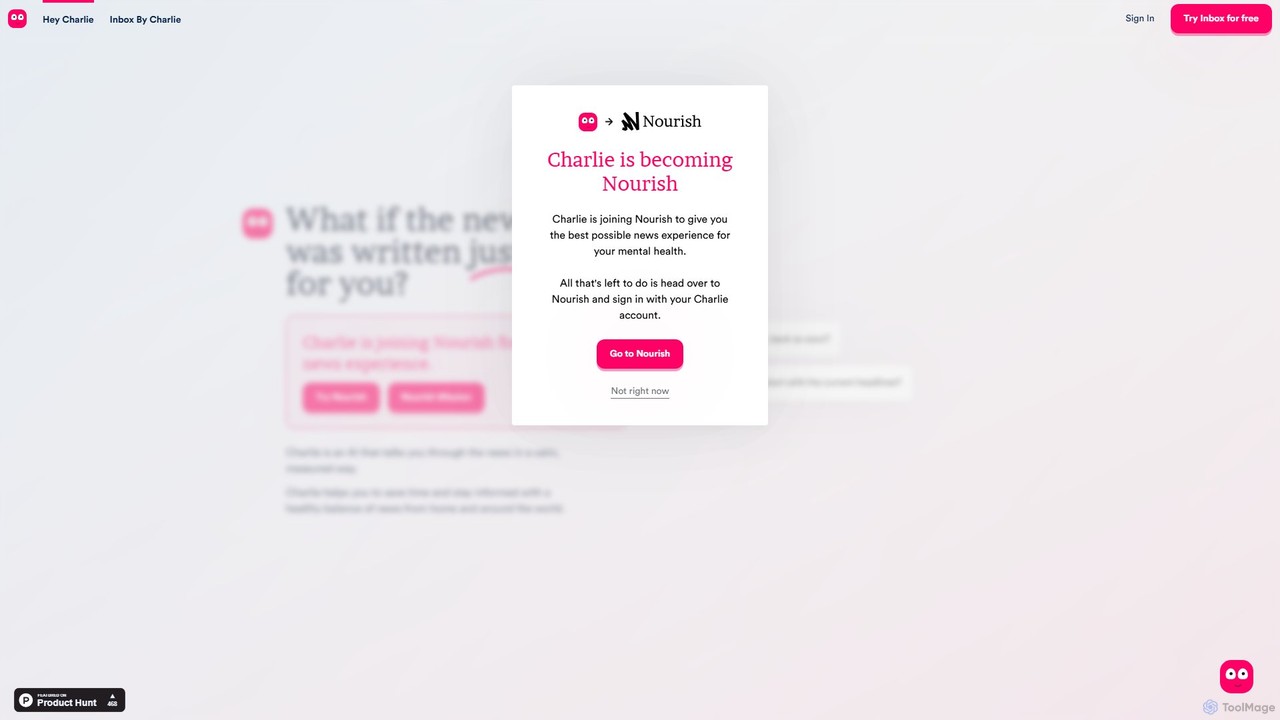
Charlie is your personal AI journalist, designed to deliver news in a calm, conversational, and balanced way. It helps you stay informed without the anxiety of the traditional news cycle, focusing on a healthy information diet and mental well-being. It has now merged with Nourish to enhance this experience.

Mental Wellness
Visits 5.8KFavorites 99Likes 105

About Personalized Summaries

Personalized Summaries tools are AI-powered applications that generate concise news summaries tailored to an individual's specific interests and preferences. They utilize natural language processing (NLP) and machine learning to analyze a user's profile, reading habits, and selected topics from a wide range of news sources. This process enables users to efficiently consume information that is directly relevant to their work or personal interests, cutting through the noise of the general news cycle. Unlike standard news feeds, these tools create a unique, prioritized information stream for each user, transforming information overload into actionable intelligence.

Core Features

  • User Profile Analysis: Learns from user-provided keywords, topics, and interaction history to build a dynamic interest profile.
  • Interest-Based Filtering: Automatically scans and filters vast amounts of news content to select only the most relevant articles for summarization.
  • Customizable Output: Allows users to control the length, format (e.g., bullet points, paragraph), and frequency of the summaries they receive.
  • Source Prioritization: Enables users to specify preferred news outlets or sources, weighting them higher in the summarization process.
  • Keyword & Entity Tracking: Actively monitors mentions of specific companies, people, or concepts defined by the user.

Use Cases

These tools are highly valuable for professionals in information-sensitive fields. For instance, financial analysts use them to track market-moving news about specific stocks, while corporate strategists monitor competitor activities and industry trends. Researchers and academics also leverage them to stay updated on the latest papers and discoveries in their niche fields without sifting through countless irrelevant publications.

How to Choose

When selecting a Personalized Summaries tool, consider the accuracy and depth of its personalization algorithms. Evaluate the breadth and quality of its supported news sources and its ability to integrate with your workflow (e.g., via email, Slack, or API). Also, critically assess the platform's data privacy policy to understand how your user profile and reading data are handled.

Personalized Summaries use cases

1

Automated Competitive Intelligence Monitoring

A market intelligence team at a tech company needs to stay ahead of competitors. They use a Personalized Summaries tool to track mentions of three key rivals, their product launches, and executive changes. The tool is configured to scan tech journals, financial news, and press releases, delivering a daily consolidated summary to their team's Slack channel. This automates hours of manual research, ensuring the team never misses a critical competitive move and can react swiftly to market shifts.

2

Targeted Daily Briefings for C-Suite Executives

A CEO has limited time but needs to be informed on specific industry trends like "sustainable manufacturing" and "AI in logistics." Their executive assistant sets up a profile in a Personalized Summaries tool that pulls from top-tier business publications. Every morning, the CEO receives a concise, 500-word email summary covering only these predefined topics. This allows them to start their day with highly relevant insights without being distracted by general news.

3

Real-Time Investment Portfolio News Tracking

An investment analyst manages a portfolio of 20 technology and healthcare stocks. Manually tracking news for each company is inefficient. They use a Personalized Summaries tool to create a dedicated feed for their portfolio. The AI monitors for news related to earnings reports, clinical trials, and regulatory changes for these specific companies. It delivers real-time, summarized alerts, enabling the analyst to make faster, more informed trading decisions.

4

Efficient Academic Literature Review

A PhD student is researching "graphene applications in battery technology." To keep up with the rapid pace of publications, they use a Personalized Summaries tool to monitor academic journals, pre-print servers, and conference proceedings. The tool filters by keywords and author names, summarizing new papers that match the criteria. This drastically reduces the time spent on literature discovery and helps identify key research trends and new findings in their specific field.

5

Customized Policy and Legislation Updates for Legal Teams

A corporate legal department must comply with evolving data privacy laws like GDPR and CCPA. They configure a Personalized Summaries tool to track legislative portals, legal news sites, and regulatory body announcements for keywords related to "data privacy," "compliance," and "data breach." The tool generates weekly summaries of proposed bills, new rulings, and policy updates, ensuring the legal team remains proactive on compliance matters.

6

Personalized Hobby and Interest News Feed

An enthusiast wants to follow developments in "astrophotography," "3D printing," and "vintage synthesizers" without the noise of social media algorithms. They use a Personalized Summaries tool to aggregate content from specialized blogs, forums, and YouTube channels. The tool creates a clean, daily digest summarizing the latest techniques, gear reviews, and community projects, providing a focused and enjoyable way to stay engaged with their hobbies.

Personalized Summaries FAQ

What are Personalized Summaries tools?

Personalized Summaries tools are AI applications that create condensed versions of news and articles specifically tailored to an individual's declared interests and observed behavior. Unlike generic summarizers that shorten any given text, these tools first filter a large volume of information to find what's relevant to you, and then generate a summary. This results in a highly curated information stream that helps you stay informed efficiently.

How do Personalized Summaries differ from a news aggregator like Google News?

The key difference lies in synthesis and curation. A news aggregator collects and displays headlines and links to articles from various sources based on broad topics. A Personalized Summaries tool goes a step further: it analyzes the content of those articles and your unique user profile to generate a new, concise summary. You consume the tailored summary directly, rather than just getting a list of articles to read.

How should I choose a Personalized Summaries tool?

When choosing a tool, focus on four main aspects:

  • Personalization Quality: How well does the AI learn and adapt to your specific interests?
  • Source Control: Can you add, remove, and prioritize your own news sources?
  • Integration: Does it deliver summaries to your preferred platforms, like email, Slack, or an RSS feed?
  • Data Privacy: How is your reading history and interest profile data stored and used?

What data is used to create the personalization?

Personalization is typically based on a combination of explicit and implicit data. Explicit data is what you directly provide, such as keywords, topics, or sources you want to follow. Implicit data is gathered from your behavior, such as the articles you click on, the time you spend reading certain topics, and summaries you rate highly. The AI uses both types to continuously refine your interest profile.

Who are the primary users of Personalized Summaries tools?

These tools are most beneficial for professionals who need to filter signal from noise in high-volume information environments. This includes financial analysts, market researchers, corporate strategists, lawyers, academics, and executives. They are also valuable for anyone with niche interests who wants to create a custom, focused news feed without the distractions of mainstream news platforms or social media.