
Scheduled
Scheduled is an open-source AI email scheduling agent that integrates directly into your email client. It automatically drafts …
Scheduled is an open-source AI email scheduling agent that integrates directly into your email client. It automatically drafts contextual email responses, suggests meeting times, and helps manage your calendar by analyzing incoming messages, saving time on routine scheduling and follow-up communication.
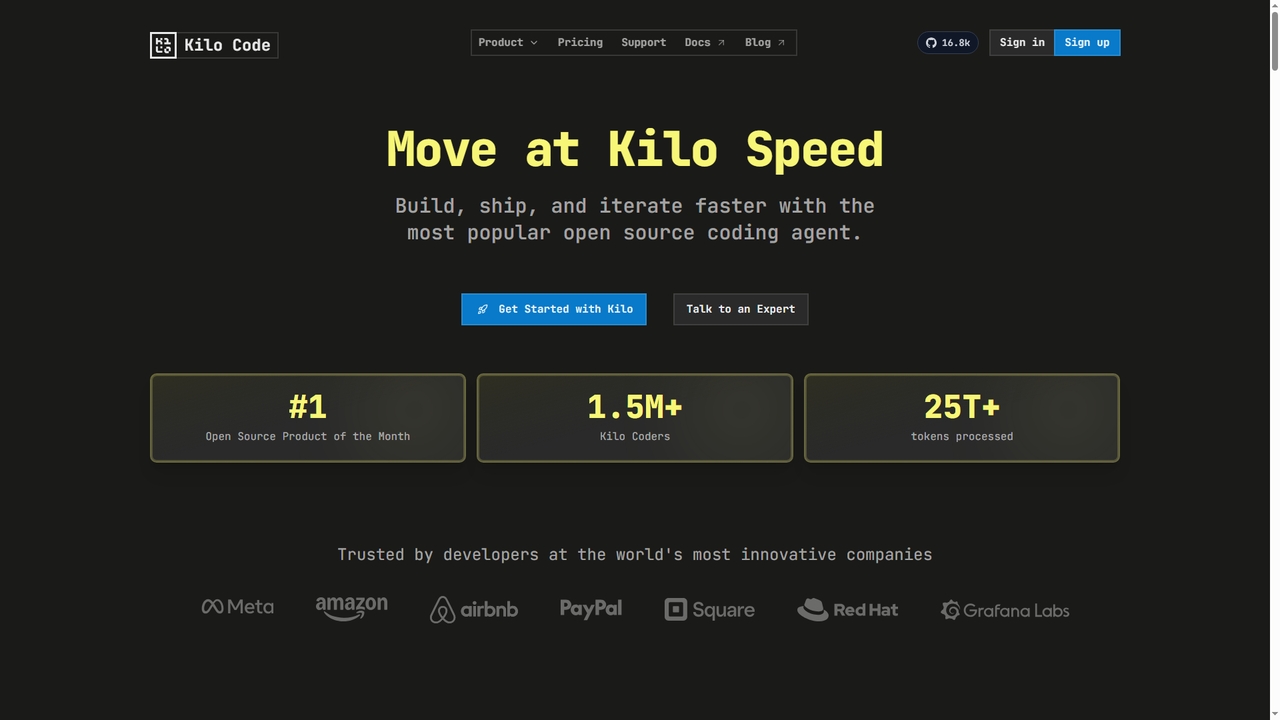
Kilo
Kilo is an open-source, all-in-one AI coding agent and orchestration platform designed to accelerate software development. It integrates …
Kilo is an open-source, all-in-one AI coding agent and orchestration platform designed to accelerate software development. It integrates seamlessly into your workflow via VS Code, JetBrains IDEs, and the CLI, offering access to 500+ AI models, automated code reviews, cloud agents, and deployment tools—all while emphasizing transparency, control, and developer productivity.
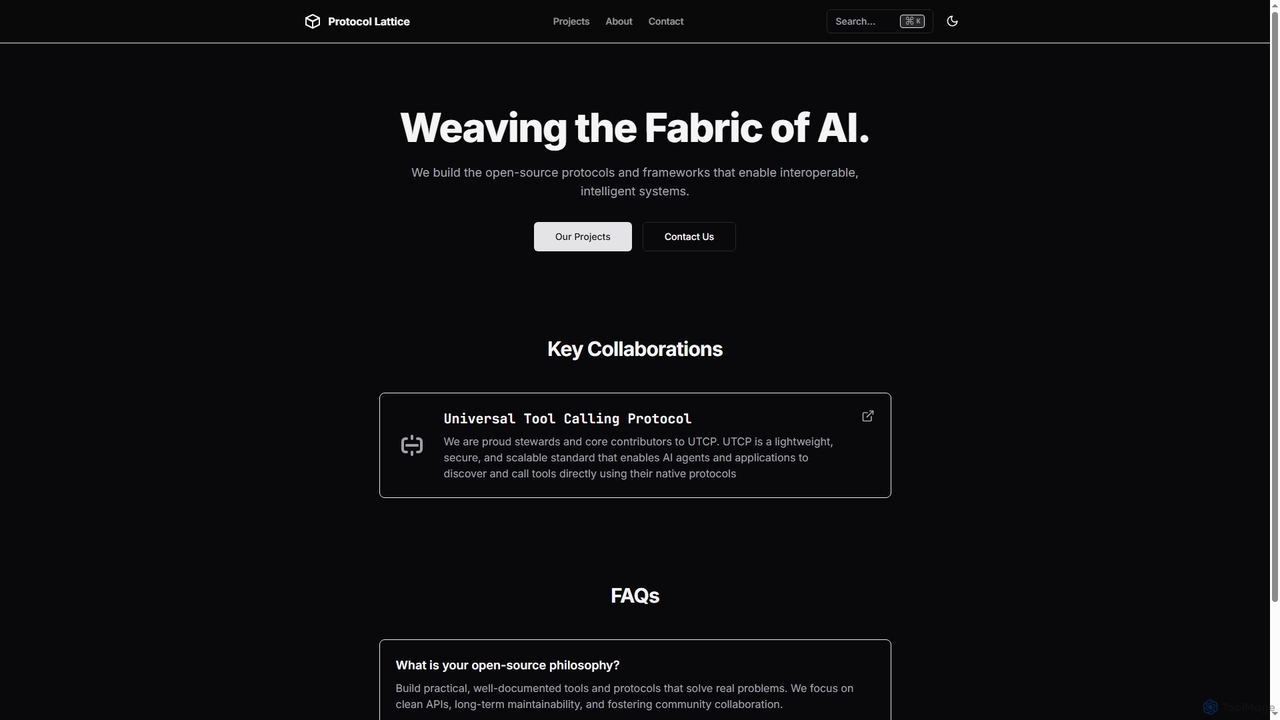
Protocol Lattice
Protocol Lattice is an organization dedicated to building open-source protocols and frameworks that foster interoperable, intelligent AI systems. …
Protocol Lattice is an organization dedicated to building open-source protocols and frameworks that foster interoperable, intelligent AI systems. Their flagship project, the Universal Tool Calling Protocol (UTCP), provides a lightweight, secure, and scalable standard for AI agents and applications to discover and interact with tools using their native protocols. They emphasize practical, well-documented solutions and community collaboration.
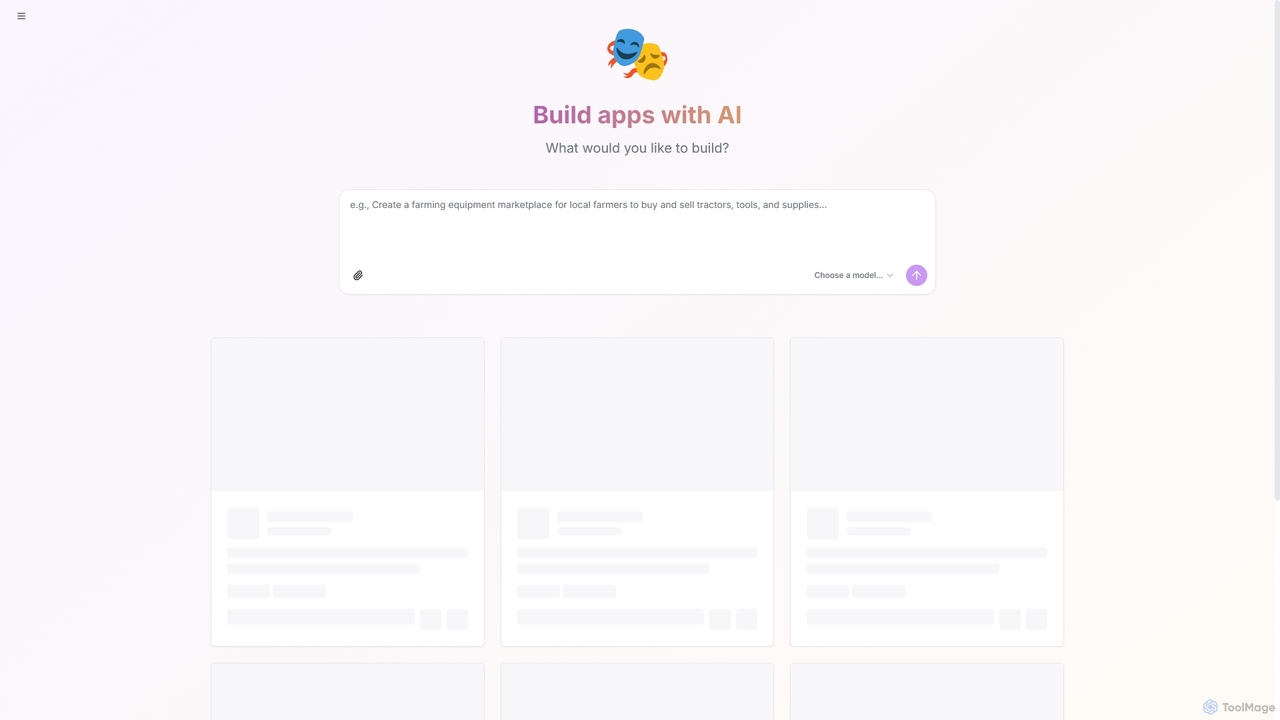
Shakespeare
Shakespeare is an open-source AI builder designed for developers to create custom AI applications. It provides a platform …
Shakespeare is an open-source AI builder designed for developers to create custom AI applications. It provides a platform to select and utilize various AI models, enabling the rapid development and deployment of intelligent solutions.
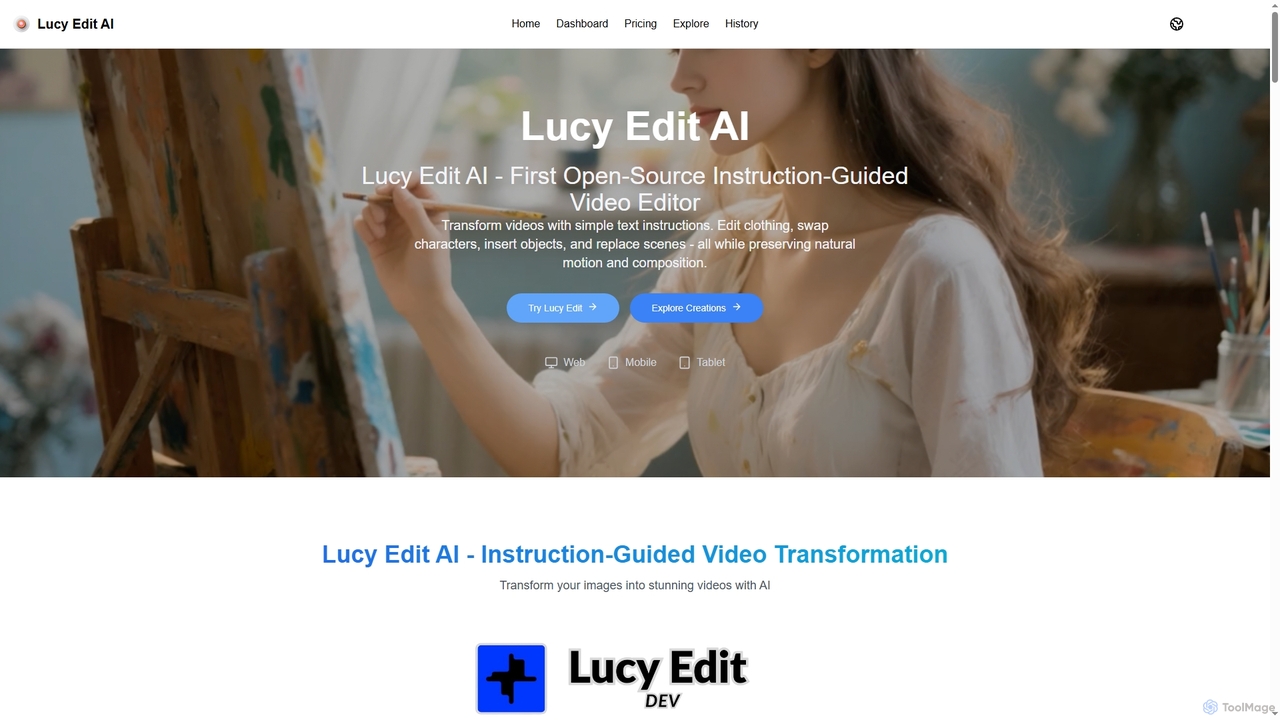
Lucy Edit AI
Lucy Edit AI is the first open-source, instruction-guided video editing model that empowers creators to transform videos using …
Lucy Edit AI is the first open-source, instruction-guided video editing model that empowers creators to transform videos using simple text commands. It allows for complex edits like changing clothing, swapping characters, inserting objects, and replacing scenes, all while meticulously preserving natural motion and composition. This innovative tool eliminates the need for masks or fine-tuning, making advanced video manipulation accessible to a wide range of users.
OpenVoiceOS
OpenVoiceOS is a community-driven, open-source voice AI platform for creating custom, private, and secure voice-controlled interfaces. It runs …
OpenVoiceOS is a community-driven, open-source voice AI platform for creating custom, private, and secure voice-controlled interfaces. It runs on various hardware like Raspberry Pi and Linux desktops, offering a flexible, plugin-based architecture for developers and DIY enthusiasts.
About Open Source
Open Source AI tools are applications whose source code is publicly available for anyone to view, modify, and distribute. These tools are built on collaborative, community-driven development models, leveraging powerful frameworks like TensorFlow, PyTorch, and Hugging Face. This transparency allows for greater security auditing, deep customization to specific needs, and fosters rapid innovation. Users benefit from significantly lower costs, freedom from vendor lock-in, and the ability to self-host for enhanced data privacy and control.
Core Features
- Source Code Accessibility: The complete code is available for inspection, auditing, and modification.
- Customizability and Extensibility: Adapt the tool to fit unique workflows or integrate it deeply into other systems.
- Community-Driven Support: Access forums, documentation, and contributions from a global developer community.
- Self-Hosting Capability: Deploy on private servers or cloud infrastructure for maximum data security and operational control.
- Permissive Licensing: Governed by licenses (e.g., MIT, Apache 2.0) that define usage, modification, and distribution rights.
Use Cases
Open Source AI tools are widely adopted by academic researchers, startups, and enterprises with strong development teams. They are particularly valuable in sectors requiring high data privacy, such as healthcare and finance, where self-hosting is a necessity. They are also the foundation for projects that need deep customization of AI models or seamless integration with proprietary technology stacks.
How to Choose
When selecting an Open Source AI tool, evaluate the project's health by checking its community activity, documentation quality, and recent update frequency. Understand the permissions and restrictions of its license (e.g., permissive vs. copyleft). Ensure your team has the technical expertise to deploy and maintain the tool, and verify that its core features align with your long-term scalability needs.
Open SourceUse Cases
Building a Custom In-House Chatbot
An enterprise development team needs a customer service chatbot with specific knowledge of its internal products while adhering to strict data privacy regulations. By using an open-source framework like Rasa, they can train the model on proprietary company documents and deploy it on their own cloud infrastructure. This results in a fully controlled, highly customized chatbot that ensures sensitive customer data never leaves the company's servers, avoiding recurring third-party subscription fees and providing complete operational autonomy.
Academic Research in Natural Language Processing
A university researcher investigating a new algorithm for sentiment analysis needs to modify and experiment with existing models. They can fork a popular open-source library from Hugging Face Transformers, allowing them to alter the underlying model architecture and training scripts directly. After running experiments, they can publish their modified code alongside the research paper. This practice fosters reproducible research, enables peers to verify the results, and contributes valuable improvements back to the scientific community.
Self-Hosting an Image Generation Service
A creative agency needs to generate thousands of marketing images but is concerned about the high costs and restrictive usage rights of commercial services. The IT department can deploy an open-source model like Stable Diffusion on a dedicated GPU server. By creating a simple internal web interface, designers gain unlimited access to image generation capabilities. This approach provides the agency with full ownership of the generated assets and complete control over the models used, all at the fixed cost of hardware and maintenance.
Automating Data Extraction from Documents
A data analyst in a financial firm needs to extract specific information from thousands of PDF invoices while ensuring data confidentiality. They can build a custom pipeline using open-source libraries like Tesseract for OCR and spaCy for NLP. This process runs entirely on-premise, identifying and extracting fields like invoice numbers, dates, and totals without exposing sensitive financial data to any third-party service. The result is a highly efficient, automated data entry process that maintains full compliance with data privacy regulations.
Developing a Personalized Content Recommendation Engine
An e-commerce startup wants to build a recommendation system to increase user engagement without paying for expensive SaaS solutions. A tech lead can implement an open-source machine learning library like Scikit-learn or a specialized framework like LightFM. By training the model on user purchase history and browsing behavior, the startup can create a cost-effective, proprietary recommendation engine. This engine can be continuously fine-tuned and scaled as the business grows, providing a key competitive advantage.
Creating a Community-Driven Translation Platform
A non-profit organization wants to translate educational content into multiple languages with the help of volunteers. They can deploy an open-source translation management system and integrate an open-source machine translation model, such as one from the Opus-MT project. This setup provides initial drafts automatically, which volunteers can then review, edit, and approve. The result is a collaborative and cost-effective platform that significantly speeds up the translation workflow, making vital content accessible to a wider global audience.