
ToolMage
Sign in

Best 1 Voice & Speech AI tools for Developer Tools

Popular Voice & Speech AI tools in Developer Tools include OpenVoiceOS, helping you work more efficiently.

OpenVoiceOS
Free

OpenVoiceOS

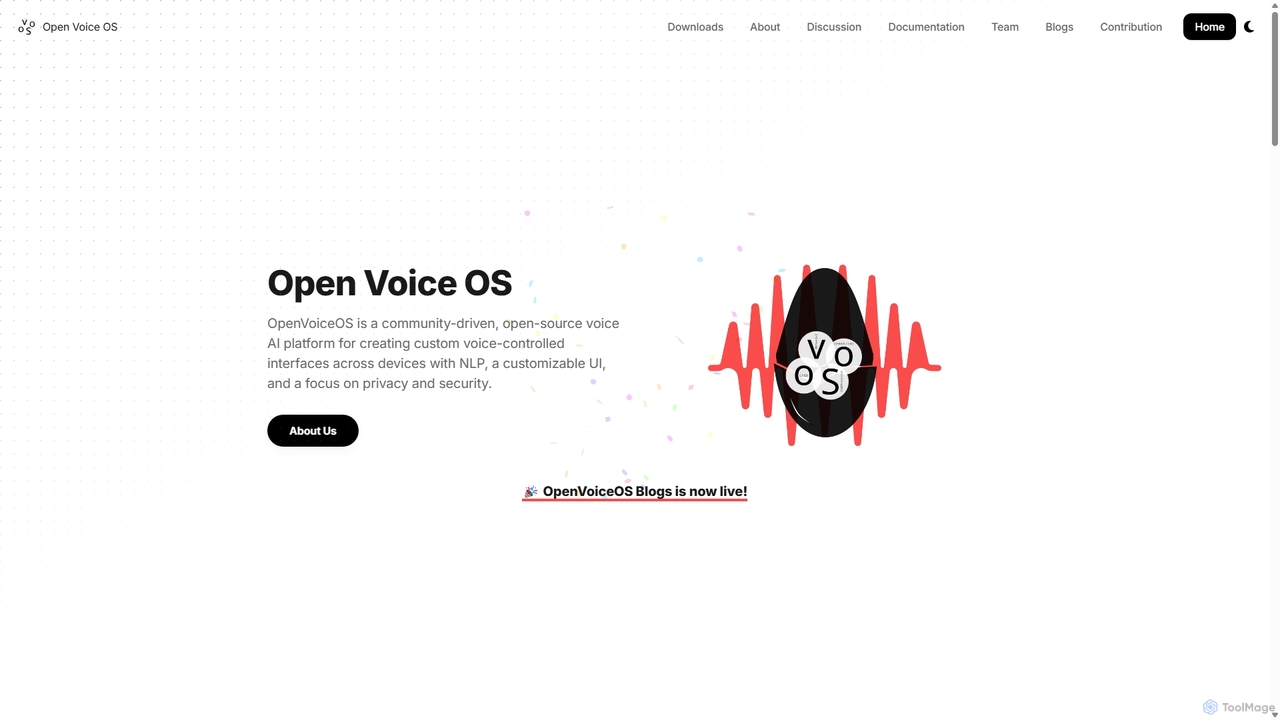
OpenVoiceOS is a community-driven, open-source voice AI platform for creating custom, private, and secure voice-controlled interfaces. It runs on various hardware like Raspberry Pi and Linux desktops, offering a flexible, plugin-based architecture for developers and DIY enthusiasts.

Voice & Speech
Visits 13.9KFavorites 101Likes 104

About Voice & Speech

Voice & Speech tools are AI-powered solutions that enable developers to integrate advanced voice recognition, speech synthesis, and natural language processing capabilities into their applications. These tools leverage deep learning models to convert spoken language into text (speech-to-text) and text into natural-sounding speech (text-to-speech), facilitating intuitive human-computer interaction. They are essential for building accessible interfaces, voice assistants, and automated communication systems.

Core Features

  • Speech-to-Text (STT): Converts spoken audio into written text, supporting various languages and accents.
  • Text-to-Speech (TTS): Generates natural-sounding human speech from written text, with customizable voices and emotional tones.
  • Natural Language Understanding (NLU): Interprets the meaning and intent behind spoken or written language, enabling intelligent responses.
  • Speaker Diarization: Identifies and separates individual speakers in a multi-person audio recording.
  • Voice Biometrics: Verifies user identity based on unique voice characteristics for secure authentication.

Use Cases

Developers utilize Voice & Speech tools to create interactive voice response (IVR) systems, build voice-controlled applications for smart devices, and enhance accessibility features in software. They are also employed in transcribing meetings, generating audio content for e-learning, and developing real-time translation services.

How to Choose

When selecting Voice & Speech tools, consider accuracy in different acoustic environments, the range of supported languages and accents, customization options for voices (for TTS) or models (for STT), integration complexity (APIs/SDKs), and pricing models based on usage volume. Evaluate latency for real-time applications and compliance with data privacy regulations.

Featured tool rankings

Voice & Speech use cases

1

Building Voice Assistants for Smart Devices

Developers integrate speech-to-text and natural language understanding APIs to create conversational interfaces for smart home devices, enabling users to control appliances, play music, or get information using voice commands. This enhances user convenience and accessibility for various tasks.

2

Automating Customer Service with AI Chatbots

Companies use Voice & Speech tools to power intelligent voicebots that handle customer inquiries, provide support, and guide users through processes over the phone or via smart speakers. This reduces call center load and offers 24/7 immediate assistance, improving customer satisfaction.

3

Transcribing Meetings and Interviews Automatically

Professionals and researchers leverage speech-to-text technology to convert audio recordings of meetings, interviews, or lectures into accurate, searchable text transcripts. This saves significant manual transcription time, allows for easy content analysis, and improves information retrieval.

4

Generating Audio Content for E-learning and Accessibility

Educators and content creators employ text-to-speech tools to convert written educational materials, e-books, or website content into natural-sounding audio. This makes learning more accessible for visually impaired individuals and provides an alternative consumption method for busy learners.

5

Developing Real-time Language Translation Applications

Developers utilize a combination of speech-to-text, machine translation, and text-to-speech APIs to build applications that can translate spoken language in real-time. This facilitates cross-cultural communication in business, travel, and personal interactions, breaking down language barriers.

6

Enhancing In-Car Infotainment Systems with Voice Control

Automotive developers integrate Voice & Speech capabilities into vehicle infotainment systems, allowing drivers to safely control navigation, music, calls, and climate settings using voice commands. This minimizes driver distraction and improves the overall driving experience.

Voice & Speech FAQ

What are Voice & Speech tools?

Voice & Speech tools are AI-driven solutions that enable applications to understand and generate human language. They typically feature speech-to-text for converting audio to text, and text-to-speech for generating spoken audio from text. These tools are crucial for creating interactive voice interfaces and automating communication.

How do Voice & Speech tools differ from general Natural Language Processing (NLP) tools?

While Voice & Speech tools often incorporate NLP, their primary focus is on the audio-to-text and text-to-audio conversion layers. General NLP tools primarily process and understand text data, whereas Voice & Speech tools specifically handle the spoken dimension of language, bridging the gap between human voice and digital text.

What are the key benefits of integrating Voice & Speech capabilities into applications?

Integrating Voice & Speech capabilities offers several benefits, including enhanced accessibility for users with disabilities, improved user experience through hands-free interaction, increased efficiency in tasks like transcription, and the ability to create more intuitive and engaging conversational interfaces.

What technical considerations are important when implementing Voice & Speech tools?

Key technical considerations include the accuracy of speech recognition in noisy environments, the naturalness and customizability of synthesized voices, latency for real-time applications, the robustness of APIs/SDKs, and scalability to handle varying user loads. Data privacy and security for voice data are also paramount.

Can Voice & Speech tools be customized for specific industry terminologies or accents?

Yes, many advanced Voice & Speech tools offer customization options. Developers can often train or fine-tune models with specific datasets to improve accuracy for industry-specific jargon, unique product names, or particular regional accents, ensuring better performance in specialized contexts.