Operations Best in category 1 results Supply Chain Management AI Tool

Popular AI tools in the Supply Chain Management field of Operations include Ignite, etc., helping you quickly improve efficiency.

Ignite

Ignite

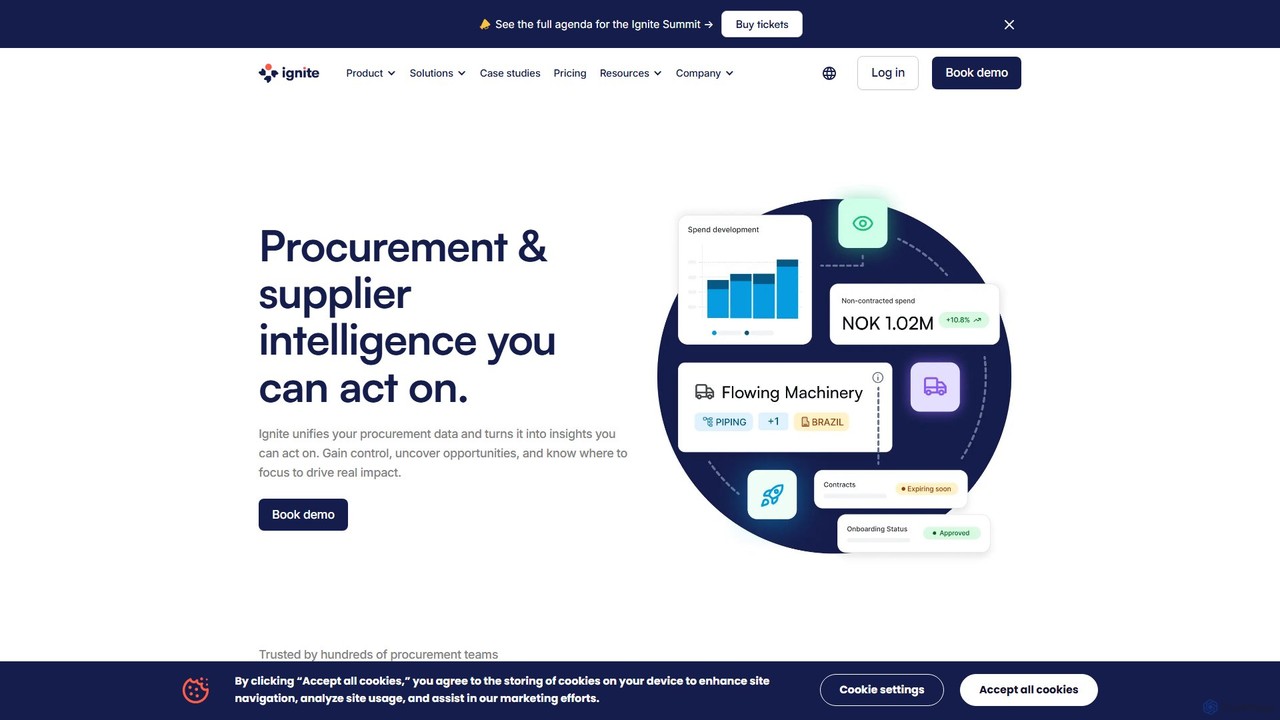
Ignite is an AI-powered platform for procurement and supplier intelligence. It unifies all procurement data into a single …

9.9K

About Supply Chain Management

AI Supply Chain Management tools are a specialized category of operations software using machine learning and predictive analytics to optimize the flow of goods, services, and information. These platforms analyze vast datasets from procurement to delivery to forecast demand, manage inventory, and identify potential disruptions. By providing data-driven insights and automating complex decisions, they help businesses build more resilient, efficient, and transparent supply chains. Their key advantage lies in adapting to real-time changes, unlike traditional static planning systems.

Core Features

  • Predictive Demand Forecasting: Utilizes historical data and external factors (like weather or social trends) to generate highly accurate demand predictions.
  • Inventory Optimization: Automatically determines optimal stock levels, reorder points, and safety stock to minimize carrying costs and prevent stockouts.
  • Route & Logistics Optimization: Calculates the most efficient delivery routes in real-time, considering traffic, fuel costs, and delivery windows.
  • Supplier Risk Assessment: Continuously monitors supplier performance and external risks (geopolitical, financial) to flag potential disruptions.
  • Automated Procurement: Streamlines the purchasing process by automating order creation based on inventory levels and demand forecasts.

Use Cases

These tools are crucial for industries like retail, manufacturing, e-commerce, and logistics. Supply chain managers, procurement specialists, and logistics coordinators use them to move from reactive problem-solving to proactive strategy. For example, a manufacturer can predict a component shortage due to a supplier's issue and proactively find an alternative source, preventing production delays.

How to Choose

When selecting an AI Supply Chain Management tool, consider its integration capabilities with your existing ERP and WMS systems. Evaluate the accuracy and transparency of its predictive models. Assess its scalability to handle your data volume and the complexity of your network. Finally, look for industry-specific modules that address the unique challenges of your sector.

Supply Chain ManagementUse Cases

1

Predictive Demand Forecasting for E-commerce

An e-commerce manager for an online electronics store uses an AI SCM tool to analyze seasonal trends, competitor pricing, and marketing campaign data. The system generates precise weekly demand forecasts for hundreds of SKUs. This allows the business to automate purchase orders, ensuring popular items like new smartphones are always in stock while avoiding overstocking on accessories with fluctuating demand. This leads to a 25% reduction in inventory holding costs and a 15% increase in sales due to fewer stockouts.

2

Dynamic Route Optimization for Logistics

A logistics coordinator for a third-party logistics (3PL) provider manages a fleet of 50 delivery trucks. By feeding real-time GPS data, traffic reports, and delivery schedules into an AI SCM platform, the system dynamically re-routes drivers throughout the day to avoid congestion and delays. It also optimizes the loading sequence of packages in each truck to match the new route. This results in a 20% reduction in fuel consumption and improves on-time delivery rates from 85% to 98%.

3

Proactive Supplier Risk Mitigation

A procurement manager at a large manufacturing firm uses an AI platform to monitor its global network of over 500 suppliers. The tool continuously scans news, financial reports, and shipping data for risk signals like port closures, supplier financial distress, or negative social media sentiment. When the AI flags a high-risk supplier in a politically unstable region, it automatically suggests alternative, pre-vetted suppliers and simulates the cost and time impact of switching. This allows the manager to secure a backup source before a disruption occurs, ensuring production continuity.

4

Optimizing Warehouse Inventory Placement

A warehouse operations manager uses an AI-powered Warehouse Management System (WMS) to optimize inventory slotting. The AI analyzes product dimensions, sales velocity (how fast items sell), and order history to recommend the best physical location for each item in the warehouse. Fast-moving items are placed closer to packing stations, and items frequently bought together are stored near each other. This strategy reduces picker travel time by 30% and increases order fulfillment speed by 20%, allowing the warehouse to handle higher volumes without additional staff.

5

Automating Freight Spend Auditing

A financial analyst in a large corporation's logistics department is tasked with auditing freight invoices. Using an AI SCM tool, they can automatically process thousands of invoices each month. The AI uses Natural Language Processing (NLP) to extract data from invoices and compares it against contracted rates, delivery receipts, and accessorial charge agreements. It flags discrepancies, such as incorrect mileage charges or duplicate billing, for human review. This automates over 90% of the auditing process, recovering an average of 3-5% of total freight spend annually through corrected errors.

6

Predicting Maintenance for Delivery Fleets

A fleet manager for a food distribution company uses an AI SCM tool that integrates with IoT sensors on their refrigerated trucks. The AI analyzes sensor data on engine performance, tire pressure, and refrigeration unit temperature in real-time. It predicts when a specific component is likely to fail, allowing the manager to schedule maintenance proactively before a breakdown occurs on the road. This predictive maintenance approach reduces unexpected vehicle downtime by 40% and prevents costly spoilage of perishable goods.

Supply Chain ManagementFrequently Asked Questions