CheatEye
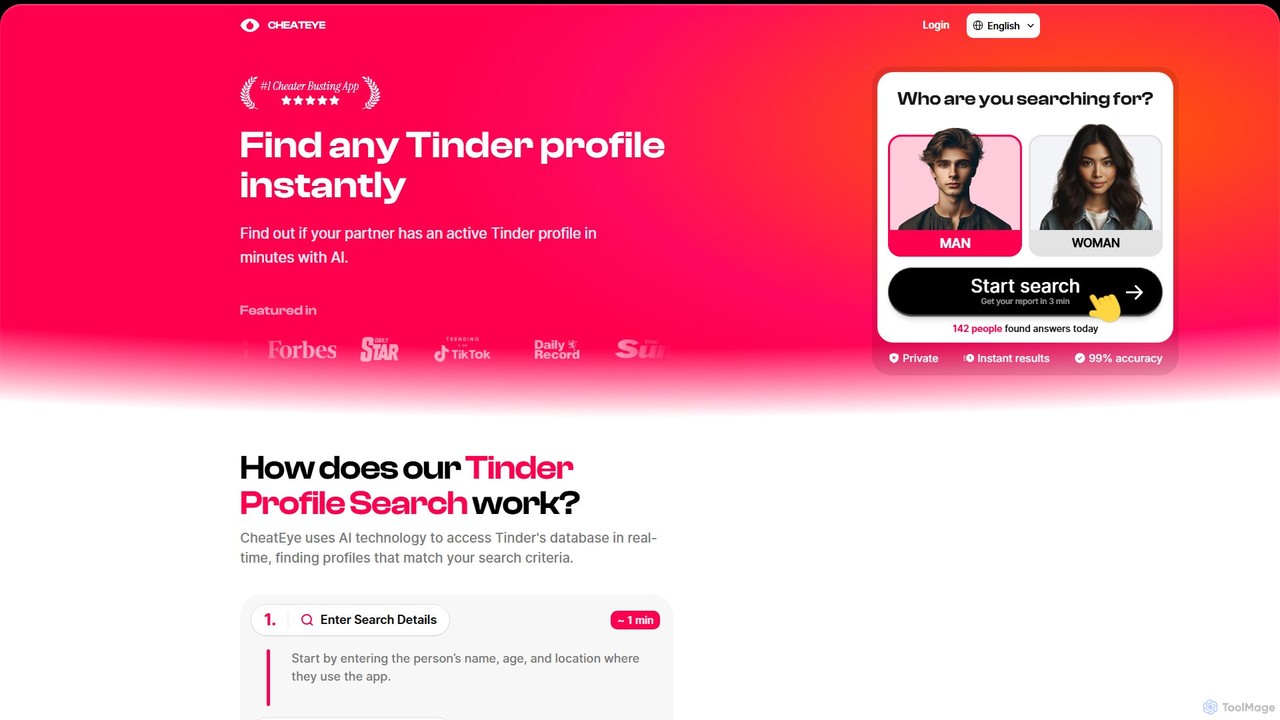
CheatEye is an AI-powered search engine designed to instantly and discreetly find anyone's Tinder profile. It helps users …
CheatEye is an AI-powered search engine designed to instantly and discreetly find anyone's Tinder profile. It helps users uncover potential infidelity or verify a partner's dating app activity, providing detailed reports with 99% accuracy to ease relationship doubts and anxiety.
About Personal Investigation
Personal Investigation tools are a class of AI-powered platforms designed to gather, analyze, and consolidate publicly available information about individuals or entities. These tools leverage advanced algorithms to scan diverse online sources, including social media, public records, and the open web, to create comprehensive profiles. They empower users to conduct due diligence, verify identities, or manage their own digital footprint with greater efficiency. Unlike broad search engines, they specialize in correlating disparate data points to uncover connections and present a coherent overview.
Core Features
- Data Aggregation: Automatically collects and compiles information from various social networks, websites, and public databases into a single report.
- Reverse Search Capability: Allows users to find associated profiles or information starting with just an email, phone number, username, or image.
- Digital Footprint Mapping: Visualizes an individual's online presence, showing connections, activities, and publicly accessible data trails.
- Public Records Access: Provides a simplified interface to search for publicly available records such as business registrations or court filings, where legally permissible.
- Relationship Analysis: Identifies and maps connections between different individuals, profiles, and online entities.
Use Cases
These tools are valuable for freelancers and small business owners conducting due diligence on potential partners or clients. Recruiters use them for initial, non-invasive background screening based on public data. Individuals also utilize them for personal safety, such as verifying the identity of someone they met online, or for finding long-lost relatives or friends. Additionally, they are used for online reputation management, allowing users to see what information about them is publicly visible.
How to Choose
When selecting a Personal Investigation tool, consider the breadth and depth of its data sources—does it cover the specific regions or platforms you need? Evaluate the types of searches offered (e.g., name, email, phone, image). Pay attention to the tool's privacy policy and its compliance with data protection regulations like GDPR or CCPA. Finally, compare pricing models, whether it's a subscription-based service for ongoing use or a pay-per-report model for occasional checks.

Personal InvestigationUse Cases
Verifying an Online Dating Profile
An individual using online dating apps wants to ensure their safety before meeting someone in person. They use a personal investigation tool to verify the identity of a potential date. By inputting the person's name, phone number, or a photo from their profile, the tool aggregates public social media accounts, checks for inconsistencies, and performs a reverse image search to see if the photos are stolen from elsewhere. This process helps confirm if the person is who they claim to be, revealing potential red flags like fake profiles or misrepresented information, thus enhancing personal security in online dating.
Conducting Due Diligence on a Freelancer
A small business owner needs to hire a freelance developer for a critical project. Before signing a contract, they use a personal investigation tool to conduct basic due diligence. They search the freelancer's name and email to find their professional footprint, such as a GitHub profile, contributions to open-source projects, or posts on technical forums. The tool helps consolidate this public information, providing a clearer picture of the freelancer's expertise, professional history, and online reputation beyond their resume. This helps the business owner make a more informed hiring decision and mitigate risks associated with hiring unknown contractors.
Managing Your Own Digital Footprint
A professional preparing for a job search wants to understand and clean up their online presence. They use a personal investigation tool on themselves to see what a potential employer might find. The tool aggregates mentions, old social media profiles, public photos, and forum comments associated with their name and email addresses. This provides a comprehensive audit of their digital footprint, allowing them to identify and remove outdated or unprofessional content, update privacy settings, and ensure their online persona aligns with their professional goals before applying for jobs.
Finding a Long-Lost Relative
Someone is trying to reconnect with a childhood friend or a distant relative they've lost contact with over the years. They have limited information, perhaps just an old name and a city they used to live in. Using a personal investigation tool, they can search for this information across public records and social media archives. The tool can help identify potential matches, find updated contact information, or discover mutual connections who might be able to help re-establish contact. It streamlines the search process, which would otherwise require manually checking dozens of different websites and databases.
Researching a Local Business or Service Provider
Before hiring a local contractor, like a plumber or electrician, a homeowner wants to check their credibility. They use a personal investigation tool to search for the business name or the owner's name. The tool can uncover public records related to business licenses, customer reviews scattered across different platforms, and any online presence that might indicate the quality of their work or business ethics. This helps the homeowner move beyond simple online reviews and gain a more holistic view of the service provider's reputation and legitimacy before making a financial commitment.
Investigating a Suspicious Email or Message
An individual receives a suspicious email claiming they've won a prize, which asks for personal information. Instead of clicking any links, they use a personal investigation tool to analyze the sender. By performing a reverse email search on the sender's address, the tool can check if the email is associated with known scams, if the domain is legitimate, or if it links to any real social or professional profiles. This quick, safe investigation helps the user identify phishing attempts or online scams, allowing them to block the sender and delete the message without compromising their security.