Deuz AI
Deuz AI is an all-in-one AI powerhouse that integrates multiple tools into a single workspace. It features a …
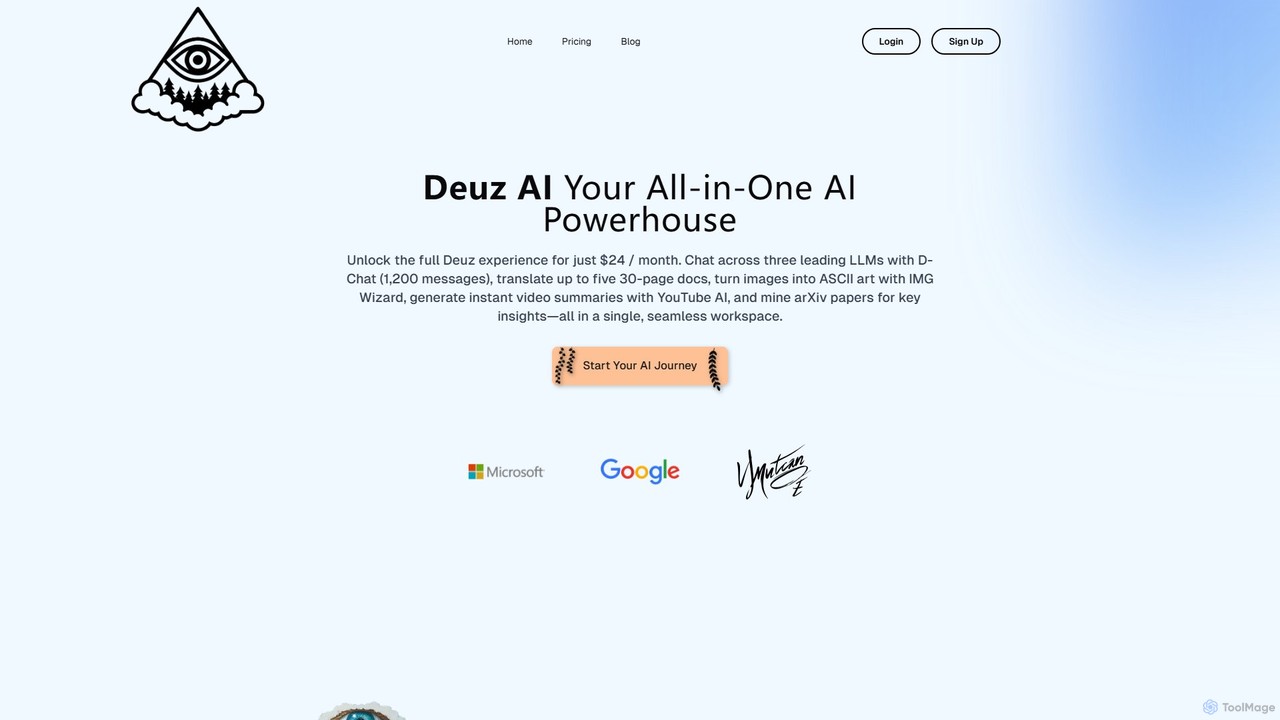
Deuz AI is an all-in-one AI powerhouse that integrates multiple tools into a single workspace. It features a multi-LLM chat, document translation, YouTube video summarization, arXiv paper analysis, and creative tools. It's designed for professionals, researchers, and creators seeking a versatile and efficient AI assistant to streamline their workflow.
About Translation
AI Translation tools are applications that use artificial intelligence, particularly neural machine translation (NMT), to convert text or speech between languages. By analyzing the full context of sentences, these tools produce significantly more accurate and natural-sounding translations than traditional methods. They are crucial for breaking down language barriers in global business, content localization, and personal communication. Many advanced tools also offer features like tone adjustment, formality control, and custom glossaries for specific terminology.
Core Features
- Neural Machine Translation (NMT): Provides context-aware translations for entire sentences, resulting in higher fluency and accuracy.
- Document Translation: Translates entire files (e.g., PDF, DOCX, PPTX) while preserving the original layout and formatting.
- Real-Time Conversation Mode: Facilitates live, spoken conversations by translating speech instantly between two or more languages.
- Terminology Management (Glossary): Allows users to define how specific terms, brand names, or jargon should be translated for consistency.
- API Integration: Enables developers to integrate translation capabilities directly into websites, applications, and business workflows.
Use Cases
These tools are widely used by marketing teams for website and campaign localization, customer support departments for multilingual communication, and legal professionals for reviewing foreign-language documents. They also empower content creators to reach a global audience and multinational corporations to facilitate internal collaboration.
How to Choose
When selecting an AI Translation tool, consider the required language pairs and their quality. Evaluate its accuracy for your specific domain (e.g., legal, medical, creative). Assess the tool's integration capabilities (API), support for various document formats, and its security policies, especially when handling sensitive information.

TranslationUse Cases
Website & App Localization for Global Markets
An e-commerce manager needs to launch their online store in three new international markets. Instead of a slow and costly manual translation process, they use an AI translation tool with API integration. This allows them to automatically translate thousands of product descriptions, user interface elements, and marketing emails. They use the glossary feature to ensure brand names and key technical terms are translated consistently across all platforms, maintaining brand integrity. This approach reduces the time-to-market from months to weeks, enabling a faster global expansion and providing a native shopping experience for new customers.
Real-time Multilingual Customer Support
A customer support team serves a global audience but is primarily English-speaking. To handle inquiries in Spanish, French, and Japanese, they integrate an AI translation tool into their live chat platform. When a customer writes in their native language, the message is instantly translated for the support agent. The agent's reply in English is then translated back into the customer's language. This seamless, real-time process allows a small team to provide effective support to a worldwide customer base, significantly improving first-response times and customer satisfaction without the high cost of hiring multilingual agents.
Efficient Translation of Legal & Technical Documents
A paralegal at a law firm receives a 100-page contract in German that needs a preliminary review within 24 hours. Instead of waiting days for a human translator, they use an AI document translation tool. They upload the PDF, and the tool provides a complete English translation in under an hour while preserving the original formatting, including tables and headers. This allows the legal team to quickly assess the document's key clauses and identify areas needing expert human review. The process accelerates the initial due diligence phase, saving significant time and budget compared to traditional translation services.
Creating Multilingual Social Media Content
A social media manager for a global fashion brand needs to post daily updates across Instagram, Twitter, and Facebook for audiences in Europe and Latin America. They draft the primary post in English. Then, using an AI translation tool with tone and formality controls, they generate a casual, emoji-filled version for Instagram in Spanish and a more formal, concise version for Twitter in French. This allows them to quickly adapt a single core message for different platforms and cultural contexts, increasing engagement and ensuring a consistent yet locally relevant brand voice across all channels without needing a large, multilingual team.
Facilitating International Team Collaboration
A project manager leads a distributed engineering team with members in Brazil, Germany, and Japan. Communication in their shared Slack channel can be challenging. They implement an AI translation bot within Slack. Now, when the German engineer posts a technical update in German, the bot automatically posts a translation in English, Portuguese, and Japanese below it. This ensures everyone understands critical information in real-time without having to constantly switch to an external translation app. The result is smoother collaboration, fewer misunderstandings, and a more inclusive environment for all team members.
Academic Research and Literature Review
A university researcher is studying advancements in renewable energy and finds several key research papers published only in Mandarin and Korean. To quickly determine their relevance, they use an AI translation tool to translate the abstracts and conclusions. For the most promising papers, they use the document translation feature to get a full English version for in-depth analysis. This allows the researcher to access a global pool of knowledge that would otherwise be inaccessible, potentially accelerating their research by incorporating cutting-edge findings from non-English sources and avoiding duplication of effort.