Best of the Year 4 results Payments AI Tools

Popular AI tools in the Payments field include Dodo Payments、Baltex、Kaisel、Starbase, etc., helping you quickly improve efficiency.

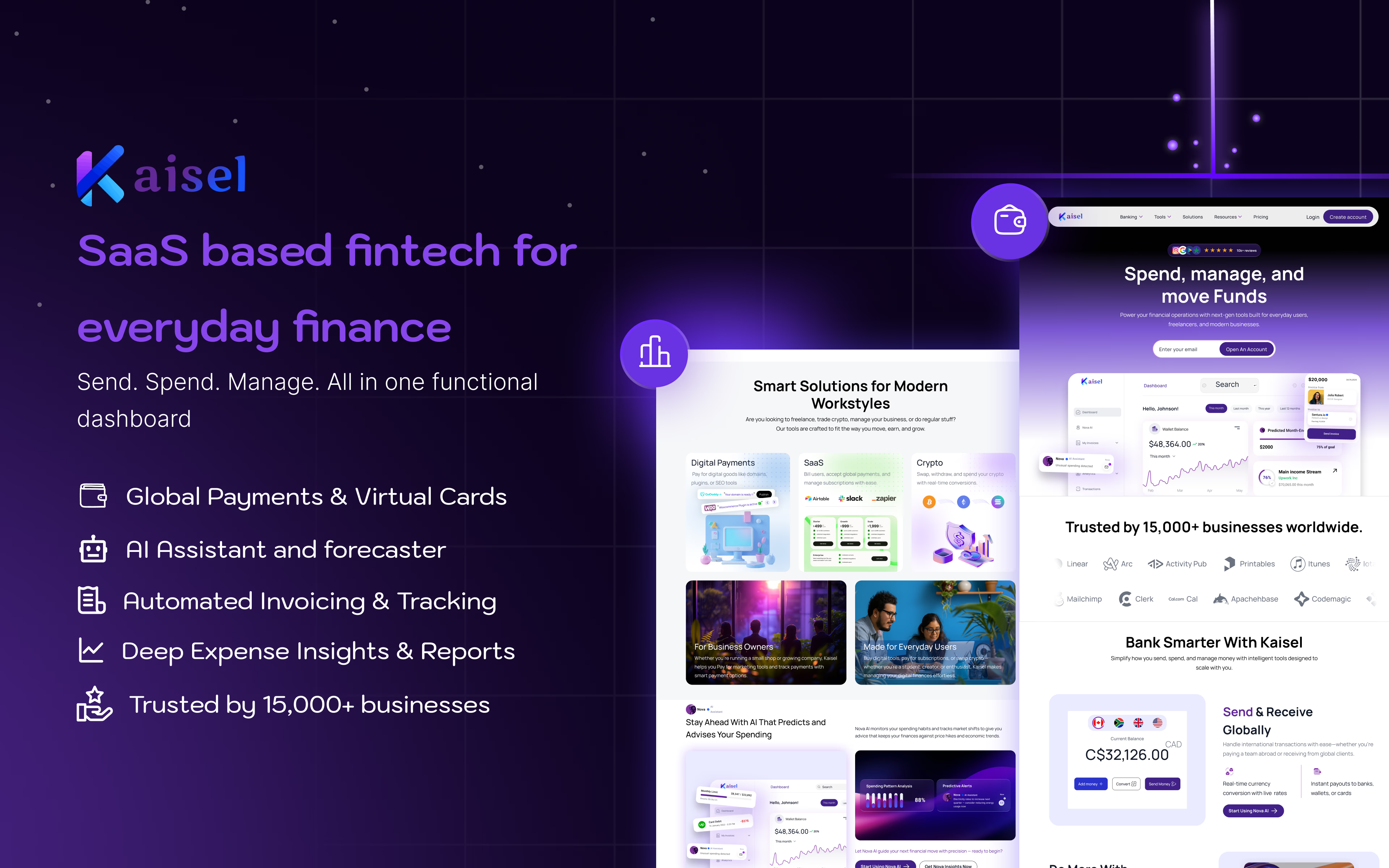
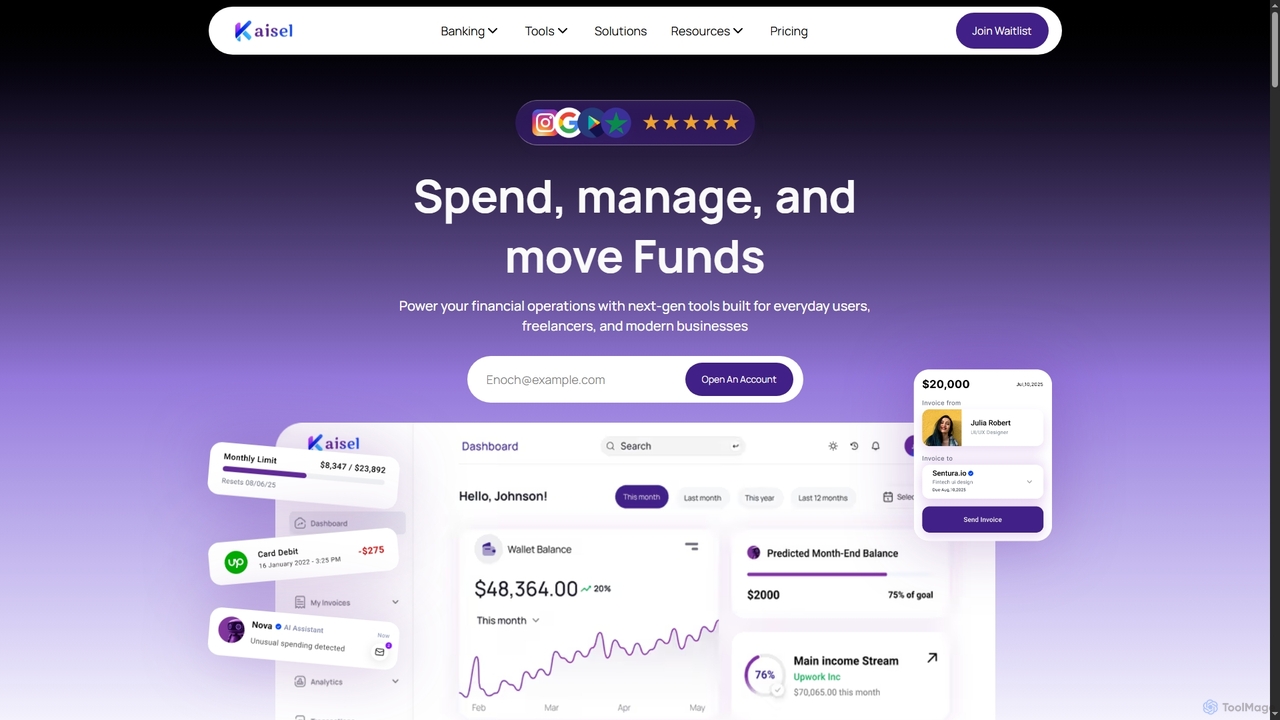
Kaisel

Kaisel

Kaisel is an AI-powered financial platform designed for everyday users, freelancers, and modern businesses to intelligently manage, spend, …

2.4K
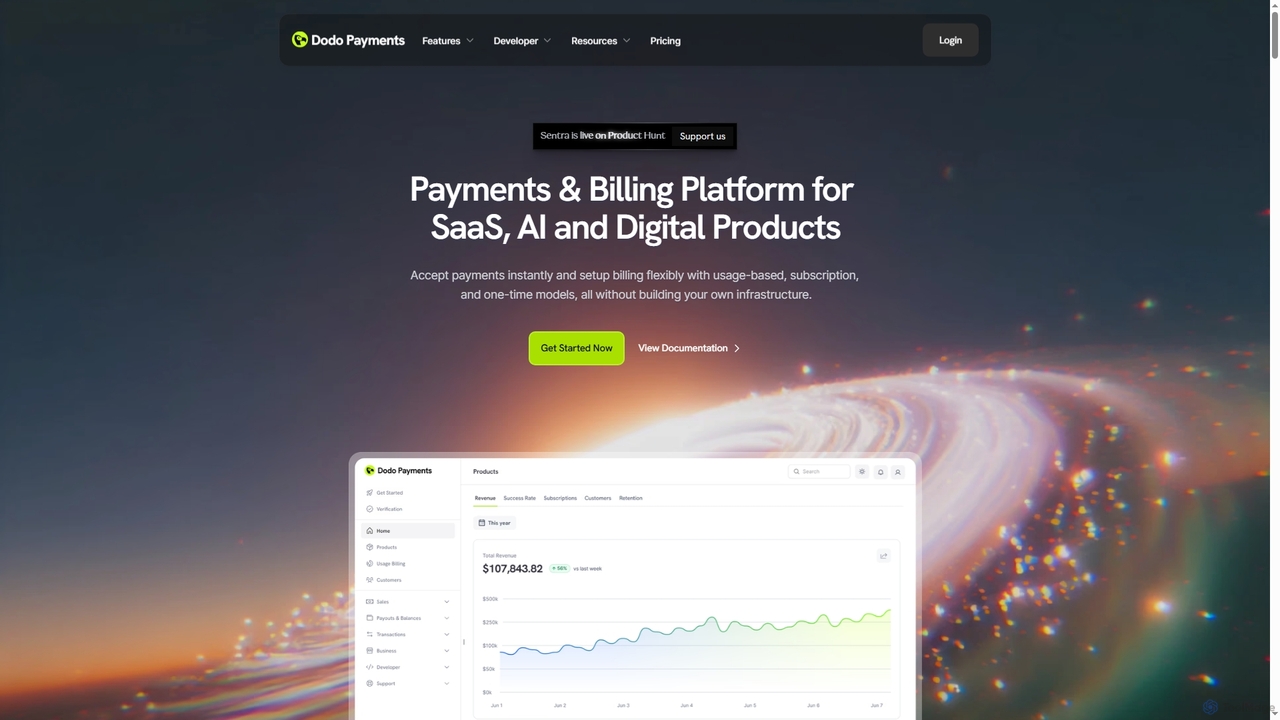
Dodo Payments

Dodo Payments

Dodo Payments is an all-in-one payment and billing platform designed for SaaS, AI, and digital products. It enables …

607.5K
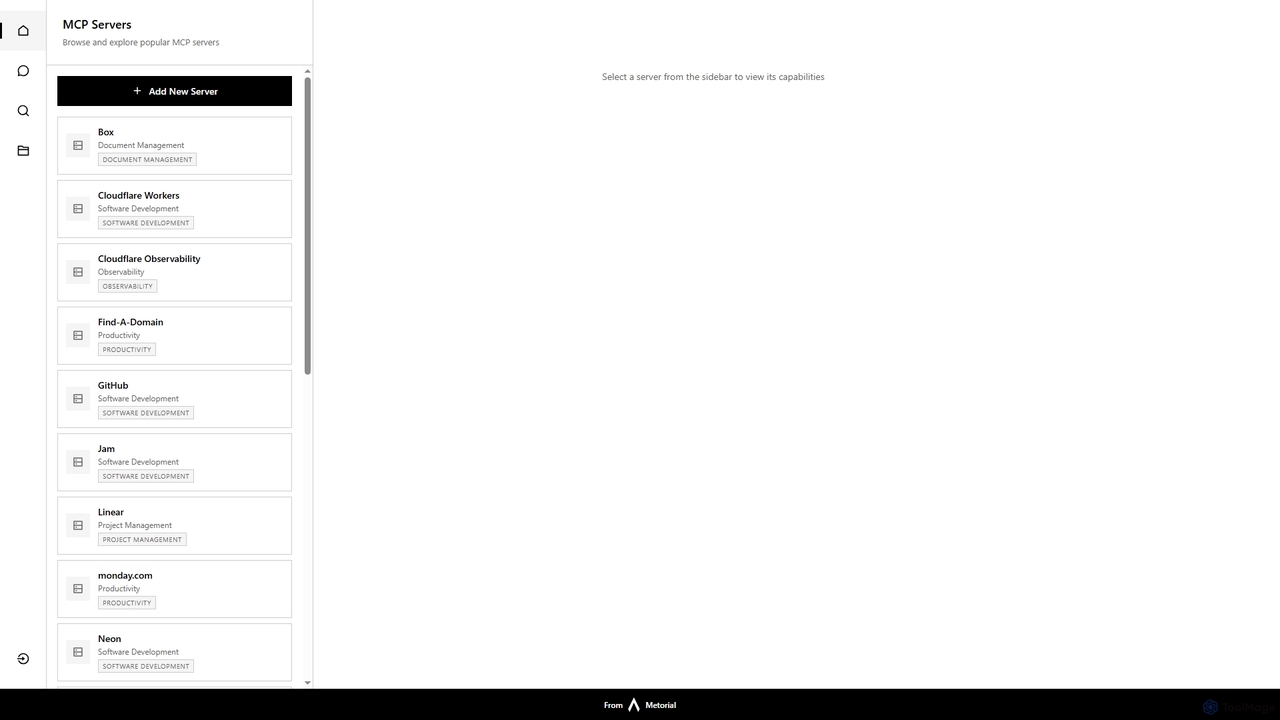
Starbase

Starbase

Starbase by Metorial is a comprehensive platform designed to centralize the browsing, exploration, and management of various popular …

2.4K
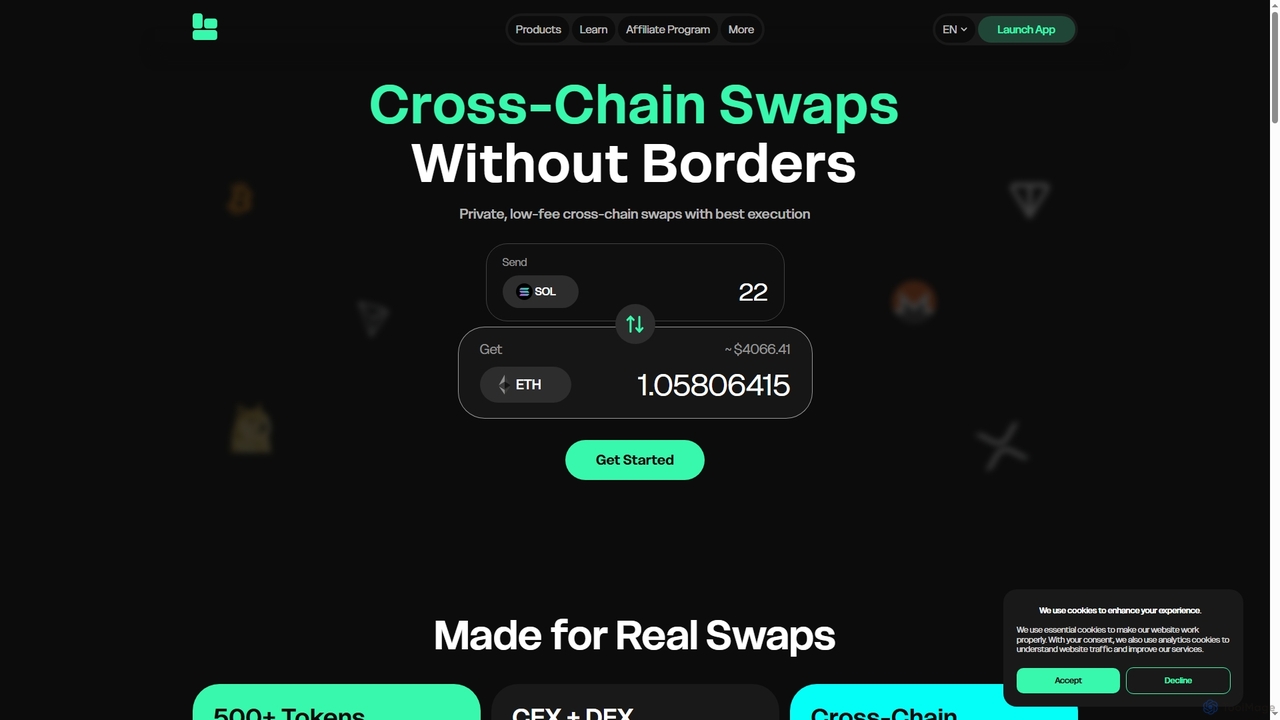
Baltex

Baltex

Baltex is a leading cross-chain terminal for instant, secure, and private cryptocurrency swaps. It integrates CEX and DEX …

18.5K

About Payments

AI Payments tools are a class of software that leverages artificial intelligence to automate, secure, and optimize financial transactions. These platforms utilize machine learning models to analyze vast amounts of transactional data in real-time, identifying complex patterns that are invisible to traditional rule-based systems. The primary value of AI Payment tools lies in their ability to significantly reduce fraudulent transactions, lower processing costs, and improve customer payment experiences. They are becoming essential for businesses of all sizes to manage the complexities of modern digital commerce.

Core Features

  • Real-time Fraud Detection: Analyzes hundreds of data points per transaction to accurately identify and block fraudulent attempts.
  • Intelligent Payment Routing: Automatically selects the most cost-effective and successful payment gateway for each transaction.
  • Automated Reconciliation: Uses AI to match incoming payments with outstanding invoices, reducing manual accounting work.
  • Credit Risk Assessment: Employs predictive models to evaluate customer creditworthiness for services like "Buy Now, Pay Later" (BNPL).
  • Churn Reduction: Proactively addresses failed recurring payments by optimizing retry schedules and communication.

Use Cases

AI Payment tools are widely used in e-commerce to prevent chargebacks and secure transactions. Financial institutions and fintech companies use them for underwriting and risk management. Additionally, subscription-based businesses (SaaS) rely on these tools to minimize involuntary churn from failed payments, while large enterprises automate their accounts payable and receivable processes.

How to Choose

When selecting an AI Payment tool, first assess its fraud detection accuracy and its ability to minimize false positives. Evaluate its integration capabilities with your existing e-commerce platform, CRM, and accounting software. Consider the pricing model—whether it's per-transaction, a flat monthly fee, or a percentage of revenue saved. Finally, examine the tool's analytics and reporting features to ensure you can gain actionable insights from your payment data.

PaymentsUse Cases

1

E-commerce Fraud Prevention in Real-Time

An online fashion retailer faces high rates of chargebacks from fraudulent credit card use. By integrating an AI Payment tool, their system analyzes each transaction in real-time, assessing over 500 data points including device fingerprint, IP location, and browsing behavior. When a high-risk transaction is flagged, it is automatically blocked or sent for manual review before fulfillment. This approach reduces chargeback rates by over 70% and protects revenue without frustrating legitimate customers with overly strict rules.

2

Optimizing Subscription Billing Success

A SaaS company with thousands of monthly subscribers struggles with involuntary churn due to failed recurring payments. They implement an AI payment solution that uses machine learning to predict the optimal time to retry a failed transaction based on the bank's reason code. The system can also automatically contact the customer with a secure link to update their payment information. This intelligent dunning process recovers up to 40% of previously failed payments, directly boosting monthly recurring revenue.

3

Automating Accounts Payable for Enterprises

A large manufacturing company processes thousands of supplier invoices each month, a time-consuming manual task. They adopt an AI-powered payment platform that uses Optical Character Recognition (OCR) to automatically scan and extract data from invoices. The system validates the data, matches it to purchase orders, and schedules the payment for its due date. This reduces invoice processing time by 85% and minimizes late payment fees, freeing up the finance team to focus on more strategic activities.

4

Streamlining Global Marketplace Payouts

A global freelance marketplace needs to pay thousands of creators in over 100 different countries. An AI payment tool automates this complex process by providing a single platform to manage all payouts. The system intelligently routes each payment through the optimal network (e.g., local bank transfer, wire) based on the recipient's country and currency to minimize fees and ensure faster settlement times. This provides a better experience for freelancers and reduces the operational burden on the marketplace's finance team.

5

Enabling "Buy Now, Pay Later" (BNPL) with AI

An online furniture store wants to offer customers a "Buy Now, Pay Later" (BNPL) option to increase conversion rates. They use an AI payment provider that performs an instant, soft credit check on the customer during checkout. The AI model analyzes various data points to assess credit risk and instantly approves or denies the installment plan. This allows the retailer to offer flexible financing, increasing the average order value by 30% while effectively managing the risk of default.

6

Reducing False Declines in Online Payments

A digital goods merchant notices that many legitimate international transactions are being declined by their traditional payment gateway. They switch to an AI-powered system that builds more sophisticated risk models. The AI understands nuances like a customer using a VPN for privacy or a card issued in a different country from their shipping address. By analyzing a wider context, the system accurately distinguishes between genuine customers and fraudsters, reducing false declines by 50% and recovering significant revenue.

PaymentsFrequently Asked Questions