
ToolMage
Sign in

Best 1 Image Recognition AI tools for Photo & Video

Popular Image Recognition AI tools in Photo & Video include siwalusoftware, helping you work more efficiently.

siwalusoftware
Freemium

siwalusoftware

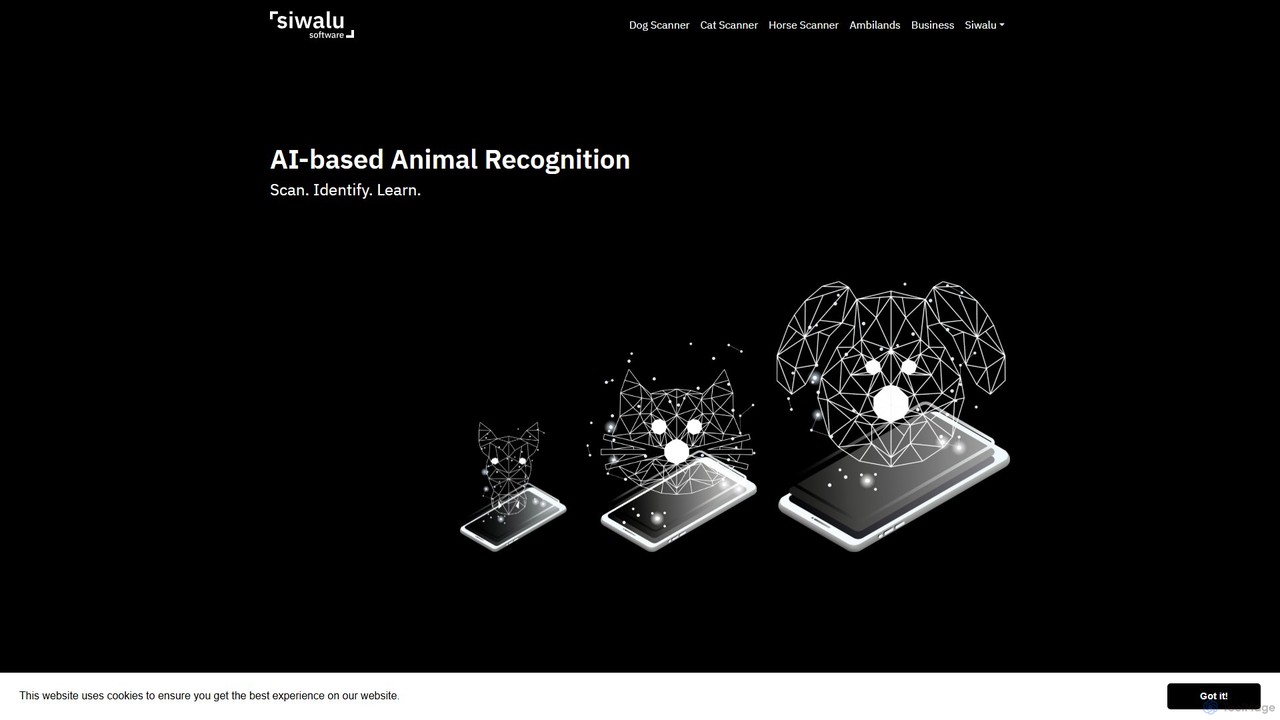
Siwalu Software develops AI-powered mobile applications like Dog Scanner, Cat Scanner, and Horse Scanner to identify animal breeds from photos or videos. Get instant, reliable breed analysis for purebreds and mixed breeds, complete with detailed information on their characteristics and traits. It's like Shazam for animals, designed for pet owners and animal enthusiasts to better understand their companions and the world's biodiversity.

Biology
Visits 21.7KFavorites 121Likes 112

About Image Recognition

Image Recognition tools are AI-powered solutions that analyze and interpret visual content within images. These tools leverage advanced machine learning algorithms, particularly deep learning, to automatically identify and classify objects, people, places, text, and actions. They transform how businesses and individuals process and interact with visual data, offering capabilities far beyond traditional photo and video editing by providing intelligent understanding of image content.

Core Features

  • Object Detection: Accurately identifies and locates specific objects within an image, often with bounding boxes.
  • Facial Recognition: Identifies or verifies individuals by analyzing unique facial features in digital images or video frames.
  • Scene Understanding: Analyzes the overall context, environment, and activities depicted in an image to provide a holistic interpretation.
  • Optical Character Recognition (OCR): Extracts and converts text from images into machine-readable format for further processing.
  • Image Tagging & Categorization: Automatically assigns relevant keywords, labels, or categories to images for efficient organization and search.

Applicable Scenarios

Image Recognition tools are vital for automating visual data processing across various sectors. They are used in security for surveillance and anomaly detection, in retail for product identification and inventory management, and in media for content moderation and intelligent asset management.

How to Choose

When selecting an Image Recognition tool, consider its accuracy and performance for your specific tasks, the range of objects or features it can reliably recognize, and its integration capabilities with your existing systems. Evaluate scalability, processing speed, and the pricing model to ensure it meets both technical and budgetary requirements.

Image Recognition use cases

1

Automated Product Tagging for E-commerce

E-commerce managers and online retailers can utilize image recognition to automatically tag product images with relevant attributes like color, material, and style. This automation significantly improves product discoverability on websites, enhances search functionality, and reduces the extensive manual effort traditionally required for categorizing large product catalogs.

2

Security Surveillance & Anomaly Detection

Security personnel and facility managers deploy image recognition tools to monitor live camera feeds or recorded footage. These tools can automatically detect unauthorized access, identify suspicious objects left behind, or flag unusual activities, enabling faster response times and significantly enhancing overall security measures in public or private spaces.

3

Content Moderation for User-Generated Content

Social media platforms and online communities leverage image recognition to automatically identify and flag inappropriate, violent, or sensitive content uploaded by users. This helps maintain a safe and compliant online environment, reducing the burden on human moderators and ensuring adherence to platform guidelines and legal requirements.

4

Medical Image Analysis for Diagnosis Support

Radiologists and medical researchers use image recognition to assist in analyzing complex medical images such as X-rays, MRIs, and CT scans. The tools can help identify subtle anomalies, potential tumors, or specific disease patterns, providing valuable support for faster and potentially more accurate preliminary diagnoses and research.

5

Agricultural Crop Monitoring & Disease Detection

Farmers and agronomists employ image recognition with drone or satellite imagery to monitor crop health across vast fields. These tools can detect early signs of pest infestations, nutrient deficiencies, or plant diseases, allowing for targeted interventions, optimized resource allocation, and ultimately, improved crop yields and reduced losses.

6

Brand Logo Detection in Marketing Analytics

Marketing analysts and brand managers utilize image recognition to scan vast amounts of visual content across social media, news outlets, and other platforms. By automatically identifying instances of brand logo appearances, they gain crucial insights into brand visibility, campaign effectiveness, and competitor presence, informing strategic marketing decisions.

Image Recognition FAQ

What are Image Recognition tools?

Image Recognition tools are AI-powered software solutions designed to analyze and interpret visual information within digital images. They automatically identify and classify various elements such as objects, faces, scenes, and text. These tools are crucial for automating tasks that require understanding visual content, extending the capabilities of traditional photo and video processing by adding intelligent analysis.

How do Image Recognition tools work?

Image Recognition tools primarily work by employing deep learning models, particularly convolutional neural networks (CNNs). These networks are trained on vast datasets of labeled images to learn patterns and features associated with different visual elements. When a new image is input, the model processes its pixels, extracts features, and compares them to its learned knowledge to identify and classify objects or scenes.

What is the difference between Image Recognition and Object Detection?

Image Recognition is a broader field focused on identifying and classifying *what* is present in an image (e.g., "this is a cat"). Object Detection is a specific subset of image recognition that not only identifies objects but also *locates* them within the image, typically by drawing bounding boxes around each detected instance (e.g., "there is a cat at these coordinates").

What are the main challenges in Image Recognition?

Key challenges include variations in image quality (lighting, angle, resolution), occlusion (objects partially hidden), and the need for massive, diverse training datasets to ensure accuracy and reduce bias. Ethical concerns regarding privacy and potential misuse, especially with facial recognition, also present significant challenges that require careful consideration and regulation.

Who can benefit from using Image Recognition tools?

A wide range of users and industries can benefit. E-commerce businesses use them for product cataloging, security firms for surveillance, social media platforms for content moderation, healthcare for medical image analysis, and agriculture for crop monitoring. Marketing professionals also leverage them for brand monitoring and visual analytics, making them versatile across many sectors.