Give Me A Prompt
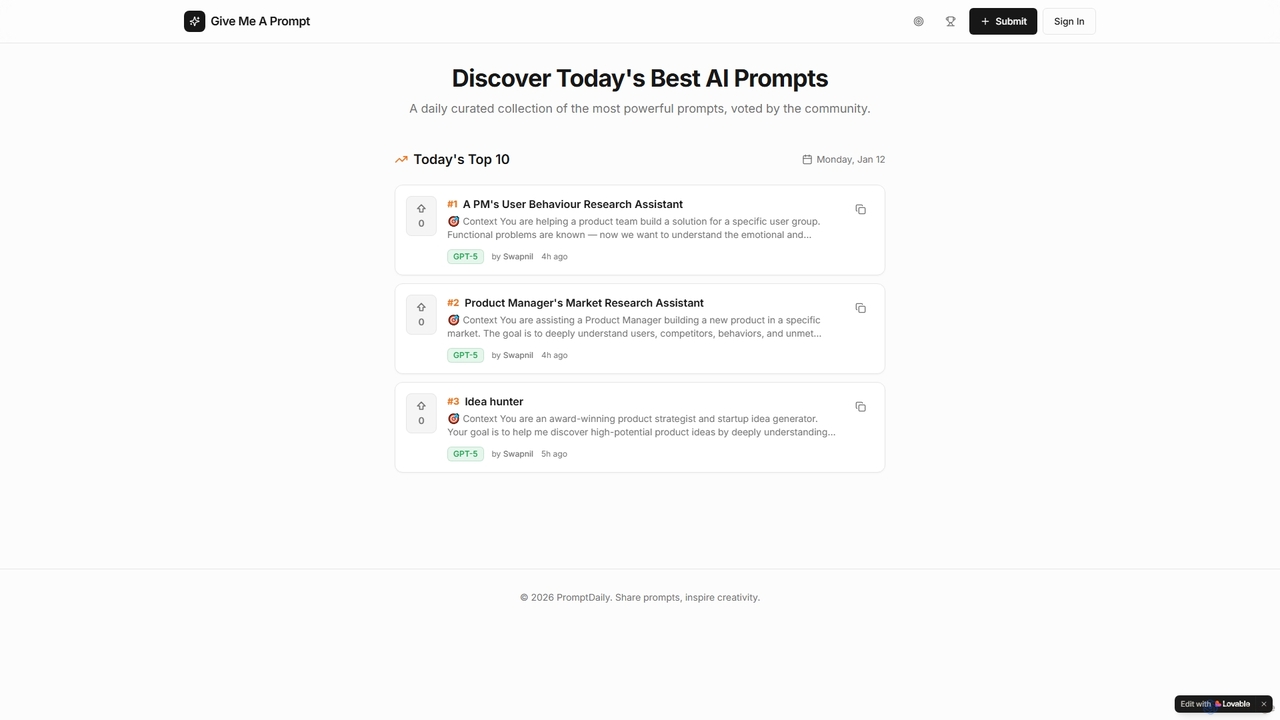
Give Me A Prompt is a platform offering a daily curated collection of powerful AI prompts, voted by …
Give Me A Prompt is a platform offering a daily curated collection of powerful AI prompts, voted by its community. It provides structured inspiration for tasks like product management, market research, and idea generation, helping users leverage AI more effectively for in-depth analysis and creative problem-solving.
Fast Research
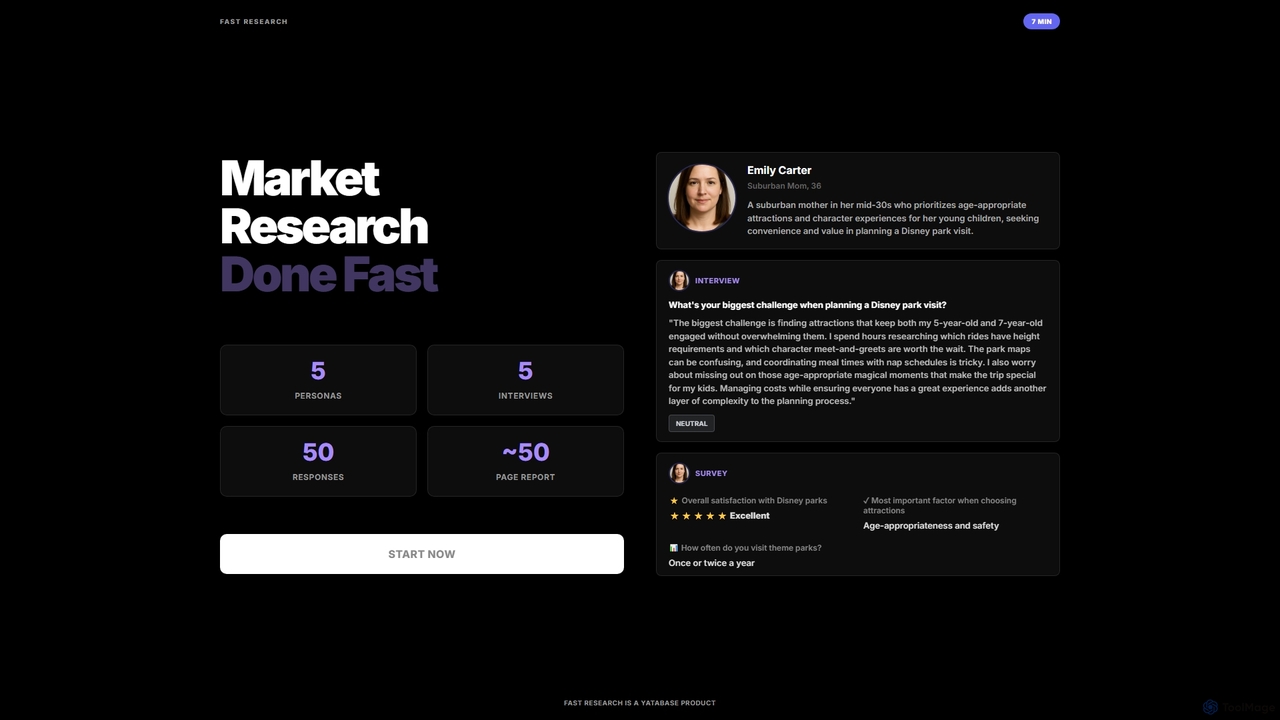
Fast Research is an AI-powered market research tool that rapidly generates synthetic data, including detailed personas, simulated interviews, …
Fast Research is an AI-powered market research tool that rapidly generates synthetic data, including detailed personas, simulated interviews, and survey responses. It delivers comprehensive reports, enabling businesses to gain quick, actionable insights for strategic decision-making without traditional data collection complexities.
Blitzllama
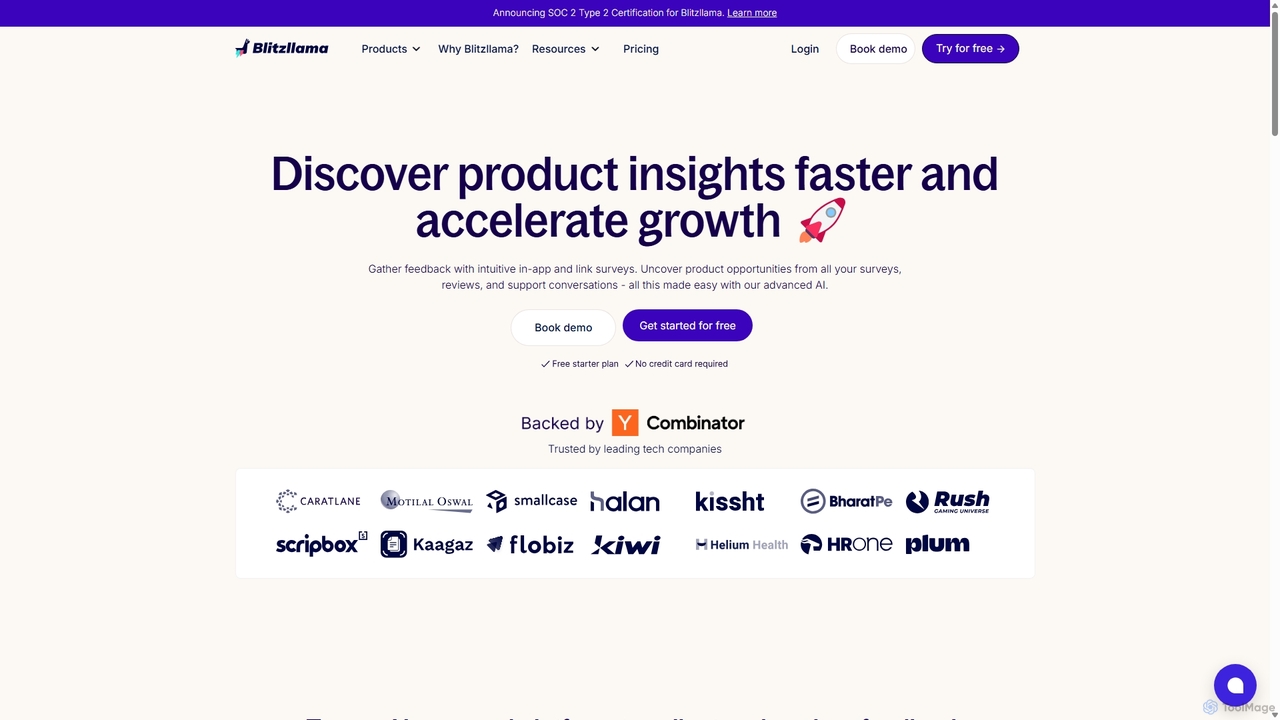
Blitzllama is an AI-powered product insights platform designed to help teams collect and analyze customer feedback. It unifies …
Blitzllama is an AI-powered product insights platform designed to help teams collect and analyze customer feedback. It unifies in-app surveys, app store reviews, and support conversations, using AI to automatically surface actionable insights, identify trends, and prioritize product improvements, accelerating data-driven growth.
About User Research
AI User Research tools are a category of AI-powered solutions designed to automate and enhance the process of understanding user behaviors, needs, and motivations. These tools leverage advanced natural language processing (NLP), machine learning, and computer vision to collect, analyze, and synthesize qualitative and quantitative user data at scale. They enable product teams, UX designers, and marketers to gain deeper, faster insights from interviews, surveys, usability tests, and feedback, ultimately leading to more user-centric product development and improved user experiences.
Core Features
- Automated Data Transcription: Converts audio/video interviews and calls into accurate text transcripts.
- Sentiment & Emotion Analysis: Identifies the emotional tone and sentiment expressed in user feedback and conversations.
- Thematic & Pattern Recognition: Automatically extracts key themes, topics, and recurring patterns from large datasets of qualitative data.
- Persona & Journey Mapping Generation: Synthesizes user data to help create data-driven user personas and map customer journeys.
- Usability Testing Analysis: Analyzes user interactions and feedback during usability tests to pinpoint friction points and areas for improvement.
Applicable Scenarios
AI User Research tools are invaluable for product managers seeking to validate new features, UX designers aiming to optimize user flows, and marketers looking to understand customer pain points. They are used in early-stage product discovery to identify unmet needs, during development for iterative feedback, and post-launch for continuous improvement and market analysis.
How to Choose
When selecting an AI User Research tool, consider the types of data you primarily work with (e.g., audio, text, video), the depth of analysis required (e.g., basic sentiment vs. complex thematic extraction), integration capabilities with existing product management or design tools, and the scalability to handle your research volume. Evaluate the accuracy of AI models, reporting features, and the level of human oversight needed for interpretation.

User ResearchUse Cases
Automated Qualitative Interview Analysis
UX researchers conducting numerous user interviews can use AI tools to automatically transcribe conversations, identify key themes, and extract sentiment from participant responses. This drastically reduces manual processing time, allowing researchers to focus on interpreting insights and informing design decisions rather than tedious data organization.
Synthesizing Customer Feedback from Multiple Channels
Product managers gather feedback from various sources like app store reviews, support tickets, and social media. AI User Research tools can consolidate this disparate data, perform sentiment analysis, and highlight recurring issues or feature requests, providing a holistic view of customer satisfaction and pain points for product roadmap prioritization.
Generating Data-Driven User Personas
Product designers and marketers can leverage AI to analyze demographic, behavioral, and attitudinal data from surveys and interviews. The tools can identify distinct user segments and automatically generate detailed user personas, complete with motivations, goals, and pain points, ensuring design and marketing efforts are targeted and effective.
Optimizing Usability Testing & Identifying Friction Points
During usability testing, AI tools can analyze user session recordings, eye-tracking data, and verbal feedback to automatically detect common points of confusion, errors, or frustration. This allows UX designers to quickly identify specific UI/UX elements that need improvement, leading to a more intuitive and efficient user experience.
Competitive Landscape Analysis through User Reviews
Business strategists and market researchers can use AI User Research tools to analyze user reviews and feedback for competitor products. By identifying what users love and hate about competing solutions, teams can uncover market gaps, differentiate their offerings, and refine their value proposition based on real user sentiment and needs.
Validating Product Hypotheses with Survey Data
Before investing heavily in new features, product teams often run surveys to validate hypotheses. AI tools can process hundreds or thousands of open-ended survey responses, automatically categorizing answers, identifying trends, and quantifying user interest in proposed features, providing data-backed confidence for product development decisions.