Context
Context is an AI-powered analytics platform designed to help product teams understand their users. It unifies qualitative feedback …
Context is an AI-powered analytics platform designed to help product teams understand their users. It unifies qualitative feedback from various sources like support tickets, surveys, and reviews, using AI to automatically surface actionable insights, track trends, and inform product decisions.
Survicate
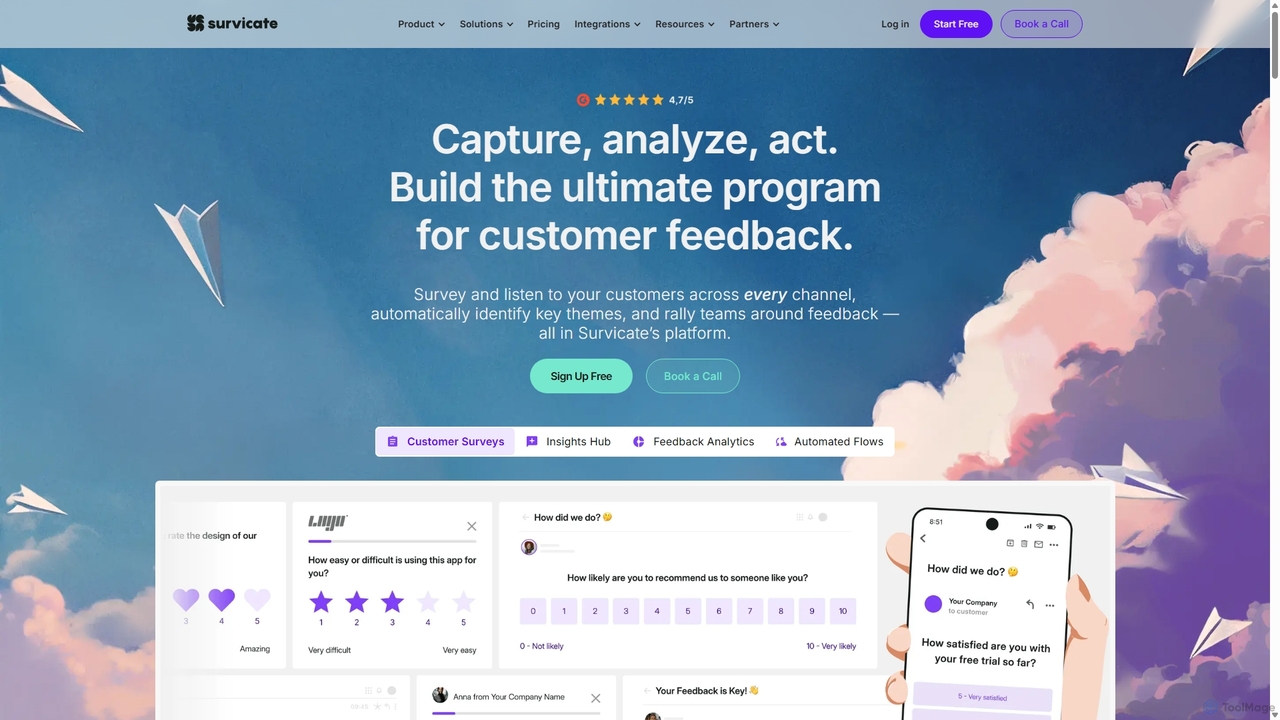
Survicate is an all-in-one customer feedback platform that helps businesses capture, analyze, and act on user insights. It …
Survicate is an all-in-one customer feedback platform that helps businesses capture, analyze, and act on user insights. It enables the creation of multi-channel surveys (web, email, in-app) and uses AI to automatically analyze text responses, identify key themes, and provide actionable intelligence. With extensive integrations and customizable dashboards, Survicate streamlines the entire feedback loop, from collection to action.
Kraftful
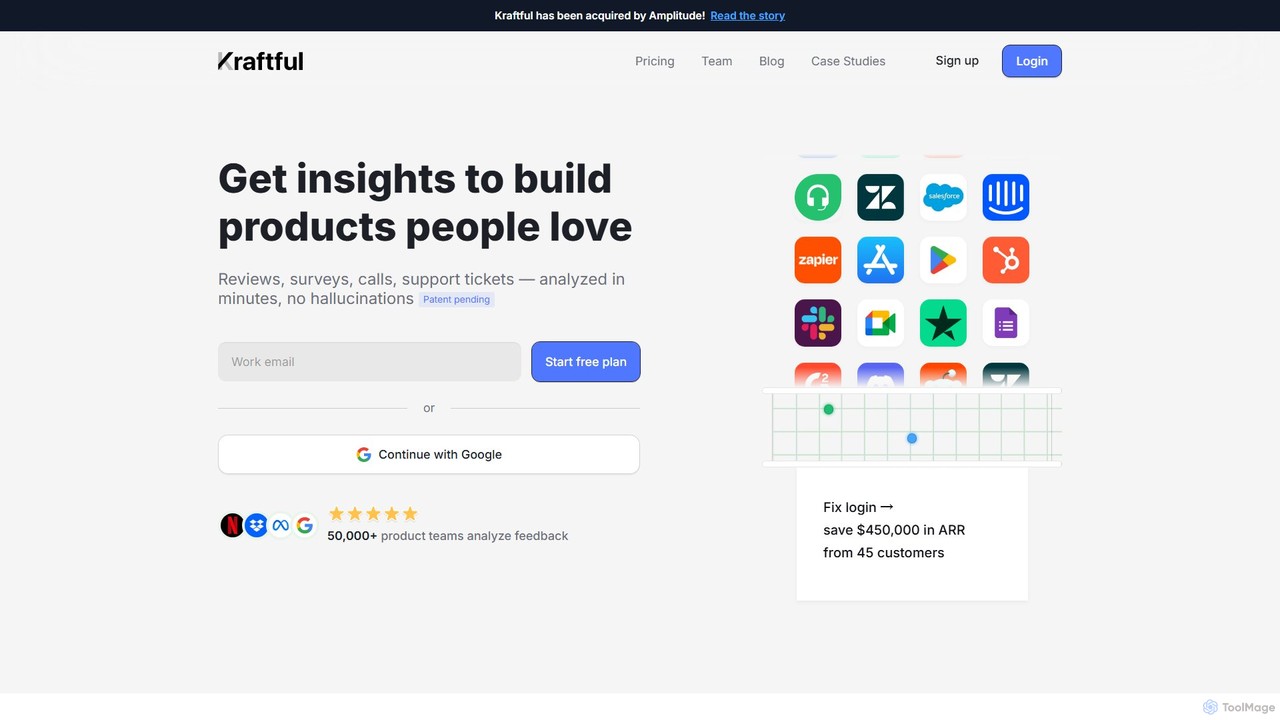
Kraftful is an AI-powered copilot for product teams, designed to analyze and synthesize user feedback from over 30 …
Kraftful is an AI-powered copilot for product teams, designed to analyze and synthesize user feedback from over 30 sources. It automatically sorts feedback into actionable insights, generates user stories for Jira and Linear, and helps teams build products customers love by deeply understanding their needs.
Collectif
Collectif is an AI-powered continuous discovery platform that automates the analysis of customer feedback. It integrates with tools …
Collectif is an AI-powered continuous discovery platform that automates the analysis of customer feedback. It integrates with tools like Zendesk, Hubspot, and Intercom to centralize support tickets, sales calls, and interviews, using GPT-4 to extract actionable insights, identify user needs, and streamline product development.
Feedback Sync
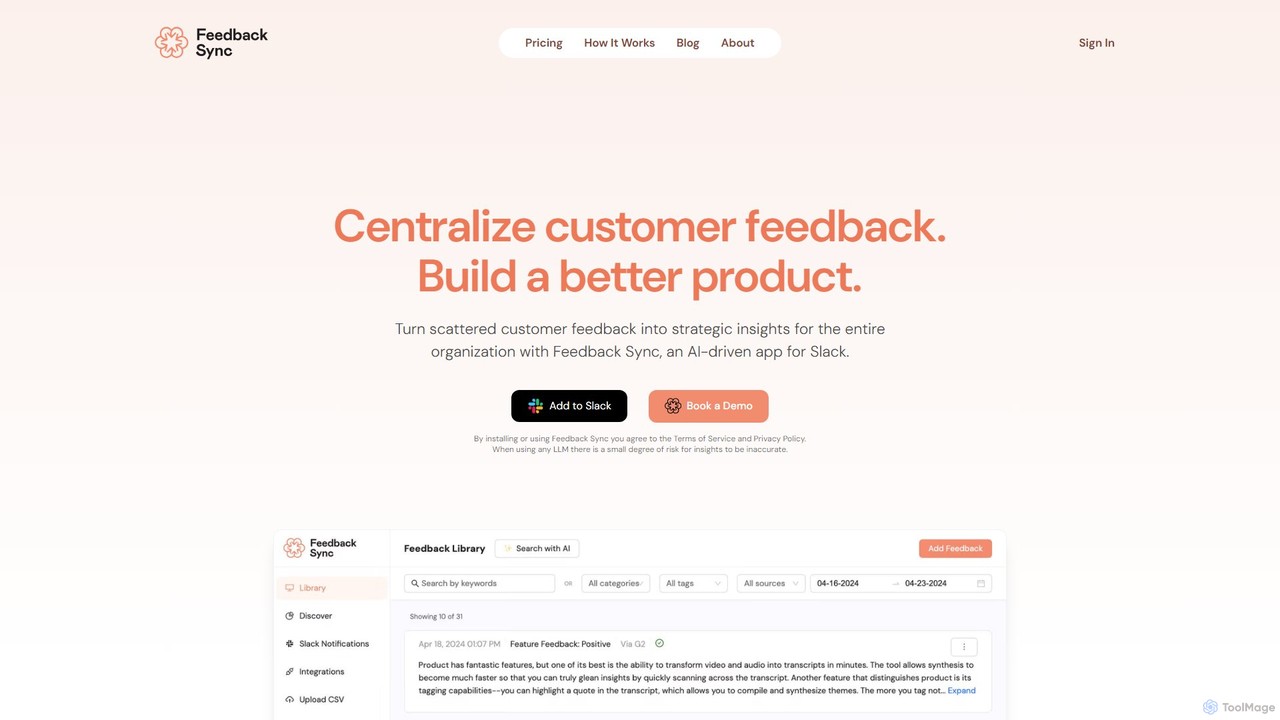
Feedback Sync is an AI-driven app for Slack that centralizes customer feedback from various sources like Zendesk and …
Feedback Sync is an AI-driven app for Slack that centralizes customer feedback from various sources like Zendesk and G2. It automatically organizes, summarizes, and prioritizes feedback, turning scattered data into strategic insights to help teams build better products faster.
Miro Insights
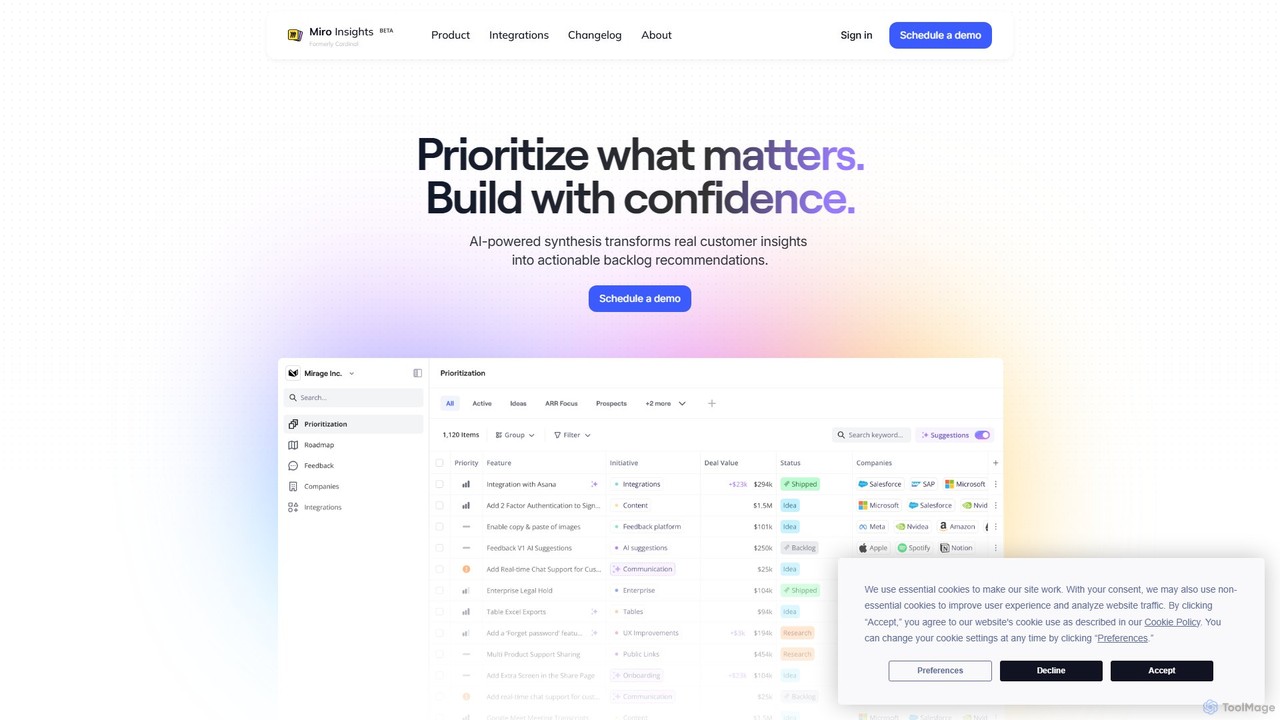
Miro Insights is an AI-powered product management platform that helps teams centralize customer feedback, analyze it for actionable …
Miro Insights is an AI-powered product management platform that helps teams centralize customer feedback, analyze it for actionable insights, and build data-driven roadmaps. It connects product decisions to revenue impact, aligning product, engineering, and go-to-market teams around a single source of truth.
Depth
Depth is an AI Product Manager that automates product analytics, user session analysis, and feedback processing. It delivers …
Depth is an AI Product Manager that automates product analytics, user session analysis, and feedback processing. It delivers actionable insights, UX improvement suggestions, and new feature ideas, helping teams build better products faster by eliminating manual data analysis.
Bagel AI
Bagel AI is an AI-native product intelligence platform that automatically consolidates customer feedback from all sources. It helps …
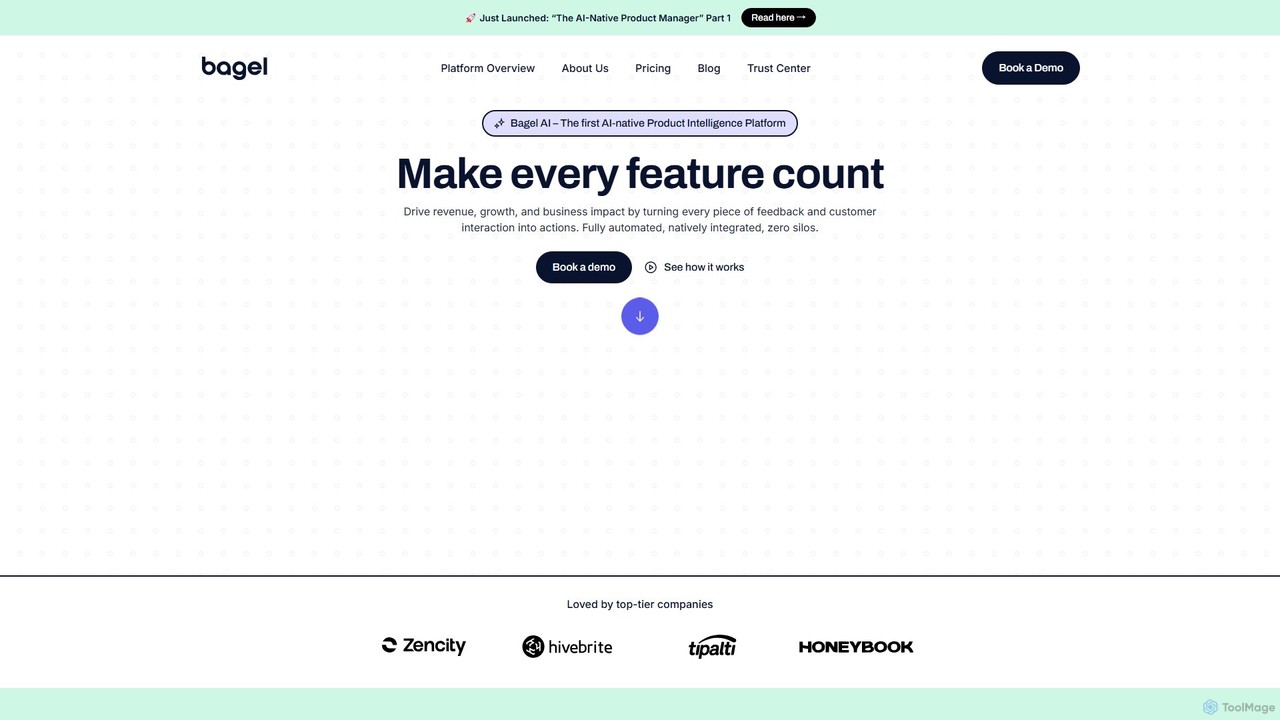
Bagel AI is an AI-native product intelligence platform that automatically consolidates customer feedback from all sources. It helps product teams identify high-impact features, align roadmaps with revenue goals, and bridge the gap between product, GTM teams, and customers, turning scattered insights into actionable growth strategies.
Assistra
Assistra is an AI-powered product management platform designed to streamline the entire product lifecycle. It helps teams turn …
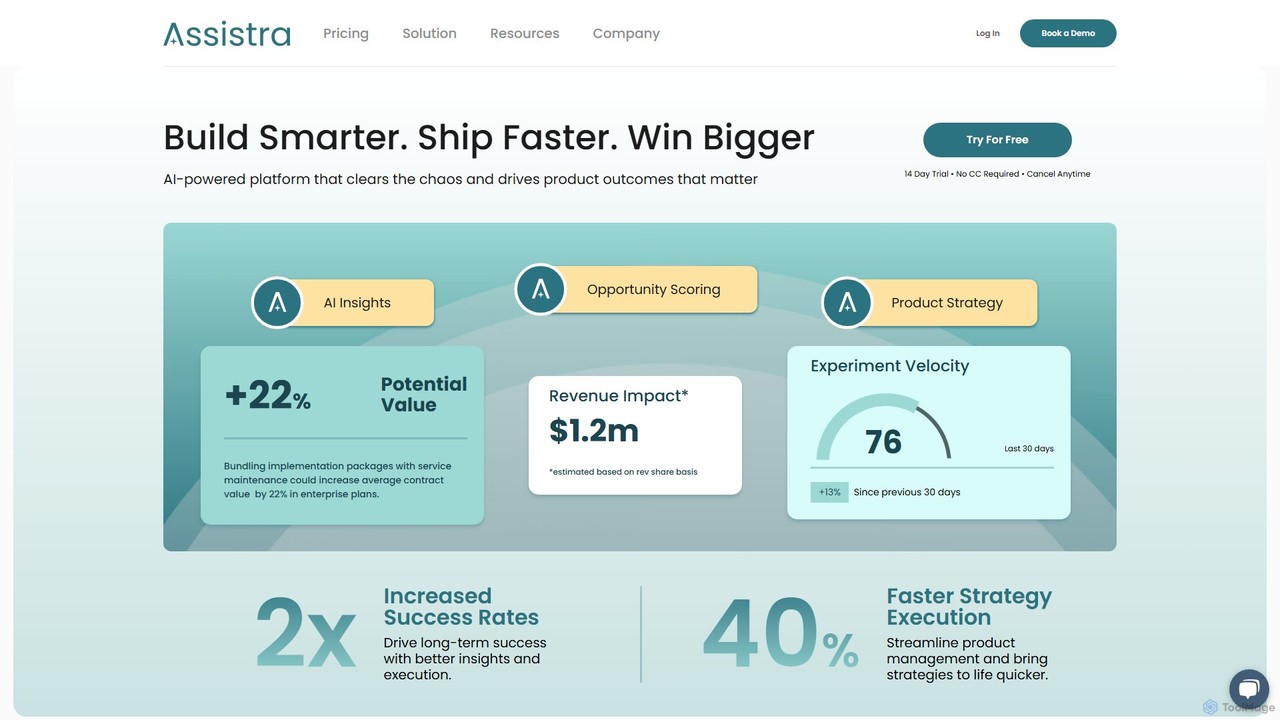
Assistra is an AI-powered product management platform designed to streamline the entire product lifecycle. It helps teams turn customer feedback into actionable insights, build data-driven roadmaps, and accelerate strategy execution, ultimately leading to more successful product outcomes.
Wondering
Wondering is an AI-driven experience research platform that empowers teams to conduct and analyze user interviews, surveys, and …
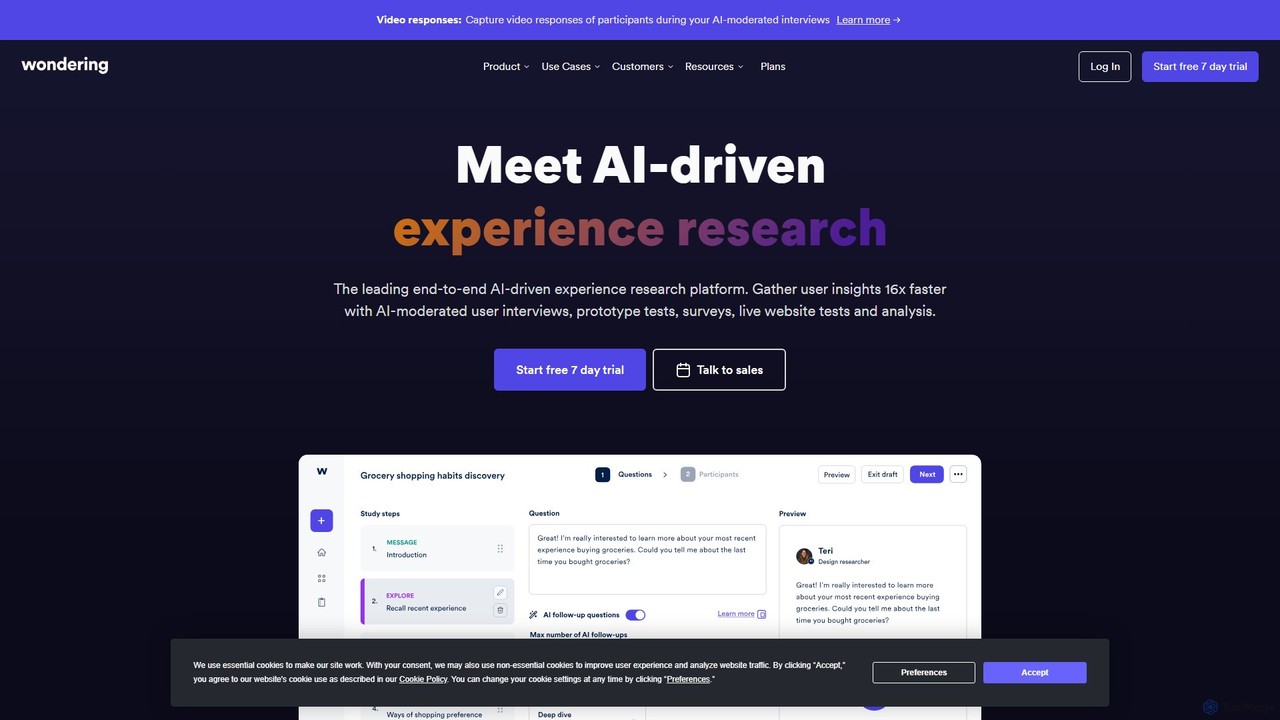
Wondering is an AI-driven experience research platform that empowers teams to conduct and analyze user interviews, surveys, and prototype tests at scale. It uses AI to moderate conversations in over 50 languages, transcribe responses, and generate actionable insights, making high-yield research accessible and efficient for any team.
lightster
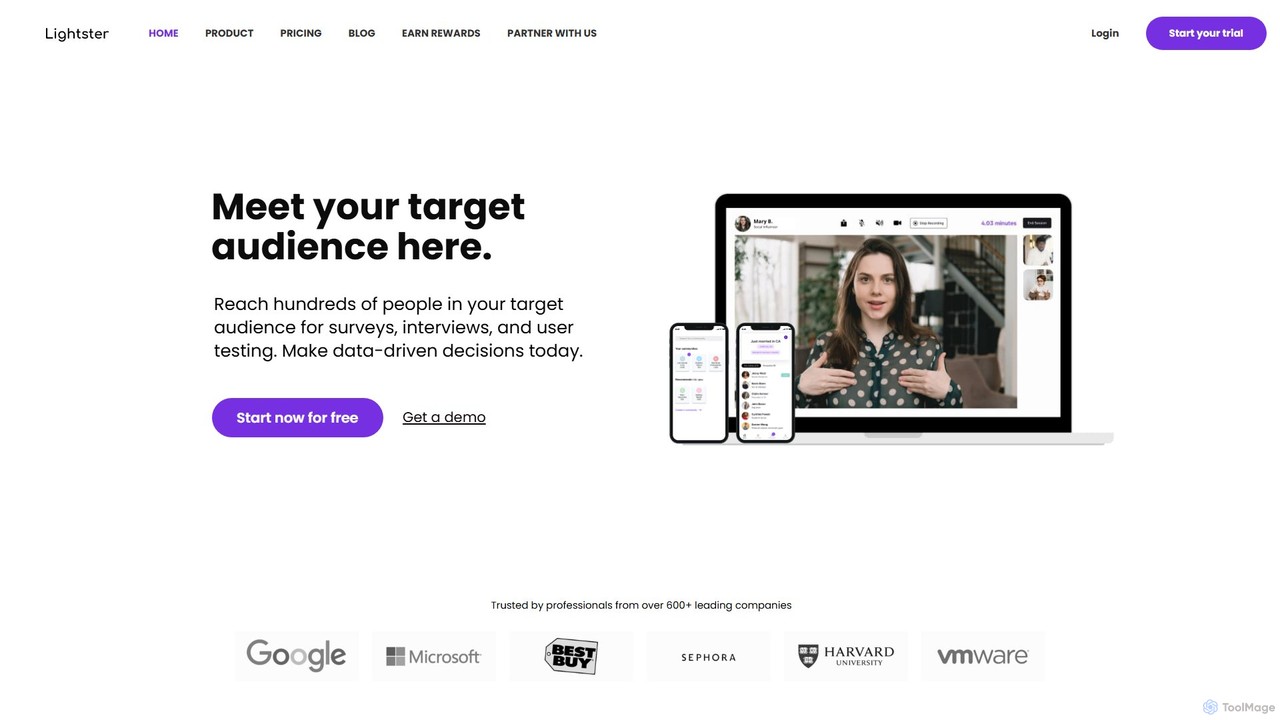
An AI-powered user research platform that connects businesses with their target audience for surveys, interviews, and unmoderated testing. …
An AI-powered user research platform that connects businesses with their target audience for surveys, interviews, and unmoderated testing. Lightster helps extract key insights from user feedback, enabling data-driven decisions for product teams, founders, and researchers to achieve product-market fit faster.
getpivotly
getpivotly is an AI-powered platform designed to guide startups and businesses through the complex process of achieving Product-Market …
getpivotly is an AI-powered platform designed to guide startups and businesses through the complex process of achieving Product-Market Fit (PMF). It acts as a personalized helper, providing step-by-step actions, analyzing user feedback, and offering data-driven insights to help you build products that customers truly need and love.
Cycle
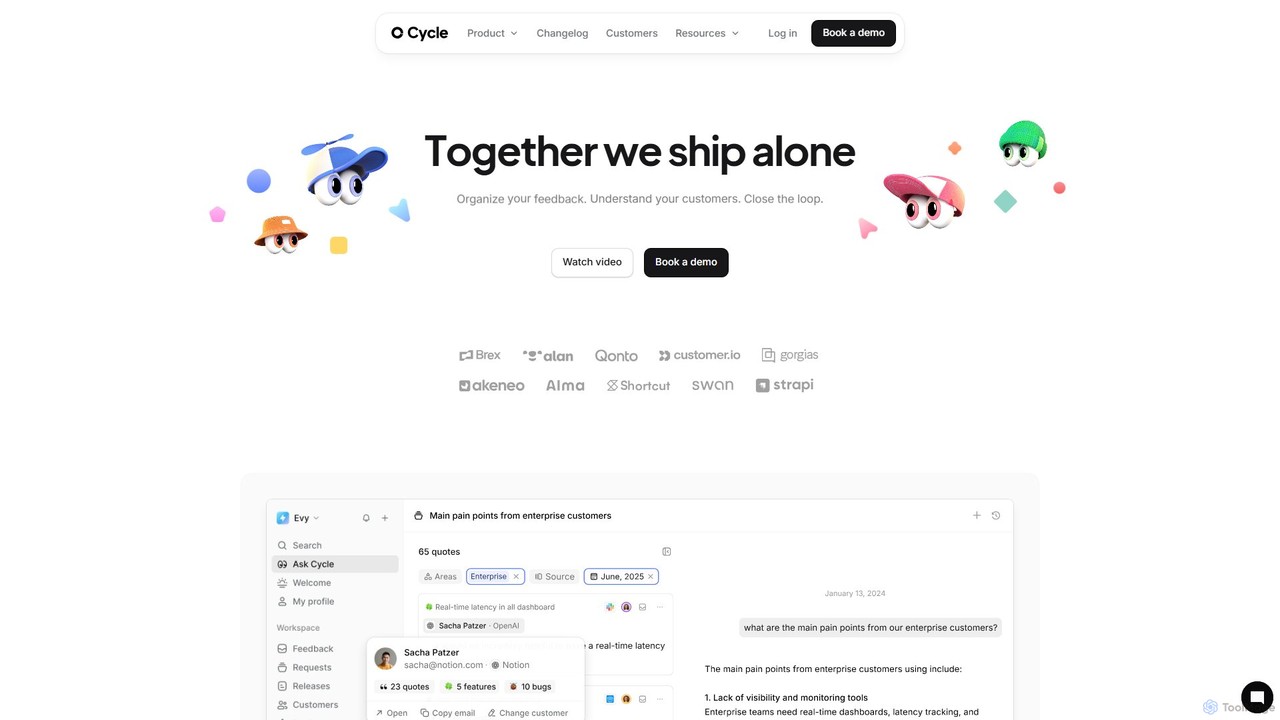
Cycle is an AI-powered feedback hub designed for product teams. It automates the collection, organization, and analysis of …
Cycle is an AI-powered feedback hub designed for product teams. It automates the collection, organization, and analysis of customer feedback from various sources like Slack, Zendesk, and Intercom. With dedicated AI agents, Cycle helps teams understand customer needs, prioritize features, and close the feedback loop effectively, streamlining the entire product development lifecycle.
AB Tasty
AB Tasty is an AI-powered experience optimization platform that helps businesses increase conversions through A/B testing, personalization, and …
AB Tasty is an AI-powered experience optimization platform that helps businesses increase conversions through A/B testing, personalization, and feature management. It enables marketing, product, and tech teams to create seamless user experiences across web and server-side applications.
Canvas AI
Canvas AI is a free, AI-powered tool designed to help innovators, product managers, and startups create and refine …
Canvas AI is a free, AI-powered tool designed to help innovators, product managers, and startups create and refine business strategy canvases. It generates intelligent suggestions for frameworks like the Business Model Canvas and Value Proposition Canvas, helping users overcome creative blocks and build actionable plans.
About Product
AI Product tools are a class of intelligent applications designed to optimize and automate various stages of the product lifecycle. These tools leverage machine learning and natural language processing (NLP) to analyze user feedback, prioritize features, and generate documentation. They empower product teams to make data-driven decisions, accelerate development cycles, and build more user-centric products. By transforming qualitative data into actionable insights, these tools help bridge the gap between user needs and product strategy.
Core Features
- User Feedback Analysis: Automatically categorizes, summarizes, and extracts insights from user reviews, support tickets, and surveys using NLP.
- Roadmap Prioritization: Uses algorithms to score and rank features based on factors like user impact, business value, and development effort.
- Automated Documentation: Generates product requirements documents (PRDs), user stories, and technical specifications from high-level inputs.
- Competitive Intelligence: Monitors competitor products and market trends to identify opportunities and threats.
- A/B Testing Optimization: Employs AI to suggest test variations and analyze results for faster product optimization.
Applicable Scenarios
These tools are widely used by product managers, UX researchers, and engineering leads in technology companies, from startups to large enterprises. For instance, a SaaS company can use an AI tool to instantly analyze thousands of customer support tickets to identify the most critical bugs. A startup founder can use it to generate a detailed PRD from a simple product idea, saving valuable time.
Selection Criteria
When choosing an AI Product tool, consider its integration capabilities with your existing stack (e.g., Jira, Slack, Figma). Evaluate the depth of its data analysis features—whether it provides simple sentiment analysis or more advanced predictive modeling. Also, assess its focus area, as some tools specialize in product discovery while others excel at post-launch optimization and growth.
ProductUse Cases
Automating User Feedback Synthesis
A product manager at a growing SaaS company is overwhelmed by the volume of user feedback from Intercom, App Store reviews, and NPS surveys. By integrating an AI Product tool, they can automatically process thousands of comments each week. The tool uses NLP to tag, categorize, and summarize feedback, identifying top feature requests, critical bug reports, and shifts in user sentiment. This process reduces manual analysis time from days to minutes, providing the product team with a real-time, data-backed understanding of user needs to inform the next development sprint.
Generating Data-Driven Product Requirements
A startup founder needs to create a detailed Product Requirements Document (PRD) for a new mobile app feature but lacks a dedicated product manager. Using a generative AI Product tool, they input a high-level concept, target audience, and key goals. The AI generates a comprehensive PRD draft, including detailed user stories, acceptance criteria, non-functional requirements, and potential user flows. This draft serves as a strong starting point, saving over 80% of the time typically required for initial documentation and ensuring all key aspects are considered before development begins.
Prioritizing the Development Backlog
An engineering lead for a B2B platform connects their Jira backlog to an AI Product tool. The tool analyzes each ticket, enriching it with data from customer support conversations, sales team feedback, and user behavior analytics. It then applies a customizable scoring model (like RICE or ICE) to objectively rank features based on strategic alignment, user impact, and estimated effort. This provides a clear, defensible priority list for sprint planning meetings, reducing debates and ensuring the team consistently works on the most valuable tasks.
Conducting Competitor Feature Analysis
A product marketing manager needs to stay ahead of the competition. They use an AI Product tool to monitor five key competitors. The tool automatically scans competitor websites, press releases, and user forums for mentions of new features or product changes. It generates a weekly competitive intelligence report that highlights new feature launches, shifts in pricing strategy, and emerging customer complaints about rival products. This automated monitoring allows the manager to proactively adjust their own product roadmap and marketing messaging without spending hours on manual research.
Creating Data-Driven User Personas
A UX researcher is tasked with refreshing the company's user personas. Instead of relying solely on qualitative interviews, they upload transcripts from 50 user interviews and data from 1,000 surveys into an AI Product tool. The AI analyzes the unstructured text and quantitative data, identifying distinct behavioral patterns and demographic clusters. It then generates five detailed, data-backed personas, complete with motivations, pain points, key quotes, and goals. This approach provides a more objective and comprehensive foundation for design and product decisions, ensuring the team builds for real, validated user segments.
Optimizing User Onboarding Flows
A growth product manager for a mobile game notices a significant user drop-off during the tutorial phase. They use an AI-powered product analytics tool to analyze user session recordings and interaction data. The AI identifies specific points of friction, such as a confusing UI element or a difficult level, that correlate with high churn rates. Based on these insights, the tool suggests A/B testing several alternative tutorial flows. This data-driven approach helps the manager quickly pinpoint and resolve onboarding issues, leading to a measurable increase in user retention and engagement.