
Project Management Best in category 1 results Ai Projects AI Tool

Popular AI tools in the Ai Projects field of Project Management include RoryPlans, etc., helping you quickly improve efficiency.

RoryPlans

RoryPlans

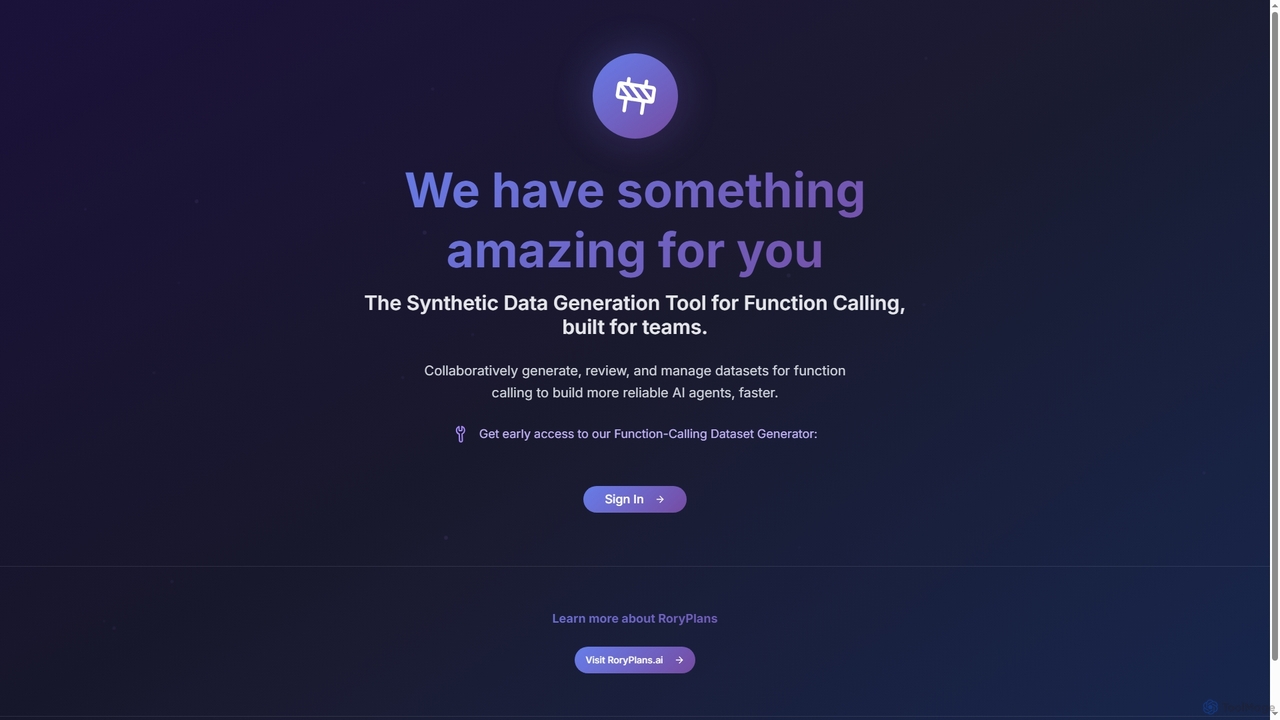
RoryPlans is a specialized AI tool designed for teams to collaboratively generate, review, and manage synthetic datasets for …

2.8K

About Ai Projects

Ai Projects are specialized AI-powered tools designed to streamline and enhance the entire lifecycle of artificial intelligence initiatives, from conception to deployment and maintenance. These platforms leverage advanced machine learning and automation to facilitate efficient resource allocation, risk management, and performance tracking unique to AI development. They empower teams to manage complex data pipelines, model training, and deployment processes, ensuring successful project delivery within the broader context of project management.

Core Features

  • AI Model Versioning: Track and manage different iterations of AI models, datasets, and code, ensuring reproducibility and easy rollback.
  • Experiment Tracking: Log and compare results from various model training runs, hyperparameter tuning, and data preprocessing steps.
  • Resource Orchestration: Automate the provisioning and scaling of computational resources (GPUs, CPUs) for model training and inference.
  • Data Pipeline Management: Design, monitor, and automate the flow of data from ingestion to transformation and feature engineering for AI models.
  • Deployment & Monitoring: Facilitate the seamless deployment of trained models into production environments and continuously monitor their performance and drift.

Use Cases

Organizations across various sectors utilize Ai Projects tools to navigate the unique challenges of AI development. Data science teams leverage them to manage complex machine learning workflows, from data preparation to model deployment. Research institutions use these platforms to track experiments and ensure reproducibility, while enterprises adopt them to standardize AI development processes and accelerate time-to-market for AI-driven products and services.

How to Choose

Selecting an Ai Projects tool requires evaluating its compatibility with existing MLOps infrastructure, scalability for growing data and model complexity, and integration capabilities with popular AI frameworks and cloud providers. Consider the level of automation offered for data management, experiment tracking, and deployment, as well as the collaboration features for distributed teams and the overall cost-effectiveness for your specific project needs.

Ai ProjectsUse Cases

1

Optimizing Software Development Sprints

A software development team lead uses an Ai Projects tool to plan upcoming sprints. The AI analyzes past sprint performance, team velocity, and task dependencies to suggest an optimized backlog, allocate tasks to developers based on skill and availability, and predict potential delays, ensuring more realistic and achievable sprint goals.

2

Streamlining Machine Learning Experimentation

Data scientists often run numerous experiments to find the best model and hyperparameters. Ai Projects tools allow them to automatically log every experiment, including code, data, configurations, and metrics. This enables easy comparison of results, identification of optimal models, and ensures reproducibility, significantly reducing manual tracking efforts and accelerating the research phase of AI development.

3

Predictive Risk Management in Construction

A construction project manager employs an Ai Projects platform to monitor a large-scale building project. The AI continuously analyzes weather forecasts, supply chain data, labor availability, and regulatory changes to predict potential delays or cost overruns, providing early warnings and recommending alternative strategies to keep the project on track.

4

Managing AI Model Lifecycle from Development to Production

For enterprises developing AI-powered applications, managing models from initial development to production deployment is critical. Ai Projects platforms provide a unified environment to version control models, automate testing, and orchestrate deployment pipelines. This ensures that models are consistently updated, monitored for performance degradation, and seamlessly integrated into live systems, minimizing downtime and operational risks.

5

Automated Marketing Campaign Planning

A marketing agency utilizes Ai Projects tools to manage multiple client campaigns. The AI helps in forecasting campaign performance based on historical data, optimizing budget allocation across different channels, and automating the creation of project timelines for content creation, ad deployment, and performance tracking, streamlining the entire marketing workflow.

6

Collaborative Development of Complex AI Solutions

Large AI projects often involve multiple teams—data engineers, data scientists, and MLOps engineers—working concurrently. Ai Projects tools offer collaborative features like shared workspaces, access control, and commenting systems. This facilitates seamless communication, code sharing, and joint model development, ensuring all stakeholders are aligned and contributing effectively towards a common goal, improving team productivity.

7

Intelligent Resource Allocation for Consulting Firms

A consulting firm uses an Ai Projects solution to assign consultants to new client engagements. The AI evaluates consultant skills, current workload, project requirements, and client preferences to recommend the best-fit team, ensuring optimal utilization of talent and maximizing project success rates while preventing burnout.

8

Automating Data Versioning and Feature Engineering

The quality and consistency of data are paramount in AI projects. Ai Projects tools help data engineers manage different versions of datasets and automate feature engineering pipelines. This ensures that models are always trained on the correct and most up-to-date data, preventing data drift issues and maintaining model accuracy over time, which is crucial for reliable AI systems.

9

Enhancing R&D Project Portfolio Management

An R&D department leverages Ai Projects tools to manage its portfolio of innovation projects. The AI assesses the potential ROI, technical feasibility, and market alignment of various research initiatives, helping leadership prioritize projects, allocate funding efficiently, and identify synergistic opportunities across different research streams.

10

Optimizing Resource Utilization for Model Training

Training large AI models can be computationally intensive and costly. Ai Projects platforms provide capabilities for efficient resource orchestration, allowing teams to dynamically provision and scale GPU/CPU resources based on demand. This optimizes infrastructure costs by ensuring resources are only used when needed and automatically released afterward, making AI development more cost-effective.

11

Streamlining Stakeholder Communication

A large enterprise project manager uses an Ai Projects tool to analyze communication across various channels (emails, meeting notes, chat logs). The AI identifies key discussion points, potential conflicts, and sentiment trends among stakeholders, summarizing critical information and flagging urgent issues, thereby improving transparency and proactive engagement.

12

Ensuring Reproducibility and Auditability in AI Research

In academic research or regulated industries, the ability to reproduce AI experiment results and audit the entire development process is essential. Ai Projects tools automatically capture all artifacts—code, data, environment, and metrics—associated with each experiment. This comprehensive logging ensures full traceability, making it easy to reproduce past results and comply with regulatory requirements or scientific standards.

Ai ProjectsFrequently Asked Questions