Scopey
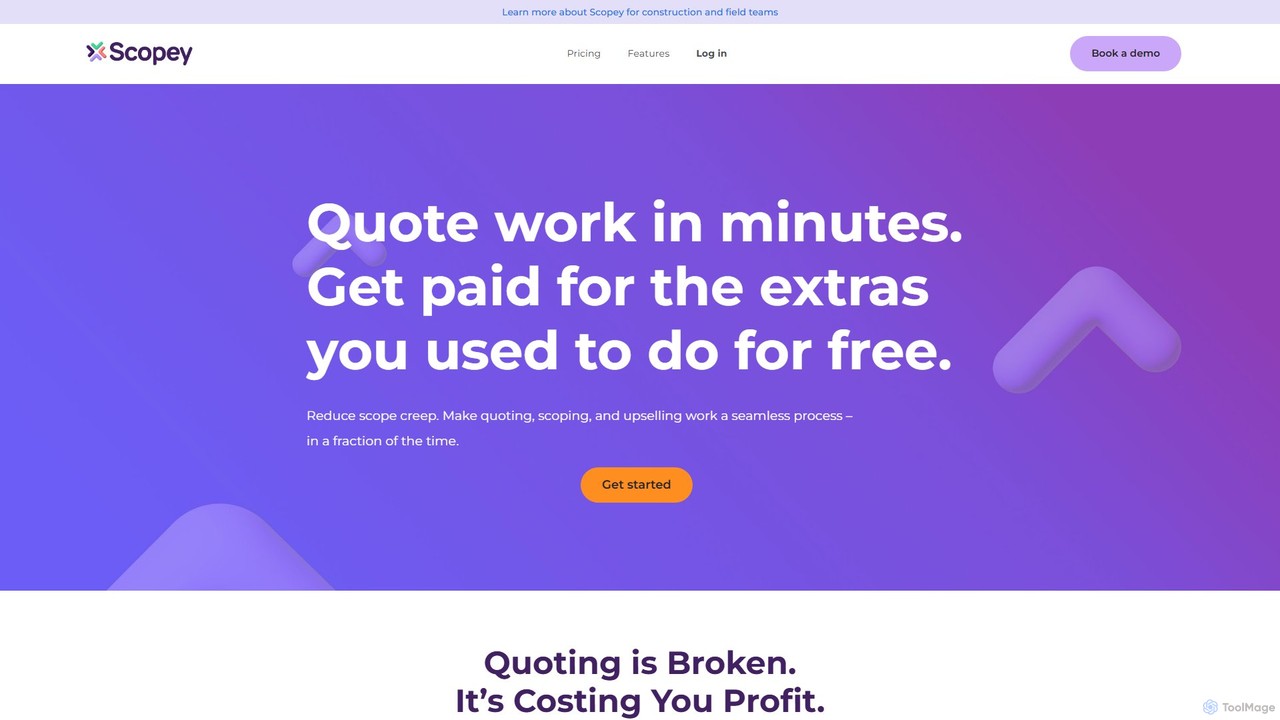
Scopey is an AI-powered platform designed to streamline quoting, scope management, and project change tracking. It helps businesses …
Scopey is an AI-powered platform designed to streamline quoting, scope management, and project change tracking. It helps businesses in construction, digital agencies, and field services prevent scope creep, increase revenue through intelligent upselling, and save significant administrative time by creating dynamic, collaborative quotes and contracts.
About Scope Management
Scope Management AI tools are specialized platforms designed to define, control, and verify project scope using advanced artificial intelligence. Leveraging AI, these tools automate the analysis of requirements, predict potential scope creep, and intelligently manage changes throughout the project lifecycle. They help project teams maintain focus, prevent costly deviations, and ensure deliverables align precisely with stakeholder expectations, ultimately enhancing project success within the broader context of project management.
Core Features
- Automated Requirement Analysis: AI processes vast amounts of data from documents, communications, and feedback to identify, categorize, and prioritize project requirements.
- Predictive Scope Creep Detection: Machine learning algorithms analyze project trends and communication patterns to proactively identify early warning signs of scope deviations.
- Intelligent Change Request Management: AI assesses the impact of proposed scope changes on budget, timeline, and resources, providing data-driven recommendations for decision-making.
- Dynamic Scope Baseline Tracking: Tools continuously monitor and update the project scope baseline, reflecting approved changes and ensuring real-time visibility into the current project boundaries.
- Stakeholder Alignment & Communication: AI assists in generating clear, concise scope documentation and communication summaries tailored for various stakeholder groups, fostering better understanding and agreement.
Applicable Scenarios
These tools are invaluable for organizations managing complex, dynamic projects where scope definition and control are critical. They are widely used in large-scale software development, product innovation, infrastructure projects, and R&D initiatives. Project managers, business analysts, and product owners leverage these AI capabilities to navigate evolving requirements and mitigate risks effectively.
How to Choose
When selecting an AI Scope Management tool, prioritize its core AI capabilities, such as predictive analytics for scope creep and intelligent impact assessment for change requests. Evaluate its integration with existing project management and communication platforms, scalability to accommodate project growth, and customization options for specific methodologies (e.g., Agile, Waterfall). Consider the clarity of its reporting features and the intuitiveness of its user interface for effective adoption.

Scope ManagementUse Cases
Automating Requirement Elicitation and Prioritization
Product managers and business analysts utilize AI Scope Management tools to streamline the initial phase of requirement gathering. The AI analyzes diverse sources like user stories, market research, and stakeholder interviews, automatically extracting, categorizing, and prioritizing requirements. This reduces manual effort by up to 70%, ensures comprehensive coverage, and helps define a clear, actionable project scope from the outset, preventing ambiguities.
Proactive Identification of Potential Scope Creep
Project managers in large-scale IT projects deploy AI tools to continuously monitor project communications, task progress, and change logs. The AI employs machine learning to detect subtle patterns and keywords indicating potential scope creep, such as informal requests or unapproved feature additions. It generates early warnings, allowing managers to address deviations proactively, saving significant time and budget later in the project lifecycle.
Streamlining Change Request Impact Analysis
Development teams working on complex software projects use AI Scope Management tools to evaluate proposed changes. When a change request is submitted, the AI instantly analyzes its potential impact on the project's budget, timeline, resource allocation, and existing features. It provides a data-driven assessment, enabling the change control board to make informed decisions rapidly, reducing the approval cycle time by 50%.
Enhancing Stakeholder Alignment on Scope Updates
Project leads in cross-functional teams leverage AI to improve communication regarding scope changes. The AI automatically summarizes complex scope documentation and generates tailored updates for different stakeholder groups (e.g., executives, technical teams, marketing). This ensures all parties receive relevant, concise information, fostering better understanding, reducing misinterpretations, and maintaining alignment on the current project scope.
Dynamic Management of Agile Project Scope
Agile teams in product development environments utilize AI Scope Management tools to adapt to evolving requirements. As sprints progress and feedback is incorporated, the AI helps visualize how the scope baseline is incrementally refined and updated. It tracks feature additions, modifications, and removals, providing a real-time, transparent view of the product backlog and ensuring the team remains focused on delivering value.
Optimizing Resource Allocation for Scope Adjustments
Operations managers overseeing multiple projects use AI to re-evaluate resource needs when significant scope adjustments occur. The AI analyzes the revised scope, current resource availability, skill sets, and project dependencies. It then recommends optimal resource reallocations, identifying potential bottlenecks or underutilized personnel, ensuring that the right talent is assigned to meet the updated project objectives efficiently.