InspectMind
InspectMind is an AI-powered application designed for the construction, engineering, and real estate industries. It streamlines field reporting …
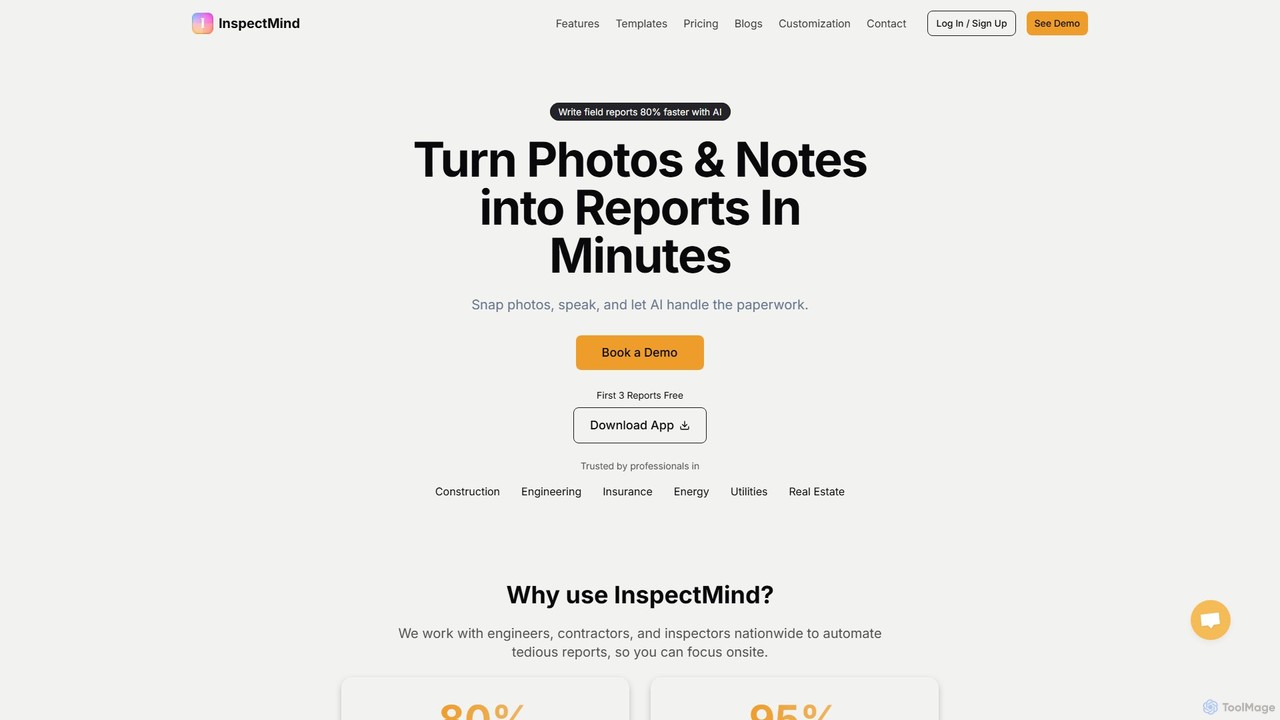
InspectMind is an AI-powered application designed for the construction, engineering, and real estate industries. It streamlines field reporting by converting photos and voice notes into detailed, professional reports in minutes. This tool reduces report writing time by up to 80%, improves accuracy, and supports real-time team collaboration, available on iOS, Android, and Web.
About Inspection
AI-powered Inspection tools are specialized solutions designed to automate and enhance the process of evaluating properties within the real estate sector. Leveraging computer vision, machine learning, and sensor data, these tools analyze visual and environmental information to identify defects, assess conditions, and generate comprehensive reports. They provide objective, data-driven insights, significantly improving the accuracy, safety, and efficiency of property assessments for various stakeholders.
Core Features
- Automated Defect Detection: AI algorithms analyze images and sensor data to automatically identify structural damage, wear and tear, moisture issues, and other anomalies.
- 3D Property Modeling: Generate detailed 3D models or digital twins of properties from drone or camera footage, offering a comprehensive view for analysis.
- Predictive Maintenance Analysis: Utilize historical data and current conditions to predict potential future issues, enabling proactive maintenance planning.
- Automated Report Generation: Compile findings, images, and data into standardized, customizable inspection reports, saving significant time.
Use Cases
These tools are invaluable for real estate professionals, insurers, and property managers. They are used for pre-purchase property assessments, post-disaster damage evaluations, routine maintenance checks, and ensuring compliance with building codes. AI inspection streamlines processes that traditionally require extensive manual labor and subjective judgment.
How to Choose
When selecting an AI Inspection tool, consider the accuracy and reliability of its AI models, its integration capabilities with existing real estate platforms, the types of data inputs it supports (e.g., drone, thermal, visual), and its reporting customization options. Evaluate its scalability for your portfolio size and the level of technical support provided.

InspectionUse Cases
Automated Roof Damage Assessment for Insurers
Property insurance adjusters can deploy drones equipped with AI inspection tools to rapidly assess roof damage after severe weather events. The AI analyzes high-resolution imagery to detect hail damage, missing shingles, or structural issues, generating a detailed report with precise measurements and damage severity. This significantly reduces manual inspection time, improves claim processing speed, and ensures consistent damage evaluation across multiple properties.
Pre-Purchase Property Condition Reports
Prospective home buyers and real estate agents utilize AI inspection tools to obtain objective and comprehensive property condition reports. By scanning interiors and exteriors with specialized cameras, the AI can detect hidden issues like moisture intrusion, electrical faults, or insulation deficiencies that might be missed by human eyes. This provides buyers with critical information to make informed decisions and negotiate effectively, reducing risks associated with property acquisition.
Monitoring Construction Site Progress and Quality
Construction project managers leverage AI inspection for continuous monitoring of building sites. Drones capture daily progress photos, which AI analyzes to compare against blueprints, identify deviations, and track material usage. This ensures quality control, detects potential construction errors early, and provides real-time updates on project timelines, leading to more efficient project management and reduced rework.
Automated Facility Management and Maintenance
Facility managers use AI inspection tools for routine maintenance checks of large commercial or residential properties. AI-powered sensors and cameras can continuously monitor HVAC systems, plumbing, and electrical infrastructure for early signs of malfunction or wear. This enables predictive maintenance, reducing unexpected breakdowns, extending asset lifespan, and optimizing operational costs by scheduling repairs proactively before they become critical.
Compliance Verification for Building Codes
Government agencies and building inspectors employ AI inspection tools to verify compliance with local building codes and safety regulations. AI can quickly scan construction sites or existing structures to identify non-compliant elements, such as incorrect wiring, improper structural supports, or fire safety hazards. This accelerates the inspection process, ensures public safety, and reduces the administrative burden of manual compliance checks.
Valuation and Appraisal Support
Real estate appraisers and valuation experts can integrate AI inspection data into their assessment processes. By providing objective, detailed condition reports and defect analyses, AI tools offer a more granular understanding of a property's true state. This data enhances the accuracy of property valuations, supports fair market pricing, and provides robust evidence for appraisal reports, leading to more credible and defensible valuations.