
Tsquare AI
Tsquare AI is an AI-powered platform that transforms the sales journey for home improvement and design industries. It …
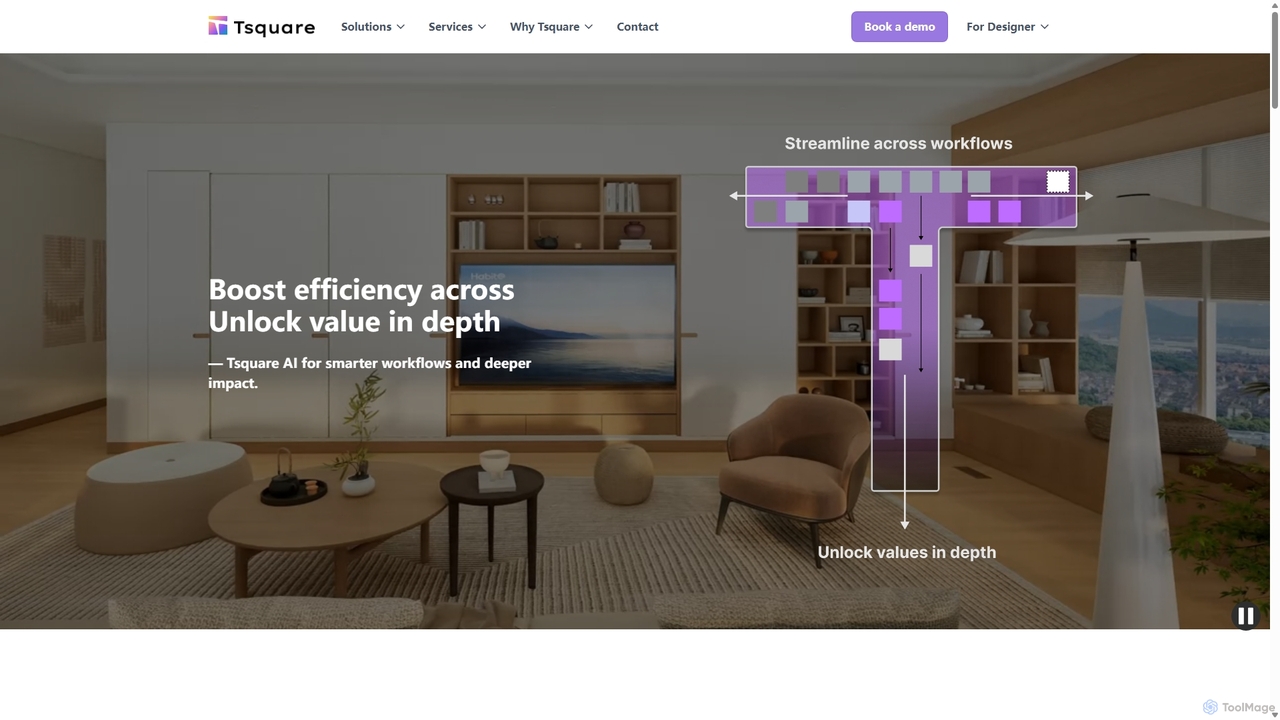
Tsquare AI is an AI-powered platform that transforms the sales journey for home improvement and design industries. It instantly converts 2D floor plans into fully furnished, interactive 3D spaces, enabling real-time product configuration, visualization, and automated quoting. This streamlines the design-to-sale process, enhances customer engagement, and boosts efficiency for sales teams and designers.
About Interior Design
AI Interior Design tools are a class of software that uses generative AI to create and visualize interior spaces. These tools leverage computer vision and machine learning to analyze photos of rooms, generating realistic redesigns, furniture layouts, and decor suggestions based on user prompts or style selections. They empower homeowners, designers, and real estate professionals to experiment with different aesthetics, materials, and arrangements in minutes, dramatically accelerating the conceptual design phase. This technology makes professional-level design exploration accessible and efficient.
Core Features
- Virtual Staging: Automatically populates empty rooms with photorealistic furniture, lighting, and decor to showcase a property's potential.
- Style Redesign: Transforms an existing room's photo into various design styles, such as minimalist, modern, or bohemian, with a single click.
- Material & Color Customization: Instantly changes the appearance of walls, floors, and furniture by applying different colors, textures, and materials.
- AI-Powered Layout Suggestions: Generates optimized furniture arrangements based on room dimensions, flow, and functional requirements.
- Object Removal & Addition: Cleans up cluttered spaces by digitally removing unwanted items or adds new decor elements to enhance the scene.
Use Cases
These tools are widely used by real estate agents for virtual staging to market properties more effectively. Interior designers use them to quickly generate and present multiple design concepts to clients. Homeowners leverage them for DIY renovation projects, visualizing changes before committing to purchases. Furniture retailers also use this technology to help customers see how products would look in their own homes.
How to Choose
When selecting an AI Interior Design tool, consider the quality and realism of the generated images. Evaluate the size and diversity of its style and furniture library. Assess the user interface for ease of use—some tools are prompt-based while others offer a visual editor. Finally, compare pricing models, such as per-image credits versus monthly subscriptions, to find one that aligns with your project frequency and budget.
Interior DesignUse Cases
Virtual Staging for Real Estate Listings
A real estate agent needs to market an empty apartment. Instead of spending thousands on physical staging, they upload photos of the vacant rooms to an AI Interior Design tool. Within minutes, the tool generates multiple fully furnished versions in different styles like 'Modern Scandinavian' and 'Urban Loft'. The agent then uses these appealing, photorealistic images in their online listings, attracting significantly more potential buyers and leading to a faster sale at a better price.
Planning a DIY Home Renovation
A homeowner wants to redesign their living room but is unsure about the style. They take a photo of their current room and upload it to an AI tool. They then apply various styles like 'Coastal', 'Industrial', and 'Mid-Century Modern'. The tool instantly shows how their space would look with new wall colors, flooring, and furniture for each style. This allows them to confidently choose a design direction and select matching furniture, avoiding costly mistakes and purchase regrets.
Accelerating Client Concept Presentations
An interior designer is preparing for a client meeting. Instead of spending days creating detailed 3D models for each concept, they use an AI tool. They upload a photo of the client's space and generate three distinct design variations in under an hour. During the meeting, they can even make real-time adjustments based on client feedback, such as changing the wall color or swapping a sofa model. This rapid visualization process streamlines communication, impresses clients, and helps secure project approval faster.
Enhancing E-commerce for Furniture Retail
An online furniture store wants to reduce returns and increase conversion rates. They integrate an AI interior design feature into their product pages. Now, customers can upload a photo of their own room and virtually place the store's sofa or coffee table into their space. This 'try before you buy' experience helps customers visualize how the product fits with their existing decor and scale, leading to higher purchase confidence and a significant decrease in product returns due to style or size mismatches.
Creating Marketing Visuals for Off-Plan Properties
A property developer is selling apartments that are still under construction. To help potential buyers visualize the final product, their marketing team uses an AI interior design tool. They feed the 2D floor plans into the tool, which generates fully furnished, photorealistic 3D renderings of the living rooms, bedrooms, and kitchens. These high-quality visuals are then used in brochures, on the website, and in social media campaigns, making the abstract floor plans tangible and appealing, thereby boosting pre-sales.
Generating Content for a Home Decor Blog
A content creator runs a blog about home decor trends. To quickly generate fresh visual content, they use an AI interior design tool. They take a single photo of a neutral-toned room and use the AI to restyle it according to different seasonal trends, like 'Autumn Cozy' or 'Spring Refresh'. This allows them to produce a high volume of unique, eye-catching images for blog posts and social media without needing to physically redecorate a space for every article, saving significant time and resources.