ThreatCluster
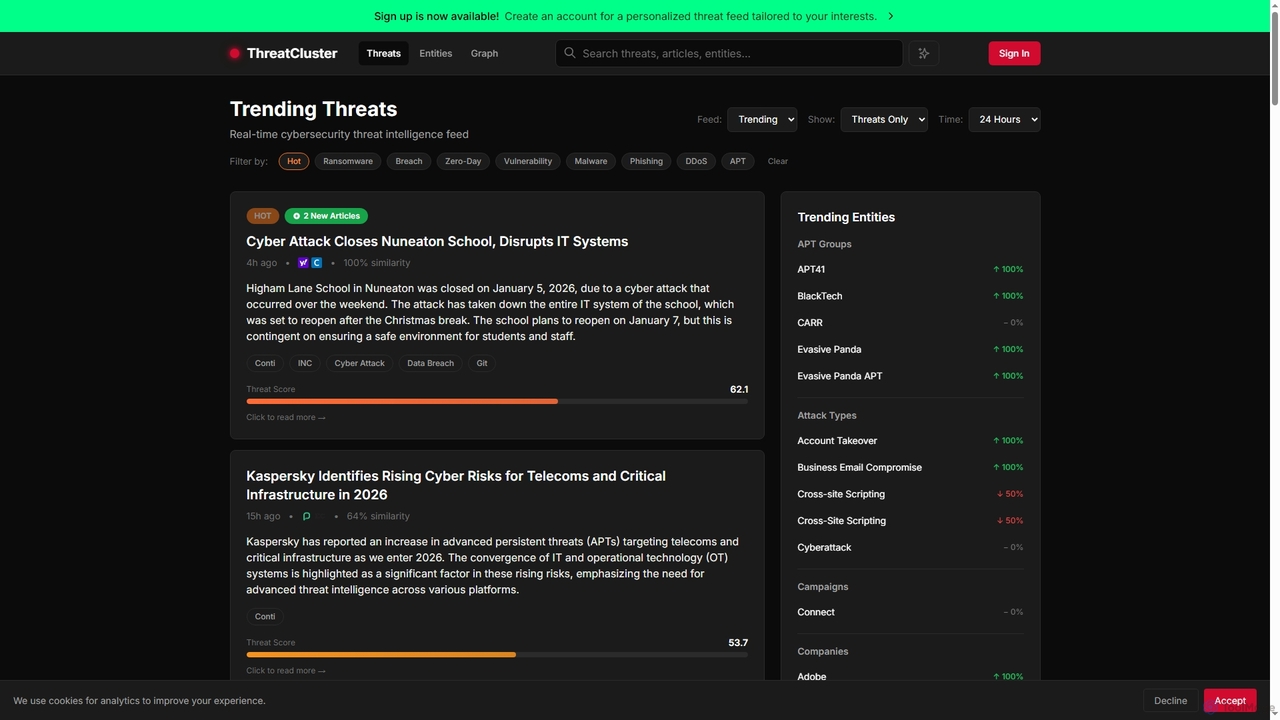
ThreatCluster is a real-time cybersecurity threat intelligence platform that aggregates, clusters, and scores threats from over 1000 sources …
ThreatCluster is a real-time cybersecurity threat intelligence platform that aggregates, clusters, and scores threats from over 1000 sources daily, providing a focused, actionable feed without information overload.
ObsidianOne
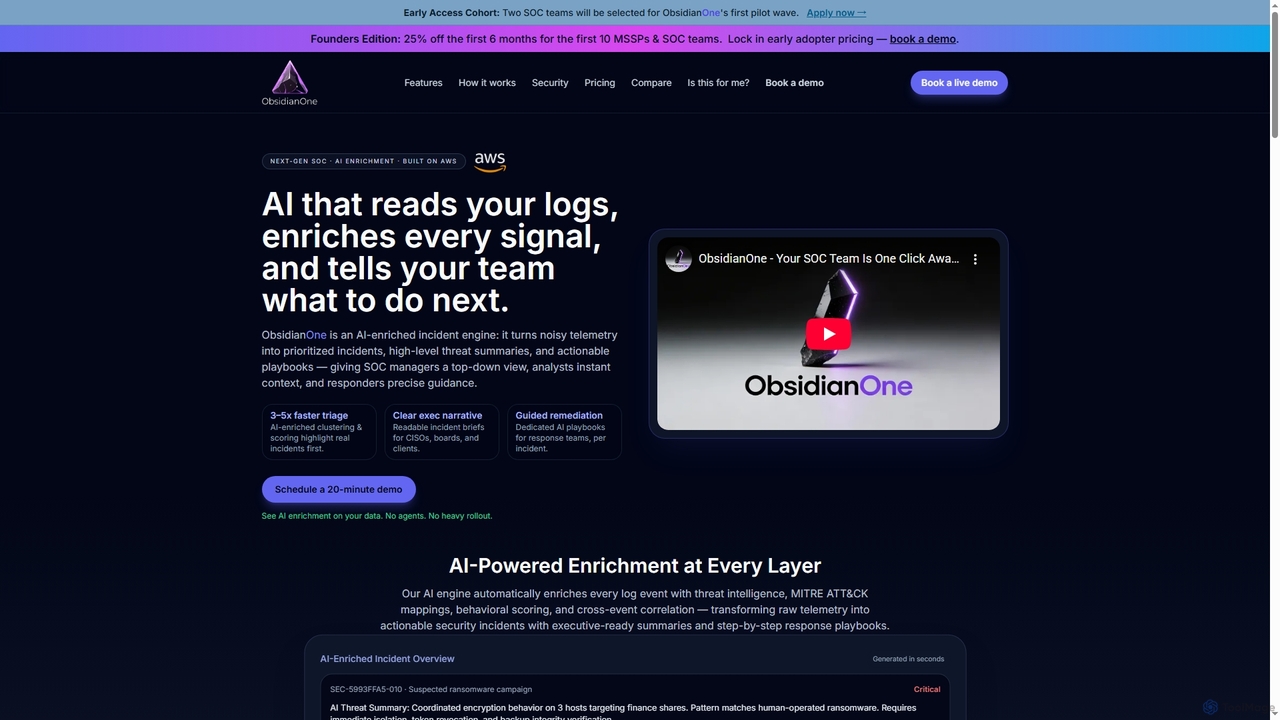
ObsidianOne is an AI-powered incident engine designed for next-generation Security Operations Centers (SOCs). It transforms noisy security telemetry …
ObsidianOne is an AI-powered incident engine designed for next-generation Security Operations Centers (SOCs). It transforms noisy security telemetry into prioritized incidents, high-level threat summaries, and actionable playbooks, enabling SOC teams and MSSPs to achieve 3-5x faster triage and guided remediation.
Cotool
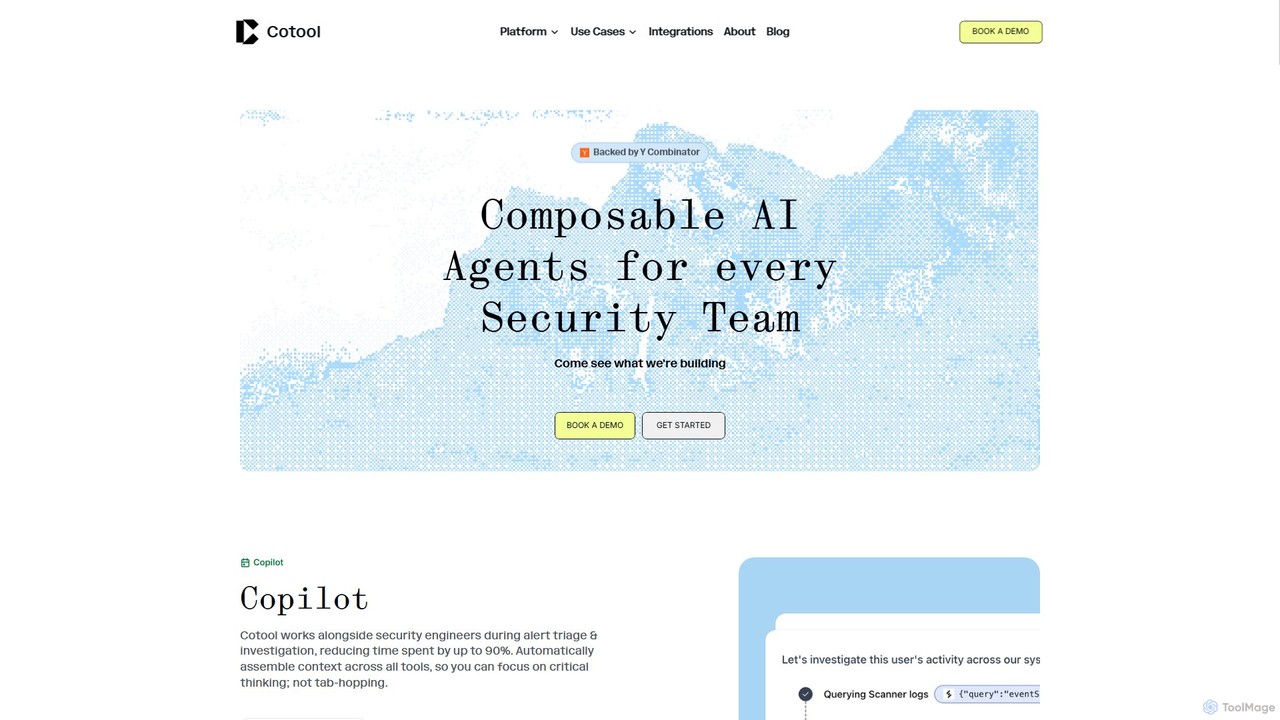
Cotool is an AI security platform featuring composable agents designed for security teams. It automates alert triage, incident …
Cotool is an AI security platform featuring composable agents designed for security teams. It automates alert triage, incident investigation, and threat detection, reducing manual work by up to 90%. By integrating with your existing security stack, it streamlines workflows and empowers analysts to focus on critical threats.
About Incident Response
Incident Response AI tools are specialized platforms that leverage artificial intelligence to automate and enhance the detection, analysis, containment, and recovery from cybersecurity incidents. These tools utilize machine learning algorithms to identify anomalies, correlate threat intelligence, and prioritize alerts, significantly accelerating the incident lifecycle. They empower security teams to react swiftly and effectively to breaches, minimizing damage and downtime. By integrating advanced analytics, these AI solutions transform reactive security measures into proactive, intelligent defense mechanisms, crucial for modern enterprise security operations.
Core Features
- Automated Threat Detection: AI-driven anomaly detection and behavioral analysis to identify sophisticated threats often missed by traditional signatures.
- Intelligent Alert Prioritization: Machine learning to score and prioritize security alerts, reducing noise and focusing analysts on critical incidents.
- Automated Playbooks & Remediation: Pre-defined, AI-triggered actions for containment, such as isolating compromised endpoints or blocking malicious IPs.
- Threat Intelligence Integration: Automatically correlates internal incident data with external threat feeds for richer context and faster analysis.
- Post-Incident Analysis: AI-assisted root cause analysis and reporting to improve future incident prevention and response strategies.
Use Cases
Security Operations Centers (SOCs) heavily rely on Incident Response AI tools to manage the overwhelming volume of security alerts, enabling faster triage and investigation. Enterprises use them to automate initial containment actions, such as network segmentation or user account suspension, immediately after a breach is detected. Furthermore, these tools assist compliance officers in generating detailed audit trails and reports for regulatory requirements following an incident.
How to Choose
When selecting Incident Response AI tools, consider their integration capabilities with existing security infrastructure like SIEM and EDR systems. Evaluate the level of automation offered, from alert enrichment to full remediation playbooks, ensuring it aligns with your team's capacity and risk tolerance. Assess the tool's ability to adapt to new threats through continuous learning, and review its reporting and compliance features for post-incident requirements.

Incident ResponseUse Cases
Automating Malware Containment on Endpoints
For a Security Operations Center (SOC) analyst, detecting a new malware infection is critical. Incident Response AI tools automatically identify suspicious processes on an endpoint, cross-reference with threat intelligence, and trigger immediate containment actions like isolating the affected machine from the network. This rapid, AI-driven response prevents lateral movement of malware, significantly reducing the spread and impact of an infection without manual intervention.
Intelligent Phishing Campaign Detection & Response
A corporate security team faces constant phishing threats. AI-powered incident response systems analyze incoming emails for subtle indicators of phishing, such as unusual sender behavior, malicious links, or suspicious attachments, even those bypassing traditional filters. Upon detection, the system can automatically quarantine suspicious emails, alert affected users, and initiate a broader investigation into the campaign's origin and scope, protecting employees from social engineering attacks.
Rapid Cloud Security Breach Remediation
Cloud architects and security engineers managing dynamic cloud environments need swift responses to misconfigurations or unauthorized access. Incident Response AI tools continuously monitor cloud infrastructure for anomalous activities, like unusual API calls or resource provisioning. If a breach is detected, the AI can automatically revoke compromised credentials, revert insecure configurations, or trigger serverless functions to isolate affected cloud resources, minimizing exposure and ensuring compliance.
Detecting Insider Threats Through Behavioral Analysis
Organizations are vulnerable to insider threats, whether malicious or accidental. AI-driven incident response platforms establish baselines of normal user behavior across networks, applications, and data access. When an employee deviates significantly from their typical patterns – for example, accessing sensitive files outside working hours or attempting to download large datasets – the AI flags this as a potential incident, initiating an investigation and potentially suspending access to prevent data exfiltration.
Automated Vulnerability Exploitation Response
When a new zero-day vulnerability or critical exploit emerges, security teams must act fast. Incident Response AI tools integrate with vulnerability management systems and threat intelligence feeds. Upon identifying an attempted exploitation of a known vulnerability within the network, the AI can automatically deploy virtual patches, update firewall rules, or reconfigure affected systems to mitigate the threat, providing immediate protection before official patches are available.
Streamlining Incident Reporting and Compliance Audits
Compliance officers and legal teams require detailed documentation for every security incident. AI-powered incident response systems automatically collect, categorize, and consolidate all relevant data—alerts, logs, actions taken, and timelines—into comprehensive reports. This automation ensures accuracy and completeness, significantly reducing the manual effort required for post-incident reviews, regulatory filings, and audit preparations, ensuring the organization meets its compliance obligations efficiently.