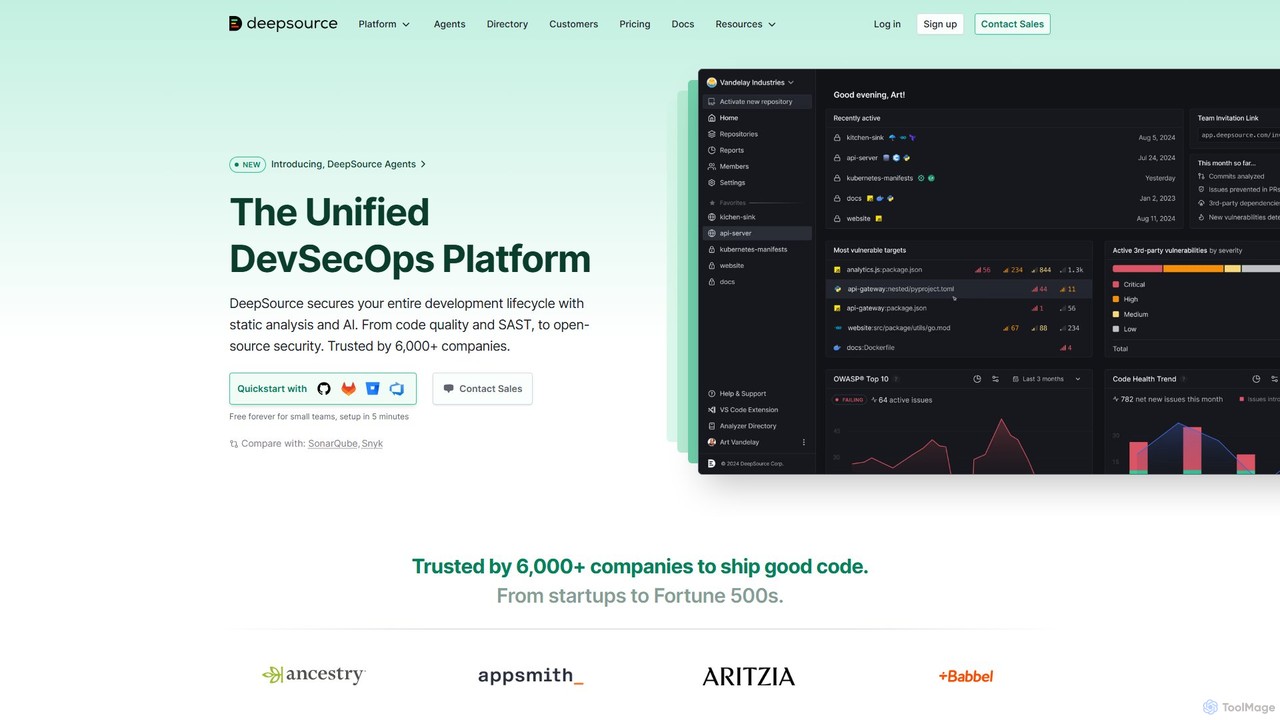
Vulnerability Scanners are automated tools designed to proactively identify and report security weaknesses within computer systems, networks, and applications. They operate by systematically probing assets to detect known vulnerabilities, common misconfigurations, and potential attack vectors based on a vast database of security signatures. This process allows security teams and developers to discover and prioritize flaws before they can be exploited by malicious actors. AI-powered scanners enhance this capability by reducing false positives and providing context-aware remediation guidance, making security management more efficient.
Core Features
- Automated Discovery & Scanning: Automatically identifies assets on a network and scans them for thousands of known vulnerabilities, such as those listed in the Common Vulnerabilities and Exposures (CVE) database.
- Configuration Auditing: Assesses systems against security best practices and compliance frameworks (e.g., CIS Benchmarks, NIST) to find misconfigurations that create security gaps.
- Vulnerability Prioritization: Uses risk scores, exploitability data, and asset criticality to help teams focus on fixing the most significant threats first.
- Detailed Reporting: Generates comprehensive reports that detail found vulnerabilities, provide evidence, and offer actionable steps for remediation.
- CI/CD Pipeline Integration: Integrates with development tools to scan code and container images, enabling a DevSecOps approach by finding issues early in the software lifecycle.
Use Cases
These tools are essential for IT security teams conducting regular network audits, developers practicing secure coding, and compliance officers ensuring adherence to regulations like PCI DSS, HIPAA, or GDPR. They are applied across on-premise data centers, cloud infrastructure, and web application environments to maintain a consistent security posture.
How to Choose
When selecting a Vulnerability Scanner, consider its coverage (web applications, networks, cloud, containers), its accuracy in minimizing false positives, and its integration capabilities with your existing tools like issue trackers (Jira) and SIEM systems. Also, evaluate its reporting features to ensure they meet both technical remediation and compliance audit requirements.