ToolMage
Sign in

Best 1 Advice AI tools for Self Improvement

Popular Advice AI tools in Self Improvement include Drunk Uncle Advice, helping you work more efficiently.

Drunk Uncle Advice
Freemium

Drunk Uncle Advice

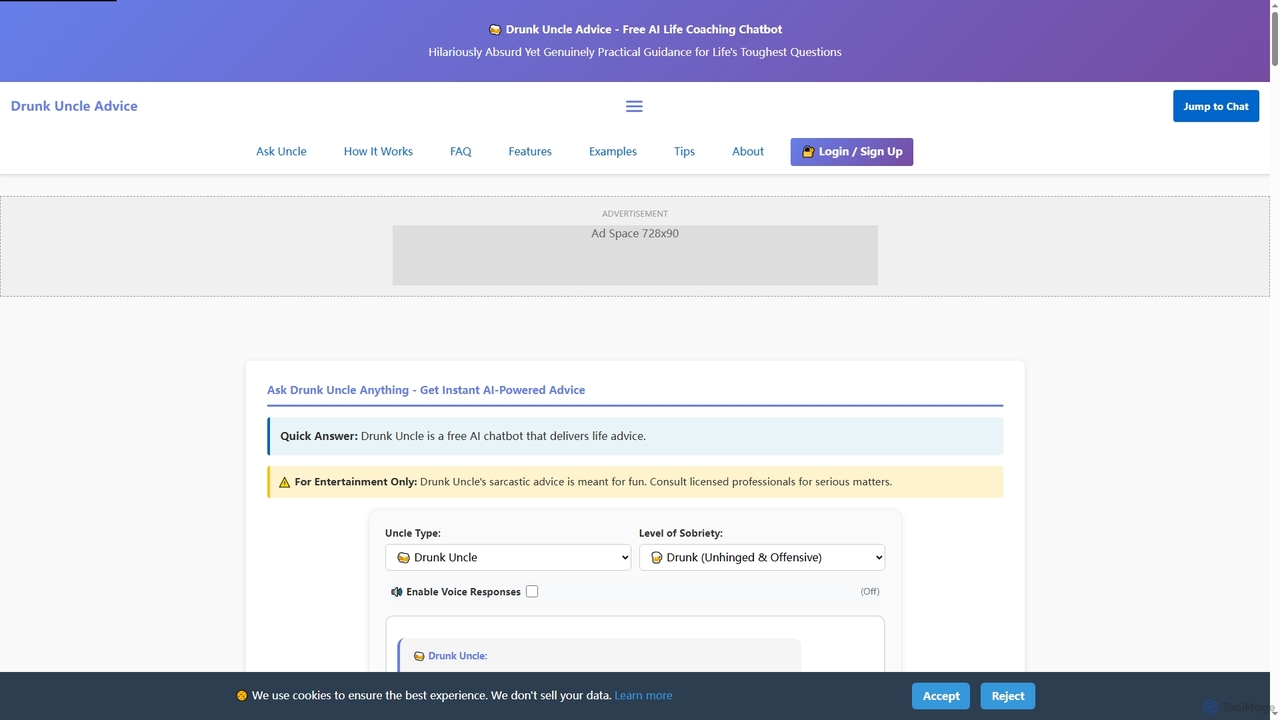
An AI chatbot that provides humorous yet practical life advice. It uses a dual-AI system (GPT-4o-mini) to generate sarcastic, entertaining responses combined with safe, actionable steps. Users can adjust the 'sobriety level' for different humor styles.

Chatbot
Visits 5KFavorites 128Likes 134

About Advice

AI Advice tools are a specialized category of self-improvement applications that provide personalized guidance and coaching through conversational AI. These tools leverage natural language processing (NLP) and machine learning to understand user challenges, ask insightful questions, and offer structured recommendations. They function as digital mentors, helping users navigate career decisions, improve personal skills, or manage daily challenges with data-driven insights. Unlike static content, AI Advice tools offer interactive, adaptive support tailored to an individual's unique context.

Core Features

  • Personalized Action Plans: Generates tailored, step-by-step plans based on user goals and inputs.
  • Conversational Coaching: Engages users in reflective dialogue to foster self-discovery and problem-solving.
  • Progress Analysis: Tracks user inputs and milestones to provide feedback on patterns and achievements.
  • Scenario Simulation: Allows users to explore potential outcomes of different choices in a safe, virtual environment.
  • Curated Resources: Suggests relevant articles, exercises, and learning materials based on the conversation's context.

Applicable Scenarios

These tools are valuable for professionals seeking career development guidance, individuals aiming to enhance soft skills like communication or leadership, and anyone facing complex personal decisions. They are frequently used for financial planning, stress management, and building healthier habits where personalized, ongoing support is beneficial.

Selection Criteria

When selecting an AI Advice tool, consider its area of specialization (e.g., career, finance, wellness). Evaluate the interaction model—whether you prefer text-based chat, voice interaction, or structured modules. It is also important to assess the underlying methodology (e.g., based on cognitive-behavioral principles or performance coaching) and carefully review its data privacy policy.

Advice use cases

1

Navigating a Career Transition

A mid-level professional feeling stagnant in their current role uses an AI Advice tool to explore new career paths. By engaging in guided conversations, the tool helps them identify their core skills, interests, and values. It then simulates potential career shifts, outlining required skills and potential challenges. The user receives a personalized action plan, including recommendations for online courses and networking strategies, providing a clear, structured roadmap for their transition.

2

Improving Public Speaking Confidence

A team leader who experiences anxiety before presentations uses an AI coach to build confidence. The tool provides daily exercises based on cognitive-behavioral techniques to reframe negative thoughts. It also offers a simulation feature where the user can practice their speech and receive AI-driven feedback on pacing, tone, and use of filler words. Over several weeks, this structured practice helps reduce anxiety and improves their overall delivery, leading to more effective team meetings.

3

Creating a Personal Financial Budget

A recent graduate struggling with financial management uses an AI advice app to create a sustainable budget. The user inputs their income, expenses, and financial goals, such as saving for a down payment. The AI analyzes their spending habits, identifies areas for potential savings, and proposes a personalized budget. Through interactive chat, it answers questions like "Can I afford a vacation?" by modeling the impact on their long-term goals, empowering them to make informed financial decisions.

4

Developing Effective Leadership Skills

A newly promoted manager uses an AI leadership coach to transition into their new role. The tool presents them with common leadership challenges, such as resolving team conflicts or giving constructive feedback, through interactive scenarios. After each scenario, the AI provides an analysis of their choices and suggests alternative approaches based on established management principles. This 'practice field' helps the manager build practical skills and confidence without real-world risk.

5

Managing Work-Related Stress

An employee in a high-pressure job uses an AI wellness advisor to manage stress. The tool offers daily check-ins to log mood and stress levels. Based on this data, it suggests personalized mindfulness exercises, breathing techniques, or short journaling prompts. When the user reports feeling overwhelmed, the AI can guide them through a 5-minute guided meditation, providing immediate, accessible support to help them recenter during a busy workday.

6

Making a Major Life Decision

Someone considering a significant life change, like relocating to a new city, uses an AI decision-support tool. They input variables such as career opportunities, cost of living, and personal preferences. The AI helps them structure their thoughts by using frameworks like a pros-and-cons list or a weighted decision matrix. It asks clarifying questions to challenge their assumptions and helps them visualize the long-term implications of each option, leading to a more confident and well-reasoned choice.

Advice FAQ

What are AI Advice tools?

AI Advice tools are applications that use artificial intelligence, particularly natural language processing, to provide personalized guidance, coaching, and support. Unlike static articles or videos, they engage in interactive conversations to understand a user's specific situation and goals. Key features often include personalized action plans, goal tracking, and scenario simulation to help users with career development, skill improvement, and decision-making.

How do I choose the right AI Advice tool for my needs?

To choose the right tool, consider these factors:

  • Specialization: Does the tool focus on a specific area like career coaching, financial planning, or mental wellness? Choose one that aligns with your primary goal.
  • Methodology: Research the principles behind the advice. Is it based on established psychological frameworks (like CBT) or proven coaching models?
  • Interaction Style: Do you prefer a chatbot, structured lessons, or voice-based interaction? Select a format you find engaging.
  • Data Privacy: Since you may share personal information, review the tool's privacy policy to understand how your data is stored and used.
What is the difference between an AI Advice tool and a general self-help app?

The key difference is interactivity and personalization. General self-help apps, like meditation or habit-tracking apps, often provide one-size-fits-all content and predefined programs. An AI Advice tool, however, uses conversational AI to create a dynamic, two-way dialogue. It adapts its guidance based on your specific inputs, progress, and unique context, offering a more tailored experience similar to interacting with a human coach or mentor.

Can AI Advice tools replace human therapists or coaches?

No, AI Advice tools are not a replacement for licensed human professionals like therapists or certified coaches. They should be seen as supplementary tools for self-improvement, skill-building, and gaining clarity. For mental health conditions or deep-seated professional challenges, consulting a qualified human expert is essential. AI tools can provide accessible, on-demand support but lack the nuanced understanding, empathy, and accountability of a human professional.

What types of advice can these AI tools provide?

AI Advice tools cover a wide spectrum of self-improvement areas. Common types of advice include:

  • Career Guidance: Helping with resume building, interview preparation, and career path exploration.
  • Skill Development: Providing coaching on soft skills like communication, leadership, and time management.
  • Financial Literacy: Assisting with budgeting, saving strategies, and understanding financial concepts.
  • Personal Productivity: Offering techniques to overcome procrastination and build effective habits.
  • Wellness Support: Guiding users through stress-management techniques and mindfulness exercises.