Uncoop
Uncoop is an AI-powered platform that distills key ideas from non-fiction bestsellers and applies them directly to your …
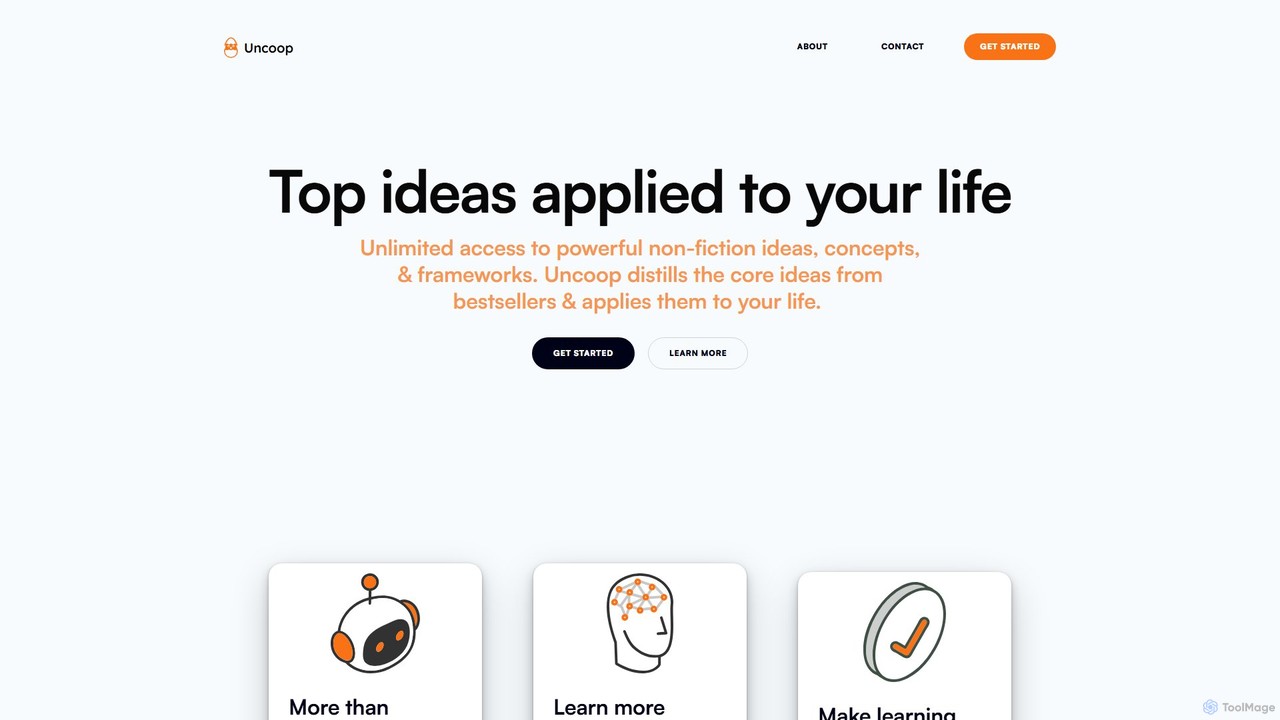
Uncoop is an AI-powered platform that distills key ideas from non-fiction bestsellers and applies them directly to your life. It moves beyond simple summaries to provide personalized, actionable insights for personal growth, habit formation, and achieving your goals.
About Habit Building
Habit Building AI tools are applications that leverage artificial intelligence to help users systematically establish and maintain positive routines. These tools analyze user data and behavioral patterns to provide personalized plans, intelligent reminders, and adaptive feedback. They transform the abstract goal of self-improvement into a structured, data-driven process, increasing the likelihood of long-term success. By automating tracking and motivation, they help users overcome common obstacles like forgetfulness and lack of willpower.
Core Features
- Personalized Habit Planning: AI suggests optimal habits and schedules based on user goals, lifestyle, and past performance.
- Intelligent Reminders: Context-aware notifications that adapt to your schedule and success rate to maximize effectiveness.
- AI-Powered Progress Analysis: Analyzes data to reveal patterns, provide actionable insights, and predict potential challenges in your routine.
- Adaptive Motivational Feedback: Generates personalized encouragement and adjusts challenges to keep users engaged without causing burnout.
- Automated Streak Tracking & Gamification: Uses game-like elements such as points and badges to make the process of habit formation more engaging and rewarding.
Use Cases
These tools are widely used by individuals for personal development, such as establishing fitness routines, learning new skills, or practicing mindfulness. Professionals use them to build productive work habits like time blocking or daily planning. They are also valuable for anyone needing to adhere to a consistent schedule, including students managing study time or individuals managing health-related routines.
How to Choose
When selecting a Habit Building tool, consider the level of AI personalization and how well it adapts to your progress. Evaluate the quality of its analytics and insights—does it provide clear, actionable feedback? Check for integrations with other apps like calendars or health trackers. Finally, consider the motivational approach (e.g., coaching, gamification, data visualization) and choose one that aligns with your personal preferences.

Habit BuildingUse Cases
Establish a Consistent Fitness Routine
A busy professional wants to exercise three times a week but often forgets or loses motivation. They use an AI Habit Building tool to set this goal. The AI analyzes their calendar and suggests optimal workout times, such as Tuesday morning and Thursday evening. It sends smart reminders 30 minutes before each session and uses motivational messages. If a session is missed, the AI suggests a rescheduled time and provides encouragement to prevent discouragement, helping the user build a sustainable fitness habit over time.
Cultivating a Daily Reading Habit
A student aims to read for 20 minutes every day to improve their knowledge. They use an AI habit tool to track this. The tool allows them to log their reading sessions and visualizes their progress with a streak calendar and charts. The AI identifies that the student is most consistent when reading before bed and adjusts reminders accordingly. It also provides weekly summaries of their reading achievements, reinforcing the positive behavior and making the habit feel more rewarding and easier to maintain.
Improving Work Productivity with Time Blocking
A freelancer wants to adopt the time blocking method to manage their projects more effectively. They use an AI habit tool that integrates with their digital calendar. The AI helps them schedule focused work blocks for specific tasks and automatically sets 'Do Not Disturb' mode on their devices during these times. It tracks how consistently they adhere to their blocks and provides analytics on their most productive hours. This data-driven feedback helps the freelancer refine their schedule for peak performance and solidifies time blocking as a core work habit.
Practicing Daily Mindfulness Meditation
An individual looking to reduce stress decides to start a daily 10-minute meditation habit. They use an AI-powered app that not only reminds them but also learns their daily rhythm. The AI notices they are often interrupted during afternoon sessions and suggests shifting the habit to the morning. The app provides guided meditations, tracks consistency, and offers positive reinforcement after each completed session. This adaptive scheduling and encouragement helps the user overcome initial difficulties and integrate mindfulness into their daily life.
Learning a New Language with Daily Practice
Someone wants to learn Spanish by studying for 15 minutes every day. They use an AI habit app that gamifies the process. The app sets a daily goal and rewards the user with points and badges for maintaining their streak. The AI analyzes their performance and suggests specific vocabulary or grammar exercises for the next session. If the user starts to fall behind, the AI might reduce the daily goal to 10 minutes to make it easier to get back on track, preventing burnout and keeping the learning process consistent.
Adhering to a Medication Schedule
An elderly patient needs to take multiple medications at different times of the day. An AI Habit Building tool on their smartphone provides intelligent reminders that are distinct and persistent. The app requires them to confirm when a dose is taken, creating a reliable log for their doctor. If a dose is missed, the AI can be configured to notify a family member or caregiver. This system goes beyond a simple alarm by providing a layer of accountability and intelligent communication, ensuring better adherence to critical health routines.