Self Improvement Best in category 1 results Emotional Intelligence AI Tool

Popular AI tools in the Emotional Intelligence field of Self Improvement include Anemes, etc., helping you quickly improve efficiency.

Free
Anemes

Anemes

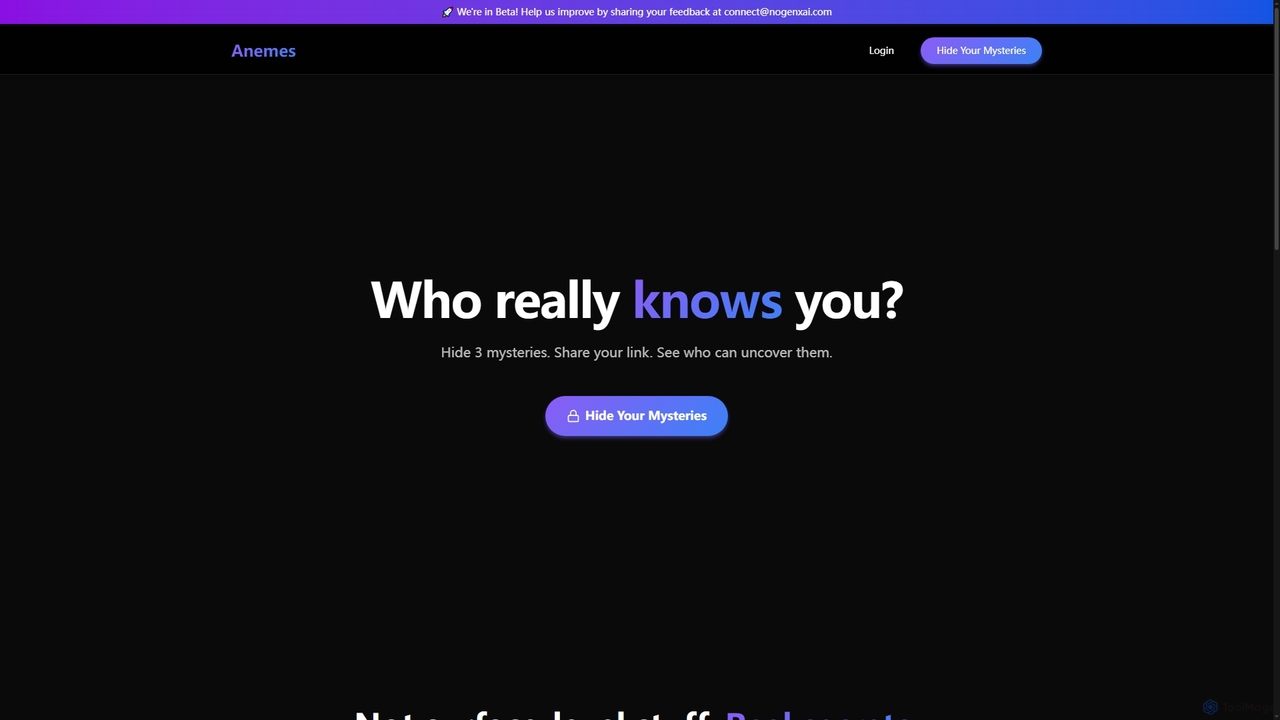
Anemes is a unique AI-powered platform designed to help you discover who truly knows you. Users hide personal …

2.9K

About Emotional Intelligence

Emotional Intelligence tools are AI-powered platforms designed to enhance an individual's or team's ability to understand, manage, and express emotions effectively. Leveraging advanced natural language processing and behavioral analytics, these tools provide personalized insights and training to improve self-awareness, empathy, social skills, and emotional regulation. They serve as digital coaches, helping users navigate complex social interactions, reduce stress, and foster healthier relationships in both personal and professional settings.

Core Features

  • Emotion Recognition: Analyzes text, voice, or facial expressions to identify underlying emotions.
  • Personalized Feedback: Offers tailored suggestions and exercises to improve emotional responses and communication.
  • Stress Management: Provides techniques and guided practices for reducing stress and enhancing emotional resilience.
  • Empathy Training: Simulates social scenarios to help users understand and respond to others' feelings more effectively.
  • Communication Enhancement: Analyzes conversational patterns and suggests improvements for clearer, more empathetic interactions.

Use Cases

These tools are valuable for professionals seeking to improve leadership skills, individuals aiming for better personal relationships, and teams looking to foster a more collaborative and understanding work environment. They can be integrated into corporate training programs or used by individuals for self-paced development.

How to Choose

When selecting an Emotional Intelligence tool, consider the specific emotional skills you wish to develop, the data input methods (text, voice, video), the depth of personalized feedback, and the availability of guided exercises. Evaluate its integration capabilities with existing communication platforms and its adherence to data privacy standards.

Emotional IntelligenceUse Cases

1

Enhancing Customer Service Empathy

Customer service representatives use AI tools to analyze customer sentiment during calls or chats, receiving real-time suggestions for more empathetic language and tone. This helps de-escalate tense situations, build rapport, and improve overall customer satisfaction by addressing emotional needs effectively, leading to a more positive service experience.

2

Enhancing Leadership Communication

For managers and team leaders, Emotional Intelligence tools offer insights into their communication style and its emotional impact on subordinates. By analyzing meeting transcripts or presentation delivery, the AI provides feedback on tone, empathy, and clarity, helping leaders foster a more positive and productive team environment and improve decision-making processes.

3

Personalized Mental Well-being Support

Individuals utilize AI-powered emotional intelligence apps to track their mood patterns, identify triggers for stress or anxiety, and receive personalized mindfulness exercises or cognitive behavioral therapy (CBT) techniques. This proactive approach supports self-management of emotional health, offering accessible tools for daily emotional regulation and resilience building.

4

Improving Customer Service Interactions

Customer service representatives can utilize these tools to better understand customer sentiment and adapt their responses accordingly. The AI analyzes customer queries and agent replies, highlighting emotional cues and suggesting empathetic language or de-escalation techniques, leading to higher customer satisfaction and more efficient issue resolution.

5

Improving Team Communication & Collaboration

Team leaders deploy AI tools that analyze communication patterns within internal messaging platforms, providing insights into team sentiment, potential conflicts, and areas for more empathetic feedback. This fosters a more positive and productive work environment by proactively addressing emotional dynamics and promoting understanding among team members.

6

Personal Stress and Well-being Management

Individuals facing high-stress environments can use Emotional Intelligence tools for self-paced emotional regulation. Through daily journaling analysis, mood tracking, and guided mindfulness exercises, the AI helps users identify stress triggers, develop coping mechanisms, and build resilience, contributing to overall mental well-being.

7

Developing Leadership & Management Skills

Managers engage with AI coaching platforms that simulate difficult conversations or provide feedback on their communication style, helping them develop stronger emotional awareness and empathetic leadership. This enhances their ability to motivate teams, resolve workplace issues, and build a more inclusive and supportive organizational culture.

8

Developing Interpersonal Skills for Sales Professionals

Sales teams can leverage these tools to refine their ability to read client emotions and tailor their pitches. By analyzing simulated sales conversations or real-time interaction feedback, the AI helps sales professionals build rapport, understand client needs more deeply, and overcome objections empathetically, ultimately boosting conversion rates.

9

Optimizing Sales & Negotiation Strategies

Sales professionals use emotional intelligence AI to analyze client communication, predict emotional responses, and adapt their pitch or negotiation tactics in real-time. This allows for more persuasive and client-centric interactions, leading to better outcomes and stronger business relationships by understanding and responding to client emotions effectively.

10

Fostering Team Collaboration and Conflict Resolution

For project teams, Emotional Intelligence tools can facilitate smoother collaboration by identifying potential communication breakdowns or emotional tensions. The AI can analyze team discussions, provide anonymous feedback on group dynamics, and suggest strategies for more inclusive communication and constructive conflict resolution, enhancing team cohesion.

11

Educational Empathy Training for Students

Educators integrate AI-driven simulations into curricula to help students practice recognizing and responding to various emotional cues in social scenarios. This builds crucial social-emotional learning skills, preparing them for real-world interactions and fostering a more inclusive and understanding environment within schools and beyond.

12

Supporting Mental Health Coaching and Therapy

Mental health professionals can integrate Emotional Intelligence tools to augment their coaching or therapy sessions. The AI can provide objective data on client emotional patterns, track progress in emotional regulation, and offer supplementary exercises between sessions, enabling more personalized and data-driven therapeutic interventions.

Emotional IntelligenceFrequently Asked Questions