Self Improvement Best in category 1 results Goal Setting AI Tool

Popular AI tools in the Goal Setting field of Self Improvement include MissionMapper, etc., helping you quickly improve efficiency.

Free
MissionMapper

MissionMapper

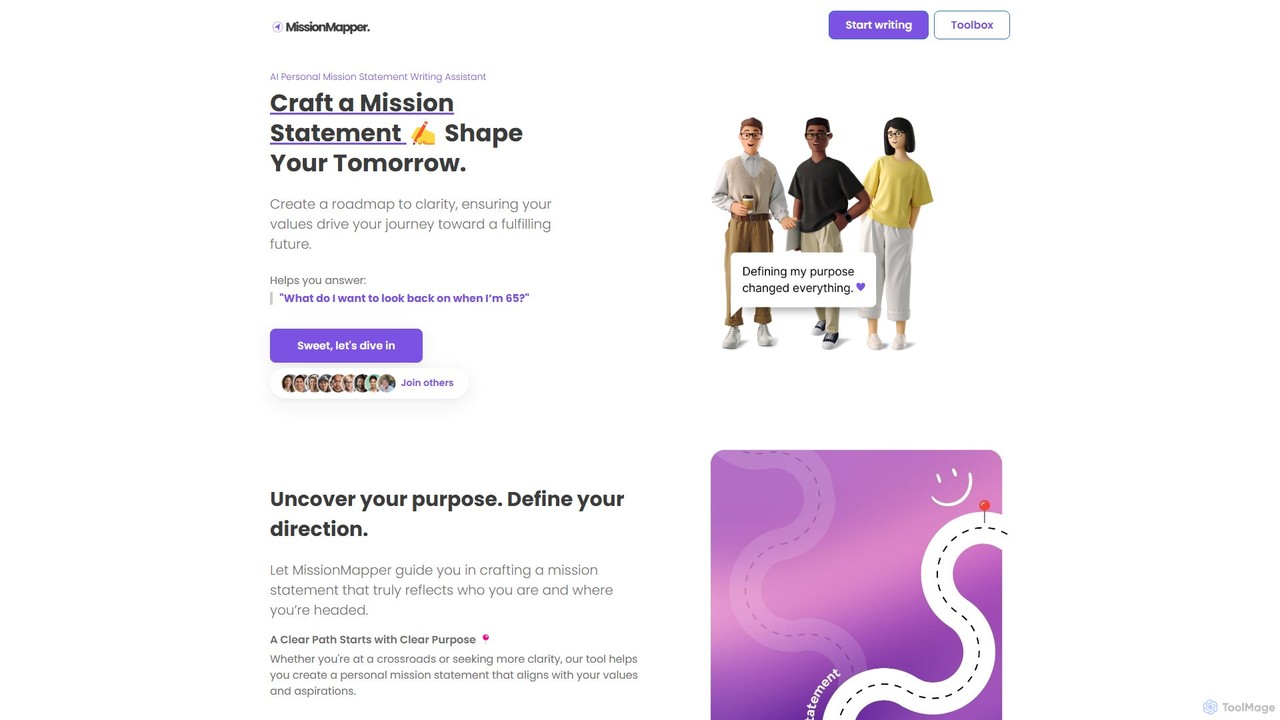
MissionMapper is a free, AI-powered assistant designed to help you craft a meaningful personal mission statement. Through a …

3.2K

About Goal Setting

AI Goal Setting tools are specialized applications designed to help users define, track, and achieve personal or professional objectives. These tools often leverage frameworks like SMART (Specific, Measurable, Achievable, Relevant, Time-bound) and OKR (Objectives and Key Results), using AI to break down large ambitions into actionable steps. They provide personalized feedback, motivational nudges, and data-driven insights to increase accountability and improve the likelihood of success. This structured approach transforms abstract aspirations into a concrete plan for achievement.

Core Features

  • AI-Powered Goal Structuring: Assists in formulating well-defined, achievable goals based on user input, often using established methodologies like SMART.
  • Progress Tracking & Visualization: Offers dashboards, charts, and timelines to monitor progress towards key results and milestones in real-time.
  • Intelligent Reminders & Nudges: Proactively sends personalized notifications to keep users on track and motivated, identifying potential roadblocks.
  • Performance Analytics: Analyzes data to provide insights into performance, highlighting effective habits and areas for improvement.
  • OKR & KPI Management: Provides frameworks for teams and organizations to set, align, and track Objectives and Key Results or Key Performance Indicators.

Use Cases

These tools are widely used by individuals for personal development, such as fitness goals or learning new skills. In a professional context, they are valuable for career planning, tracking performance targets, and managing freelance projects. Teams and companies use them to align on strategic objectives, manage OKRs, and foster a culture of accountability and continuous improvement.

How to Choose

When selecting an AI Goal Setting tool, consider the supported methodologies (e.g., OKR, SMART, GTD). Evaluate its integration capabilities with other tools like calendars or project management software. Assess the depth of its AI-driven feedback and analytics. For teams, collaboration features and reporting capabilities are crucial, while individual users might prioritize a simple interface and mobile accessibility.

Goal SettingUse Cases

1

Planning a Personal Fitness Journey

A user aiming to improve their health sets a high-level goal like 'lose 10kg in 3 months'. Using an AI Goal Setting tool, they input this objective. The AI helps break it down into SMART goals:

  • Specific: Lose 0.8kg per week.
  • Measurable: Track weight daily and calorie intake via an integrated app.
  • Achievable: Schedule 4 gym sessions of 45 minutes per week.
  • Relevant: Aligns with the overall goal of better health.
  • Time-bound: Re-evaluate progress every 2 weeks.
The tool then visualizes the timeline, sends reminders for workouts, and provides weekly reports, helping the user stay motivated and accountable.

2

Aligning Startup Team with OKRs

A startup founder needs to ensure their entire team is aligned on quarterly goals. They use an AI Goal Setting platform to define company-level Objectives, such as 'Achieve Product-Market Fit'. The AI suggests potential Key Results, like 'Increase user retention by 15%' and 'Achieve a Net Promoter Score (NPS) of 50'. The founder then assigns these OKRs to relevant teams (e.g., Product, Marketing). Team members can link their individual tasks to these Key Results, creating a transparent hierarchy. The platform's dashboard provides a real-time view of overall progress, flagging at-risk KRs for early intervention.

3

Structuring a Language Learning Plan

A student wants to become conversational in Spanish within six months. This broad goal is difficult to track. They use an AI tool to structure it. The AI suggests a phased approach with clear milestones:

  • Month 1-2: Master A1 level vocabulary (500 words) and basic grammar. Key Result: Complete 30 lessons on a language app.
  • Month 3-4: Achieve A2 level. Key Result: Hold a 15-minute conversation with a language partner weekly.
  • Month 5-6: Reach B1 proficiency. Key Result: Watch and understand a Spanish movie without subtitles.
The tool helps schedule study time, tracks completed lessons, and visualizes the student's progression through CEFR levels, making the long-term goal feel more manageable.

4

Managing Freelancer Income Goals

A freelance designer sets a financial goal to earn $60,000 in a year. Using an AI goal-setting app, they break this down into a $5,000 monthly income target. The tool helps them further divide this into actionable weekly goals, such as 'Send 10 project proposals' or 'Complete 2 client projects'. It integrates with their time-tracking and invoicing software to automatically update progress towards the income goal. The AI can provide insights, such as identifying which type of project yields the highest hourly rate, helping the freelancer optimize their efforts to reach their financial targets more efficiently.

5

Tracking Career Advancement Milestones

A software developer aims for a promotion to a senior role within two years. They use a goal-setting tool to map out the required skills and experiences. The main objective is 'Promotion to Senior Developer'. Key results are defined as:

  • Contribute to 3 major feature releases.
  • Mentor one junior developer for 6 months.
  • Complete an advanced certification in cloud computing.
  • Lead one small-scale project from conception to deployment.
The tool allows them to log progress against each KR, attach evidence (e.g., certification, project links), and share a progress report with their manager during performance reviews, creating a clear, data-backed case for their promotion.

6

Improving Daily Habits for Productivity

A user wants to improve their overall productivity by building better daily habits. Their high-level goal is 'Become more focused and organized'. They use an AI tool to translate this into concrete, trackable habits. The AI suggests linking habits to the goal, such as:

  • Read for 30 minutes every morning.
  • Practice the Pomodoro Technique for deep work sessions.
  • Plan the next day's tasks before logging off.
  • Dedicate 15 minutes to tidying the workspace daily.
The tool acts as a habit tracker, visualizing streaks and completion rates. The AI can analyze patterns and suggest adjustments, like recommending a different time for reading if it detects the user frequently misses their morning session, thus optimizing the path to the larger productivity goal.

Goal SettingFrequently Asked Questions