ToolMage
Sign in

Best 2 Personal Development AI tools for Self Improvement

Popular Personal Development AI tools in Self Improvement include befreed and Atomic Habits Gpt, helping you work more efficiently.

Atomic Habits Gpt
Free

Atomic Habits Gpt

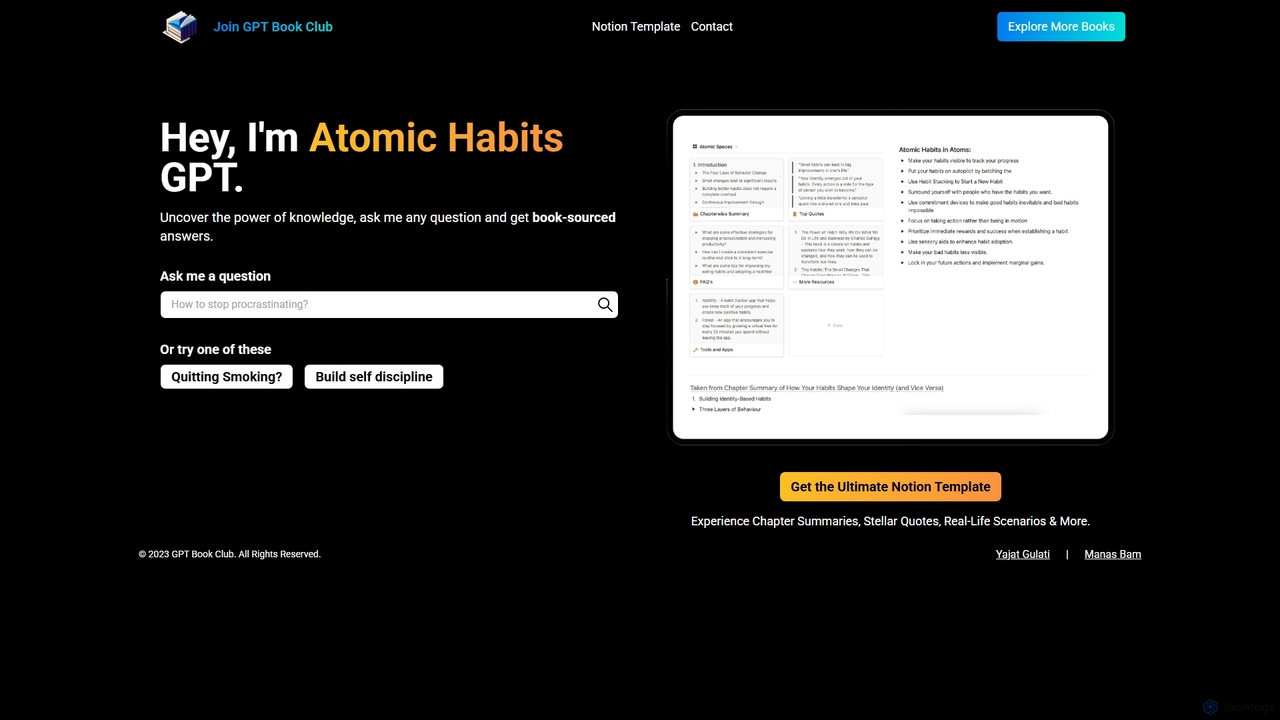
An interactive AI chatbot trained on James Clear's bestselling book, "Atomic Habits." Ask any question and get instant, book-sourced answers, summaries, quotes, and real-life application scenarios to help you build better habits.

Learning
Visits 4.4KFavorites 147Likes 140
befreed
Freemium

befreed

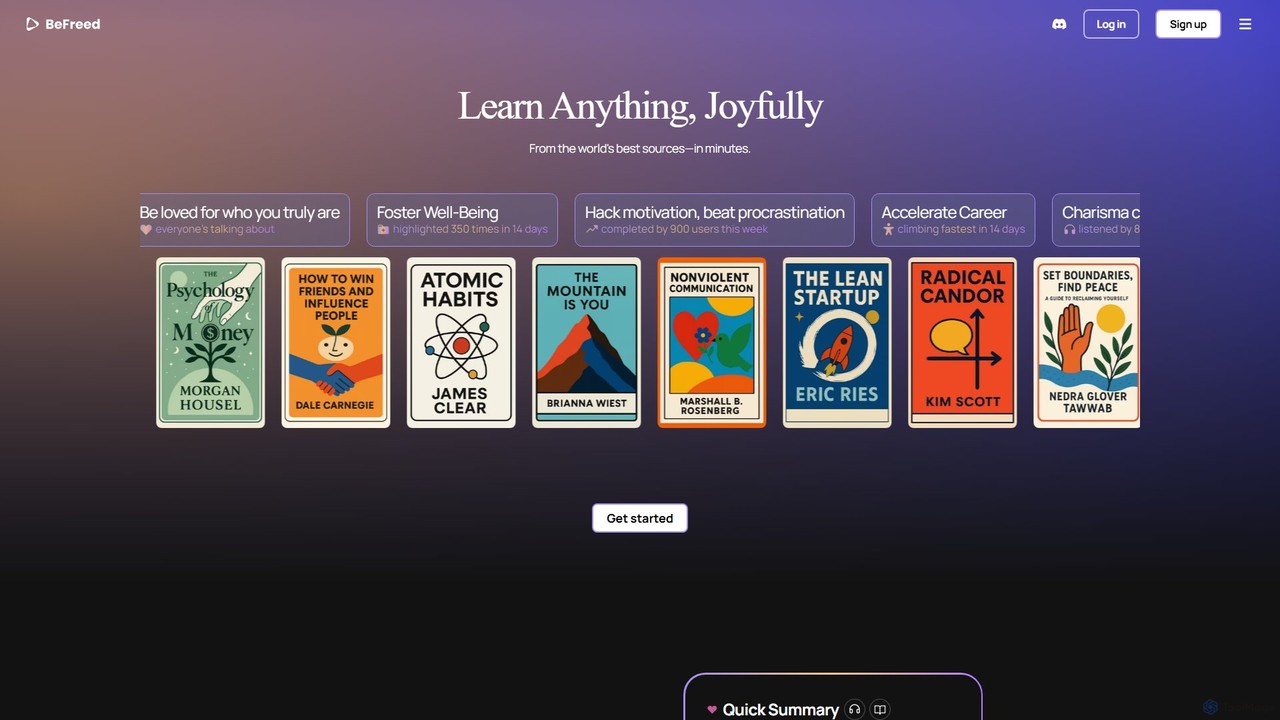
befreed is an AI-powered micro-learning app that transforms knowledge from the world's best books and sources into personalized, bite-sized content. Learn anything joyfully through engaging formats like audio podcasts, flashcards, and quick summaries, tailored to your unique learning style and pace.

Summaries
Visits 258.6KFavorites 123Likes 110

About Personal Development

AI Personal Development tools are applications designed to foster self-awareness, emotional intelligence, and soft skills through interactive, data-driven guidance. These tools leverage machine learning and natural language processing to act as digital coaches, mentors, or reflective journals. They analyze user input, such as journal entries or recorded speech, to provide personalized feedback, track progress on goals, and suggest actionable steps for growth. This approach makes skill-building in areas like communication and leadership more accessible and consistent.

Core Features

  • AI Coaching & Mentorship: Simulates conversations to help users set goals, identify limiting beliefs, and develop action plans.
  • Guided Journaling & Reflection: Provides intelligent prompts to encourage deeper self-analysis and emotional processing.
  • Habit Formation Tracking: Uses behavioral science principles and AI to monitor progress and provide personalized motivation for building positive habits.
  • Soft Skill Practice: Offers interactive scenarios and role-playing exercises to improve communication, negotiation, and leadership skills.
  • Personalized Feedback: Analyzes text or voice inputs to offer objective insights into communication style, emotional tone, and areas for improvement.

Use Cases

These tools are widely used by professionals seeking career advancement, individuals aiming to improve relationships and well-being, and students developing foundational life skills. For example, a manager might use an AI coach to practice difficult conversations, while an individual could use a guided journaling app to manage anxiety and build resilience. They are particularly effective for continuous, self-paced learning outside of formal training environments.

How to Choose

When selecting an AI Personal Development tool, first consider your primary goal (e.g., habit formation, communication skills, emotional regulation). Evaluate the tool's underlying methodology—does it use proven techniques like Cognitive Behavioral Therapy (CBT)? Assess the feedback mechanism; it should be constructive and actionable. Finally, consider data privacy policies, especially for tools that handle sensitive personal reflections.

Featured tool rankings

Personal Development use cases

1

Improve Public Speaking Skills with AI Feedback

A project manager preparing for a major client presentation uses an AI personal development tool to refine their public speaking. They record their speech within the app, and the AI analyzes various metrics such as speaking pace, use of filler words like 'um' and 'ah', vocal tone variation, and overall clarity. The tool provides a detailed report with specific, actionable feedback, for instance, 'Try to slow down your pace by 10% in the introduction' or 'You used 'like' 15 times; try pausing instead.' By practicing with the AI coach multiple times, the manager significantly reduces filler words and improves their vocal confidence, leading to a more persuasive and professional presentation.

2

Develop Emotional Intelligence through Guided Journaling

An individual struggling with stress and emotional reactivity uses an AI-powered journaling app to build self-awareness. Each day, the app provides prompts based on Cognitive Behavioral Therapy (CBT) principles, such as 'What was the most challenging part of your day, and what thoughts did it trigger?' or 'Describe a moment you felt proud and analyze the feeling.' The AI analyzes the text entries for emotional sentiment and recurring themes, providing weekly summaries that highlight patterns, like a tendency to experience anxiety on Sunday evenings. This data-driven reflection helps the user identify emotional triggers and develop healthier coping mechanisms, leading to improved emotional regulation over time.

3

Practice Difficult Conversations with an AI Role-Player

A new team lead needs to address a performance issue with a senior team member and is anxious about the conversation. They use an AI personal development tool that offers role-playing simulations. The user selects the scenario 'Giving Constructive Feedback'. The AI plays the role of the employee, responding with realistic pushback, defensiveness, or questions. The tool provides real-time feedback on the user's word choice, tone (if using voice input), and strategy, suggesting alternative phrasing like 'Instead of saying 'you always...', try 'I've noticed a pattern of...'.' This safe, repeatable practice environment allows the team lead to build confidence and refine their communication strategy before the actual high-stakes conversation.

4

Build a Consistent Meditation Habit with an AI Coach

A busy professional wants to start meditating to manage stress but struggles with consistency. They use an AI personal development app focused on mindfulness. The app first assesses their experience level and goals to recommend a personalized plan, starting with 5-minute guided sessions. The AI coach sends smart, non-intrusive reminders at times the user is most likely to be free, based on their calendar or usage patterns. After each session, the user rates their focus level, and the AI adjusts future sessions accordingly. It provides encouragement and visualizes their progress streak, which gamifies the experience and motivates them to maintain consistency, successfully integrating meditation into their daily routine.

5

Set and Track Life Goals with an AI Mentor

A recent graduate feels overwhelmed about their career path and personal goals. They use an AI mentorship tool to gain clarity. The process starts with the AI asking structured questions to help the user define their long-term vision in different life areas (career, health, relationships). Based on these goals, the AI helps break them down into smaller, quarterly milestones and weekly actionable tasks. It acts as an accountability partner, checking in on progress and asking reflective questions if a task is missed, such as 'What obstacle stood in your way this week?'. This structured guidance helps the graduate move from a state of ambiguity to having a clear, actionable roadmap for their personal development.

6

Overcome Procrastination with AI-Guided CBT Techniques

A freelance writer frequently misses deadlines due to procrastination. They turn to a personal development app that uses Cognitive Behavioral Therapy (CBT) techniques. When the writer feels the urge to procrastinate, they open the app and engage with an AI chatbot. The bot guides them through a 'thought record' exercise, helping them identify the negative automatic thought (e.g., 'This article is too hard'), challenge it ('I've written difficult articles before'), and reframe it with a more balanced perspective ('I can start by writing just the outline'). The app also helps them break down large projects into small, manageable 'Pomodoro' sessions. By consistently using these AI-guided exercises, the writer learns to manage their procrastination triggers and develops more productive work habits.

Personal Development FAQ

What are AI Personal Development tools?

AI Personal Development tools are a category of software that uses artificial intelligence to provide personalized guidance for self-improvement. Unlike general productivity apps, they focus on internal growth, such as enhancing emotional intelligence, building positive habits, and improving soft skills like communication. They often function as AI coaches, mentors, or guided journals, using techniques from psychology and behavioral science to offer interactive exercises, track progress, and deliver data-driven insights to help users understand themselves better and achieve their personal goals.

How do I choose the right AI Personal Development tool?

Choosing the right tool depends on your specific goals. Consider the following factors:

  • Focus Area: Identify what you want to improve. Is it habit formation, public speaking, emotional regulation, or goal setting? Choose a tool that specializes in that area.
  • Methodology: Look for tools based on established scientific principles, such as Cognitive Behavioral Therapy (CBT), positive psychology, or behavioral science. This ensures the guidance is effective.
  • Interaction Style: Do you prefer a chatbot coach, a structured journaling app, or a tool that analyzes your speech? Select a format that you will feel comfortable using consistently.
  • Data Privacy: Since you may be sharing personal thoughts and data, carefully review the tool's privacy policy to ensure your information is secure and confidential.
What's the difference between AI Personal Development and AI Productivity tools?

The primary difference lies in their core objective. AI Productivity tools focus on optimizing external tasks and workflows. Their goal is to help you do more in less time, managing projects, automating scheduling, or summarizing documents. In contrast, AI Personal Development tools focus on internal growth and self-awareness. Their goal is to help you be better, not just do more. They work on improving your mindset, emotional intelligence, and soft skills. While a productivity tool might organize your to-do list, a personal development tool would help you understand and overcome the procrastination that prevents you from starting it.

Can AI tools really help with personal growth?

Yes, AI tools can be effective aids for personal growth when used correctly. They offer several advantages: accessibility, providing 24/7 support that traditional coaching cannot; personalization, tailoring exercises and feedback to individual needs; and objectivity, offering data-driven insights without human bias. They excel at building consistency in habits like journaling or meditation and provide a safe space to practice skills like difficult conversations. However, they are best viewed as supplements to, not replacements for, human connection and professional therapy, especially for complex mental health issues. Their effectiveness depends on the user's commitment and the quality of the tool's underlying psychological framework.

Who can benefit from using AI Personal Development tools?

A wide range of individuals can benefit from these tools. This includes:

  • Professionals: Those looking to improve leadership, communication, and negotiation skills for career advancement.
  • Students: Individuals developing foundational life skills like time management, goal setting, and resilience.
  • Entrepreneurs: Founders who need to manage stress, make high-stakes decisions, and maintain a growth mindset.
  • Anyone Seeking Self-Improvement: Individuals interested in building self-awareness, managing emotions, forming positive habits, or simply understanding themselves better.

Essentially, anyone with a desire for structured, self-paced growth in their personal or professional life can find value in these AI-powered applications.