GPT Zero
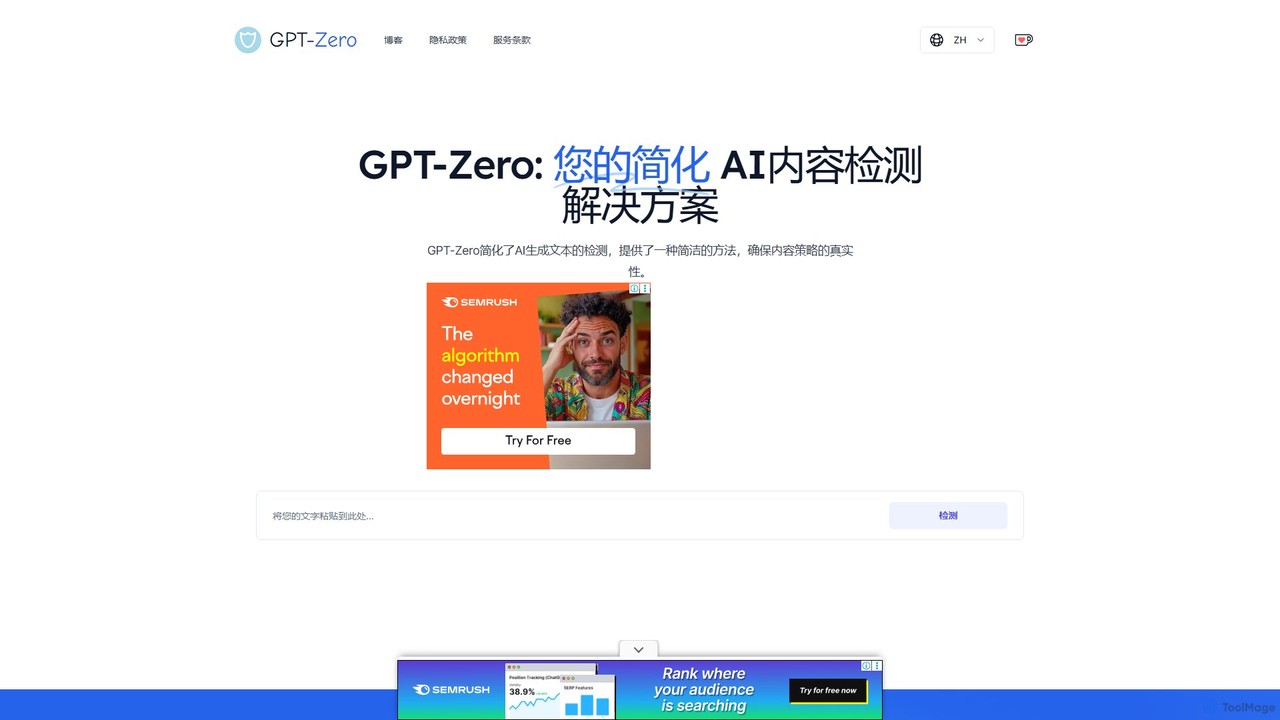
GPT Zero is a free and highly accurate AI content detector designed to identify text generated by models …
GPT Zero is a free and highly accurate AI content detector designed to identify text generated by models like ChatGPT, GPT-4, and others. It helps educators, writers, and businesses ensure content authenticity and uphold academic and professional integrity. With its user-friendly interface and rapid analysis, it provides a reliable solution for verifying the originality of any text.
aidetectorbot
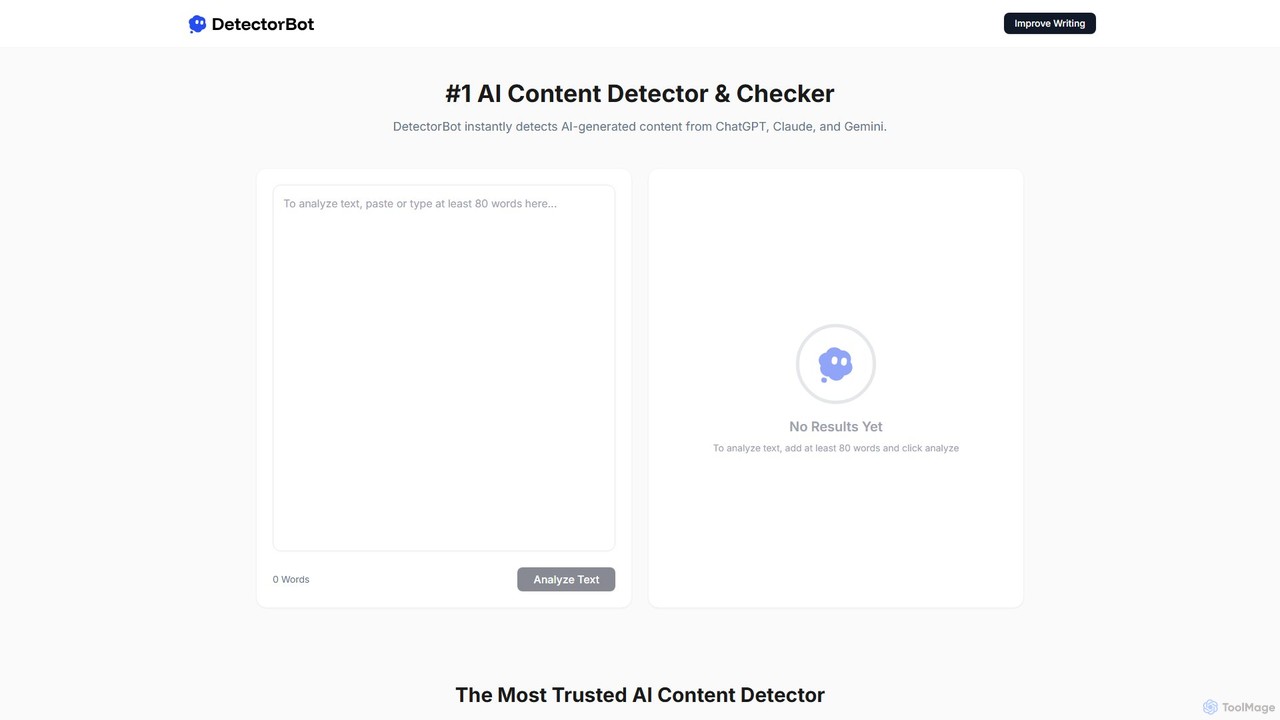
aidetectorbot is an advanced AI content detector that accurately identifies text generated by models like ChatGPT, GPT-4, Claude, …
aidetectorbot is an advanced AI content detector that accurately identifies text generated by models like ChatGPT, GPT-4, Claude, and Gemini. It offers a free, user-friendly interface for analyzing essays, articles, and other documents. The tool provides detailed, sentence-level analysis with confidence scores, making it ideal for educators, writers, and SEO professionals who need to ensure content originality and authenticity.
About Content Verification
Content Verification tools are a specialized category of AI software designed to analyze and validate the originality, accuracy, and credibility of written material. They utilize advanced algorithms, including natural language processing (NLP) and large-scale database comparisons, to detect plagiarism, identify factual inaccuracies, and recognize AI-generated text. These tools are essential for SEO professionals, editors, and publishers who need to ensure their content meets high standards of quality and trustworthiness, directly supporting search engine E-E-A-T guidelines.
Core Features
- Plagiarism Detection: Scans text against billions of web pages and academic sources to identify non-original content.
- Fact-Checking: Cross-references statements and data points with reliable knowledge bases to verify factual accuracy.
- AI Content Detection: Identifies patterns and characteristics typical of text generated by large language models.
- Source Credibility Analysis: Evaluates the authority and reliability of cited sources and external links.
Use Cases
These tools are widely used in digital publishing, academic institutions, and content marketing. Editors use them to vet articles before publication, educators check student submissions for originality, and SEO agencies ensure the content they produce is unique and authoritative to avoid search engine penalties.
How to Choose
When selecting a Content Verification tool, consider the scale of its database for plagiarism checks, the accuracy of its fact-checking and AI detection capabilities, integration options with your existing content management system (CMS), and the granularity of its reporting features.

Content VerificationUse Cases
Ensuring Originality in SEO Content Production
A content marketing agency uses a Content Verification tool to process articles submitted by freelance writers. Before publishing, each article is scanned to generate an originality report. The tool flags passages that are too similar to existing online content, allowing editors to request revisions. This process prevents duplicate content penalties from search engines and ensures the agency delivers unique, high-value content to its clients, protecting both their and the client's SEO rankings.
Maintaining Editorial Standards in Digital Publishing
An online news outlet integrates a Content Verification tool into its editorial workflow. Journalists and editors run their articles through the system before publication. The tool automatically fact-checks key claims, dates, and statistics against trusted databases. It also analyzes the credibility of linked sources, helping the publication uphold its reputation for accuracy and trustworthiness, which is a critical factor for building reader loyalty and search engine authority.
Upholding Academic Integrity in Education
A university implements a Content Verification tool across its departments to check student essays and research papers. Students submit their work through a portal that automatically scans for plagiarism. The system provides instructors with detailed reports highlighting any unoriginal text and missing citations. This helps educate students on proper sourcing and deters academic dishonesty, preserving the institution's academic standards.
Auditing AI-Generated Content for Quality Control
A marketing team uses AI to generate initial drafts for blog posts and social media updates. They then employ a Content Verification tool to refine this content. The tool first checks for factual 'hallucinations' or inaccuracies that the AI may have produced. It then scans for originality to ensure the AI-generated text is not a simple copy of its training data, allowing the team to leverage AI for speed while maintaining human oversight for quality and accuracy.
Verifying Legal and Compliance Documents
A corporate legal department uses a Content Verification tool to review contracts and regulatory filings. The software compares new documents against a library of approved templates and past agreements. It flags any deviations, inconsistencies in terminology, or outdated clauses. This automated check reduces the risk of human error, ensures compliance with legal standards, and significantly speeds up the document review process.
Protecting Brand Reputation with Fact-Checking
A public relations firm uses a Content Verification tool to monitor online mentions of its clients. When a potentially damaging article or social media post appears, the tool is used to quickly verify or debunk its claims by cross-referencing them with established facts. This enables the PR team to formulate a rapid, evidence-based response, helping to manage crises and protect the client's brand reputation from misinformation.