ToolMage
Sign in

Best 4 Multilingual Seo AI tools for Seo

Popular Multilingual Seo AI tools in Seo include Linguana, multilipi, Global SEO, and AIGLOT, helping you work more efficiently.

Linguana
Freemium

Linguana

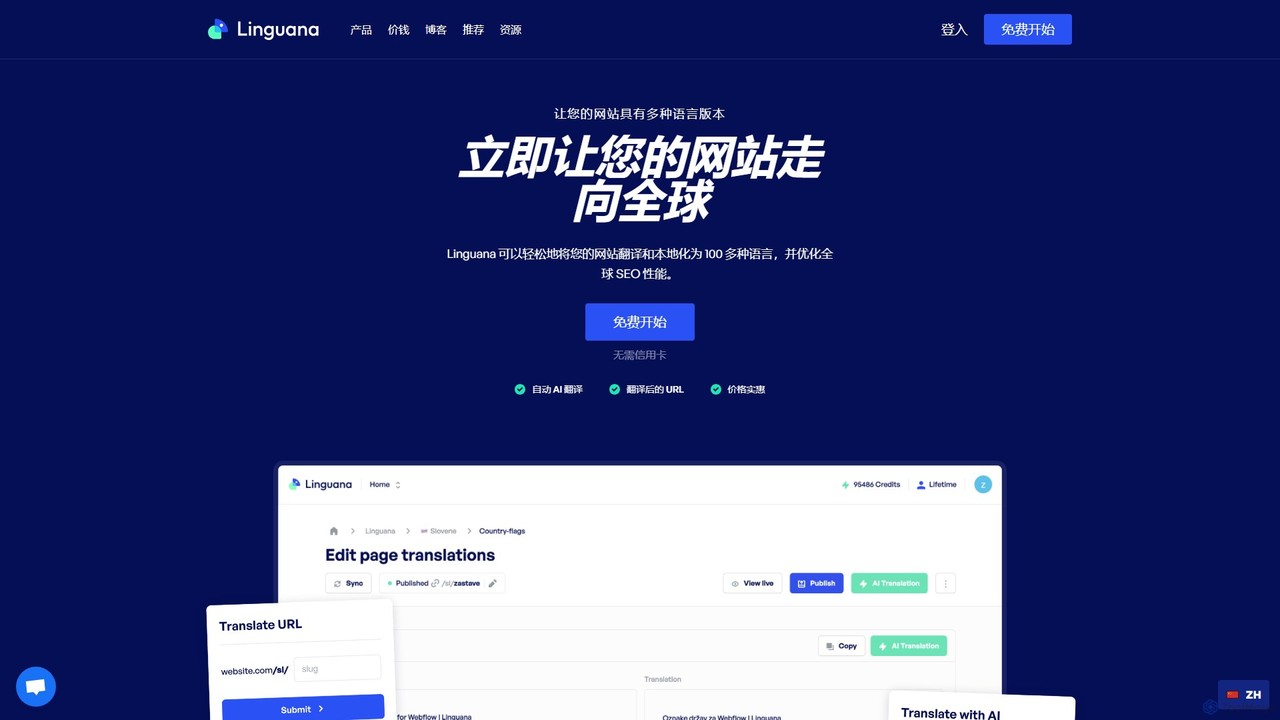
Linguana is an AI-powered, no-code website localization tool that automatically translates sites built on platforms like Framer, Webflow, and WordPress. It focuses on creating SEO-friendly multilingual sites using subdirectory structures, helping businesses expand their global reach and improve search engine visibility in over 100 languages.

No Code
Visits 12.4KFavorites 141Likes 152
multilipi
Freemium

multilipi

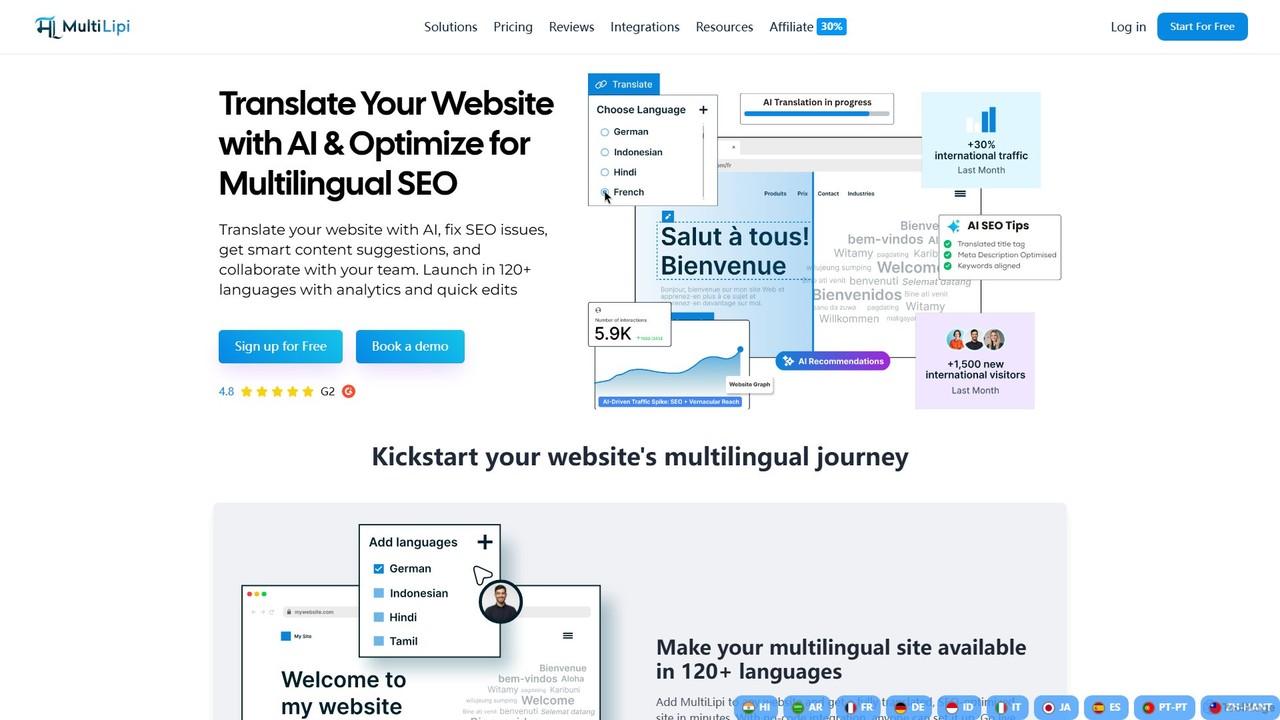
multilipi is an AI-powered platform that automatically translates your website content into over 100 languages, optimizing it for multilingual SEO. It offers a seamless, no-code integration to help businesses expand their global reach, improve user experience, and increase international traffic. It combines machine translation with a visual editor for human refinement.

Localization
Visits 10.1KFavorites 145Likes 122
AIGLOT
Freemium

AIGLOT

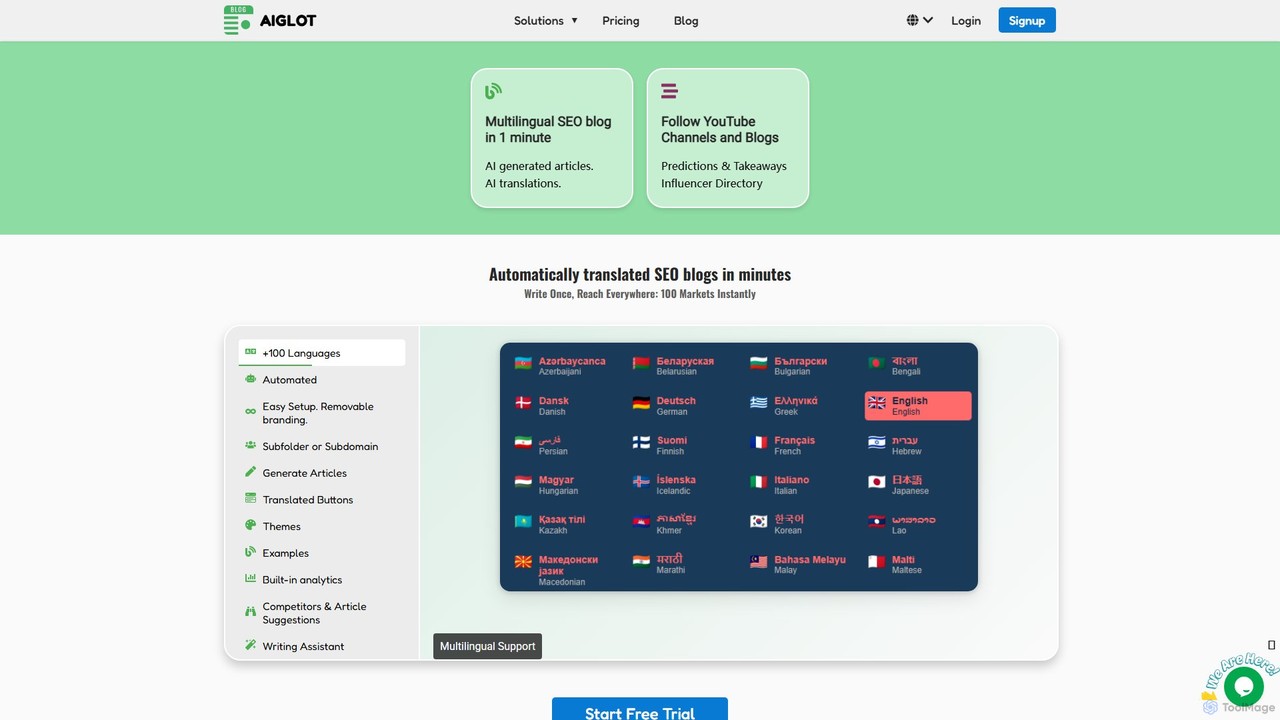
AIGLOT is an AI-powered platform that creates multilingual SEO-optimized blogs in minutes. It automates article generation, translation into over 100 languages, and content distribution. It also features tools for tracking competitors, following YouTube channels and blogs for insights, and an extensive influencer directory to boost your global reach.

Content Marketing
Visits 5.5KFavorites 146Likes 131
Global SEO
Freemium

Global SEO

Global SEO is an AI-powered platform that automatically translates your website into 94 languages, enabling you to reach a global audience. It focuses on multilingual SEO, ensuring translated pages are indexed by search engines to grow international organic traffic. With easy integration, contextual GPT-4 translations, and a cost-effective pay-per-word model, it's designed for businesses of all sizes to expand their global reach effortlessly.

Localization
Visits 6.7KFavorites 156Likes 166

About Multilingual Seo

Multilingual SEO tools are specialized AI platforms designed to optimize websites for search engines across different languages and geographic regions. They automate complex technical tasks like generating and managing hreflang tags to prevent duplicate content issues and ensure correct language versioning. These tools go beyond simple translation by using AI to conduct localized keyword research, analyze cultural search nuances, and track rankings in specific international markets. This enables businesses to effectively reach a global audience and improve their visibility in local search results.

Core Features

  • Automated Hreflang Management: Generates, validates, and implements hreflang tags to signal language and regional targeting to search engines.
  • Localized Keyword Research: Discovers high-potential keywords and search queries specific to each target language and culture, not just direct translations.
  • International Rank Tracking: Monitors keyword performance and search visibility across different countries and search engine domains (e.g., google.de, google.co.jp).
  • Content Localization Analysis: Provides suggestions for adapting content to meet local cultural expectations, improving user engagement.
  • Technical International Audit: Scans websites for common international SEO issues, such as incorrect redirects or URL structures.

Use Cases

These tools are essential for global e-commerce businesses expanding into new markets, SaaS companies targeting international users, and multinational corporations managing complex web properties. Digital marketing agencies also use them to streamline international SEO campaigns for their clients, ensuring technical accuracy and market relevance.

How to Choose

When selecting a Multilingual SEO tool, consider the accuracy of its hreflang generation, the depth of its localized keyword database, and the number of supported countries and languages. Also, evaluate its integration capabilities with your CMS (like WordPress or Shopify) and analytics platforms, as well as its reporting and auditing features.

Multilingual Seo use cases

1

Global E-commerce Market Expansion

An e-commerce manager for an online fashion brand is planning to launch in France and Japan. They use a Multilingual SEO tool to identify commercially valuable keywords in French and Japanese, going beyond literal translations of their English terms. The tool automatically generates the necessary hreflang tags for thousands of product pages, ensuring Google serves the correct language and currency version to users in each country. This prevents duplicate content penalties and significantly accelerates the new stores' organic traffic growth.

2

Localizing a SaaS Blog for Latin America

A content marketer at a B2B SaaS company wants to increase lead generation from Spanish and Portuguese-speaking countries. They use an AI tool to analyze top-ranking competitor articles in Brazil and Mexico. The tool suggests localized topic ideas and relevant long-tail keywords. It also helps adapt existing English articles by suggesting culturally appropriate examples and phrasing, making the content resonate better with the local audience and improving search rankings in the region.

3

Auditing a Multinational Corporate Website

The global digital marketing lead at a large corporation is responsible for 15 different regional websites. They use a Multilingual SEO tool to perform a comprehensive international technical audit. The tool crawls all sites and identifies critical issues like broken hreflang links, incorrect canonical tags across domains, and mixed-language content on pages. This provides a centralized dashboard to manage and fix errors, ensuring a consistent and technically sound SEO foundation across all global web properties.

4

Managing International Clients at a Digital Agency

An SEO specialist at a marketing agency handles campaigns for clients in the UK, Germany, and Spain. They use a Multilingual SEO tool to streamline their workflow. The platform tracks keyword rankings for each client in their respective Google domains (google.co.uk, google.de, google.es). It automates monthly reporting on international performance and provides actionable recommendations for each market, allowing the specialist to manage multiple complex campaigns efficiently without manual data pulling.

5

Optimizing a Travel Blog for a Global Audience

A travel blogger wants to attract readers from Europe and Asia. They use a Multilingual SEO tool to optimize their destination guides. For a post about 'things to do in New York,' the tool helps find what German tourists search for versus what Japanese tourists search for. It assists in creating properly tagged, translated versions of the article, ensuring that when someone searches in German from Germany, they find the German version of the post, leading to higher engagement and traffic.

6

Scaling Content for an International News Publisher

An editor at an online media outlet aims to expand its readership into non-English speaking markets. They integrate a Multilingual SEO tool into their content management system (CMS). When an article is published in English, the tool assists in creating localized versions for other languages. It helps ensure headlines are optimized for local search intent and that the URL structure and hreflang tags are automatically and correctly implemented, enabling the publisher to scale its global reach effectively.

Multilingual Seo FAQ

What are Multilingual SEO tools?

Multilingual SEO tools are specialized software that automates the technical and strategic tasks required to rank a website in multiple languages and countries. Their primary function is to manage international SEO elements like hreflang tags, conduct localized keyword research, and track performance across different geographic markets. Unlike simple translation plugins, they focus on the technical signals and cultural nuances that search engines use to serve the right content to the right audience.

How do I choose the right Multilingual SEO tool?

When selecting a tool, evaluate these key factors:

  • Technical Accuracy: Does it correctly generate, validate, and implement hreflang tags and other international signals?
  • Language & Region Support: Does it cover the specific countries and languages you are targeting with reliable keyword and SERP data?
  • Integration: Can it connect with your website's CMS (e.g., WordPress, Shopify) and analytics tools for seamless workflow?
  • Feature Set: Does it offer the right balance of technical auditing, localized keyword research, and international rank tracking for your needs?
What is the difference between Multilingual SEO and website translation?

Website translation is the process of converting text from one language to another. Multilingual SEO is a broader strategy that includes translation but also focuses on optimizing the website to be found by search engines in each target market. This involves technical setup (like hreflang tags and URL structures), researching how local users search (keyword localization), adapting content to cultural norms, and building authority in that specific region. A translated site without Multilingual SEO may not rank or may even be penalized by search engines.

Are Multilingual SEO tools necessary for a small website?

While they become critical for large, complex sites, Multilingual SEO tools offer significant value even for smaller websites. For any site with more than one language version, correctly implementing hreflang tags is essential to avoid confusing search engines and prevent potential duplicate content issues. Using a tool to automate this process reduces the risk of human error and ensures your translated pages are properly indexed and served to the intended audience from the start.

How does AI enhance Multilingual SEO tools?

AI significantly enhances Multilingual SEO tools by moving beyond manual rules and direct translations. AI-powered natural language processing (NLP) models can understand search intent and cultural nuances in different languages, leading to more effective localized keyword suggestions. AI algorithms can also crawl and analyze complex website structures at scale to automatically identify international SEO errors, generate accurate hreflang maps, and even suggest content adaptations to better resonate with local audiences.