ToolMage
Sign in

Best 5 Programmatic Seo AI tools for Seo

Popular Programmatic Seo AI tools in Seo include Gracker, SEOmatic, UntalkedSEO, and prograseo, helping you work more efficiently.

SEOmatic
Paid

SEOmatic

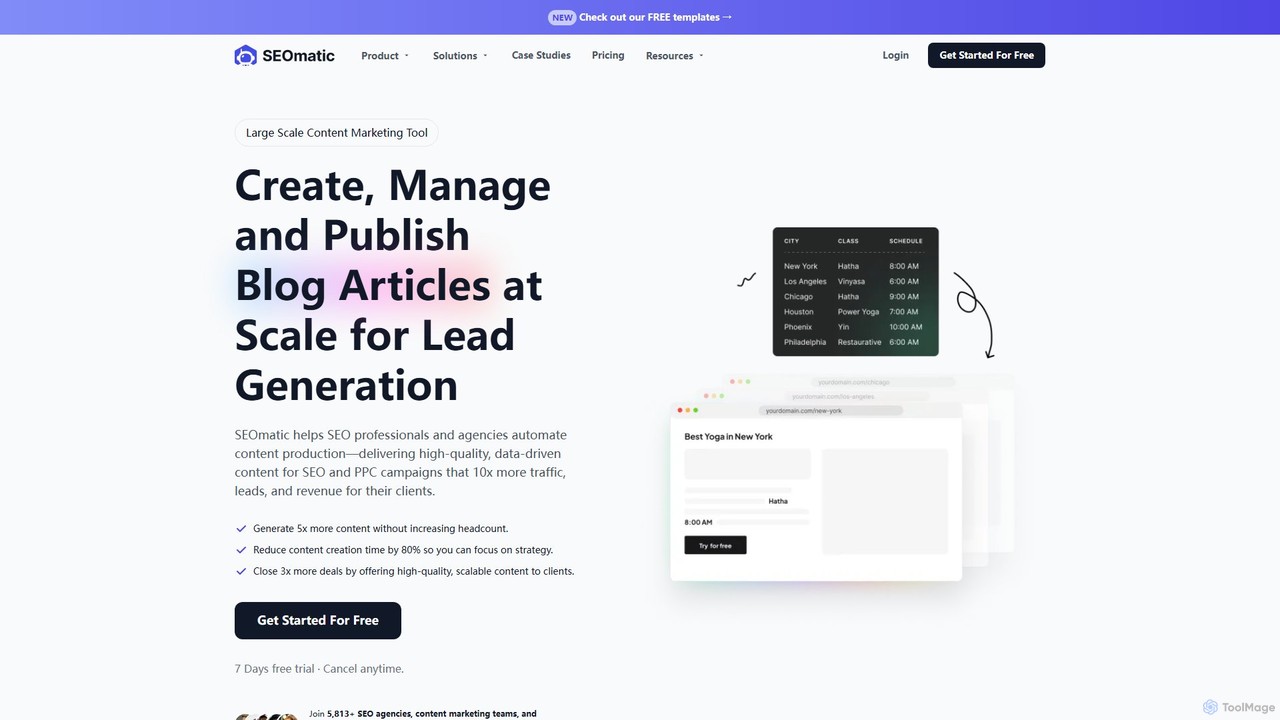
SEOmatic is an AI-powered programmatic SEO platform designed to automate and scale content creation. It enables users to generate thousands of optimized pages from data sources, targeting long-tail keywords to drive massive organic traffic without complex technical hurdles.

Content Marketing
Visits 4.2KFavorites 104Likes 104
SEOmatic
Freemium

SEOmatic

SEOmatic is an AI-powered programmatic SEO platform designed for SEO professionals and agencies. It automates large-scale content creation, management, and publishing, enabling users to generate thousands of unique, data-driven blog articles and landing pages to boost traffic, leads, and revenue without needing coding skills.

Content Marketing
Visits 26.6KFavorites 98Likes 95
prograseo
Freemium

prograseo

prograseo is an AI-powered platform designed for Programmatic SEO (pSEO). It enables users to automatically generate thousands of optimized landing pages from data, targeting long-tail keywords to massively scale organic traffic and content creation efforts.

Content Marketing
Visits 4.6KFavorites 133Likes 120
Gracker
Freemium

Gracker

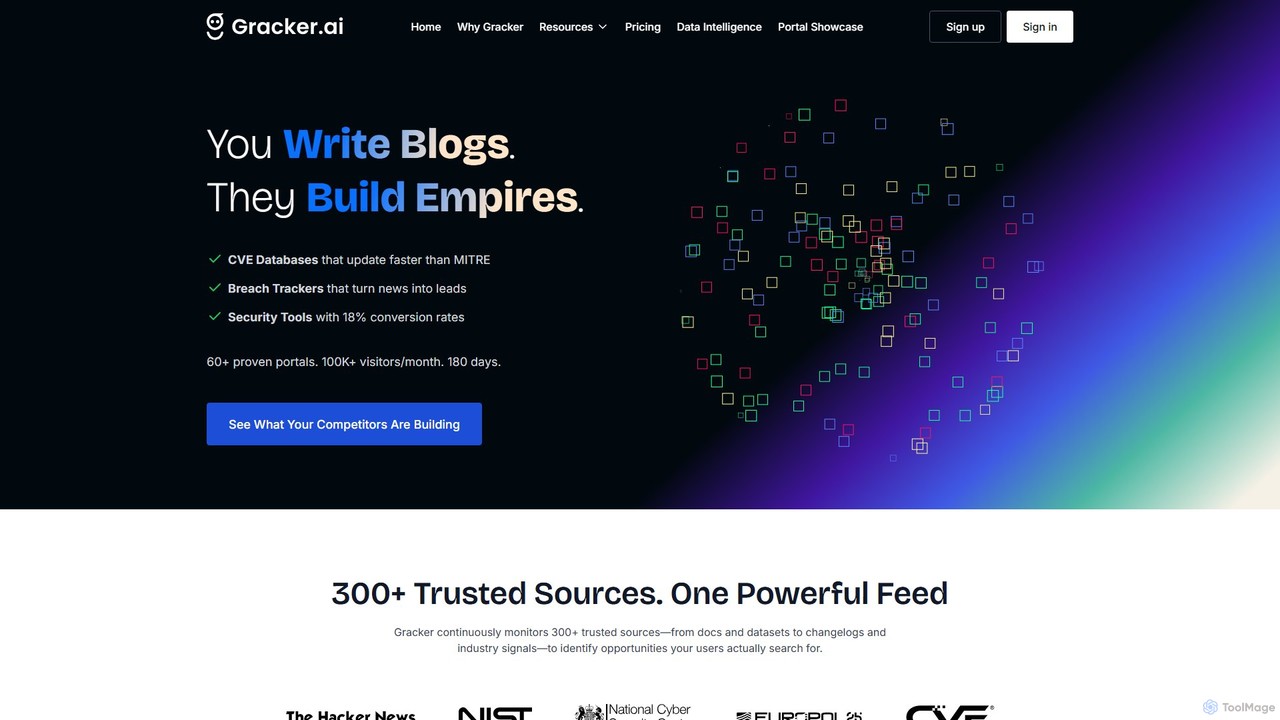
Gracker is an AI-powered programmatic SEO (pSEO) platform designed for B2B growth, especially in technical industries like cybersecurity. It automates the creation of high-utility content such as interactive tools, directories, and data-driven portals, transforming your product data into search-dominating assets. Gracker handles everything from idea generation to deployment and continuous optimization, enabling teams to scale content and drive high-intent traffic without manual writing or coding.

No Code
Visits 102.8KFavorites 110Likes 102
UntalkedSEO
Freemium

UntalkedSEO

UntalkedSEO is a comprehensive platform dedicated to simplifying Programmatic SEO (pSEO). It offers a rich collection of educational resources, expert-led services, and powerful AI-driven tools like the 'Multi-AI in Google Sheets' add-on. This platform is designed for marketers and businesses to learn, plan, and execute large-scale content strategies, enabling them to generate thousands of optimized landing pages, drive targeted traffic, and build a sustainable competitive advantage through automation and data-driven insights.

Resource
Visits 5.7KFavorites 93Likes 107

About Programmatic Seo

Programmatic SEO tools are a specialized category of software designed to automate the creation of large-scale, data-driven landing pages. These tools connect a structured data source, such as a product database or API, to a set of page templates, enabling the automatic generation of hundreds or thousands of unique, optimized pages. This approach is highly effective for businesses with extensive inventories or data sets, like e-commerce sites, marketplaces, and directories, allowing them to capture vast amounts of long-tail keyword traffic. Unlike traditional SEO which relies on manual content creation, Programmatic SEO leverages automation for massive content expansion and targeting niche search queries.

Core Features

  • Data Source Integration: Connects to databases, APIs, spreadsheets (CSV, Google Sheets), or other structured data sources to pull information.
  • Dynamic Page Templating: Allows users to create flexible page layouts with placeholders that are dynamically filled with data for each generated page.
  • Bulk Page Generation & Publishing: Automates the creation and publication of a large volume of pages directly to a CMS like WordPress or Webflow.
  • Automated Internal Linking: Intelligently creates a logical site structure by automatically generating internal links between related pages (e.g., parent-child relationships).
  • Keyword Variable Management: Manages keyword variations and modifiers to create unique titles, headings, and URLs for each generated page.

Use Cases

Programmatic SEO is ideal for digital businesses that manage large, structured datasets. Common applications include e-commerce sites creating pages for every product category and attribute combination, real estate portals generating listings for each city and neighborhood, travel aggregators building pages for every destination and activity, and job boards publishing unique pages for every role in every location.

How to Choose

When selecting a Programmatic SEO tool, evaluate its integration capabilities with your specific data sources and Content Management System (CMS). Assess the flexibility of the templating engine and its ability to create complex, unique layouts. Consider the tool's scalability to handle your required volume of pages and the sophistication of its internal linking features. Finally, review the pricing model, which is often based on the number of pages generated or features included.

Featured tool rankings

Programmatic Seo use cases

1

Scaling E-commerce Product Pages

An e-commerce manager for a large online store needs to create unique pages for thousands of product variations (e.g., 'men's red running shoes size 10'). Manually creating these is impossible. By using a Programmatic SEO tool, they connect their product inventory spreadsheet to a page template. The tool automatically generates a unique, optimized page for every single product variation, complete with specific titles, descriptions, and images. This strategy allows them to capture highly specific, high-intent long-tail search traffic, leading to increased visibility and direct sales for niche product queries.

2

Generate E-commerce Product Pages at Scale

An e-commerce manager for a large online shoe retailer needs to create unique landing pages for every combination of brand, model, color, and size to capture specific long-tail searches. Using a Programmatic SEO tool, they connect their product information management (PIM) system as a data source. They then design a template that dynamically inserts product names, images, descriptions, and specifications. The tool generates thousands of pages like 'Nike Air Max 90 White Size 10', each optimized for its specific search query, dramatically increasing organic traffic from highly qualified buyers.

3

Create Hyper-Local Service Pages

A national plumbing company wants to rank for service-related queries in every city and neighborhood it serves. A marketing specialist uses a Programmatic SEO tool to combine a list of their services (e.g., 'emergency pipe repair', 'drain cleaning') with a comprehensive list of locations. The tool automatically generates thousands of targeted pages like 'Emergency Pipe Repair in Brooklyn, NY' and 'Drain Cleaning in Williamsburg'. Each page can be further enriched with unique local information, such as testimonials from that area or local contact details, creating highly relevant content for local searchers.

4

Generating Localized Service Pages

A national service company (e.g., plumbing, cleaning) wants to rank for local searches in every city they operate in, such as 'plumber in Boston' or 'cleaning services in Miami'. A marketing team uses a Programmatic SEO tool by creating a list of all service locations in a spreadsheet. They design a template that includes service descriptions, testimonials, and contact information. The tool then generates a dedicated, localized page for each city, automatically inserting the correct city name into titles, headings, and content. This creates hundreds of locally relevant pages, significantly improving their visibility in local search results across the country.

5

Build a Comprehensive Real Estate Portal

A real estate technology startup aims to build a portal with pages for every property listing in every major city. Manually creating these pages is impossible. They use a Programmatic SEO platform to ingest property data feeds from Multiple Listing Services (MLS). They create templates for different page types: city overviews, neighborhood guides, and individual property listings. The system then generates millions of interconnected pages, such as 'Apartments for Rent in Austin, TX' and '3-Bedroom Homes for Sale in Zilker', establishing a massive footprint in search engines for real estate queries.

6

Building a Comprehensive Comparison Website

A content creator wants to build a website comparing thousands of software tools, like 'Tool A vs. Tool B'. They gather data on features, pricing, and ratings for each tool into a database. Using a Programmatic SEO tool, they create a template for comparison pages. The tool then programmatically generates a unique page for every possible comparison pair (e.g., 'Slack vs. Microsoft Teams', 'Asana vs. Trello'). This allows them to cover an exhaustive number of long-tail comparison keywords, attracting users who are in the final stages of their decision-making process and establishing the site as an authority in the niche.

7

Automate Affiliate Marketing Review Sites

An affiliate marketer wants to create a niche review website comparing thousands of tech gadgets. They gather structured data on product specifications, prices, and user ratings into a single database. Using a Programmatic SEO tool, they create a template for comparison pages. The tool then generates pages for every conceivable comparison, such as 'GoPro Hero 10 vs. DJI Action 2' or 'Best Laptops under $1000 with 16GB RAM'. This strategy allows them to target a vast number of highly specific, purchase-intent keywords that would be impossible to cover manually, driving targeted traffic to their affiliate links.

8

Creating a Hyper-Specific Job Board

The operator of a niche job board wants to attract candidates searching for very specific roles, like 'remote senior python developer jobs in Texas'. They aggregate job listings from various sources into a single database. A Programmatic SEO tool is used to generate a unique page for every combination of job title, skill, and location. This results in tens of thousands of highly targeted pages that match specific user search queries perfectly. This approach drives qualified, high-intent traffic directly to relevant job listings, increasing application rates and providing better results for employers.

9

Automating Affiliate Marketing Content

An affiliate marketer focuses on 'best of' product review articles. They maintain a large database of products with features, pros, cons, and affiliate links. Instead of manually writing hundreds of articles like 'Best Laptops for Students' or 'Best Coffee Makers under $100', they use a Programmatic SEO tool. They create a template for a 'best of' listicle and define rules for which products to include based on tags (e.g., 'student', 'budget'). The tool then generates numerous articles, each targeting a different long-tail keyword, massively scaling their content output and affiliate revenue potential.

10

Develop a Large-Scale Travel Guide Website

A travel company wants to become an authority on global travel by providing detailed guides for thousands of destinations. A content strategist uses a Programmatic SEO tool to combine data sets for cities, attractions, hotels, and restaurants. They create templates to generate pages like 'Top 10 Things to Do in Paris', 'Best Family-Friendly Hotels in Rome', and '3-Day Itinerary for Tokyo'. By programmatically generating this vast library of content, they can rank for an enormous range of travel-related queries, attracting potential customers at various stages of their travel planning process.

11

Create Targeted SaaS Feature Landing Pages

A SaaS company offers a project management tool with features applicable to many different industries. To attract users from these specific verticals, a product marketer uses a Programmatic SEO approach. They create a dataset listing each feature (e.g., 'Gantt Charts', 'Time Tracking') and each target industry ('Construction', 'Software Development', 'Marketing Agencies'). The tool then generates highly specific landing pages like 'Gantt Charts for Construction Project Management' and 'Time Tracking for Marketing Agencies'. This allows them to rank for niche, high-intent keywords that their main feature pages wouldn't capture.

12

Powering a Real Estate Listing Portal

A real estate portal needs to display thousands of property listings, each with its own page. The data for these listings (price, location, number of bedrooms, photos) is stored in a central database and updated frequently. A Programmatic SEO tool connects directly to this database. It uses a template to automatically generate and update a unique page for each property. Furthermore, it creates summary pages for each neighborhood, city, and zip code (e.g., 'Homes for sale in Brooklyn, NY'). This creates a deep, well-structured website that ranks for a vast array of specific, location-based real estate searches.

Programmatic Seo FAQ

What is Programmatic SEO?

Programmatic SEO is a technique for creating a large number of web pages automatically by using data and templates. Instead of writing each page manually, it uses a script or tool to combine a data source (like a spreadsheet of cities or products) with a page template to generate unique pages for each item in the data. This method is primarily used to target thousands of long-tail keywords at scale, which would be impractical to target with traditional, manual SEO efforts.

What is Programmatic SEO?

Programmatic SEO (pSEO) is an advanced SEO technique that uses automation to create a large number of optimized landing pages from a structured dataset. Instead of manually writing each page, pSEO tools use templates and data sources (like spreadsheets or APIs) to programmatically generate unique pages at scale. This method is highly effective for capturing a wide range of long-tail keyword traffic, particularly for businesses like e-commerce stores, marketplaces, and directories that have extensive data to leverage.

How is Programmatic SEO different from traditional SEO?

The main difference lies in scale and focus. Traditional SEO often involves manually creating and optimizing a smaller number of high-value pages for broad, competitive keywords. Programmatic SEO focuses on automatically generating thousands or even millions of pages to target a vast number of highly specific, low-competition 'long-tail' keywords. While traditional SEO prioritizes in-depth content on a few pages, programmatic SEO prioritizes breadth and coverage across many targeted queries.

How does Programmatic SEO differ from traditional content SEO?

The core difference is scale and method. Traditional SEO often focuses on manually creating a smaller number of high-quality, in-depth content pieces (like blog posts) for broad keywords. Programmatic SEO focuses on automatically generating a very large number of pages for highly specific, long-tail keywords.

  • Traditional SEO: Manual creation, focuses on quality over quantity, targets broader topics.
  • Programmatic SEO: Automated creation, focuses on quantity and coverage, targets hyper-specific, data-driven topics.

Both strategies can be used together. Programmatic SEO is not a replacement for high-quality content but a complementary strategy to cover a vast search landscape that is impossible to address manually.

What kind of data is needed for Programmatic SEO?

You need a structured dataset where each row can represent a page and each column represents a piece of data to be placed on that page. The data must be clean, well-organized, and comprehensive enough to create unique and valuable pages. Common data sources include:

  • Spreadsheets: Google Sheets or CSV files containing product lists, locations, or service details.
  • Databases: SQL or NoSQL databases with large amounts of structured information.
  • APIs: Third-party or internal APIs that provide real-time data (e.g., real estate listings, stock prices).
  • Web Scraping Data: Information gathered and structured from other websites (ensure compliance with terms of service).
Is Programmatic SEO considered spam by search engines?

No, not if it's done correctly. Search engines penalize low-quality, auto-generated content that offers no value to the user. However, high-quality Programmatic SEO focuses on creating genuinely useful and unique pages at scale. For example, a page programmatically generated for '3-bedroom apartments in downtown Austin' is valuable if it provides accurate listings, photos, and neighborhood data. The key is to use data to create value, not just to create pages for the sake of volume.

What kind of data is needed for Programmatic SEO?

The foundation of Programmatic SEO is structured data. This can be any large, organized dataset where each row can represent a potential page. Common examples include:

  • E-commerce: Product catalogs with SKUs, names, prices, and attributes.
  • Real Estate: Property listings with addresses, prices, number of bedrooms, and features.
  • Travel: Databases of cities, countries, hotels, flights, and points of interest.
  • Local Services: Lists of services offered combined with lists of geographic locations served.
The richer and more unique the data, the more valuable the resulting pages will be.

Is Programmatic SEO considered spam by search engines?

No, not when done correctly. Programmatic SEO is not spam if the generated pages provide unique value to the user. Search engines penalize low-quality, auto-generated content that offers no real information (doorway pages). However, a well-executed pSEO strategy creates thousands of useful, specific pages that directly answer a user's query (e.g., a page for '2-bedroom apartments in downtown Austin'). The key is to use high-quality data to create pages that are genuinely helpful and distinct from one another, not just keyword-stuffed duplicates.

How do you choose a Programmatic SEO tool?

When selecting a Programmatic SEO tool, consider these factors:

  • Data Connectivity: How easily can it connect to your data sources (e.g., Google Sheets, API, database)?
  • Template Flexibility: Does it offer a powerful templating system that allows for logic, variables, and unique content generation to avoid duplicate content issues?
  • Scalability: Can the tool handle the volume of pages you plan to create and manage them efficiently over time?
  • Platform Integration: How well does it integrate with your CMS (like WordPress, Webflow, or a custom-built site)?
  • Technical Requirements: Assess the level of technical skill needed to set up and maintain the system. Some tools are no-code, while others require development resources.

How do I choose the right Programmatic SEO tool?

Choosing the right tool depends on your specific needs. Consider these key factors:

  • CMS Integration: Does the tool integrate seamlessly with your website's platform (e.g., WordPress, Webflow, Shopify, or a custom build)?
  • Data Source Compatibility: Can it easily connect to your data source, whether it's Google Sheets, an API, or a SQL database?
  • Template Flexibility: How much control do you have over the design and structure of the generated pages? Can you create complex layouts?
  • Scalability and Performance: Can the tool handle the number of pages you plan to generate without slowing down your site?
  • Technical Skill Required: Is the tool user-friendly for marketers, or does it require a developer to set up and manage?