HeyKora
HeyKora is an AI-powered landing page optimization tool that provides brutal, honest audits and actionable SEO and CRO …
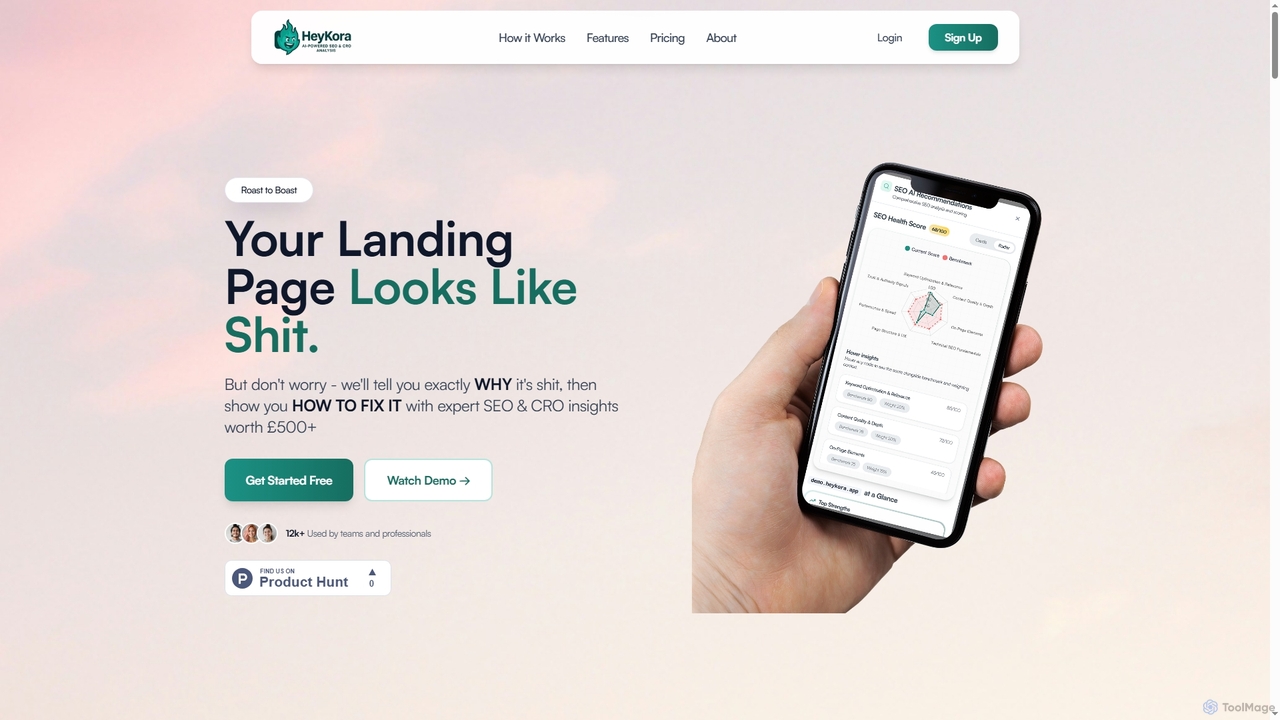
HeyKora is an AI-powered landing page optimization tool that provides brutal, honest audits and actionable SEO and CRO insights. It quickly analyzes your landing page's looks, copy, UX, and trust signals, offering prioritized fixes to boost conversions and improve performance. Get expert-level recommendations in minutes, not weeks.
About Website Audit
Website Audit tools are AI-powered solutions designed to comprehensively analyze a website's health, performance, and search engine optimization (SEO) factors. Leveraging advanced algorithms, these tools automatically identify technical issues, content gaps, user experience bottlenecks, and on-page SEO deficiencies that impact visibility and ranking. They provide actionable insights and recommendations, enabling webmasters, marketers, and SEO professionals to optimize their digital presence effectively within the broader SEO strategy.
Core Features
- Technical SEO Analysis: Identifies crawl errors, broken links, redirect issues, sitemap problems, and server response times.
- On-Page SEO Evaluation: Assesses title tags, meta descriptions, header structure, keyword usage, and image alt attributes for optimization.
- Content Quality Assessment: Analyzes content readability, uniqueness, keyword density, and identifies potential duplicate content or thin content.
- Performance & Speed Audit: Evaluates page load times, core web vitals, and identifies large files or inefficient code impacting user experience.
- User Experience (UX) Insights: Pinpoints navigation issues, mobile-friendliness, and accessibility concerns that affect visitor engagement.
Use Cases
Website Audit tools are essential for digital marketing agencies, e-commerce businesses, and content publishers aiming to maintain a robust online presence. They are used to diagnose why a website isn't ranking well, prepare for website redesigns, or regularly monitor site health to prevent SEO issues from escalating. These tools provide a systematic approach to identifying and resolving critical website problems that hinder organic growth.
How to Choose
When selecting an AI Website Audit tool, consider its scope of analysis (technical, content, performance, UX), the depth of its reporting, and the clarity of its recommendations. Look for integration capabilities with other SEO or analytics platforms, scalability for different website sizes, and a user-friendly interface. Evaluate the pricing model based on your audit frequency and the number of websites you manage, ensuring it aligns with your budget and specific needs.

Website AuditUse Cases
Diagnosing SEO Ranking Drops
SEO specialists use AI Website Audit tools to quickly identify the root causes of sudden drops in search engine rankings. By running a comprehensive audit, they can pinpoint technical issues like broken internal links, server errors, or recent changes in content quality that might be negatively impacting the site's visibility, allowing for targeted corrective actions.
Pre-Launch Website Health Check
Web developers and project managers utilize these tools before a new website or major redesign goes live. An audit ensures that all technical SEO elements are correctly implemented, content is optimized, and there are no critical performance bottlenecks or user experience issues that could hinder the site's initial performance and search engine indexing.
Regular Site Health Monitoring
Digital marketers and webmasters schedule periodic AI website audits to proactively monitor their site's health. This helps in catching new issues as they arise, such as broken pages, slow-loading assets, or duplicate content created inadvertently, ensuring the website consistently meets search engine and user experience standards.
Content Gap & Optimization Identification
Content strategists employ website audit tools to analyze existing content for quality, relevance, and keyword saturation. The tools help identify content gaps, opportunities for updating outdated information, or areas where content needs to be expanded or rewritten to better serve user intent and improve search engine performance.
Competitor Website Analysis
Marketing analysts use AI Website Audit tools to perform audits on competitor websites. This provides insights into their technical setup, content strategy, and performance metrics, helping to uncover competitive advantages or weaknesses that can inform and refine their own SEO and website optimization strategies.
Improving User Experience & Accessibility
UX designers and accessibility specialists leverage audit tools to identify issues impacting user experience, such as poor navigation, non-responsive design elements, or accessibility compliance failures. The detailed reports guide them in making improvements that enhance site usability for all visitors, leading to higher engagement and lower bounce rates.