
Shopping Best in category 1 results Review Summarizer AI Tool

Popular AI tools in the Review Summarizer field of Shopping include ChatGPT EVO, etc., helping you quickly improve efficiency.

Free
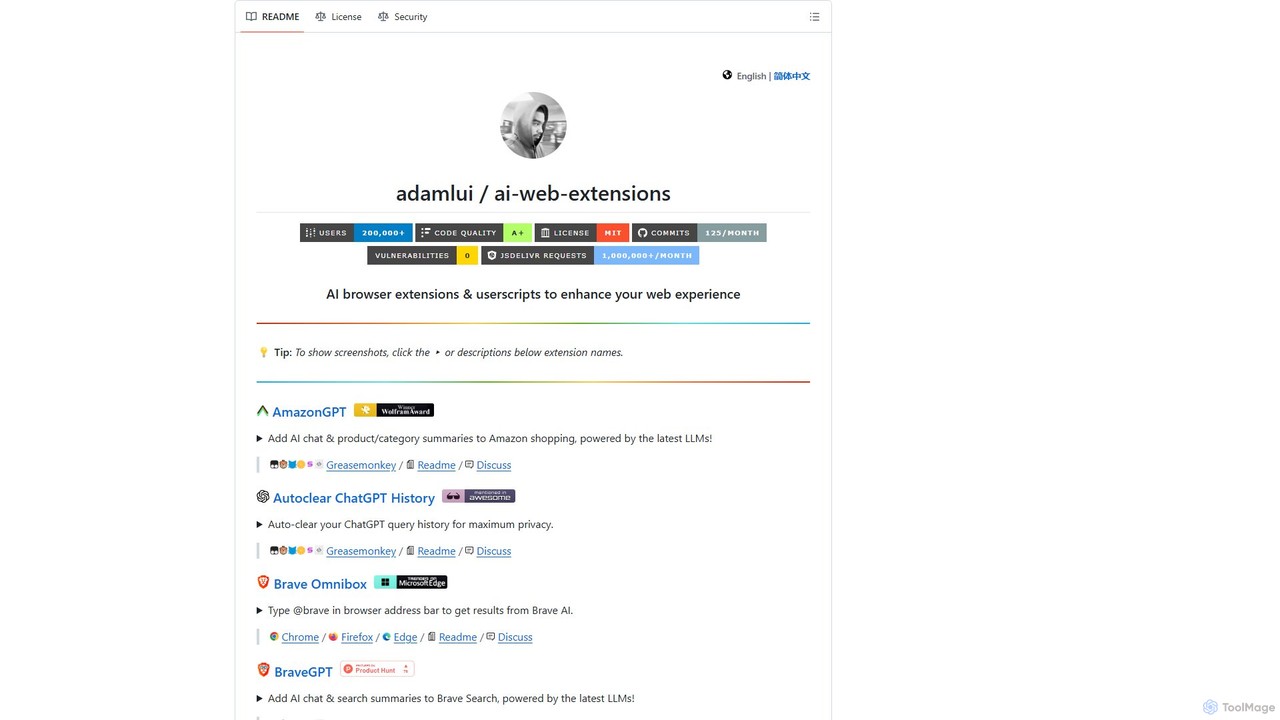
ChatGPT EVO

ChatGPT EVO

ChatGPT EVO is a powerful suite of open-source browser extensions and userscripts designed to augment your web experience. …

52.1K

About Review Summarizer

Review Summarizer tools are AI-powered applications that automatically analyze and condense large volumes of customer reviews into concise, understandable summaries. They leverage Natural Language Processing (NLP) to identify key themes, sentiment, and recurring pros and cons from unstructured text. This enables users, from consumers to product managers, to quickly grasp the collective opinion on a product or service without reading hundreds of individual comments. These tools are particularly valuable in the shopping and e-commerce space for making informed decisions and gathering market intelligence.

Core Features

  • Sentiment Analysis: Automatically categorizes reviews as positive, negative, or neutral to gauge overall customer satisfaction.
  • Topic & Keyword Extraction: Identifies and groups frequently mentioned topics, such as 'battery life', 'customer service', or 'shipping speed'.
  • Pros & Cons Generation: Distills feedback into a clear, bulleted list of the most cited advantages and disadvantages.
  • Trend Identification: Tracks changes in review sentiment or topics over time to spot emerging issues or popular features.
  • Multi-Source Aggregation: Gathers and analyzes reviews from various platforms like Amazon, Yelp, Google Maps, and app stores.

Use Cases

These tools are primarily used by e-commerce businesses, product managers, and market researchers to analyze customer feedback at scale. For instance, a product manager can use a review summarizer to quickly understand why a new product's ratings are declining. Consumers also use them to make faster, more confident purchasing decisions by getting a balanced overview of a product's strengths and weaknesses.

How to Choose

When selecting a Review Summarizer, consider the data sources it supports (e.g., specific e-commerce sites, social media). Evaluate the accuracy of its sentiment analysis and the granularity of its topic extraction. Also, assess its integration capabilities with other business tools (like Slack or CRMs) and whether its pricing model aligns with your usage volume.

Review SummarizerUse Cases

1

Analyze E-commerce Product Feedback

An e-commerce product manager needs to understand customer sentiment for a newly launched wireless earbud. Instead of manually reading over 2,000 reviews on Amazon, they use a Review Summarizer. The tool aggregates all reviews and generates a dashboard showing 75% positive sentiment. It highlights 'excellent battery life' and 'comfortable fit' as top pros, but flags 'microphone quality for calls' as a significant con mentioned in 15% of negative reviews. This allows the manager to quickly report the specific issue to the engineering team for the next product iteration, saving dozens of hours of manual analysis.

2

Conduct Competitive Market Research

A marketing analyst is tasked with identifying weaknesses in a competitor's leading product. They use a Review Summarizer to analyze 5,000+ reviews for the competitor's product across three major retail websites. The summary reveals a strong trend of complaints about 'poor software integration' and 'unresponsive customer support,' despite praise for the hardware. This insight directly informs their company's marketing strategy, allowing them to create campaigns that highlight their own product's superior software ecosystem and award-winning support, targeting a clear pain point of the competitor's customers.

3

Accelerate Consumer Purchase Decisions

A student is looking for a new budget laptop for their studies. They find a model with thousands of mixed reviews, making it difficult to decide. They use an online Review Summarizer by pasting the product page URL. Within seconds, the tool provides a summary: 'Pros: Lightweight, long battery life, good keyboard. Cons: Slow performance under heavy load, dim screen.' It also shows that 80% of student reviewers rated it 4 stars or higher. This concise, aggregated information helps the student quickly determine that the laptop is suitable for their needs (writing and research) and make a confident purchase, avoiding hours of scrolling through individual reviews.

4

Monitor App Store Feedback for Updates

A mobile app developer releases a major update with a new user interface. To gauge user reaction, they connect a Review Summarizer to their App Store and Google Play listings. The tool is configured to send daily summaries to their team's Slack channel. After two days, the summary shows a 30% increase in negative reviews, with 'confusing navigation' and 'missing old features' as the top extracted keywords. This immediate, data-driven feedback allows the development team to quickly prioritize a patch to address the navigation issues and communicate a roadmap for reintroducing popular features, mitigating user churn.

5

Improve Hospitality and Service Quality

A hotel chain manager wants to standardize service quality across 20 locations. They use a Review Summarizer to analyze guest feedback from Google Maps, TripAdvisor, and Booking.com for all hotels. The AI identifies a chain-wide pattern: while 'room cleanliness' consistently receives high praise, 'breakfast quality' is a recurring negative theme, particularly at urban locations. The summary also highlights specific hotels that are frequently praised for 'friendly staff.' Armed with this data, the manager implements a new breakfast menu standard and uses the high-performing hotels as a model for staff training programs across the chain.

6

Manage Brand Reputation Proactively

A public relations team for a major electronics brand needs to monitor online sentiment. They set up a Review Summarizer to track mentions and reviews across social media, tech blogs, and retail sites. The tool detects a sudden spike in negative sentiment related to a software bug in their flagship smartphone that causes overheating. The summary pinpoints the exact software version and usage scenarios. This early warning allows the PR team to work with engineering to release a patch and issue a public statement acknowledging the problem and providing a solution, all before the issue escalates into a major news story, thus protecting the brand's reputation.

Review SummarizerFrequently Asked Questions