ToolMage
Sign in

Best 2 Chatbots AI tools for Social Media

Popular Chatbots AI tools in Social Media include yourfriends.ai and ChatGPT For Social, helping you work more efficiently.

yourfriends.ai
Freemium

yourfriends.ai

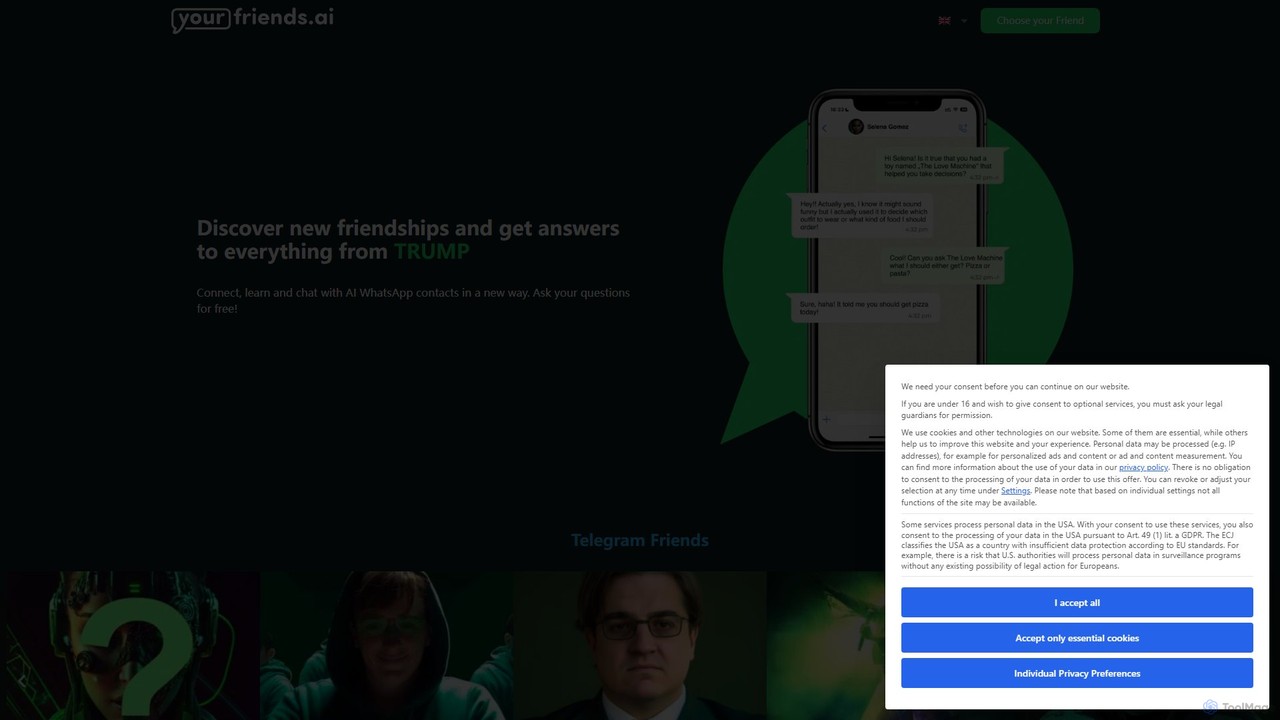
yourfriends.ai is an innovative AI platform that allows users, influencers, and brands to create and interact with personalized AI companions. Build a digital version of yourself, a brand mascot, or a unique virtual friend to engage audiences, automate interactions, and create new digital experiences.

Automated Assistant
Visits 8.4KFavorites 125Likes 114
ChatGPT For Social
Freemium

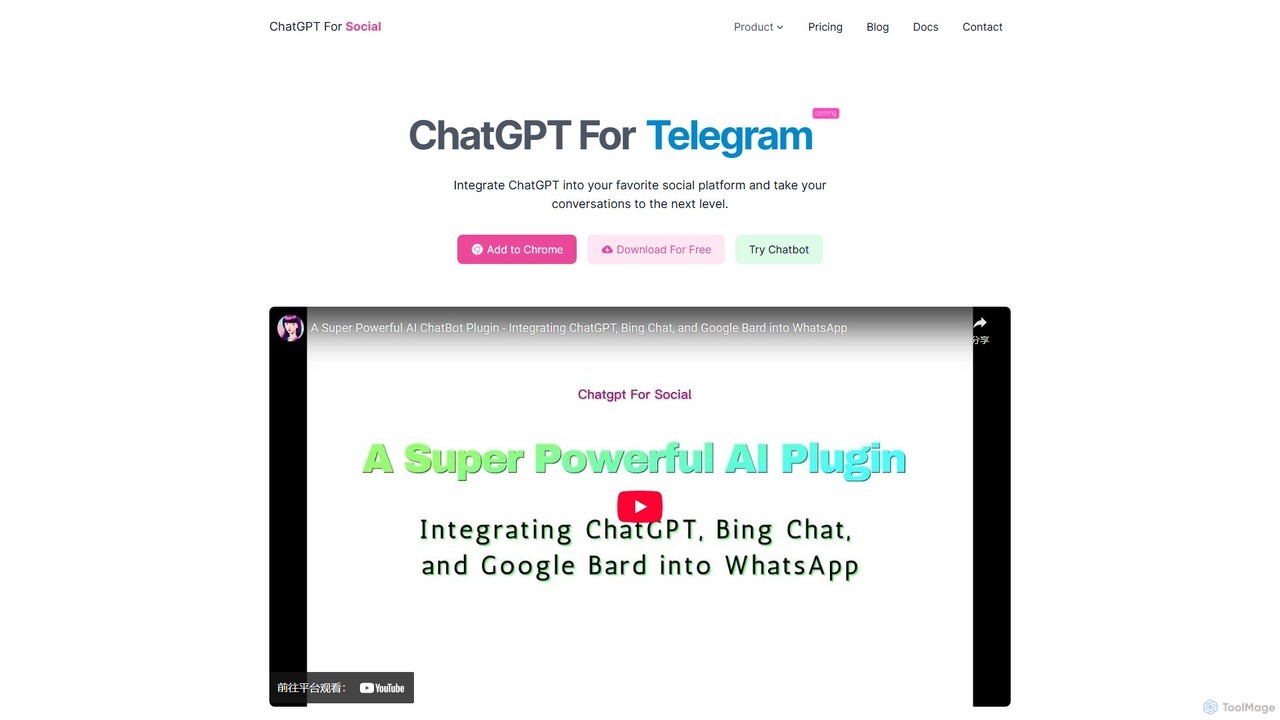
ChatGPT For Social

A browser extension that integrates powerful AI models like ChatGPT, Google Bard, and Bing Chat directly into your favorite social media platforms such as WhatsApp and WeChat. Enhance your conversations, automate responses, and boost productivity without leaving your chat window.

Communication
Visits 5.4KFavorites 125Likes 140

About Chatbots

Chatbots are AI-powered tools designed to simulate human conversation through text or voice interfaces. They leverage Natural Language Processing (NLP) to understand user intent, process queries, and provide automated, real-time responses. Primarily used for customer support, lead generation, and user engagement, these tools operate across websites, messaging apps, and social media platforms. Modern AI chatbots can handle complex dialogues, learn from interactions, and deliver personalized experiences 24/7, significantly improving operational efficiency.

Core Features

  • Natural Language Processing (NLP): Accurately understands and interprets user intent, context, and sentiment in conversations.
  • 24/7 Automated Responses: Provides instant, consistent answers to common questions at any time of day or night.
  • Multi-channel Integration: Deploys seamlessly across websites, social media platforms (like Facebook Messenger), and various messaging apps.
  • Lead Qualification & Routing: Gathers user information through conversation, qualifies potential leads, and routes them to the appropriate sales team.
  • Conversation Analytics: Tracks key metrics like interaction volume, user satisfaction, and common queries to provide actionable insights.

Use Cases

Chatbots are widely adopted by e-commerce businesses for shopping assistance, SaaS companies for user onboarding, and marketing teams for interactive campaigns. Social media managers use them to automate replies to direct messages and comments, while customer support departments deploy them as the first line of defense to resolve common issues, freeing up human agents for more complex problems.

How to Choose

When selecting a chatbot tool, evaluate its integration capabilities with your existing systems like CRM and social media channels. Assess the sophistication of its AI and NLP; determine if you need a simple rule-based bot or a more advanced AI that learns. Also consider the level of customization available for branding, the quality of its analytics dashboard, and whether the pricing model aligns with your expected usage volume.

Chatbots use cases

1

Automate Social Media Customer Support

A social media manager for an e-commerce brand is often overwhelmed with repetitive direct messages and comments about order status, shipping policies, and product availability. By implementing an AI chatbot on Facebook Messenger and Instagram, they can automate responses to these common queries. The chatbot instantly provides tracking information, explains return policies, and checks stock levels 24/7, reducing response times from hours to seconds. This frees up the manager to focus on community engagement and creative content, while improving overall customer satisfaction.

2

Qualify Website Leads for Sales Teams

A B2B software company wants to improve the quality of leads passed to its sales team. Their website attracts significant traffic, but many contact form submissions are from unqualified visitors. By deploying a chatbot on their pricing and product pages, they can engage visitors proactively. The bot asks qualifying questions like company size, role, and specific needs. It can then schedule a demo directly on the sales team's calendar for qualified leads or direct others to relevant resources like whitepapers. This process filters out noise, increases qualified demo bookings, and ensures salespeople spend their time on high-potential prospects.

3

Provide 24/7 E-commerce Shopping Assistance

An online fashion retailer notices a high cart abandonment rate, especially outside of business hours when no live support is available. They integrate a chatbot that acts as a virtual shopping assistant. The bot can answer questions about sizing, material, and shipping. It can also offer personalized product recommendations based on the user's browsing history or stated preferences (e.g., "show me blue summer dresses"). By providing instant, helpful guidance around the clock, the chatbot helps customers make confident purchasing decisions, leading to a reduction in abandoned carts and an increase in overall sales.

4

Automate Internal IT & HR Helpdesks

An HR department in a large company is constantly fielding the same questions from employees about leave policies, benefits enrollment, and payroll dates. To improve efficiency, they deploy an internal chatbot on their company intranet and Slack. Employees can now ask the bot questions like "how many vacation days do I have left?" or "where can I find the health insurance form?". The bot provides instant answers by pulling information from company knowledge bases. This reduces the administrative burden on the HR team and provides employees with a convenient, self-service way to get information quickly.

5

Conduct Conversational User Surveys

A product team wants to gather user feedback on a new feature, but traditional email surveys have very low response rates. They decide to use a chatbot embedded within their application. The chatbot initiates a friendly, natural conversation, asking users about their experience with the new feature in an interactive way. Instead of a static form, the bot can ask follow-up questions based on user answers. This conversational approach feels less intrusive, leading to a higher completion rate and richer, more detailed qualitative feedback compared to standard surveys.

6

Onboard New SaaS Users Interactively

A SaaS company struggles with user churn in the first week after signup. New users often feel lost and don't discover key features. They implement an in-app chatbot to create an interactive onboarding tour. When a user logs in for the first time, the chatbot greets them and guides them step-by-step through setting up their account and using core functionalities. It can answer questions contextually as the user navigates the platform. This hands-on, guided experience helps users reach their "aha!" moment faster, increasing activation rates and long-term retention.

Chatbots FAQ

What is an AI chatbot?

An AI chatbot is a software application designed to simulate human-like conversations with users via text or voice. Unlike simple rule-based bots, AI chatbots use technologies like Natural Language Processing (NLP) and machine learning to understand the user's intent, context, and sentiment. This allows them to handle a wide range of queries, learn from past interactions, and provide more accurate and personalized responses. They are commonly used for customer service, lead generation, and providing information on websites and social media.

How to choose the right chatbot for my business?

Choosing the right chatbot involves evaluating several key factors based on your specific needs. Consider the following:

  • Integration Capabilities: Ensure it can connect with your essential tools, such as your CRM, helpdesk software, and social media platforms.
  • AI Sophistication: Decide if you need a simple, rule-based bot for basic FAQs or a sophisticated AI-powered bot with NLP for complex, dynamic conversations.
  • Customization: Check if you can customize the bot's appearance, tone, and language to match your brand identity.
  • Analytics: Look for a tool with robust analytics to track performance, user satisfaction, and gather insights from conversations.
  • Scalability: Choose a platform that can grow with your business and handle increasing conversation volumes.
What's the difference between an AI chatbot and a rule-based chatbot?

The primary difference lies in how they process information and interact with users. A rule-based chatbot follows a predefined script or decision tree. It can only respond to specific commands or keywords it's programmed to recognize, making it suitable for simple, predictable tasks like basic FAQs. An AI chatbot uses Natural Language Processing (NLP) to understand the intent and context behind a user's query, even if it's phrased in various ways. It can handle more complex conversations, learn from interactions, and provide more flexible and human-like responses.

Can chatbots be used on social media platforms?

Yes, absolutely. Integrating chatbots with social media is a very common and effective use case. They can be deployed on platforms like Facebook Messenger, Instagram Direct Messages, and WhatsApp. On these platforms, chatbots can automate customer service by answering common questions, qualify leads from social media ads, run interactive marketing campaigns, and guide users to products or services. This allows businesses to engage with their audience directly within the apps they use daily, providing instant and scalable communication.

What are the main benefits of using a chatbot?

Implementing a chatbot offers several significant benefits for a business. The key advantages include:

  • 24/7 Availability: Chatbots provide instant support around the clock, improving customer satisfaction by eliminating wait times.
  • Cost Efficiency: They can handle a large volume of queries simultaneously, reducing the need for a large human support team and lowering operational costs.
  • Scalability: A chatbot can manage thousands of conversations at once without a drop in performance, which is difficult for human agents to match.
  • Improved Lead Generation: They can proactively engage website visitors, collect contact information, and qualify leads automatically, streamlining the sales funnel.
  • Data Collection: Chatbots gather valuable data from user interactions, providing insights into customer needs, pain points, and frequently asked questions.