Voxa
Voxa is an intelligent AI voice assistant designed to boost productivity. It allows you to manage tasks, schedule …
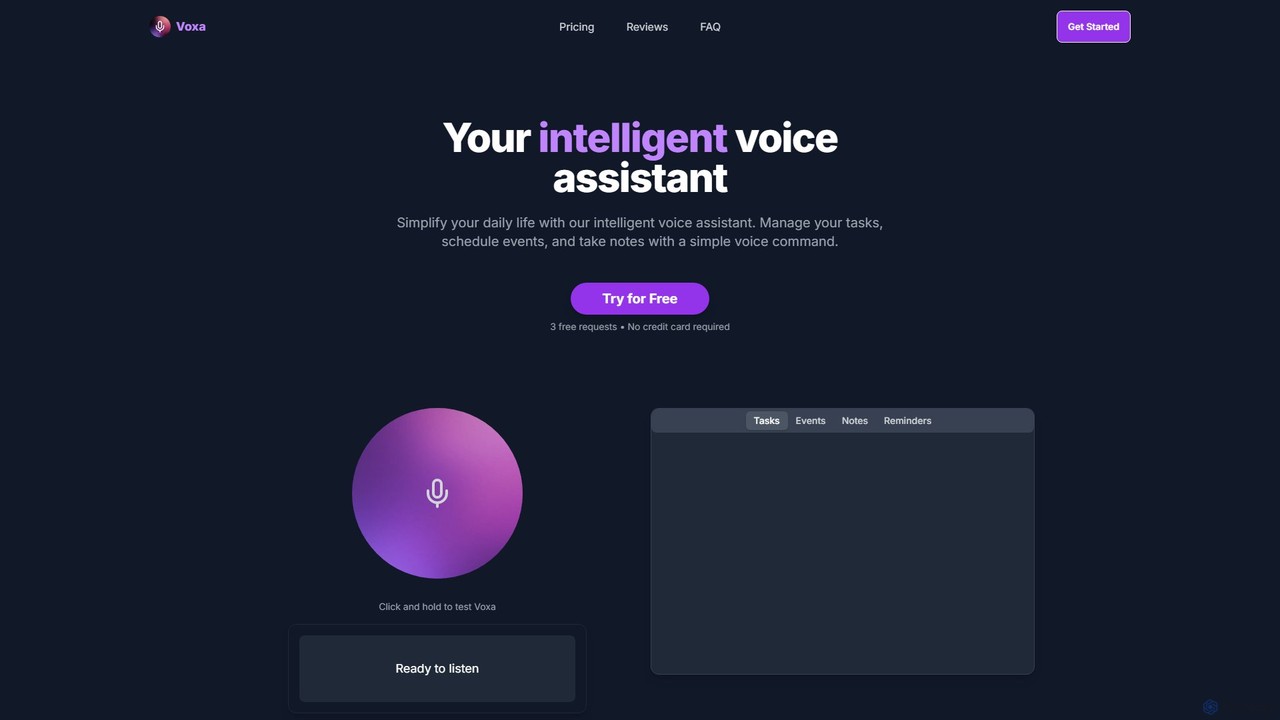
Voxa is an intelligent AI voice assistant designed to boost productivity. It allows you to manage tasks, schedule events, and take notes using simple voice commands. With seamless integration with Google Tasks and Google Calendar, Voxa streamlines your workflow, reduces app switching, and helps you stay organized effortlessly.
About Voice Assistant
Voice Assistants are AI-powered software agents designed to understand and respond to human voice commands. They utilize Natural Language Processing (NLP), Speech-to-Text (STT), and Text-to-Speech (TTS) technologies to interpret user intent and provide audible replies. The primary value of a Voice Assistant is to perform tasks, retrieve information, and control devices hands-free, creating a seamless interactive experience. This makes them distinct from basic speech recognition tools by focusing on action and conversation.
Core Features
- Natural Language Understanding (NLU): Interprets the intent and context behind user queries, not just keywords.
- Task Execution: Performs actions like setting alarms, sending messages, or controlling smart home devices.
- Conversational Dialogue: Engages in multi-turn conversations, remembering previous parts of the interaction.
- Information Retrieval: Accesses and vocalizes information from the internet or connected databases to answer questions.
- Personalization: Learns user preferences, habits, and voice to provide tailored responses and suggestions.
Use Cases
Voice Assistants are integrated into various platforms. They are commonly found in smart speakers (like Amazon Echo, Google Home), smartphones (Siri, Google Assistant), and modern vehicles for hands-free control. In business, they power interactive voice response (IVR) systems for customer service and provide in-app guidance for users.
How to Choose
When selecting a Voice Assistant tool or platform, consider its integration capabilities with other software and hardware (APIs). Evaluate its accuracy in understanding specific languages, dialects, and accents. For business applications, assess the level of customization available for wake words, voice, and branding. Finally, review the platform's privacy policy and data handling practices.

Voice AssistantUse Cases
Smart Home Automation and Control
Homeowners use voice assistants integrated into smart speakers or hubs to manage their connected devices hands-free. For example, a user can say, 'Set the living room temperature to 22 degrees,' 'Dim the lights by 50%,' or 'Show me the front door camera.' This centralizes control of various systems like lighting, climate, entertainment, and security, making daily routines more convenient and accessible for everyone in the household.
Hands-Free Productivity for Professionals
Professionals on the go, such as sales representatives or consultants, use voice assistants on their smartphones or in-car systems to stay productive. They can dictate and send emails, schedule meetings, set reminders for follow-ups, or initiate calls without touching their device. This allows for efficient time management during commutes or when multitasking, ensuring that important tasks are captured and acted upon immediately.
Automated Customer Service and Support
Businesses deploy voice assistants as the first point of contact in their customer service channels. A customer calling a support line can interact with an AI assistant to check an order status, pay a bill, or get answers to frequently asked questions. This system can handle a high volume of routine inquiries 24/7, freeing up human agents to focus on more complex issues and reducing customer wait times significantly.
In-Vehicle Navigation and Infotainment Control
Drivers use built-in or smartphone-connected voice assistants to operate their vehicle's systems safely. They can ask for directions to a destination, find nearby points of interest, change the radio station, or play a specific song or podcast. This hands-free interaction is critical for safety, as it allows drivers to keep their hands on the wheel and their eyes on the road while still accessing essential navigation and entertainment functions.
Accessibility Tool for Users with Disabilities
For individuals with visual impairments or motor disabilities, voice assistants are a transformative technology. Users can navigate their smartphones, compose and listen to messages, browse the web, and control their environment (like smart home devices) entirely through voice. This provides a level of independence and access to digital information that was previously difficult to achieve, making technology more inclusive.
Personalized Daily Briefings and Information
Users can start their day with a customized summary delivered by their voice assistant. By saying a simple command like 'Good morning,' the assistant can provide a weather forecast, read top news headlines from preferred sources, review the day's calendar appointments, and give an update on traffic for the morning commute. This consolidates essential daily information into a single, convenient, audible report, streamlining morning routines.