ToolMage
Sign in

Best 30 Startups AI tools

Popular Startups AI tools include GummySearch, Papermark, UserCue, Upmetrics, buildd, anotherwrapper, Artificial Societies, Equitybee, Perfectly, and coffeespace, helping you work more efficiently.

365mvps
Freemium

365mvps

365mvps is an AI-powered platform designed for rapid Minimum Viable Product (MVP) development. It enables entrepreneurs and developers to transform ideas into functional applications using natural language prompts and a low-code interface, drastically reducing development time and costs.

No Code
Visits 5.5KFavorites 144Likes 147
Modeliks
Freemium

Modeliks

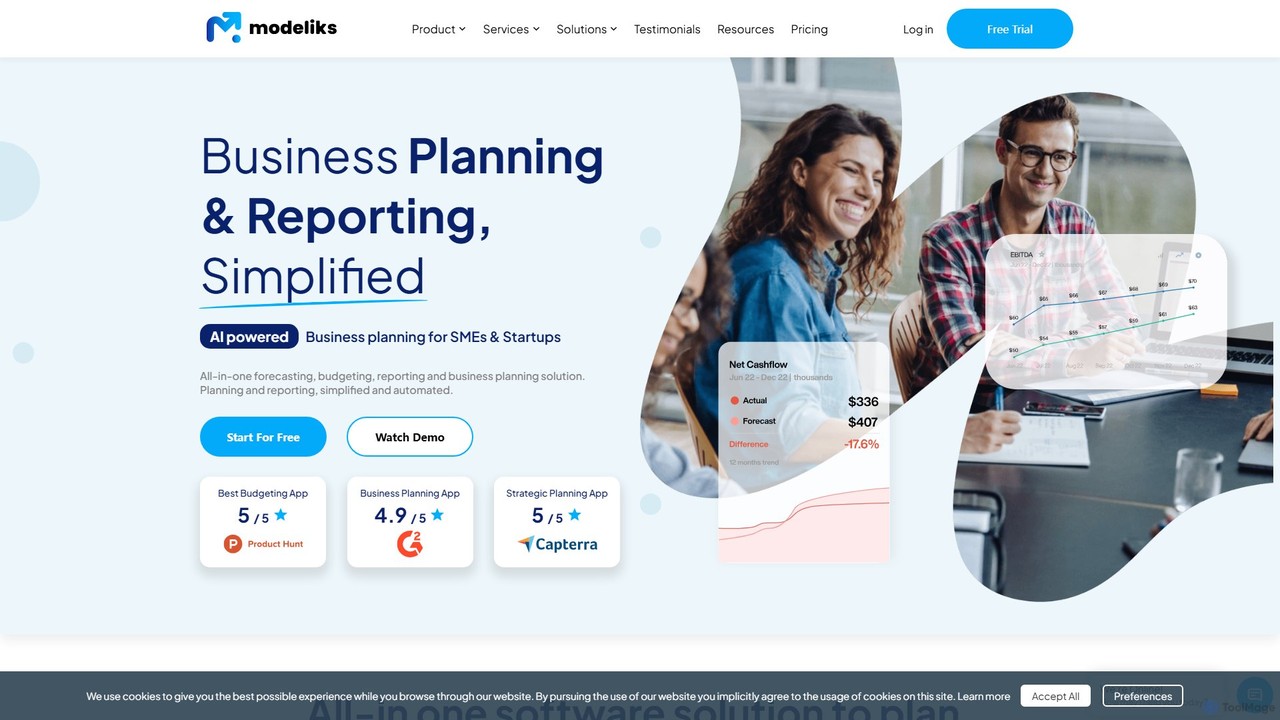
Modeliks is an AI-powered, all-in-one business planning software designed for entrepreneurs, startups, and SMEs. It simplifies financial forecasting, automates reporting, and generates professional business plans and investor-ready pitch decks, enabling users to plan, manage, and grow their business with data-driven confidence.

Business Planning
Visits 15.8KFavorites 130Likes 141
Ask YC
Free

Ask YC

Ask YC was an AI-powered search engine designed to answer questions using the vast knowledge base of Y Combinator. It provided entrepreneurs with synthesized insights from Paul Graham's essays, YC's library, and startup advice. Please note: this service has been discontinued.

Search Engine
Visits 5.4KFavorites 141Likes 129
pitchleague.ai
Free

pitchleague.ai

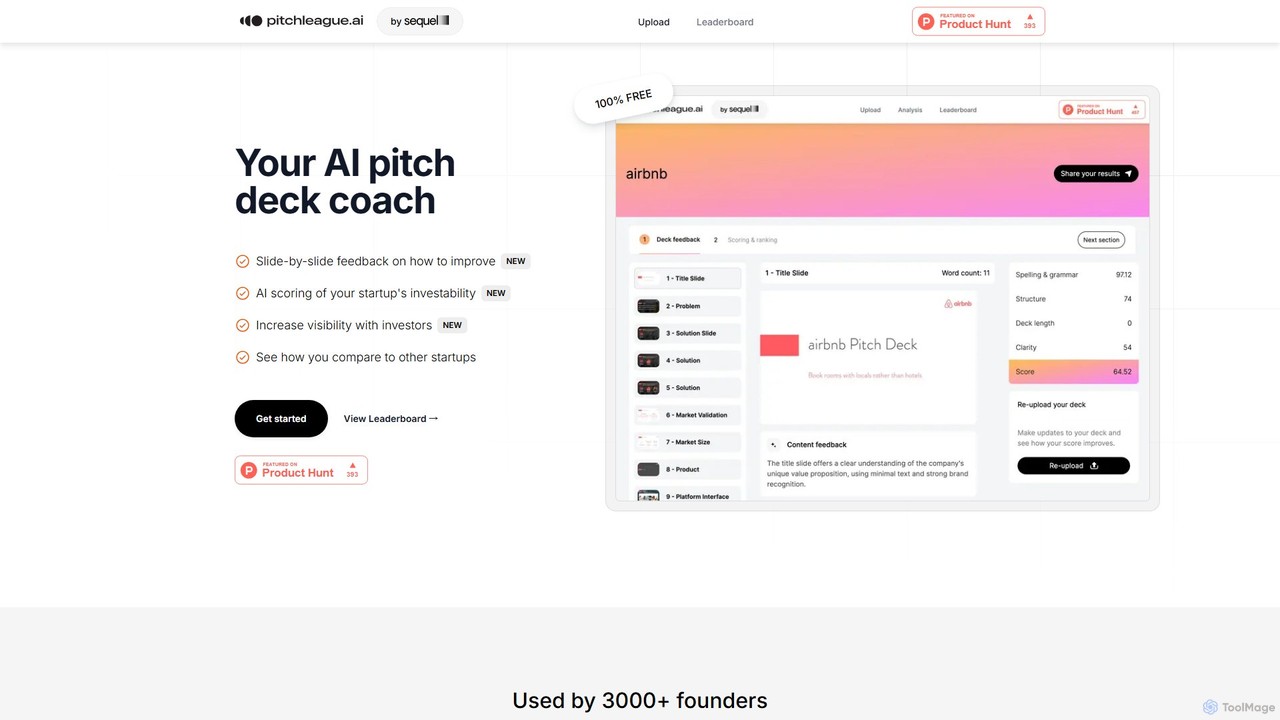
PitchLeague.ai is a free AI-powered coach that provides instant, slide-by-slide feedback on your startup's pitch deck. It analyzes your presentation for structure, clarity, and content, providing an "investability score" to help you understand your strengths and weaknesses. The platform also features a leaderboard to increase your visibility with potential investors.

Venture Capital
Visits 8.3KFavorites 142Likes 112
getpivotly
Freemium

getpivotly

getpivotly is an AI-powered platform designed to guide startups and businesses through the complex process of achieving Product-Market Fit (PMF). It acts as a personalized helper, providing step-by-step actions, analyzing user feedback, and offering data-driven insights to help you build products that customers truly need and love.

User Analytics
Visits 7.7KFavorites 151Likes 138
GummySearch
Freemium

GummySearch

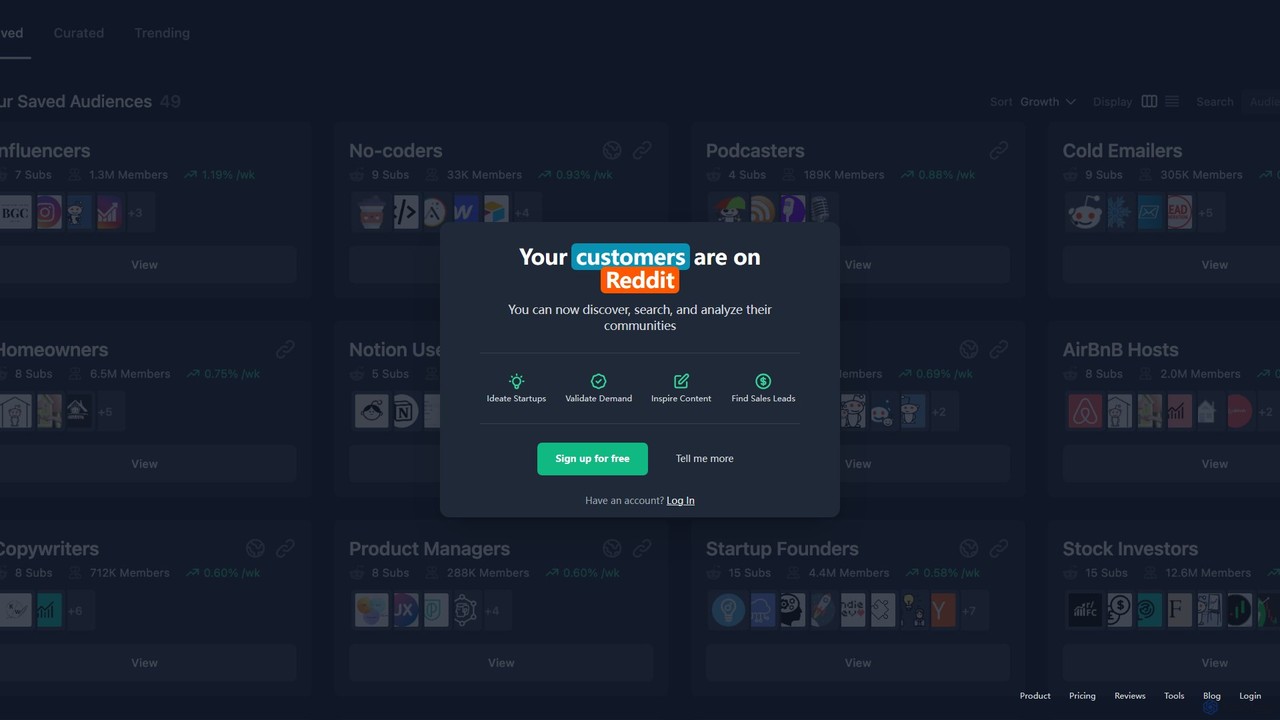
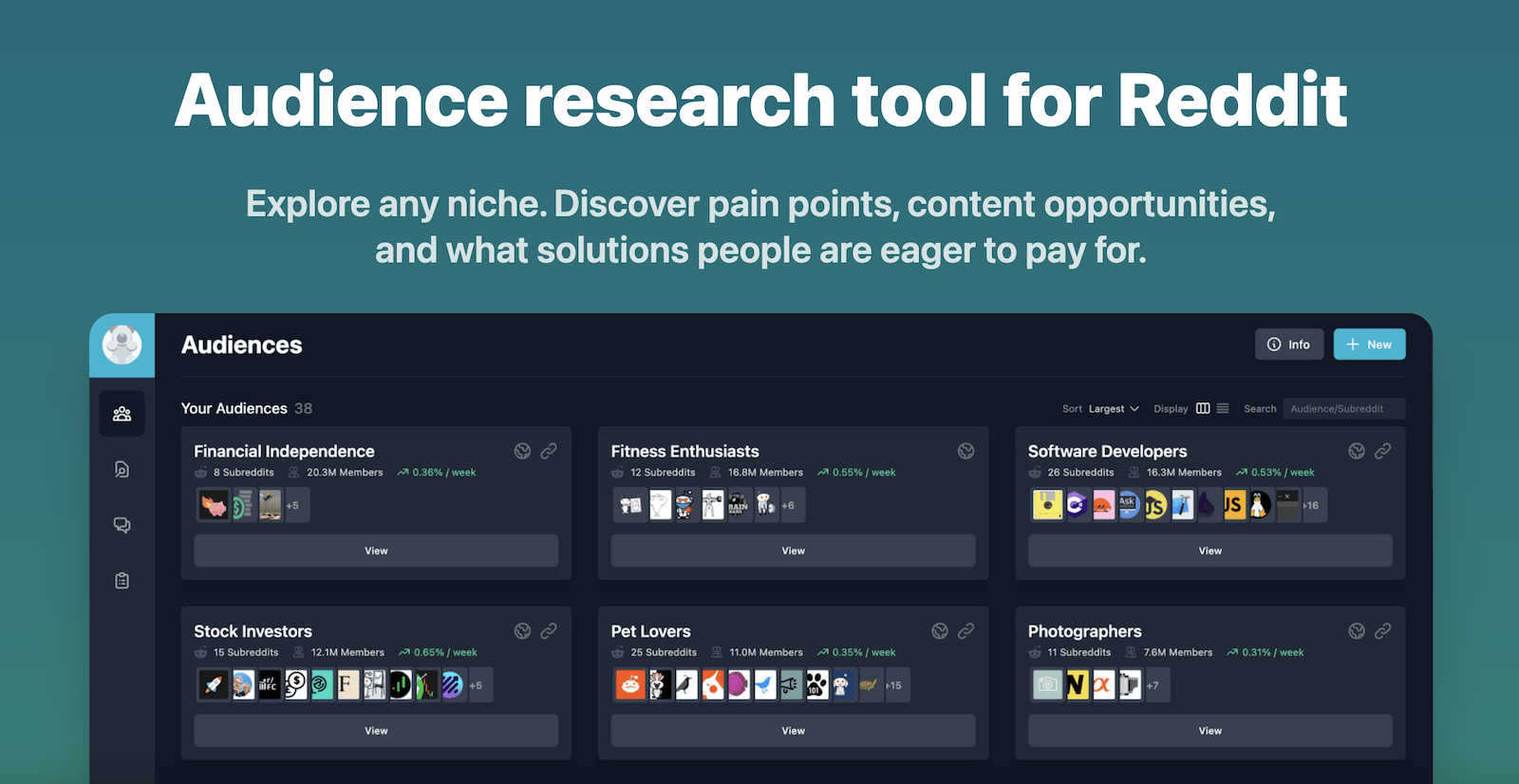
GummySearch is an AI-powered audience research tool designed for Reddit. It helps entrepreneurs, marketers, and content creators discover customer pain points, validate business ideas, and find content inspiration by analyzing conversations across thousands of subreddits. The platform uses AI to identify trends, patterns, and sales opportunities, turning Reddit's vast communities into a goldmine of actionable insights.

Market Research
Visits 203.9KFavorites 137Likes 125

About Startups

AI tools for Startups are a suite of solutions designed to address the unique challenges of new businesses, such as limited resources and the need for rapid growth. These tools leverage artificial intelligence to automate and optimize critical functions like market analysis, lead generation, customer support, and operations. They empower small teams to operate with the efficiency of larger organizations, enabling them to validate ideas, acquire customers, and scale more quickly. The primary value lies in providing data-driven insights and automating repetitive tasks, freeing up founders to focus on strategy and product development.

Core Features

  • Market & Competitor Analysis: AI algorithms that process vast amounts of data to identify market trends, customer segments, and competitor strategies.
  • Automated Lead Generation: Platforms that identify, qualify, and engage potential customers through automated outreach and data enrichment.
  • Scalable Customer Support: AI-powered chatbots and helpdesks that provide 24/7 support, handling common queries without human intervention.
  • Lean Operations Management: Tools for automating administrative tasks in finance, HR, and project management to reduce overhead.
  • Rapid Content Creation: AI assistants that generate marketing copy, blog posts, and social media content to accelerate marketing efforts.

Use Cases

These tools are essential for early-stage tech companies, e-commerce businesses, and solo entrepreneurs. For instance, a SaaS startup can use AI to analyze user behavior for product improvements, while an online store can automate personalized email marketing campaigns. They are particularly useful for validating a business idea with minimal initial investment and for managing growth phases efficiently.

How to Choose

When selecting an AI tool for your startup, prioritize scalability; choose solutions with flexible pricing that can grow with your business. Evaluate integration capabilities to ensure the tool connects with your existing software stack (e.g., CRM, Slack). Focus on ease of use, as startups require tools with a low learning curve for quick team adoption. Finally, assess the tool's specific return on investment (ROI) by determining if it solves a critical, immediate problem for your business.

Featured tool rankings

Startups use cases

1

Automating Market Research for a New App Idea

An early-stage founder needs to validate a new mobile app concept before investing in development. Instead of spending weeks on manual research, they use an AI market analysis tool. By inputting their core idea and target industry, the tool scans competitor reviews, social media trends, and industry reports. Within hours, it generates a comprehensive report detailing target demographics, user pain points, and feature gaps in the current market. This data-driven approach allows the founder to refine their value proposition and feature set, significantly reducing the risk of building a product nobody wants.

2

Building a Scalable Customer Support System

A small e-commerce startup experiences a surge in customer inquiries after a successful marketing campaign, overwhelming its two-person support team. To manage the volume without hiring more staff, they implement an AI chatbot on their website. The chatbot is trained on their FAQ page and product information. It now automatically handles 70% of incoming queries related to order status, shipping policies, and product details. This frees up the human team to focus on complex issues, improves customer response times, and allows the business to provide 24/7 support, enhancing customer satisfaction.

3

Generating High-Quality Leads on a Tight Budget

A B2B SaaS startup's first sales representative needs to build a sales pipeline from scratch with a minimal marketing budget. They use an AI lead generation platform that scours public data sources like LinkedIn and company websites to identify ideal customer profiles. The tool not only finds contact information but also provides insights into a company's tech stack or recent funding rounds. The sales rep then uses the platform's AI to automate personalized outreach emails. This process results in identifying over 500 qualified leads in the first month, achieving a 15% response rate and saving dozens of hours of manual prospecting.

4

Creating Marketing Content with a Small Team

A content marketer at a bootstrapped startup is responsible for the company blog, social media, and ad copy. Lacking the resources for a full team, they use an AI writing assistant. The tool helps them brainstorm blog post ideas based on keywords, generate structured outlines, and write first drafts. For social media, they can create dozens of post variations for different platforms in minutes. This allows the marketer to increase their content output by 3x, maintain a consistent publishing schedule, and focus their time on strategy and editing, ultimately driving more organic traffic and engagement.

5

Streamlining Financials for a Funding Round

A founder is preparing for a seed funding round and needs to present clear financial projections and a professional pitch deck. They use an AI-powered financial tool to automatically categorize expenses from bank statements and generate cash flow forecasts. This saves days of manual spreadsheet work. Next, they use an AI presentation maker, inputting their business plan as a text outline. The tool designs a visually appealing 15-slide pitch deck with appropriate charts and layouts. The founder can now approach investors with a data-backed financial model and a polished presentation, created in a fraction of the usual time.

6

Accelerating MVP Development with AI Coding Assistance

A technical co-founder and a small development team are building their product's Minimum Viable Product (MVP) under a tight deadline. They integrate an AI code completion tool directly into their development environment (IDE). The tool provides real-time code suggestions, autocompletes entire functions, and helps write unit tests. When they encounter a bug, they can use the AI assistant to explain the error and suggest potential fixes. This process reduces development time for core features by an estimated 30%, enabling a faster launch to gather crucial feedback from early users.

Startups FAQ

What are AI tools for startups?

AI tools for startups are software applications that use artificial intelligence to solve common challenges faced by new businesses. They are designed to automate tasks, provide data-driven insights, and optimize processes in areas like marketing, sales, customer support, and operations. The goal is to give small teams operational leverage, allowing them to compete with larger companies by working more efficiently and making smarter, faster decisions without needing a large workforce or budget.

How do I choose the right AI tool for my startup?

To choose the right AI tool, start by identifying your most critical business bottleneck. Don't adopt AI for its own sake; find a tool that solves a real, immediate problem. Consider the following factors:

  • Scalability: Look for tools with flexible, tiered pricing that can grow with your user base and revenue. Avoid long-term contracts initially.
  • Integration: Ensure the tool can connect seamlessly with your existing software stack (e.g., CRM, email marketing platform, Slack) to avoid data silos.
  • Ease of Use: Choose tools with intuitive interfaces that your team can adopt quickly without extensive training.
  • Return on Investment (ROI): Evaluate whether the tool's cost is justified by the time it saves, the revenue it helps generate, or the operational costs it reduces.
What is the main advantage of using AI tools in a startup?

The main advantage is achieving operational leverage. AI tools enable a small team to perform tasks that would traditionally require a much larger workforce. For example, one marketer can manage content creation for multiple channels using an AI writer, or a two-person team can provide 24/7 customer support with an AI chatbot. This leverage allows startups to conserve cash, scale operations efficiently, and focus their limited human resources on high-value activities like strategy, customer relationships, and innovation.

Can non-technical founders use these AI tools?

Absolutely. A significant portion of AI tools for startups are specifically designed with non-technical users in mind. They often feature no-code or low-code interfaces, allowing users to build chatbots, create marketing campaigns, or analyze data through simple drag-and-drop editors and intuitive dashboards. The goal of these tools is to democratize access to powerful AI capabilities, so founders can leverage them to grow their business without needing a background in programming or data science.

Are AI tools for startups expensive?

Pricing varies widely, but many AI tools are designed with a startup's budget in mind. It is common to find flexible pricing models that cater to early-stage companies:

  • Freemium Plans: Many tools offer a free tier with basic features, allowing startups to start without any upfront cost.
  • Pay-As-You-Go: Some services charge based on usage (e.g., per API call, per contact generated), which is ideal for managing costs during unpredictable growth phases.
  • Affordable Subscriptions: Monthly or annual subscription plans are often priced competitively, providing a lower barrier to entry compared to traditional enterprise software.

While some advanced platforms can be costly, there is a large and growing ecosystem of affordable AI tools that can provide significant value even to bootstrapped startups.