ToolMage
Sign in

Best 7 Assessment AI tools for Teacher Tools

Popular Assessment AI tools in Teacher Tools include EssayGrader, GradeWiz, GradeWrite, Edexia, Lingofi, Teachify.online, and Exam Maker AI, helping you work more efficiently.

Edexia
Paid

Edexia

Edexia is a teacher-controlled AI grading assistant designed to save up to 80% of grading time. It learns from your corrections to accurately grade essays, math, diagrams, and more across all subjects. Edexia provides transparent, rubric-based feedback while ensuring robust data privacy and seamless LMS integration.

Grading
Visits 5.5KFavorites 124Likes 155
Lingofi
Freemium

Lingofi

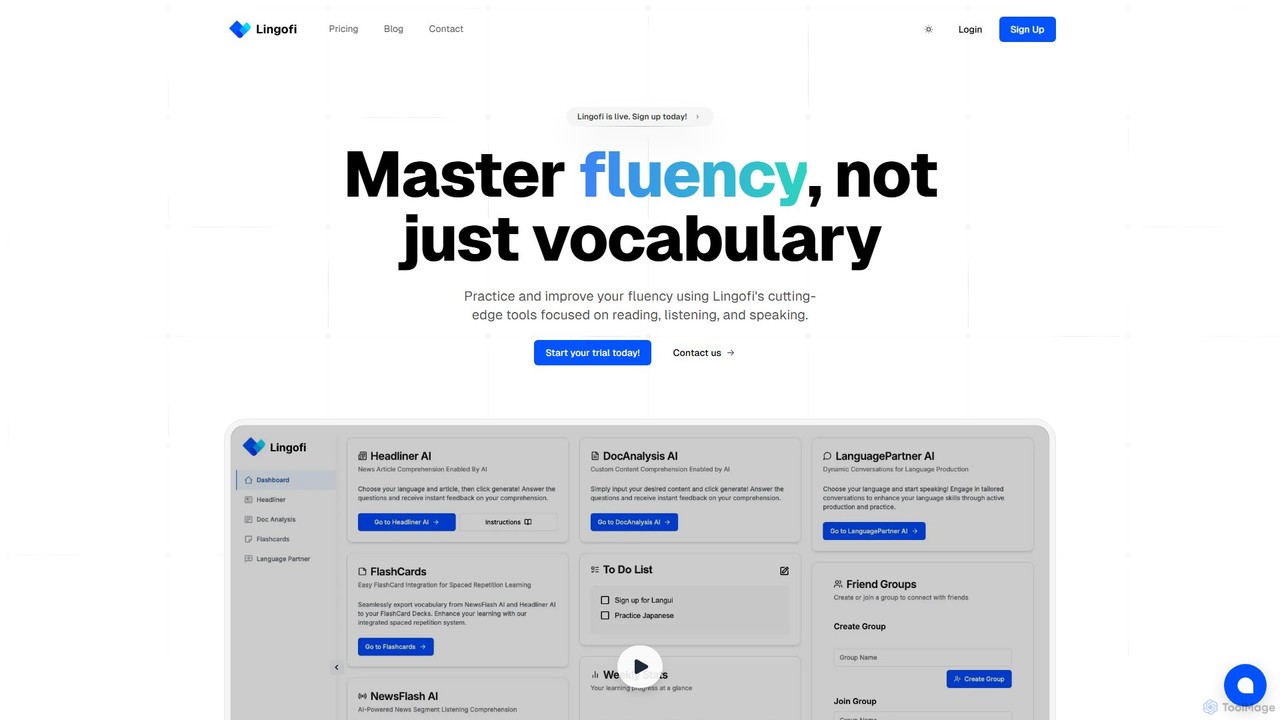
Lingofi is an AI-powered language learning platform designed to help users master fluency, not just vocabulary. It offers a suite of cutting-edge tools focusing on reading, listening, and speaking practice. With an AI language partner for conversational practice and a dedicated 'Lingofi Academy' for educators, it provides a personalized and comprehensive learning experience for over 37 languages.

Language Learning
Visits 5.5KFavorites 138Likes 125
GradeWrite
Freemium

GradeWrite

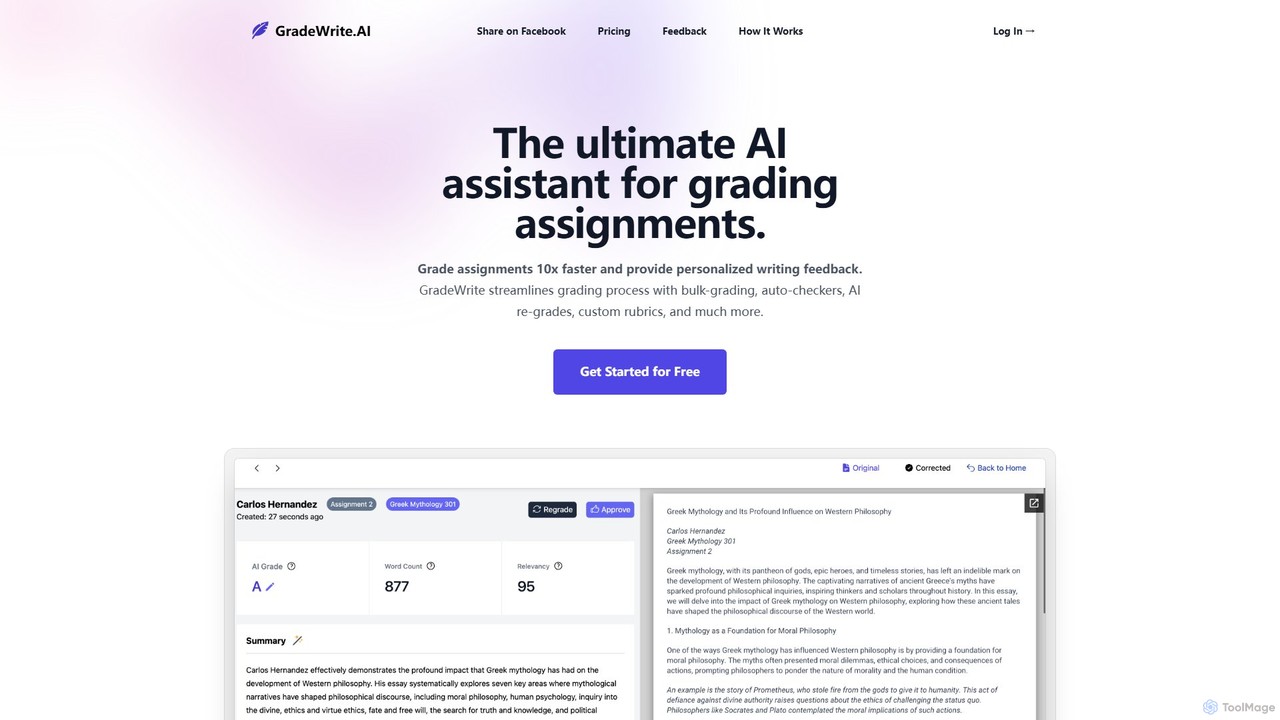
GradeWrite is an AI-powered grading assistant designed for educators to grade assignments 10x faster. It provides personalized, human-like writing feedback, supports bulk uploads, and features custom rubrics, auto-checkers for word count and originality, and an interactive side-by-side grading experience to streamline the entire assessment process.

Grading
Visits 6.3KFavorites 127Likes 114
Teachify.online
Freemium

Teachify.online

Teachify.online is an AI-powered platform designed for educators to streamline content creation. It instantly generates high-quality lesson plans, quizzes, worksheets, and course outlines, saving teachers valuable time and effort. Ideal for K-12 teachers, university professors, and online course creators looking to enhance their teaching materials and engage students more effectively.

Lesson Planning
Visits 5.4KFavorites 122Likes 137
EssayGrader
Freemium

EssayGrader

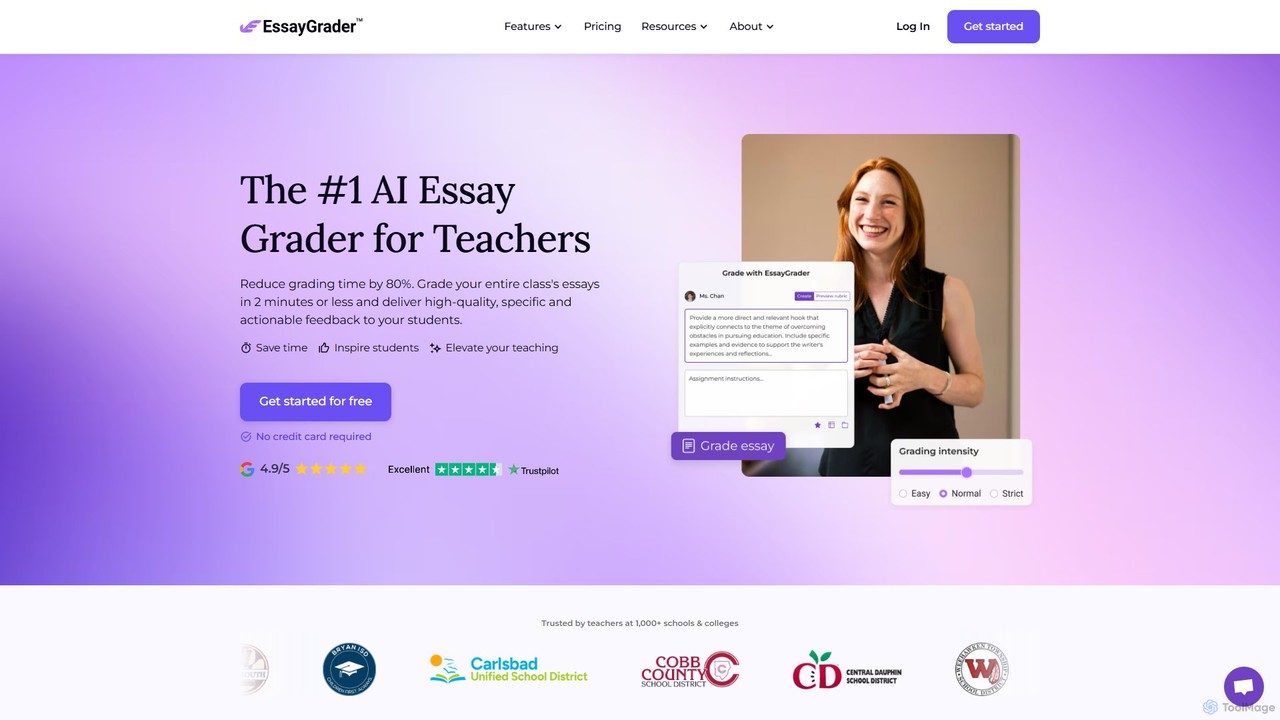
EssayGrader is an AI-powered grading tool for educators that automates essay evaluation. It allows teachers to create custom rubrics, integrate with LMS like Canvas and Google Classroom, and receive instant, detailed feedback and accurate grades for student submissions, including handwritten work. It's designed to save time and streamline the grading process for teachers at all levels.

Grading
Visits 112.2KFavorites 132Likes 143
Exam Maker AI
Paid

Exam Maker AI

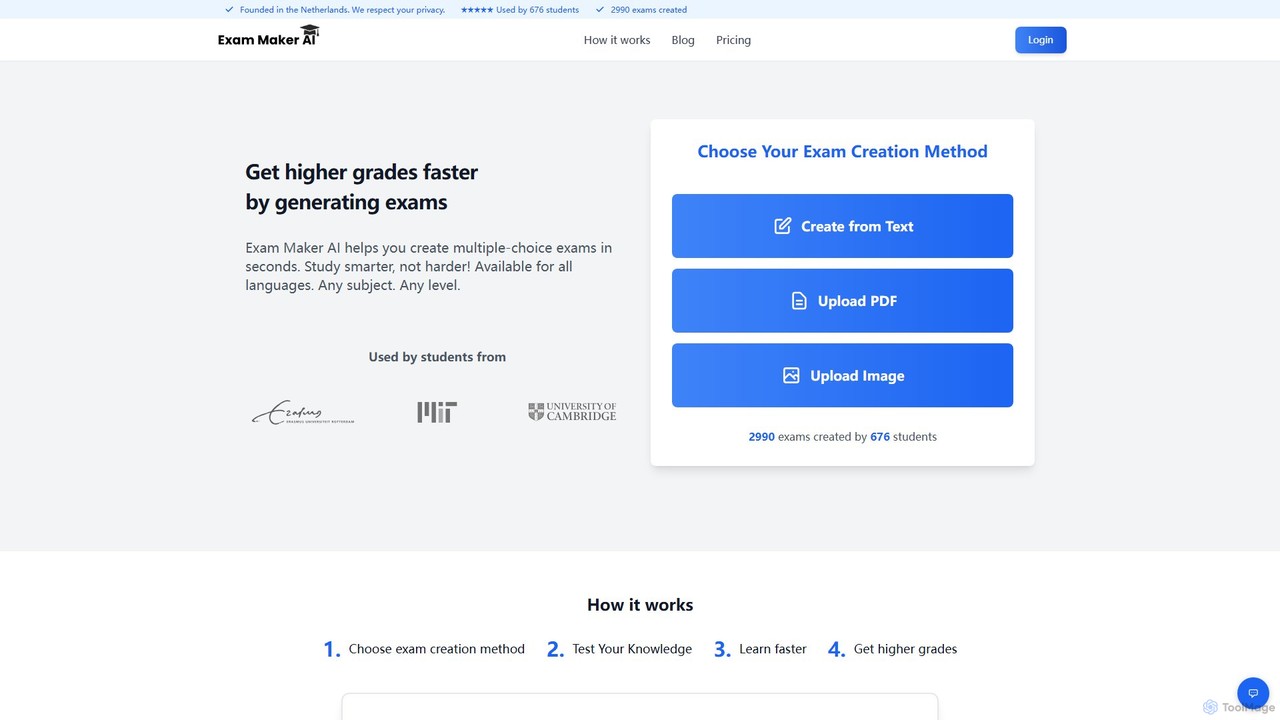
Exam Maker AI is an AI-powered tool that instantly generates multiple-choice exams from various materials like text, PDFs, images, and YouTube videos. Designed for students and teachers, it supports all subjects and languages, helping users study smarter, save time, and achieve higher grades through automated test creation and performance tracking.

Test Preparation
Visits 5.4KFavorites 132Likes 125
GradeWiz
Freemium

GradeWiz

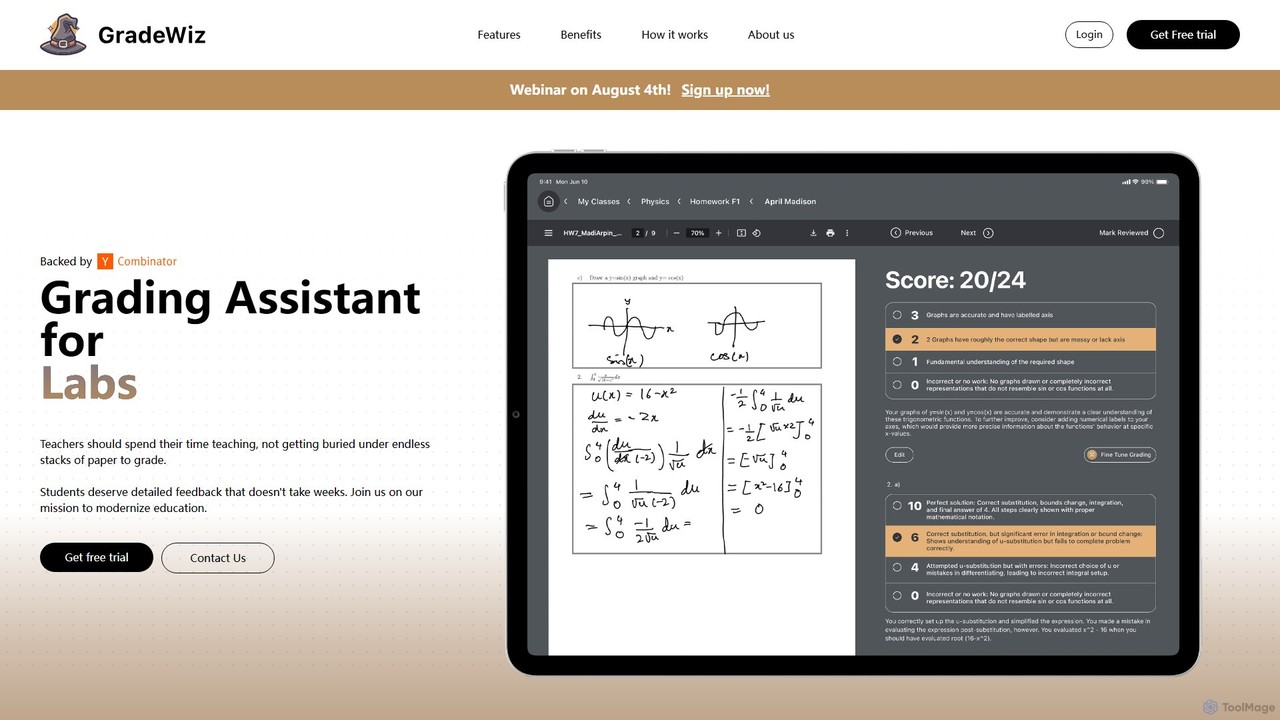
GradeWiz is an AI-powered grading assistant designed for educators. It automates the grading process, provides personalized and constructive feedback on student work, and helps teachers save significant time. By leveraging customizable rubrics, GradeWiz ensures consistent and fair evaluation across all assignments, allowing teachers to focus more on instruction and student engagement.

Grading
Visits 8KFavorites 113Likes 114

About Assessment

AI Assessment tools are a specialized category within teacher tools, designed to automate and enhance the evaluation of student learning. These tools leverage artificial intelligence, including natural language processing and machine learning, to provide efficient grading, personalized feedback, and insightful performance analytics. They empower educators to streamline administrative tasks, focus more on teaching, and offer tailored support to individual students. By analyzing diverse data points, AI assessment tools can identify learning patterns and predict academic needs, fostering a more adaptive and responsive educational environment.

Core Features

  • Automated Grading: Efficiently grades various assignment types, from multiple-choice to open-ended responses, using AI algorithms.
  • Personalized Feedback: Generates specific, constructive feedback for students based on their submissions, highlighting areas for improvement.
  • Plagiarism Detection: Scans student work against vast databases to identify potential instances of plagiarism, ensuring academic integrity.
  • Performance Analytics: Provides detailed reports on student and class performance, identifying trends, strengths, and weaknesses.
  • Adaptive Quizzing: Creates dynamic quizzes that adjust question difficulty in real-time based on a student's responses, optimizing learning.

Applicable Scenarios

AI assessment tools are invaluable for educators in various settings. University professors use them for large-scale essay grading and plagiarism checks, while K-12 teachers implement them for real-time formative assessments and personalized learning path recommendations. Online course instructors benefit from automated evaluation of assignments and progress tracking, ensuring consistent and fair assessment across diverse student cohorts.

How to Choose

When selecting an AI assessment tool, consider its accuracy in grading and feedback generation, especially for complex subjects. Evaluate its integration capabilities with your existing Learning Management System (LMS) to ensure a seamless workflow. Data privacy and security features are paramount to protect student information. Finally, assess the tool's customization options for different assessment types and its user-friendliness for both educators and students.

Assessment use cases

1

Automated Essay Grading for Large Classes

A university professor teaching a large humanities course needs to grade hundreds of essays each semester. Using an AI assessment tool, they can upload all student submissions, and the AI automatically evaluates essays based on predefined rubrics, grammar, and coherence. This saves significant time, provides consistent grading, and allows the professor to focus on providing more qualitative, in-depth feedback on specific areas rather than basic corrections.

2

Personalized Feedback for Student Assignments

A high school English teacher wants to provide detailed, actionable feedback to each student on their creative writing assignments, but lacks the time for individual deep dives. An AI assessment tool can analyze each student's submission, identify common errors, suggest improvements in plot development or characterization, and even offer sentence-level revisions. This ensures every student receives tailored guidance, fostering their writing skills more effectively.

3

Real-time Formative Assessment in Classrooms

An elementary school teacher wants to quickly gauge student comprehension during a lesson on fractions. Instead of collecting papers, they use an AI assessment tool that integrates with interactive whiteboards or student devices. Students answer quick questions, and the AI instantly aggregates responses, identifies common misconceptions, and displays a summary. This allows the teacher to adjust their lesson plan on the fly, addressing areas where students are struggling immediately.

4

Plagiarism Detection for Academic Integrity

A college academic department needs to ensure the originality of student research papers and theses. An AI assessment tool with advanced plagiarism detection capabilities can scan submitted documents against a vast database of academic works, online sources, and previously submitted student papers. It generates detailed reports highlighting similarities and potential instances of academic dishonesty, helping faculty uphold strict academic integrity standards efficiently.

5

Adaptive Learning Path Recommendation

An online learning platform aims to provide highly personalized educational experiences. By integrating AI assessment tools, the platform can continuously evaluate a student's performance on quizzes and assignments. Based on these assessments, the AI identifies knowledge gaps and strengths, then dynamically recommends specific learning modules, supplementary materials, or practice exercises tailored to the student's individual needs, optimizing their learning journey.

6

Skill Gap Analysis in Vocational Training

A vocational training institute needs to assess the practical skills of its trainees in areas like coding or technical drawing. AI assessment tools can analyze project submissions, code quality, or design outputs against industry standards. The AI provides a detailed breakdown of each trainee's proficiency, highlighting specific skill gaps and suggesting targeted training modules. This ensures trainees meet required competencies and are job-ready upon completion.

Assessment FAQ

What are AI assessment tools?

AI assessment tools are software applications that utilize artificial intelligence to automate and enhance the process of evaluating student learning. They can grade assignments, provide personalized feedback, detect plagiarism, and analyze performance data. These tools aim to reduce the administrative burden on educators, offer more consistent and objective evaluations, and provide students with timely, targeted insights into their academic progress.

How do I choose the right AI assessment tool for my needs?

Choosing the right AI assessment tool involves several considerations. First, evaluate its core functionalities: does it support the types of assessments you need (e.g., essays, coding, multiple-choice)? Second, check its integration capabilities with your existing Learning Management System (LMS) for seamless data flow. Third, prioritize tools with robust data privacy and security measures to protect student information. Finally, consider its customization options for rubrics and feedback, and ensure it offers a user-friendly interface for both teachers and students.

What types of assessments can AI tools handle effectively?

AI assessment tools are highly versatile and can effectively handle a wide range of assessment types. They excel at objective assessments like multiple-choice questions, true/false, and fill-in-the-blanks, providing instant grading. For subjective assessments such as essays, short-answer questions, and even coding assignments, AI can analyze content for grammar, coherence, logical structure, and adherence to rubrics, offering detailed feedback. Some advanced tools can also assess presentations or practical skills through video analysis.

How do AI assessment tools benefit both teachers and students?

For teachers, AI assessment tools significantly reduce the time spent on grading and administrative tasks, allowing them to focus more on teaching and personalized student interaction. They provide consistent, unbiased evaluations and generate valuable data insights into class performance. For students, these tools offer immediate, personalized feedback, helping them understand their mistakes and improve faster. Adaptive assessments can tailor learning paths, making the educational experience more engaging and effective by focusing on individual needs.

How do AI assessment tools differ from traditional grading software?

Traditional grading software primarily automates the calculation and recording of grades, often requiring manual input for subjective assignments. AI assessment tools, however, go beyond simple automation. They leverage advanced algorithms to understand content, provide contextual feedback, detect nuances like plagiarism, and even adapt assessment difficulty. While traditional software streamlines administrative tasks, AI tools actively participate in the evaluation process, offering deeper insights and personalized learning support, making them a more dynamic component of teacher tools.