SeatCompare
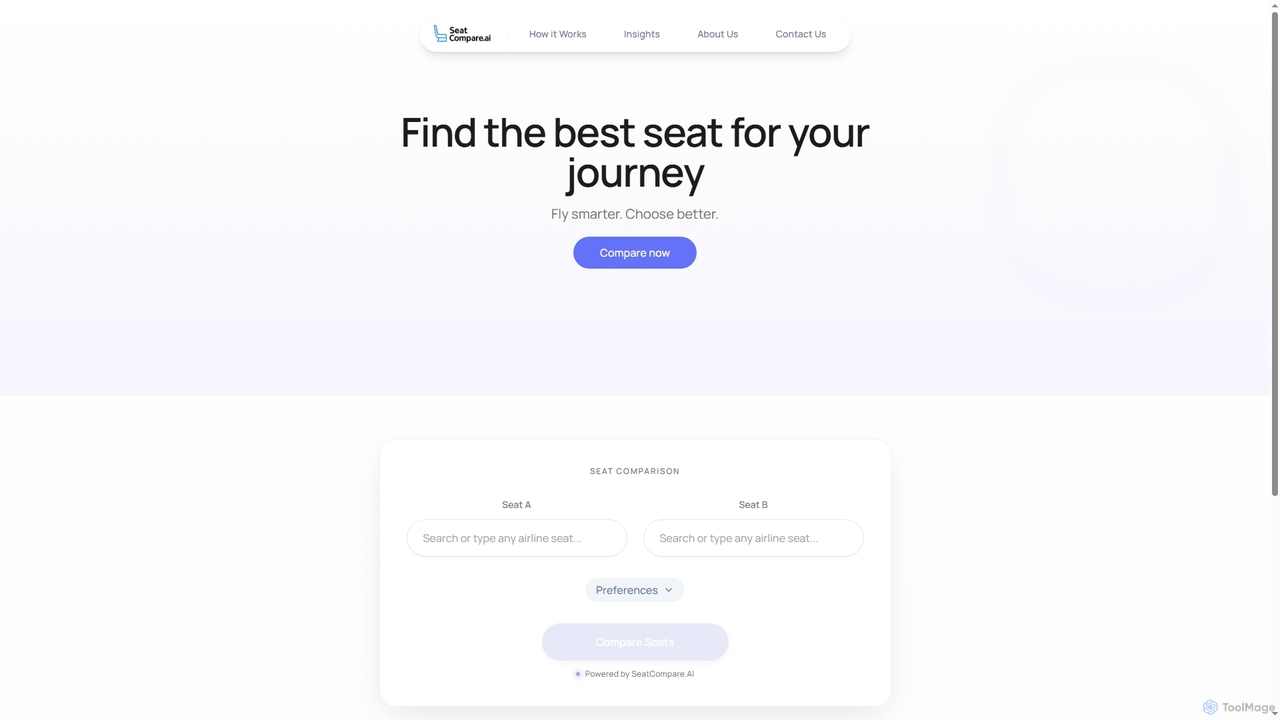
SeatCompare is an AI-powered tool that instantly compares airline seats across various classes, from economy to first class. …
SeatCompare is an AI-powered tool that instantly compares airline seats across various classes, from economy to first class. It helps travelers make informed decisions by analyzing real traveler feedback and airline data to find the best seat for their journey, focusing on comfort, privacy, and overall value.
flightseatmaps
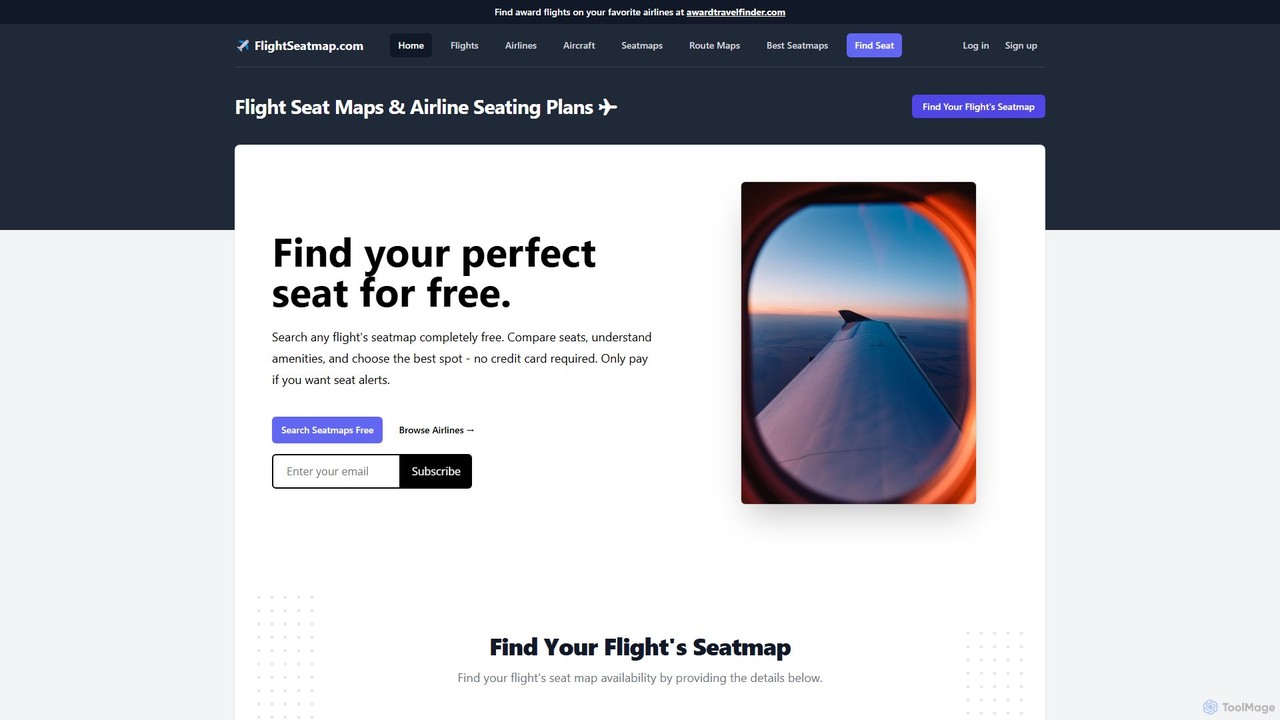
flightseatmaps is a comprehensive tool for air travelers to find, compare, and select the best airplane seats. Search …
flightseatmaps is a comprehensive tool for air travelers to find, compare, and select the best airplane seats. Search any flight's seat map for free to view detailed layouts, amenities, and passenger reviews. Upgrade for real-time seat availability tracking and instant alerts to secure your preferred spot, ensuring a more comfortable journey.
About Flight Planning
Flight Planning AI tools are advanced software solutions that leverage artificial intelligence to optimize and automate the complex process of preparing for a flight. These tools analyze vast amounts of real-time data, including weather, airspace restrictions, aircraft performance, and fuel consumption, to generate the most efficient and safest flight paths. They significantly enhance operational safety, reduce fuel costs, and improve overall logistical efficiency for pilots, airlines, and drone operators alike.
Core Features
- Route Optimization: AI algorithms dynamically calculate the most efficient and safest flight paths, considering factors like wind, terrain, and restricted airspace.
- Real-time Weather Integration: Provides up-to-the-minute weather forecasts, turbulence predictions, and hazard alerts along the planned route.
- Fuel & Load Calculation: Precisely determines optimal fuel loads and aircraft weight distribution for maximum efficiency and compliance.
- Regulatory Compliance: Automatically checks flight plans against current NOTAMs, TFRs, and international aviation regulations.
- Performance Prediction: Estimates flight time, altitude profiles, and speed, adapting to changing conditions for accurate arrival times.
Applicable Scenarios
Commercial airlines use these tools to optimize thousands of daily flights, minimizing fuel burn and delays. Private pilots rely on them for comprehensive pre-flight briefings, ensuring safety and compliance for general aviation. Drone operators utilize AI flight planning to navigate complex urban airspaces, adhering to local regulations and optimizing delivery routes.
How to Choose
When selecting an AI flight planning tool, consider its data integration capabilities for real-time weather and NOTAMs, the level of route customization and flexibility for different aircraft types, the intuitiveness of its user interface, and the comprehensiveness of its regulatory database. Evaluate its ability to integrate with existing avionics or dispatch systems for seamless operations.

Flight PlanningUse Cases
Commercial Airline Route Optimization
Airline dispatchers and operations managers utilize AI flight planning to optimize thousands of daily flights. The AI analyzes historical data, real-time weather, airspace congestion, and aircraft performance to suggest optimal routes, altitudes, and speeds. This process significantly reduces fuel consumption and flight time, leading to substantial operational cost savings and improved on-time performance across the fleet.
Private Pilot Pre-flight Briefing & Planning
General aviation pilots (VFR/IFR) use AI tools to prepare for safe flights. The AI aggregates all necessary information—weather, NOTAMs, airspace, fuel requirements, and alternate airports—into a concise briefing. It calculates precise fuel burn for different altitudes and suggests safe routes avoiding restricted areas or adverse weather, significantly enhancing safety and compliance for individual flights.
Drone Delivery Route Generation
Drone logistics companies and urban air mobility operators leverage AI flight planning to generate efficient and compliant delivery routes for autonomous drones. The AI considers 3D urban models, temporary flight restrictions, wind patterns, and delivery schedules to create optimized, safe, and energy-efficient drone paths. This ensures successful deliveries while adhering to complex urban airspace regulations and maximizing battery life.
Emergency Medical Services (EMS) Flight Planning
Air ambulance pilots and medical dispatchers rely on AI flight planning for rapidly planning urgent medical flights. Often operating under challenging weather conditions, these missions prioritize speed and safety for patient or organ transport. AI quickly assesses real-time weather, available landing zones, shortest safe routes, and potential hazards, providing critical decision support for time-sensitive operations and enhancing mission success rates.
Air Cargo Operations Efficiency
Cargo airline planners and logistics coordinators use AI flight planning to optimize cargo flight schedules and routes globally. The AI integrates cargo weight and balance, customs requirements, and dynamic weather forecasts to create efficient flight plans that minimize delays and maximize payload capacity. This ensures tight delivery windows are met, reduces operational costs, and enhances the reliability of global supply chains.
Flight Instructor & Student Training Planning
Flight instructors and student pilots use AI tools to plan training flights that meet specific curriculum requirements and introduce various navigation challenges. AI helps instructors design diverse flight scenarios, simulate different weather conditions, and generate detailed flight plans for students to practice navigation, emergency procedures, and decision-making in a controlled yet realistic environment, enhancing learning outcomes and safety.