Hitab
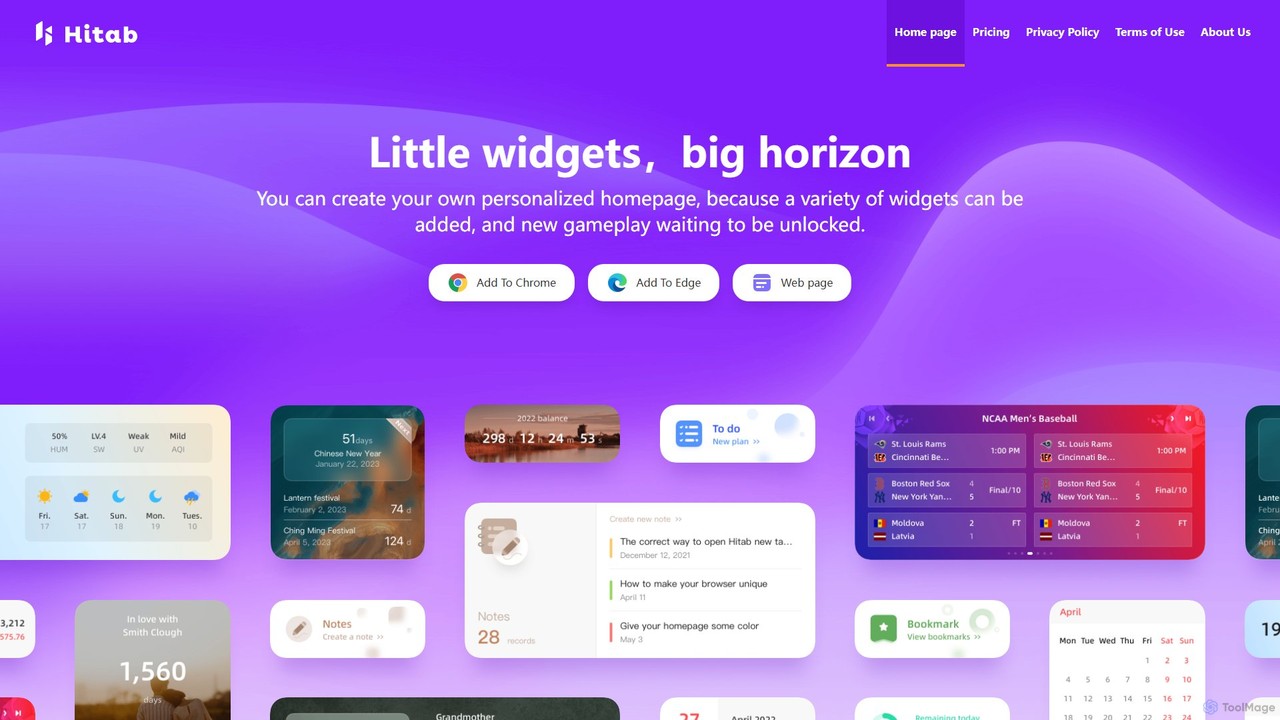
Hitab is a powerful browser extension that transforms your new tab page into a personalized and productive dashboard. …
Hitab is a powerful browser extension that transforms your new tab page into a personalized and productive dashboard. It allows users to add a variety of widgets like notes, to-do lists, weather, and countdowns. With extensive customization options, including drag-and-drop widgets, custom icons, and a vast library of HD wallpapers, Hitab helps you create a beautiful, efficient, and unique homepage tailored to your needs.
About Dashboard
AI Dashboards are intelligent data visualization tools that use machine learning to automatically analyze complex datasets and surface actionable insights. Unlike traditional dashboards that only display static data, these tools can identify trends, detect anomalies, and generate predictive forecasts. They transform raw data into a dynamic, interactive interface where users can ask questions in natural language and receive AI-generated explanations. This capability allows businesses to move from reactive data monitoring to proactive, data-driven decision-making.
Core Features
- Predictive Analytics: Utilizes historical data to forecast future trends, sales, or demand.
- Anomaly Detection: Automatically identifies unusual patterns or outliers in data that may indicate problems or opportunities.
- Natural Language Query (NLQ): Allows users to ask questions about their data in plain English, without needing to write complex code.
- Automated Insights: Proactively generates and presents key findings, correlations, and summaries from the data.
- Real-time Data Integration: Connects to multiple data sources to provide a unified, up-to-the-minute view of performance.
Use Cases
AI Dashboards are widely used across various departments such as marketing, sales, finance, and operations. Marketing teams use them to monitor campaign performance and get AI-driven optimization suggestions. In finance, they help track key financial metrics in real-time and automatically flag potential risks. Operations managers leverage them to monitor supply chain efficiency and predict potential bottlenecks.
How to Choose
When selecting an AI Dashboard, consider the tool's data source compatibility and integration capabilities. Evaluate the depth and accuracy of its AI features, such as forecasting and anomaly detection. Assess the user interface for ease of use, especially its Natural Language Query functionality. Finally, consider the level of customization available for reports and visualizations to ensure it meets your specific business needs.
DashboardUse Cases
Sales Performance Forecasting and Analysis
A sales manager uses an AI dashboard to connect data from their CRM, ERP, and marketing platforms. Instead of manually building reports, the dashboard automatically visualizes key metrics like conversion rates and sales cycle length. The AI component provides a rolling forecast of quarterly revenue based on the current pipeline and historical trends, highlighting deals at risk. The manager can use natural language to ask, 'Which region has the highest growth potential next month?' and receive an instant, data-backed answer, enabling them to allocate resources more effectively.
Marketing Campaign Optimization
A digital marketer monitors multiple campaigns across Google Ads, Facebook, and email marketing. An AI dashboard consolidates all this data, providing a unified view of performance. The AI automatically detects anomalies, such as a sudden drop in click-through rate for a specific ad group, and sends an alert. It also generates insights like 'Your campaign targeting 25-34 year olds on Instagram is showing 30% higher ROI than other segments.' This allows the marketer to quickly reallocate budget to the best-performing channels and audiences without spending hours on manual analysis.
Supply Chain Anomaly Detection
An operations manager for an e-commerce company oversees a complex supply chain. They use an AI dashboard connected to inventory, shipping, and supplier data. The system monitors key metrics like order fulfillment times and shipping costs in real-time. The AI's anomaly detection feature automatically flags a potential disruption, such as a specific warehouse showing a sudden increase in processing delays. This early warning allows the manager to proactively investigate the issue and reroute shipments before it significantly impacts customer delivery times.
Financial Health Monitoring for Executives
A Chief Financial Officer (CFO) needs a high-level overview of the company's financial health. An AI dashboard provides a consolidated view of revenue, expenses, and cash flow from various accounting systems. The AI can identify subtle trends that might be missed in standard reports, such as a gradual increase in customer churn within a specific product category. It can also generate automated narrative summaries for board meetings, translating complex financial charts into plain-language explanations, saving the CFO hours of preparation time.
Analyzing Customer Support Ticket Trends
A customer support manager wants to understand the root causes of support tickets. They connect their helpdesk software (like Zendesk or Intercom) to an AI dashboard. The AI uses natural language processing to analyze thousands of tickets, automatically categorizing them by topic and sentiment. The dashboard visualizes trends, showing a spike in tickets related to 'billing issues' after a recent software update. This insight allows the support team to proactively create help articles and inform the product team about the problem, reducing ticket volume and improving customer satisfaction.
Website Performance and User Behavior Analysis
A product manager for a SaaS application uses an AI dashboard to analyze user behavior data from tools like Google Analytics and Mixpanel. The dashboard automatically identifies key user journeys and conversion funnels. The AI highlights friction points, such as a high drop-off rate on a specific step in the sign-up process. It can also segment users and identify patterns, for instance, 'Users who engage with feature X in their first week have a 50% higher retention rate.' This enables the product team to prioritize improvements and feature developments based on data-driven insights rather than intuition.