
ToolMage
Sign in

Best 1 App Marketplace AI tools for Utilities

Popular App Marketplace AI tools in Utilities include Microsoft Edge Add-ons, helping you work more efficiently.

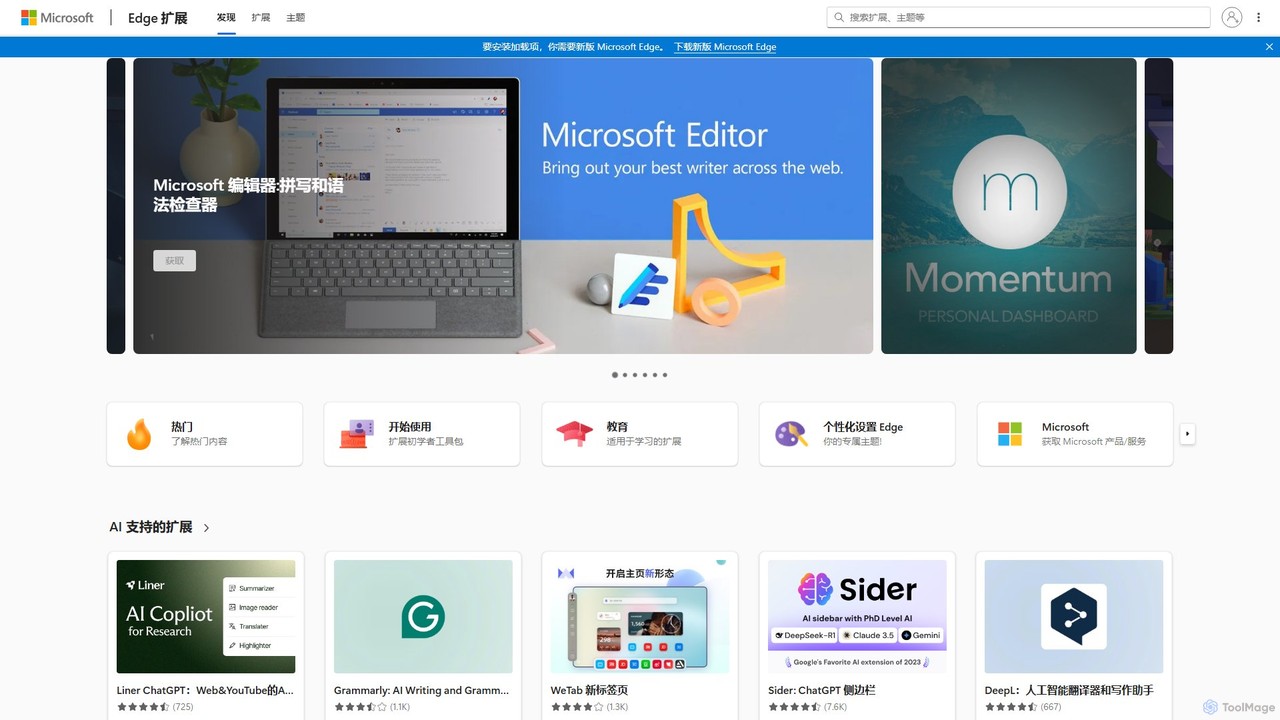
Microsoft Edge Add-ons
Freemium

Microsoft Edge Add-ons

The official marketplace for Microsoft Edge extensions, offering a vast library of add-ons to enhance productivity, security, and personalization. Discover AI-powered tools, ad-blockers, password managers, and more to customize your browsing experience.

Extension Store
Visits 60.2KFavorites 116Likes 117

About App Marketplace

App Marketplaces are centralized platforms for discovering, installing, and integrating third-party AI-powered applications and extensions into existing software ecosystems. They function as curated hubs where users can enhance their primary tools, such as CRMs or design software, with specialized AI capabilities without building them from scratch. This approach streamlines the adoption of AI by providing vetted, ready-to-deploy solutions that connect with established workflows. The core value lies in extending the functionality of current systems rather than replacing them entirely.

Core Features

  • Centralized Discovery: A single, searchable catalog of AI apps and plugins for a specific platform.
  • Seamless Integration: Offers one-click or low-code installation to connect AI features directly into your existing software.
  • Quality and Security Vetting: Apps are often reviewed by the marketplace owner for security, performance, and compatibility.
  • Community Reviews and Ratings: User feedback helps in evaluating the effectiveness and reliability of different applications.
  • Developer APIs and SDKs: Provides tools for developers to build and list their own AI applications on the marketplace.

Use Cases

These marketplaces are widely used by businesses to augment their core software. For example, a marketing team might add an AI-powered content optimizer from their CMS marketplace, while a sales team could integrate a lead scoring app into their CRM. Developers also leverage these platforms to find and connect specialized AI services, such as sentiment analysis or object recognition APIs, to build more complex applications.

How to Choose

When selecting an app, consider its specific functionality and how well it addresses your needs. Check for compatibility with your current software version and review user ratings for insights on performance and support. Also, evaluate the pricing model (e.g., subscription, pay-per-use) and understand the developer's data privacy and security policies to ensure compliance.

App Marketplace use cases

1

Enhancing CRM with AI Lead Scoring

A sales team using a CRM like Salesforce or HubSpot can browse their platform's app marketplace to find an AI-powered lead scoring tool. After a simple integration process, the tool automatically analyzes incoming leads based on demographic data, behavior, and engagement history. It assigns a predictive score indicating the likelihood of conversion. This allows sales representatives to prioritize their efforts on high-potential leads, increasing conversion rates and optimizing the sales cycle without leaving their primary work environment.

2

Automating Design Tasks with Plugins

A graphic designer working in Figma or Adobe Creative Cloud can access the respective app marketplace to find AI plugins that automate repetitive tasks. For instance, they can install a plugin that automatically removes backgrounds from images, generates color palette variations, or creates realistic mockups from a 2D design. By integrating these tools directly into their design software, the designer saves significant time on manual work, allowing them to focus more on creative strategy and complex design challenges, thereby increasing overall productivity.

3

Integrating AI into Customer Support Systems

A customer support manager can use the app marketplace within their helpdesk platform (like Zendesk or Intercom) to install AI applications. They might add a sentiment analysis tool to automatically tag tickets based on customer emotion, or an AI chatbot to handle common queries and deflect tickets. This integration allows the support team to respond faster to urgent issues, gain insights into customer satisfaction, and automate routine tasks, all within the familiar interface of their helpdesk software, improving both agent efficiency and customer experience.

4

Augmenting Marketing Automation Platforms

A digital marketer using a platform like Mailchimp or Marketo can explore its marketplace for AI add-ons. They could install an app for predictive audience segmentation, which uses AI to identify customer groups most likely to engage with a campaign. Another useful app might be an AI-powered subject line generator that A/B tests and optimizes for higher open rates. By integrating these tools, the marketer can create more personalized, effective campaigns with less manual analysis, leading to better ROI and deeper customer insights directly within their marketing automation workflow.

5

Adding Predictive Models to BI Tools

A data analyst using a business intelligence (BI) tool like Tableau or Power BI can leverage its app marketplace to enhance their analytical capabilities. They can find and integrate pre-built AI models for tasks like sales forecasting, customer churn prediction, or anomaly detection. Instead of building these models from scratch, the analyst can apply them directly to their datasets within the BI environment. This accelerates the process of generating predictive insights, making advanced analytics more accessible and allowing the business to make data-driven decisions more quickly.

6

Building Custom AI Workflows with APIs

A developer or IT professional can use a cloud app marketplace, such as those from AWS, Google Cloud, or Azure, to assemble custom AI-powered workflows. They can select and connect various specialized AI services—like a natural language processing (NLP) API for text analysis, a computer vision API for image tagging, and a translation API. By integrating these pre-trained models via the marketplace, they can build a sophisticated application, such as an automated content moderation system, without the extensive time and resources required to train each AI model independently.

App Marketplace FAQ

What is an AI App Marketplace?

An AI App Marketplace is a digital platform that centralizes third-party AI applications, plugins, and extensions designed to integrate with specific software ecosystems. Instead of offering standalone programs, it provides tools that enhance the functionality of existing platforms like CRMs, design software, or cloud services. Users can browse, purchase, and install these AI add-ons to automate tasks, gain predictive insights, or add intelligent features directly into their established workflows without needing deep technical expertise.

How do I choose the right app from an AI App Marketplace?

To choose the right app, follow these steps:

  • Define Your Goal: Clearly identify the problem you want to solve or the process you want to improve.
  • Check Compatibility: Ensure the app is compatible with your current software version and existing tools.
  • Read Reviews: Look at user ratings and reviews to gauge the app's performance, reliability, and the quality of customer support.
  • Evaluate Features and Pricing: Compare the app's features against your requirements and assess if its pricing model (e.g., subscription, one-time fee) fits your budget.
  • Review Security Policies: Understand how the app handles your data and ensure it complies with your organization's security and privacy standards.
What's the difference between an AI App Marketplace and a standalone AI tool?

The key difference is integration. A standalone AI tool operates as a separate program with its own interface, requiring you to switch between applications. An app from an AI App Marketplace is designed to integrate directly into a host platform (like a CRM or design tool). This creates a seamless workflow where the AI functionality becomes a native part of the software you already use, eliminating the need to export data or learn a new environment. Marketplaces focus on extending functionality, while standalone tools provide a complete, self-contained solution.

What are the main benefits of using an AI App Marketplace?

The primary benefits include:

  • Increased Efficiency: By integrating AI directly into existing workflows, you eliminate context switching and automate tasks within the tools you use daily.
  • Easy Access to Innovation: Marketplaces provide a simple way to adopt cutting-edge AI capabilities without needing a dedicated data science team.
  • Vetted and Secure Solutions: Apps listed on major marketplaces are often reviewed for security and quality, reducing the risk of using unreliable third-party tools.
  • Cost-Effectiveness: It is often more affordable to subscribe to a specialized app than to build a similar AI feature in-house.
  • Seamless Workflow: Enhances your primary software rather than forcing you to adopt entirely new systems.
Who are AI App Marketplaces for?

AI App Marketplaces are for a wide range of users. Business professionals (in sales, marketing, support) use them to enhance their primary software without needing technical skills. Creative professionals (designers, content creators) use them to automate repetitive tasks and speed up their creative process. Developers and IT teams use them to quickly integrate powerful, pre-trained AI models and APIs into custom applications, saving significant development time and resources. Essentially, they are for anyone looking to leverage AI to improve an existing software or workflow.