ToolMage
Sign in

Best 3 Calculator AI tools for Utilities

Popular Calculator AI tools in Utilities include Cutlist Evolution, HeightEstimator, and PaintPlanner, helping you work more efficiently.

HeightEstimator
Free

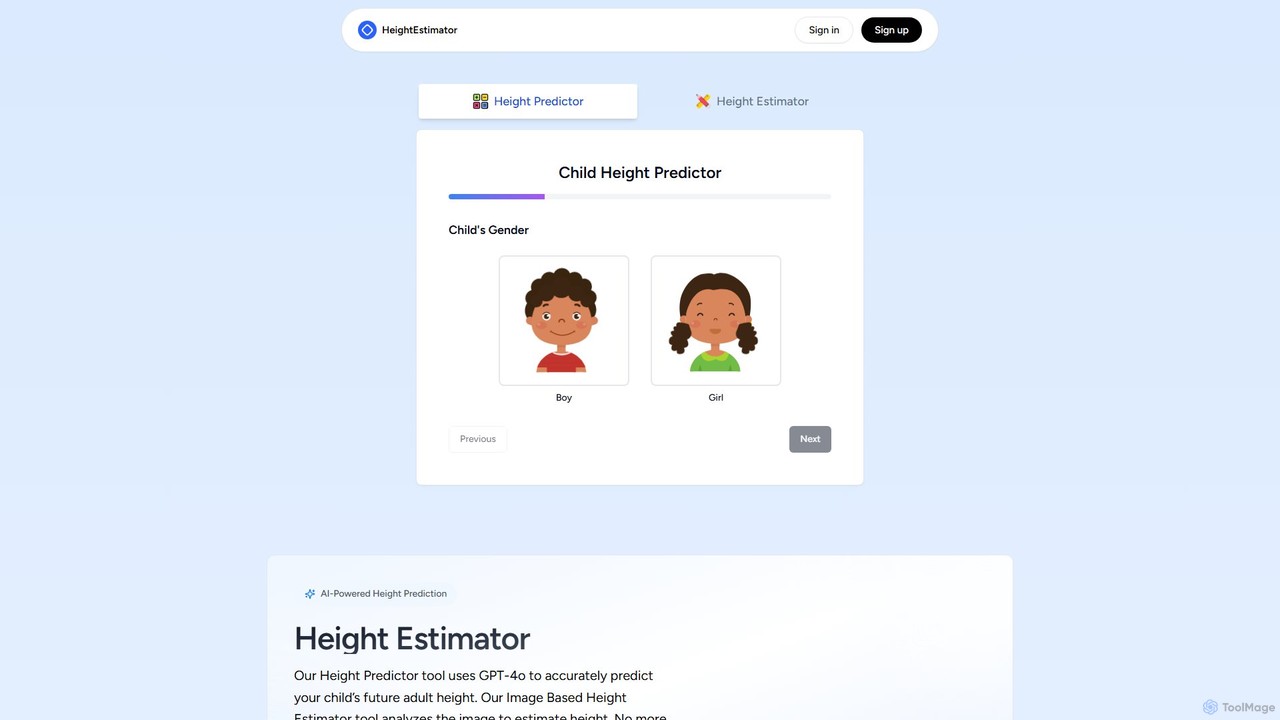
HeightEstimator

An AI-powered platform offering two distinct tools: a child height predictor based on genetic and growth data, and an image-based height estimator. Using GPT-4o and advanced algorithms, it provides highly accurate (95%) future height predictions for children and estimates height from photos, all while prioritizing user privacy with no data storage.

3D
Visits 4.7KFavorites 129Likes 126
PaintPlanner
Free

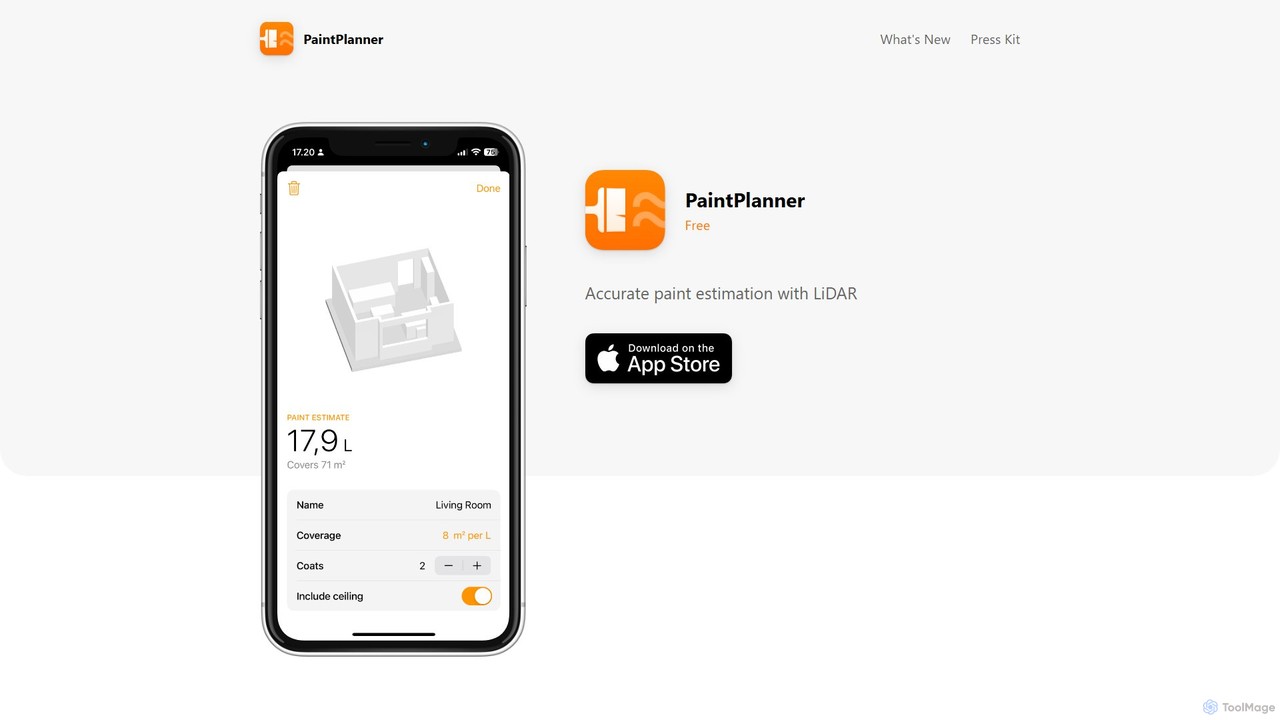
PaintPlanner

PaintPlanner is a free AI-powered mobile app that uses your device's LiDAR sensor to accurately calculate paint needs. Instantly scan rooms to measure surface areas, automatically subtracting doors and windows. Plan your painting projects efficiently, save estimates, and avoid wasting time or money.

Interior Design
Visits 4.5KFavorites 142Likes 132
Cutlist Evolution
Freemium

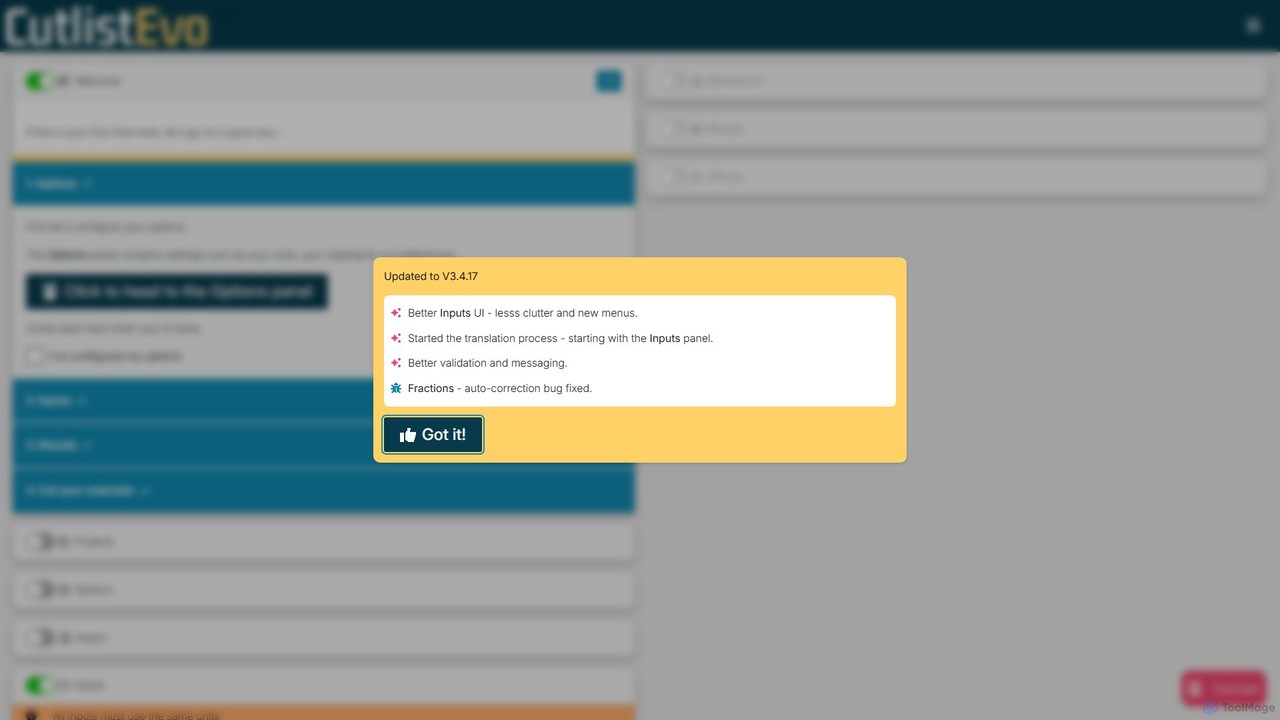
Cutlist Evolution

Cutlist Evolution is an AI-powered cut list optimizer designed for woodworkers, metalworkers, and manufacturers. It calculates the most efficient cutting layouts for sheet goods and linear stock, significantly reducing material waste, saving time, and cutting costs. Its intuitive web-based interface helps you plan projects accurately by considering blade width and managing usable offcuts.

Planning
Visits 27.3KFavorites 135Likes 133

About Calculator

AI Calculators are intelligent tools that go beyond basic arithmetic, leveraging artificial intelligence to interpret complex inputs, perform advanced computations, and provide data-driven insights. These tools can understand natural language queries, model intricate scenarios, and offer predictive analysis, making them invaluable for specialized fields requiring precise and context-aware calculations. They streamline complex problem-solving by automating data interpretation and formula application.

Core Features

  • Natural Language Processing: Understands and processes calculation requests described in plain human language.
  • Advanced Predictive Modeling: Utilizes AI algorithms to forecast future values or outcomes based on historical data and trends.
  • Contextual Data Integration: Connects with external data sources to perform calculations with real-time or domain-specific information.
  • Specialized Domain Logic: Incorporates AI-driven rules and knowledge bases for accurate calculations in specific fields like finance or engineering.
  • Optimization Algorithms: Solves complex problems by finding optimal solutions for resource allocation, scheduling, or design parameters.

Use Cases

AI Calculators are employed in diverse sectors for tasks requiring more than simple number crunching. Financial analysts use them for complex investment risk assessments, while engineers leverage them for optimizing material usage in design. Researchers apply these tools for statistical analysis and predictive modeling in scientific studies.

How to Choose

When selecting an AI Calculator, consider its domain-specific capabilities, such as financial modeling or scientific computation. Evaluate its natural language processing accuracy and ability to integrate with your existing data sources. Assess the complexity of problems it can solve and its predictive accuracy, alongside user interface and pricing structure.

Featured tool rankings

Calculator use cases

1

Financial Investment Risk Assessment

Financial analysts use AI calculators to evaluate potential investment risks by inputting market data, company financials, and economic indicators. The AI models various scenarios, predicts potential returns, and quantifies risk exposure, helping analysts make informed decisions and optimize portfolio strategies. This automates complex statistical analysis, saving hours of manual computation.

2

Optimizing Project Resource Allocation

Project managers leverage AI calculators to determine the most efficient allocation of resources (time, budget, personnel) for complex projects. By inputting project constraints, task dependencies, and resource availability, the AI identifies optimal schedules and resource assignments, minimizing costs and maximizing project completion efficiency. This ensures projects stay on track and within budget.

3

Generate Predictive Sales Forecasts

Sales and marketing teams utilize AI calculators to forecast future sales volumes and revenue. By analyzing historical sales data, seasonal trends, marketing campaign performance, and external economic factors, the AI generates accurate predictions. This enables businesses to better plan inventory, set realistic targets, and strategize future campaigns effectively.

4

Personalized Financial Planning

Individuals and financial advisors use AI calculators for personalized financial planning, including retirement savings, loan repayments, and budget management. Users input their income, expenses, goals, and risk tolerance, and the AI provides tailored projections and recommendations, helping them achieve long-term financial stability.

5

Optimize Engineering Design Parameters

Engineers employ AI calculators to optimize design parameters for products or structures. By inputting design constraints, material properties, and performance requirements, the AI explores thousands of permutations to identify the most efficient and robust design configurations. This accelerates the design process and improves product performance.

6

Scientific Data Analysis and Modeling

Researchers and scientists use AI calculators for advanced statistical analysis and modeling of complex datasets. From drug discovery to climate science, these tools process vast amounts of experimental data, identify patterns, and build predictive models, accelerating scientific breakthroughs and validating hypotheses.

Calculator FAQ

What are AI Calculators?

AI Calculators are advanced computational tools that integrate artificial intelligence to perform complex calculations, interpret natural language inputs, and provide data-driven insights. Unlike traditional calculators, they can understand context, perform predictive modeling, and optimize solutions across various specialized domains, making them more versatile for intricate problem-solving.

How do AI Calculators differ from traditional calculators?

Traditional calculators primarily perform predefined arithmetic operations based on explicit numerical inputs. AI Calculators, however, leverage AI to interpret natural language, understand contextual data, perform predictive analysis, and apply domain-specific logic. They can handle ambiguous inputs, learn from data, and offer optimized solutions, going far beyond simple number crunching.

What types of problems can AI Calculators solve?

AI Calculators can solve a wide range of complex problems that require intelligent interpretation and advanced computation. This includes financial risk assessment, predictive sales forecasting, engineering design optimization, resource allocation planning, scientific data modeling, and personalized financial planning. They excel where context, data integration, and predictive capabilities are crucial.

How to choose the best AI Calculator for my needs?

To choose the best AI Calculator, first identify your specific domain (e.g., finance, engineering) and the complexity of calculations required. Look for tools with strong natural language processing, robust predictive modeling capabilities, and seamless integration with your data sources. Consider the user interface, scalability, and pricing model, ensuring it aligns with your technical expertise and budget.

Are AI Calculators suitable for everyday use?

While AI Calculators are powerful for complex, specialized tasks, they might be overkill for simple everyday arithmetic. For basic calculations, a traditional calculator or a smartphone app is often more efficient. However, for personal finance planning, budgeting with predictive elements, or quick data analysis, an AI Calculator can offer significant advantages by providing deeper insights and automation.