flavorish
Flavorish is an all-in-one AI-powered recipe manager that lets you save recipes from anywhere—social media, websites, or even …
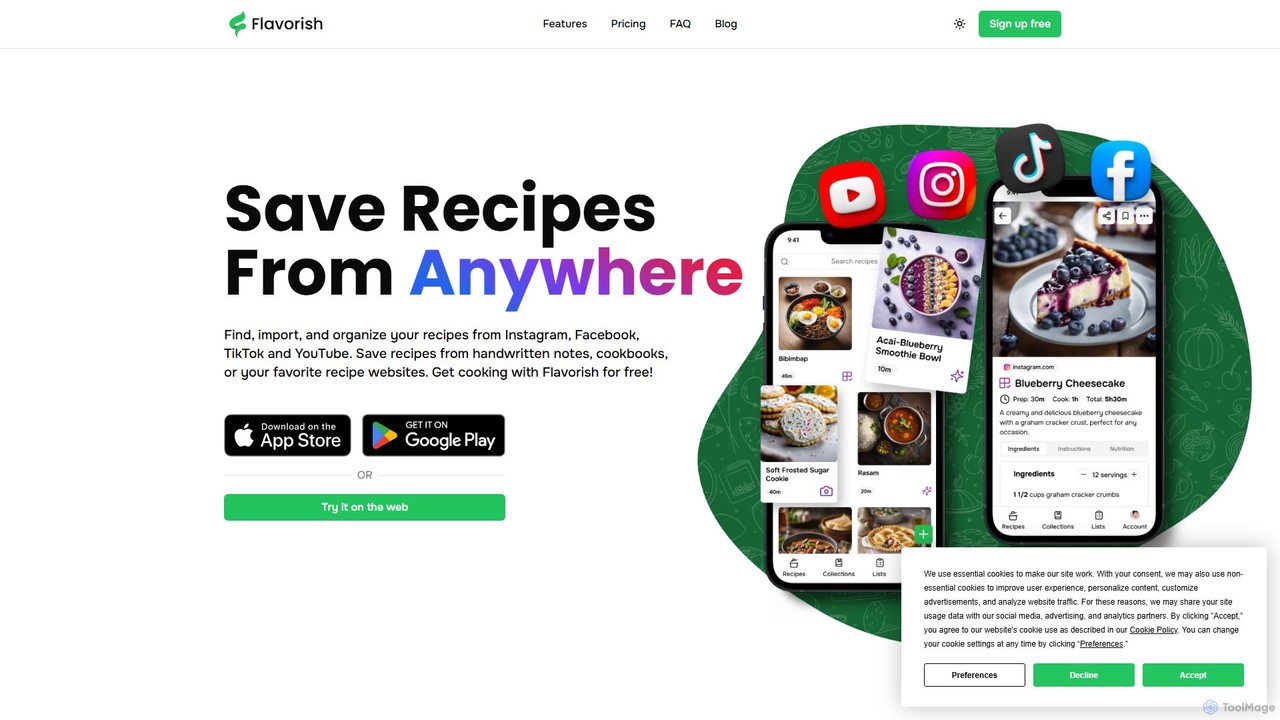
Flavorish is an all-in-one AI-powered recipe manager that lets you save recipes from anywhere—social media, websites, or even handwritten notes. It helps you organize your digital cookbook, generate personalized recipes with AI, create smart grocery lists, and streamline your entire cooking process.
About Recipe Management
Recipe Management tools are AI-powered applications designed to intelligently digitize, organize, and analyze culinary recipes. Using technologies like Optical Character Recognition (OCR) and Natural Language Processing (NLP), these tools automatically parse recipe details from websites, photos, or text. They extend beyond simple storage by providing automated meal planning, in-depth nutritional analysis, and smart ingredient substitutions. This enables users to efficiently manage dietary goals, reduce food waste, and personalize their cooking experience based on specific needs and preferences.
Core Features
- Smart Recipe Import: Automatically captures and formats recipes from URLs, images, or text, extracting ingredients and instructions.
- Nutritional Analysis: Instantly calculates calories, macronutrients (protein, carbs, fat), and micronutrients for any dish.
- Automated Meal Planning: Generates weekly meal plans based on dietary goals, preferences, and available ingredients.
- Ingredient Substitution Suggestions: Recommends intelligent alternatives for ingredients based on dietary restrictions (e.g., vegan, gluten-free) or pantry availability.
- Dynamic Recipe Scaling: Automatically adjusts ingredient quantities when changing the number of servings.
Applicable Scenarios
These tools are ideal for home cooks seeking to streamline meal planning, fitness enthusiasts tracking nutritional intake, and individuals managing dietary restrictions or allergies. Food bloggers and content creators also use them to standardize their recipe database and provide accurate nutritional information to their audience, while families can use them to simplify grocery shopping and reduce food waste.
Selection Criteria
When selecting a tool, consider the accuracy of its recipe parsing technology and the comprehensiveness of its nutritional database. Evaluate the flexibility of its meal planning features and its ability to handle complex dietary needs. Also, assess the user interface, integration with grocery list apps, and whether the pricing model aligns with your usage frequency.

Recipe ManagementUse Cases
Automated Weekly Meal Planning for Families
A busy parent uses an AI recipe management tool to plan a week's worth of meals for their family of four. They input dietary preferences, such as 'no red meat' and 'one vegetarian night,' along with a weekly budget. The AI generates a balanced meal plan, complete with breakfast, lunch, and dinner recipes. It automatically compiles a categorized shopping list, which can be sent directly to a grocery delivery service. This process saves hours of planning time, reduces impulse buys at the store, and ensures the family eats varied and healthy meals.
Macro and Calorie Tracking for Fitness Goals
A fitness enthusiast aims to build muscle and needs to consume a specific amount of protein, carbs, and fats daily. They use an AI recipe tool to find and create meals that fit their macronutrient targets. After importing a recipe from a blog, the tool instantly analyzes its nutritional content. The user can then adjust ingredient quantities, like adding more chicken breast or reducing oil, and see the macro changes in real-time. This allows for precise meal preparation that aligns perfectly with their fitness regimen, removing the guesswork from diet planning.
Managing Recipes for Dietary Allergies and Restrictions
A user with a gluten intolerance and a dairy allergy needs to adapt their favorite recipes. They use an AI recipe manager to find suitable ingredient substitutions. When they import a lasagna recipe, the AI flags the regular pasta and cheese. It then suggests certified gluten-free pasta brands and provides several dairy-free cheese alternatives, such as cashew-based or tofu-based ricotta. The tool can also filter a database of thousands of recipes to show only those that are inherently gluten-free and dairy-free, making meal discovery safe and effortless.
Digitizing and Organizing Family Recipe Collections
Someone inherits a box of handwritten recipe cards from their grandmother. Instead of manually typing each one, they use an AI recipe tool's OCR feature. They simply take a photo of each card, and the AI transcribes the ingredients and instructions into a standardized digital format. It automatically tags recipes with keywords like 'dessert' or 'baking.' This not only preserves precious family recipes in a secure, searchable digital library but also makes them easy to share with other family members and even calculate their nutritional information for modern dietary awareness.
Reducing Food Waste with Pantry-Based Suggestions
A user wants to cook a meal but is unsure what to make with the ingredients they have on hand. They use their AI recipe app to input the items from their pantry and fridge, such as 'chicken thighs,' 'broccoli,' and 'lemon.' The AI then searches its database and suggests several recipes that use these core ingredients, like 'Lemon Herb Roasted Chicken and Broccoli' or 'Chicken and Broccoli Stir-fry.' This helps the user utilize food before it expires, significantly reducing household food waste and saving money on groceries.
Standardizing Nutrition Facts for Food Bloggers
A food blogger wants to provide accurate nutritional information for the recipes they publish, enhancing their credibility and audience trust. After finalizing a new cake recipe, they input the exact ingredients and measurements into their AI recipe tool. The tool instantly generates a standard nutrition label, including calories, fat, sugar, and protein per serving. They can easily copy this information to their blog post. This automates a previously tedious and error-prone task, ensuring consistency across all their recipes and providing valuable information to health-conscious readers.