ToolMage
Sign in

Best 2 Learn To Earn AI tools for Web3

Popular Learn To Earn AI tools in Web3 include Intract and DailyWiser, helping you work more efficiently.

Intract
Freemium

Intract

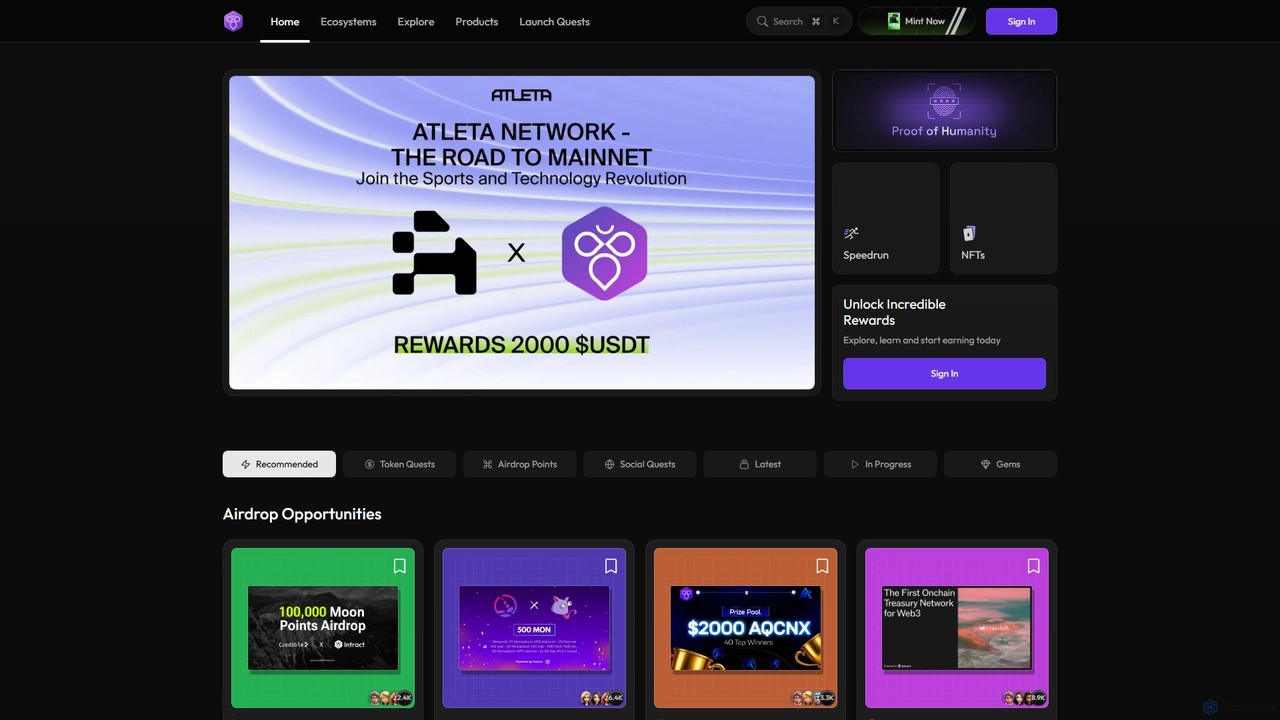
Intract is a leading Web3 learning and discovery platform that guides users through the world of crypto with gamified quests. Participate in tasks from top Web3 projects, learn about new technologies, and earn rewards like crypto and NFTs in a fun, interactive environment.

Airdrops
Visits 6.4KFavorites 134Likes 135
DailyWiser
Freemium

DailyWiser

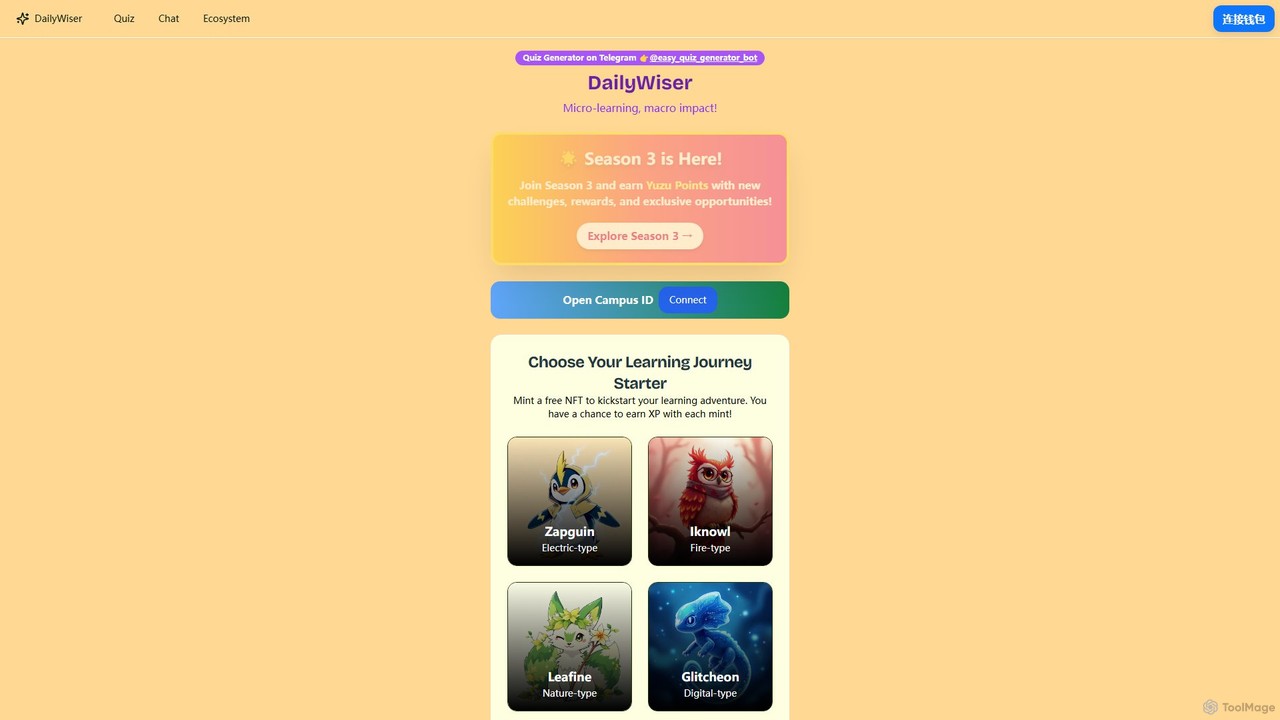
DailyWiser is a gamified, learn-to-earn platform on the Open Campus EDU Chain. It incentivizes learning through daily quizzes, challenges, and NFT minting. Users can earn points and convert them into crypto rewards ($EDU), making education an engaging and profitable journey into Web3 and other diverse subjects.

Gamified Learning
Visits 6.2KFavorites 141Likes 122

About Learn To Earn

Learn To Earn (L2E) platforms are a class of Web3 applications that reward users with cryptocurrency or NFTs for completing educational content. These tools utilize blockchain technology to transparently track learning progress and automatically distribute tokenized incentives. They are primarily used to onboard new users into the Web3 space, teach complex topics like DeFi, and create a direct economic link between knowledge acquisition and value. Unlike traditional online courses, L2E models provide tangible, ownable digital assets as verifiable proof of learning.

Core Features

  • Tokenized Rewards: Users earn fungible tokens (cryptocurrency) or Non-Fungible Tokens (NFTs) for completing quizzes, modules, or courses.
  • On-Chain Credentials: Learning achievements are recorded as verifiable credentials on the blockchain, creating a permanent and transparent record of skills.
  • Gamified Learning Modules: Content is often presented through interactive quizzes, challenges, and tutorials to make learning engaging and effective.
  • Integrated Crypto Wallet: Seamless connection to a user's crypto wallet is required for receiving rewards and managing earned assets.

Use Cases

Learn To Earn platforms are widely used by blockchain projects for community education and user acquisition. They serve as an effective tool for Web3 companies to teach users about their protocols or products. Additionally, individuals new to cryptocurrency use these platforms as a low-risk entry point to earn their first digital assets while learning the fundamentals of the ecosystem.

How to Choose

When selecting a Learn To Earn platform, evaluate the quality and relevance of the educational content. Consider the type and potential value of the rewards offered, such as established tokens versus new project tokens. It's also important to assess the reputation of the project behind the platform and the user experience of the learning interface and wallet integration.

Learn To Earn use cases

1

Onboarding New Users to a DeFi Protocol

A DeFi project aims to attract and educate new users about its complex features like liquidity pools and yield farming. They create a series of interactive tutorials on a Learn To Earn platform. As users, such as crypto enthusiasts new to DeFi, complete each module and pass a quiz, the platform's smart contract automatically sends a small amount of the protocol's native governance token to their connected wallet. This not only teaches them how to use the protocol but also gives them a stake in it, encouraging immediate participation and long-term engagement.

2

Learning a Blockchain Programming Language

A developer education platform wants to incentivize programmers to learn Solidity, the language for Ethereum smart contracts. They structure a course with interactive coding challenges. For each successfully completed challenge, from writing a simple 'Hello World' contract to deploying a basic token, the developer earns a skill-badge NFT. These NFTs are non-transferable and act as a verifiable, on-chain resume, proving their proficiency to potential employers or collaborators in the Web3 ecosystem. This model motivates continuous learning through tangible, career-enhancing rewards.

3

Corporate Web3 Training for Employees

A large financial firm needs to upskill its workforce on blockchain technology and its implications for the industry. Instead of traditional seminars, the company partners with a Learn To Earn platform to create a private, internal training program. Employees, such as financial analysts and compliance officers, complete modules on topics like enterprise blockchain and tokenization. Upon completion, they receive stablecoin rewards funded by the company. This gamified approach increases engagement and completion rates, ensuring the workforce is prepared for technological shifts while providing a direct, modern incentive.

4

Engaging a Gaming Community with Tokenomics

A Web3 game developer is about to launch a new play-to-earn game with a complex in-game economy. To ensure players understand how to maximize their earnings and use the game's NFTs effectively, they release a pre-launch 'Learn To Earn' campaign. Players who complete short, animated video lessons about the game's tokenomics and pass a quiz are airdropped a small amount of the game's currency and an exclusive, non-tradable cosmetic NFT. This educates the player base, builds hype, and ensures a smoother launch as players already understand the core economic mechanics.

5

Language Learning with Crypto Incentives

A mobile language-learning app integrates Learn To Earn mechanics to boost user retention. Users set a weekly goal for completing lessons. For every day they practice and complete a lesson, they earn a small amount of a partner cryptocurrency. If they maintain their streak for the entire week, they receive a bonus reward. This model transforms the abstract goal of fluency into daily, tangible rewards, providing a powerful motivational tool for learners to stay consistent with their studies. The crypto earned can be used for in-app purchases or transferred to an external wallet.

6

Verifiable Certification for Digital Skills

A digital marketing academy wants to offer certifications that are more credible and portable than traditional PDFs. They use a Learn To Earn platform to issue their course certificates as NFTs. Students, such as aspiring social media managers, complete modules on SEO, content marketing, and analytics. Upon passing the final exam, a unique, non-fungible token representing their 'Certified Digital Marketer' qualification is minted directly to their crypto wallet. This NFT can be easily verified by employers on a public blockchain and linked on professional profiles, providing a secure and modern credentialing system.

Learn To Earn FAQ

What is Learn To Earn (L2E)?

Learn To Earn (L2E) is a model within the Web3 ecosystem where users receive tangible rewards, like cryptocurrency or NFTs, for completing educational tasks. It combines learning with financial incentives on the blockchain. Unlike simply reading or watching content, L2E platforms verify your progress and automatically distribute ownable digital assets to your wallet upon completion. This creates a direct link between gaining knowledge and earning value, making it a popular method for onboarding people into new technologies like crypto and DeFi.

How is Learn To Earn different from traditional online courses?

The primary difference lies in the reward and credentialing system. Traditional online courses typically offer a PDF certificate of completion, which is centralized and can be difficult to verify. Learn To Earn platforms provide rewards with real-world value (crypto/NFTs) and issue credentials directly on a public blockchain. This makes your achievements:

  • Verifiable: Anyone can confirm your credential on the blockchain without needing to contact the issuing institution.
  • Ownable: The credential (often an NFT) is a digital asset in your wallet that you truly own and control.
  • Incentivized: There is a direct financial motivation to complete the course material.

How do you choose a good Learn To Earn platform?

To choose a reliable Learn To Earn platform, consider these four factors:

  • Content Quality: Is the educational material accurate, up-to-date, and presented clearly? Look for platforms that partner with credible experts or projects.
  • Reward Value & Sustainability: What are you earning? Is it an established token like ETH or a new, speculative project token? Assess the long-term value and the tokenomics of the reward.
  • Platform Credibility: Research the team behind the platform. Do they have a good track record in the Web3 or education space? Check for community reviews and security audits.
  • User Experience: The platform should be easy to navigate, the content engaging, and the process of connecting a wallet and receiving rewards should be secure and straightforward.
What kind of rewards can you get from L2E platforms?

Rewards on Learn To Earn platforms typically fall into two categories:

  • Fungible Tokens: These are cryptocurrencies with direct monetary value. They can be well-known assets like Ethereum (ETH) or stablecoins (like USDC), or they can be the native token of the project providing the education. These can usually be traded on crypto exchanges.
  • Non-Fungible Tokens (NFTs): These are unique digital assets. In an L2E context, an NFT often represents a certificate of completion, a skill badge, an access pass to an exclusive community or event, or a unique in-game item. While some NFTs can be traded, others might be non-transferable 'soulbound' tokens meant to represent your personal achievements.
Who is Learn To Earn for?

Learn To Earn platforms are suitable for a wide range of users:

  • Crypto Beginners: It's a low-risk way to earn your first cryptocurrency while learning the fundamentals of the Web3 ecosystem without a significant initial investment.
  • Existing Crypto Users: For those already familiar with crypto, L2E is a great way to deepen knowledge on specific topics like new blockchain protocols, DeFi strategies, or NFT standards.
  • Developers & Builders: Programmers can learn new blockchain-specific languages (like Solidity or Rust) and earn verifiable credentials to prove their skills.
  • Projects & Companies: Businesses use L2E as a powerful marketing and community-building tool to educate potential users about their products and incentivize adoption.