ToolMage
Sign in

Best 2 Email AI tools for Writing

Popular Email AI tools in Writing include Letty and EmailCharlie, helping you work more efficiently.

EmailCharlie
Freemium

EmailCharlie

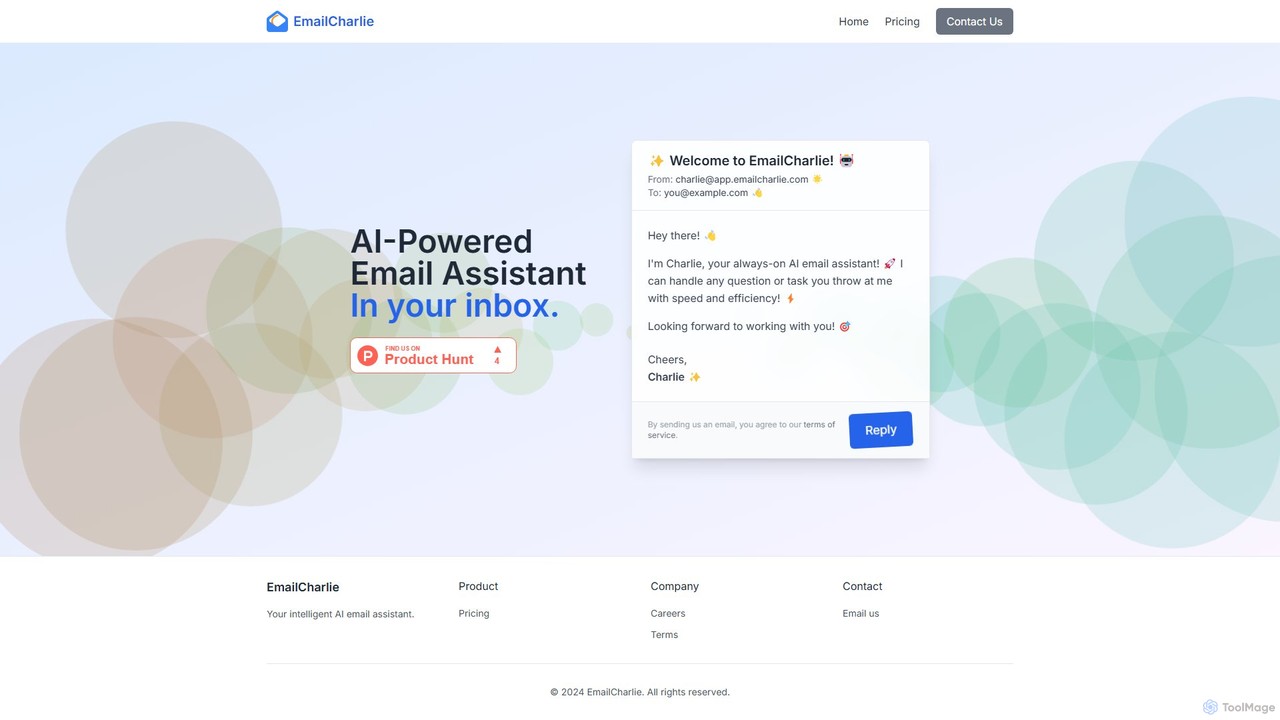
EmailCharlie is an AI-powered email assistant that automates tasks directly within your inbox. Simply send an email with your request—like summarizing documents, drafting replies, or finding information—and Charlie will process it and email you back the result. It eliminates context switching by integrating seamlessly into your existing email workflow, boosting productivity and efficiency for busy professionals.

Workflow
Visits 4.2KFavorites 130Likes 108
Letty
Freemium

Letty

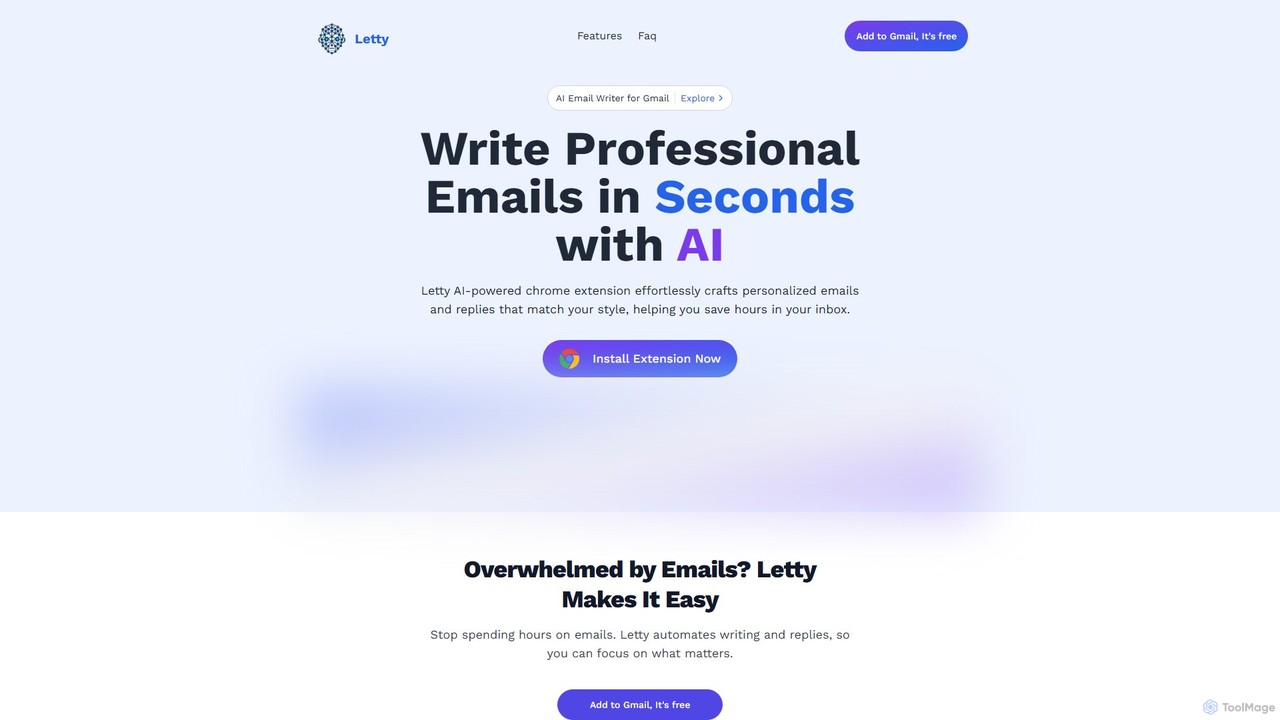
Letty is an AI-powered Chrome extension for Gmail that helps you write professional emails and replies in seconds. It learns your writing style and can be trained on your own data (documents, websites) to provide highly personalized, context-aware suggestions, saving you hours in your inbox.

Email Assistant
Visits 5.2KFavorites 102Likes 100

About Email

AI Email tools are specialized applications that leverage artificial intelligence to automate and enhance the process of writing, managing, and optimizing emails. As a key part of the AI Writing ecosystem, these tools use natural language processing (NLP) to generate drafts, refine tone, suggest replies, and summarize long conversations. Their primary value lies in significantly boosting communication efficiency, improving the quality of correspondence, and saving users valuable time on daily email tasks. They can adapt to various contexts, from formal business proposals to casual team updates.

Core Features

  • Automated Drafting: Generates complete email drafts from brief prompts or keywords.
  • Tone and Style Adjustment: Modifies the email's tone to be more professional, friendly, persuasive, or concise.
  • Smart Reply Suggestions: Provides context-aware reply options for quick responses.
  • Subject Line Optimization: Creates compelling subject lines designed to increase open rates.
  • Email Summarization: Condenses long email threads into key points and action items.

Applicable Scenarios

These tools are widely used by sales and marketing teams for creating outreach campaigns and newsletters. Customer support professionals leverage them to provide faster, more consistent responses. Executives and managers use them to streamline internal communications and manage high-volume inboxes efficiently.

How to Choose

When selecting an AI Email tool, consider its integration capabilities with your current email client (e.g., Gmail, Outlook). Evaluate the quality and customizability of its language generation and tone options. Also, review its data privacy and security policies, especially for handling sensitive business information. Finally, compare pricing models based on your usage volume.

Featured tool rankings

Email use cases

1

Automating Personalized Sales Outreach

A Sales Development Representative (SDR) is tasked with contacting 100 new leads per day. Manually writing personalized emails is time-consuming and leads to generic templates. By using an AI Email tool, the SDR provides a few key details about each lead (e.g., name, company, role, recent achievement). The AI then generates a unique, personalized cold email for each contact, referencing their specific context. This process reduces drafting time by over 70% and increases reply rates by creating more relevant and engaging initial touchpoints.

2

Streamlining Customer Support Responses

A customer support agent for an e-commerce company handles dozens of similar inquiries daily, such as 'Where is my order?' or 'How do I process a return?'. An AI Email tool integrated into their helpdesk system can analyze incoming tickets and suggest complete, empathetic, and accurate draft replies. The agent simply reviews and approves the draft, or makes minor edits. This allows the agent to resolve tickets 2-3 times faster, maintain a consistent brand voice, and focus on more complex customer issues.

3

Enhancing Executive and Internal Communications

A department head needs to send a company-wide announcement about a new policy. The message must be clear, professional, and unambiguous. Using an AI Email tool, they can input the key points of the policy. The AI helps structure the information logically, refines the language for clarity, and adjusts the tone to be authoritative yet approachable. This ensures the communication is effective and minimizes potential misunderstandings across the organization, saving time in drafting and follow-up clarifications.

4

Managing High-Volume Inboxes with Summaries

A project manager is cc'd on numerous long email threads daily, making it difficult to keep up with key decisions. An AI Email tool can automatically summarize these threads. When opening a long conversation, the tool presents a bulleted list of key points, decisions made, and outstanding action items. This allows the manager to grasp the context in seconds without reading every single message, ensuring they stay informed and can prioritize their responses effectively.

5

Optimizing Email Marketing Campaign Copy

A digital marketer is preparing a promotional email campaign for a new product launch. To maximize engagement, they need compelling subject lines and persuasive body copy. They use an AI Email tool to generate multiple variations of subject lines and call-to-action phrases. The tool can also analyze the email body and suggest improvements to enhance clarity and persuasive impact. This facilitates A/B testing and helps the marketer identify the copy that yields the highest open and conversion rates.

6

Crafting Multilingual Business Correspondence

A business development manager needs to communicate with potential partners in Japan and Germany. They are not fluent in Japanese or German. Using an AI Email tool with advanced translation and localization features, they can write their message in English. The tool then generates a professionally worded email in the target language, respecting cultural nuances and formal business etiquette. This enables clear and effective cross-border communication without relying on expensive or slow translation services.

Email FAQ

What are AI Email tools?

AI Email tools are software applications that use artificial intelligence, particularly natural language processing, to help users write, manage, and optimize their emails. They go beyond simple spell-checking to offer advanced features like automated email drafting, tone adjustment, smart reply suggestions, and summarization of long threads. Their main purpose is to increase productivity and improve the quality of email communication in both personal and professional contexts.

How do I choose the right AI Email tool?

To choose the right tool, consider these four factors:

  • Integration: Ensure it works seamlessly with your primary email client (e.g., Gmail, Outlook, Apple Mail).
  • Features: Identify your main need. Do you need help with drafting from scratch, refining tone, or managing a busy inbox? Choose a tool that excels in that area.
  • Customization: Look for options to create custom prompts, save preferred styles, or train the AI on your writing voice for more personalized outputs.
  • Security: Verify the tool's privacy policy to understand how it handles your email data, especially if you work with confidential information.

What is the difference between AI Email tools and general AI Writing assistants?

The main difference is specialization. General AI Writing assistants are designed for a wide range of content, such as blog posts, social media updates, and reports. AI Email tools are specifically optimized for the unique format and context of email communication. They have features tailored for email, like subject line optimization, reply suggestions based on thread context, and integrations directly into email clients, which general-purpose writers typically lack.

Can AI Email tools understand the context of an entire email conversation?

Yes, many advanced AI Email tools are designed to analyze the context of an entire email thread. By processing previous messages in the conversation, they can generate highly relevant summaries, suggest appropriate replies that address specific points raised, and maintain conversational continuity. This contextual understanding is a key feature that distinguishes them from simple text generators and allows them to provide more accurate and helpful assistance for ongoing dialogues.

Are AI-generated emails secure and private?

Security and privacy vary significantly between providers. Reputable AI Email tools use encryption to protect data in transit and at rest. However, it is crucial to read the privacy policy of any tool before using it. Some tools may use your data to train their models. For sensitive business or personal communication, choose a provider that offers a zero-data-retention policy or on-premise deployment options to ensure your information remains confidential and is not used for any other purpose.