ToolMage
Sign in

Best 1,202 Writing AI tools

Popular Writing AI tools include Google Gemini, Baidu, doubao, Perplexity, Microsoft Copilot, DeepL, JanitorAI, boundlessai, Spicychat, and Quark, helping you work more efficiently.

Redmo
Freemium

Redmo

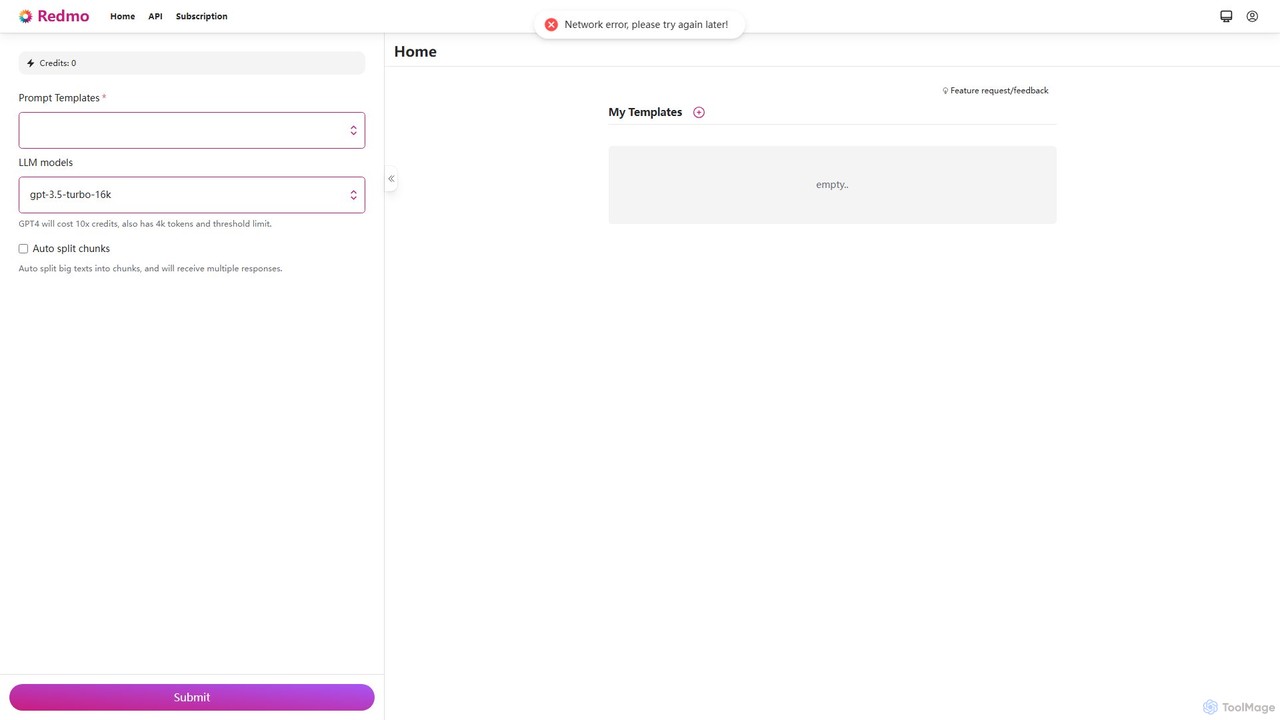
Redmo is a powerful prompt engineering platform that enables users to create, manage, and execute dynamic prompt templates with variables. It offers API support for seamless integration and features multi-LLM compatibility, including GPT-4, to streamline and scale automated content generation and workflows.

Api Management
Visits 5.8KFavorites 103Likes 83

RAGNA Nano
Freemium

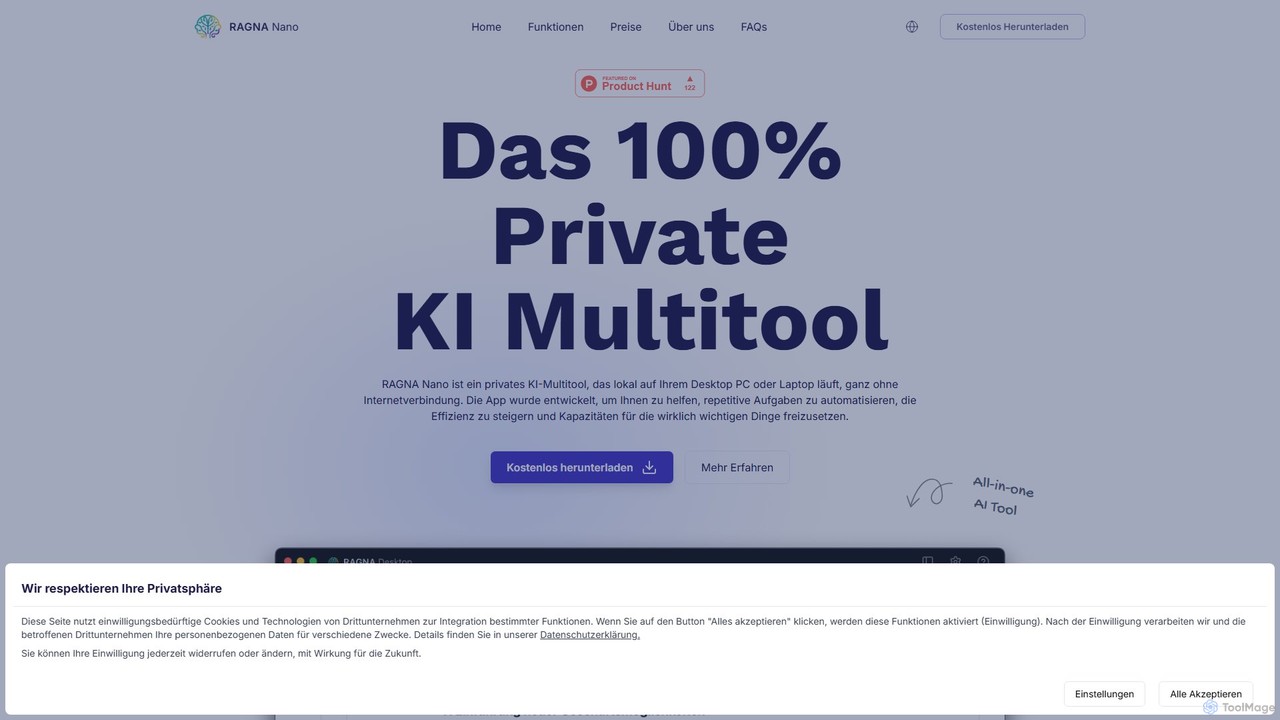
RAGNA Nano

RAGNA Nano is a 100% private, all-in-one AI multitool that runs locally on your desktop, completely offline. It's designed for maximum data security and privacy, allowing you to chat with an AI assistant, analyze sensitive documents, and use an intelligent text editor without your data ever leaving your computer. It offers a free plan for individuals and a customizable enterprise solution, making powerful AI accessible without compromising on security.

Api
Visits 5.7KFavorites 120Likes 125

About Writing

AI Writing tools are applications that leverage artificial intelligence, particularly large language models (LLMs), to generate, edit, and optimize human-like text. These tools analyze vast amounts of data to understand context, grammar, and style, enabling them to produce a wide range of written content from simple prompts. They serve as powerful assistants for overcoming writer's block, automating repetitive writing tasks, and enhancing the quality and clarity of communication. The output can be tailored for different tones, audiences, and formats, making them highly versatile.

Core Features

  • Content Generation: Creates original text for articles, blogs, ads, emails, and social media posts based on user prompts.
  • Paraphrasing and Rewriting: Rephrases sentences or entire paragraphs to improve clarity, change tone, or avoid plagiarism.
  • Grammar and Style Correction: Identifies and corrects grammatical errors, spelling mistakes, and suggests stylistic improvements for better readability.
  • Summarization: Condenses long documents, articles, or reports into concise summaries, highlighting key points.
  • Tone and Language Adjustment: Modifies the writing style to be formal, casual, persuasive, or other specified tones, and supports multiple languages.

Use Cases

These tools are widely used by content marketers for creating SEO-optimized blog posts, social media managers for generating engaging captions, and business professionals for drafting emails and reports. Students and academics also use them for research assistance, paraphrasing, and proofreading their papers.

How to Choose

When selecting an AI Writing tool, consider the quality and originality of the generated content. Evaluate the range of available templates and supported content formats. Assess its language capabilities and the level of control over tone and style. Finally, check for integration options with other platforms like WordPress or Google Docs to ensure a smooth workflow.

Featured tool rankings

Writing use cases

1

Automated Blog Post and SEO Content Creation

A content marketer needs to publish several SEO-optimized articles per week to drive organic traffic. Using an AI writing tool, they input target keywords and a topic. The tool generates a structured outline, drafts each section with relevant information, and suggests meta titles and descriptions. This process reduces research and writing time by over 60%, allowing the marketer to focus on content strategy and editing, ultimately increasing content output and search engine rankings.

2

Generating Engaging Social Media Captions

A social media manager for a fashion brand needs to create daily posts for Instagram, Facebook, and Twitter. They use an AI writing tool to generate multiple caption ideas for a single product image. By specifying the platform and desired tone (e.g., witty, inspiring), the tool provides several options, including relevant hashtags and calls-to-action. This allows the manager to quickly test different messages and maintain a consistent, high-quality presence across all channels without spending hours on brainstorming.

3

Drafting Professional Business Emails and Reports

A project manager needs to send a weekly progress update to stakeholders. Instead of writing from scratch, they input key bullet points—such as milestones achieved, challenges faced, and next steps—into an AI writing tool. The tool instantly structures this information into a clear, professional email or a formal report section. It ensures a consistent tone and format, saving the manager valuable time while improving the clarity and professionalism of their communications.

4

Academic Paper Paraphrasing and Summarization

A university student is conducting a literature review for their thesis and needs to synthesize information from dozens of research papers. They use an AI writing tool's paraphrasing feature to rephrase key findings from various sources in their own words, helping to avoid unintentional plagiarism. Additionally, they use the summarization function to quickly grasp the core arguments of dense academic articles, significantly accelerating their research and note-taking process.

5

Overcoming Writer's Block in Creative Projects

A novelist is struggling with a difficult chapter, unable to advance the plot. They turn to an AI writing tool as a brainstorming partner. By inputting the current scene's context and character profiles, they ask the AI to generate potential dialogue, plot twists, or descriptive passages. While not using the text directly, the AI's suggestions provide fresh perspectives and ideas, sparking the author's own creativity and helping them break through the writer's block to continue their story.

6

Translating and Adapting Marketing Copy for Global Markets

A global e-commerce company is launching a new product in Japan and Germany. The marketing team uses an AI writing tool with advanced translation and localization features. They input their English ad copy, and the tool not only translates it but also adapts cultural nuances, idioms, and marketing phrases to resonate with local audiences. This ensures the brand's message is not just understood but is also persuasive and culturally appropriate in each new market, a task that would otherwise require expensive local agencies.

Writing FAQ

What are AI Writing tools?

AI Writing tools are software applications that use artificial intelligence, primarily large language models (LLMs), to generate, rewrite, summarize, and proofread text. They function by processing user prompts and leveraging vast datasets to produce human-like content. Key features often include creating blog posts, correcting grammar, changing the tone of a text, and translating languages. They are designed to assist users in producing high-quality written content more efficiently.

How to choose the right AI Writing tool?

To choose the right AI Writing tool, first identify your primary need (e.g., long-form articles, social media copy, or academic writing). Then, consider these factors:

  • Output Quality: Test the tool to see if its output is coherent, accurate, and natural-sounding. Look for tools with low plagiarism scores.
  • Features and Templates: Check if it offers specific templates or features for your tasks, such as SEO optimization, specific tones, or content frameworks.
  • Ease of Use: The interface should be intuitive and allow for a smooth workflow without a steep learning curve.
  • Integrations: Consider if it integrates with other software you use, like WordPress, Google Docs, or social media schedulers.
  • Pricing: Compare pricing plans to find one that fits your budget and usage volume. Many tools offer free trials to evaluate their capabilities.
What kind of content can AI Writing tools create?

AI Writing tools are highly versatile and can create a wide variety of content types. Common examples include:

  • Marketing Content: Blog posts, SEO articles, ad copy, product descriptions, and social media captions.
  • Business Communication: Professional emails, business proposals, press releases, and reports.
  • Creative Writing: Story plots, character descriptions, poems, and song lyrics.
  • Academic Content: Essay outlines, summaries of research papers, and paraphrased text for literature reviews.
  • Technical Content: Documentation, knowledge base articles, and user guides.

The capabilities depend on the specific tool, with some specializing in certain niches like long-form content or marketing copy.

Can AI-generated content be detected and does it rank on Google?

Yes, AI-generated content can sometimes be identified by AI detection tools, although their accuracy varies. However, Google's official stance is to reward high-quality content that is helpful to people, regardless of how it is produced. Content created with AI is not inherently penalized. The key is to use AI as a tool to create original, accurate, and valuable content that demonstrates expertise and meets user search intent. Simply publishing raw, unedited AI output is unlikely to perform well, as it may lack originality and depth. Human oversight and editing are crucial for success.

Who are AI Writing tools for?

AI Writing tools are beneficial for a wide range of users who need to create written content. Key user groups include:

  • Content Marketers and SEOs: To quickly generate blog posts, articles, and website copy at scale.
  • Copywriters and Advertisers: For brainstorming ad copy, slogans, and product descriptions.
  • Social Media Managers: To create engaging posts and captions for various platforms.
  • Students and Academics: For assistance with research, summarizing articles, and paraphrasing to avoid plagiarism.
  • Business Professionals: To draft professional emails, reports, presentations, and other business documents efficiently.
  • Authors and Bloggers: To overcome writer's block, generate ideas, and draft initial content.