Bannerbear is a powerful API for automating the generation of images, videos, and PDFs. It helps businesses scale their marketing efforts by creating dynamic social media visuals, e-commerce banners, and personalized content through templates and integrations with tools like Zapier, Airtable, and custom applications.
Hedra is a foundational AI model for creating highly expressive and controllable video content. It specializes in generating lifelike, real-time interactive avatars that can be integrated into various applications via its powerful API, enabling dynamic and engaging user experiences.
Product overview
Bannerbear Product overview
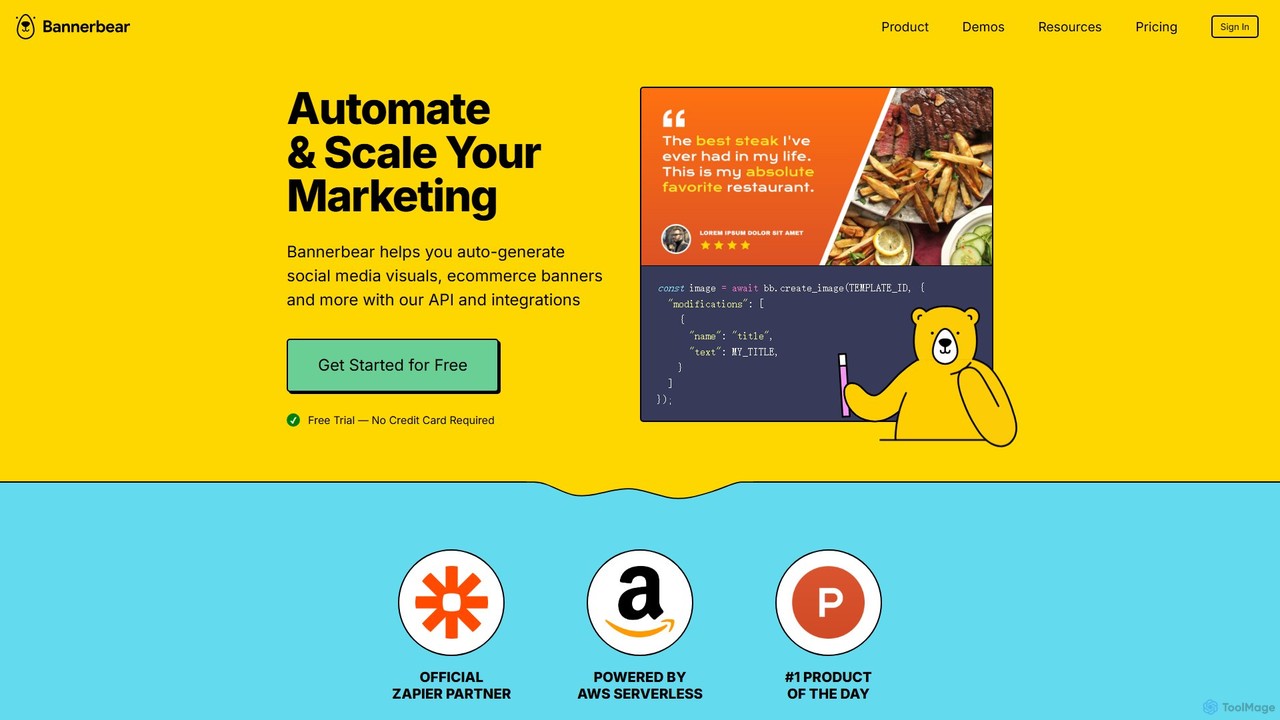
Bannerbear is a powerful API for automating the generation of images, videos, and PDFs. It helps businesses scale their marketing efforts by creating dynamic social media visuals, e-commerce banners, and personalized content through templates and integrations with tools like Zapier, Airtable, and custom applications.
Hedra Product overview
Hedra is a foundational AI model for creating highly expressive and controllable video content. It specializes in generating lifelike, real-time interactive avatars that can be integrated into various applications via its powerful API, enabling dynamic and engaging user experiences.
Detailed feature comparison
| Feature | Bannerbear | Hedra |
|---|---|---|
| Primary category | Image Generation | Api |
| Added | 2025-08-16 | 2025-08-17 |
| Pricing | Freemium | Freemium |
| Official website | www.bannerbear.com | www.hedra.com |
| Product type | Website | Website |
| Performance data | ||
| User rating | Not verified | Not verified |
| Comments | 0 | 0 |
| Monthly visits | 198K | 763.4K |
| Monthly growth | -2.4% | 7.3% |
| Favorites | 151 | 131 |
| Details | View details | View details |
Bannerbear vs Hedra monthly traffic
Compare Bannerbear and Hedra by monthly reach, traffic trend, visit depth, top regions, and acquisition sources.
How to interpret the traffic data
In the Bannerbear vs Hedra monthly traffic comparison, Bannerbear currently shows 198K visits and Hedra shows 763.4K; Hedra has about 3.9 times the visible traffic of Bannerbear, an absolute difference of about 565.4K visits. This reflects visible reach, not feature quality or paid users.
Both tools provide verified traffic details, so monthly trends, visit depth, regions, and acquisition sources can be compared on the same basis.
Bannerbear monthly traffic:
Latest traffic
Monthly traffic trend
- 2025/9: 211.4K Monthly visits
- 2026/1: 210.6K Monthly visits
- 2026/2: 163.5K Monthly visits
- 2026/3: 199.9K Monthly visits
- 2026/4: 202.9K Monthly visits
- 2026/5: 198K Monthly visits
Top regions
Top 5 countries/regions
| Country/region | Percentage | Traffic |
|---|---|---|
| 🇮🇳India | 41.4% | 82K |
| 🇺🇸United States | 29.07% | 57.6K |
| 🇬🇧United Kingdom | 10.12% | 20K |
| 🇨🇦Canada | 9.93% | 19.7K |
| 🇩🇪Germany | 9.48% | 18.8K |
Traffic sources
| Source type | Percentage | Traffic |
|---|---|---|
| Direct | 92.09% | 182.3K |
| Referral | 6.69% | 13.2K |
| 1.22% | 2.4K |
Search keywords
Hedra monthly traffic:
Latest traffic
Monthly traffic trend
- 2025/9: 1.3M Monthly visits
- 2026/1: 1.1M Monthly visits
- 2026/2: 1.6M Monthly visits
- 2026/3: 1.1M Monthly visits
- 2026/4: 711.6K Monthly visits
- 2026/5: 763.4K Monthly visits
Top regions
Top 5 countries/regions
| Country/region | Percentage | Traffic |
|---|---|---|
| 🇺🇸United States | 52.02% | 397.1K |
| 🇮🇳India | 20.63% | 157.5K |
| 🇫🇷France | 10.44% | 79.7K |
| 🇧🇷Brazil | 9.17% | 70K |
| 🇩🇪Germany | 7.74% | 59.1K |
Traffic sources
| Source type | Percentage | Traffic |
|---|---|---|
| Direct | 91.55% | 698.9K |
| Referral | 7.19% | 54.9K |
| 1.26% | 9.6K |
Search keywords
Usage comparison
Compare the core capabilities of Bannerbear and Hedra
Bannerbear Core features
Hedra Core features
Use cases
Bannerbear Use cases
Hedra Use cases
Bannerbear vs Hedra:In-depth comparison and selection guidance
First decide whether the products solve the same kind of need
This in-depth Bannerbear vs Hedra comparison uses only the product records, taxonomy, audience, traffic, and community signals available on this page. Bannerbear is primarily listed under “Image Generation”, while Hedra is primarily listed under “Api”, so the first decision is whether your actual task matches their recorded scope.
The structured fields currently show these decision-relevant differences: Primary category (Bannerbear: Image Generation; Hedra: Api); Monthly visits (Bannerbear: 198K; Hedra: 763.4K); Monthly growth (Bannerbear: -2.4%; Hedra: 7.3%); Favorites (Bannerbear: 151; Hedra: 131); Website (Bannerbear: www.bannerbear.com; Hedra: www.hedra.com). These facts are more useful for selection than brand visibility alone.
What market visibility and monthly traffic mean
In the Bannerbear vs Hedra monthly traffic comparison, Bannerbear currently shows 198K visits and Hedra shows 763.4K; Hedra has about 3.9 times the visible traffic of Bannerbear, an absolute difference of about 565.4K visits. This reflects visible reach, not feature quality or paid users.
Both tools provide verified traffic details, so monthly trends, visit depth, regions, and acquisition sources can be compared on the same basis.
If public market visibility is an important first-pass criterion, investigate Hedra first. The final choice should still follow taxonomy, use case, and a real trial because higher traffic does not prove broader capabilities or better workflow fit.
Product positioning, use cases, and roles
Bannerbear and Hedra currently overlap in shared categories: Api; shared tags: API, developer tools, and video generation. This can place both on the same shortlist, but it does not prove equal implementation, depth, or cost.
Bannerbear's unique categories/tags are Image Generation, Automation, No Code, airtable, e-commerce banners, image generation, marketing automation, and no-code; Hedra's are Customer Support, Avatar, ai avatar, digital human, interactive video, lip sync, real-time video, and text to video. These unique fields are the strongest differentiators: validate the product whose recorded scope matches the task instead of following traffic alone.
What ratings, comments, and favorites can tell you
Bannerbear has no verified rating, 0 comments, 151 favorites, and 156 likes;Hedra has no verified rating, 0 comments, 131 favorites, and 140 likes。
Neither product has enough rating or comment samples for a credible reputation ranking.
Selection guidance by actual need
When to evaluate Bannerbear first
Put Bannerbear on the priority trial list when the task aligns with “Image Generation” and especially Image Generation, Automation, No Code, airtable, e-commerce banners, and image generation. This follows recorded positioning and does not imply unlisted capabilities are absent.
Bannerbear also currently records: pricing is freemium, product type is website, 198K verified monthly visits, no verified user rating. Verify any hard requirement around price, platform, or reach before trial, and do not let sparse review data substitute for testing.
When to evaluate Hedra first
Put Hedra on the priority trial list when the task aligns with “Api” and especially Customer Support, Avatar, ai avatar, digital human, interactive video, and lip sync. This follows recorded positioning and does not imply unlisted capabilities are absent.
Hedra also currently records: pricing is freemium, product type is website, 763.4K verified monthly visits, no verified user rating. Verify any hard requirement around price, platform, or reach before trial, and do not let sparse review data substitute for testing.
How to validate the recommendation before deciding
The available data describes positioning, public visibility, and community signals, but it cannot prove output quality, speed, integration effort, privacy, or long-term cost in your workflow. Before deciding, run the same representative tasks in Bannerbear and Hedra, then record completion time, accuracy, manual corrections, and the real paid threshold. A like-for-like trial turns this comparison into a defensible adoption decision.
Comparison FAQ
How should I choose between Bannerbear and Hedra?
Where does this comparison data come from?
What do unknown fields mean?
Related AI tools

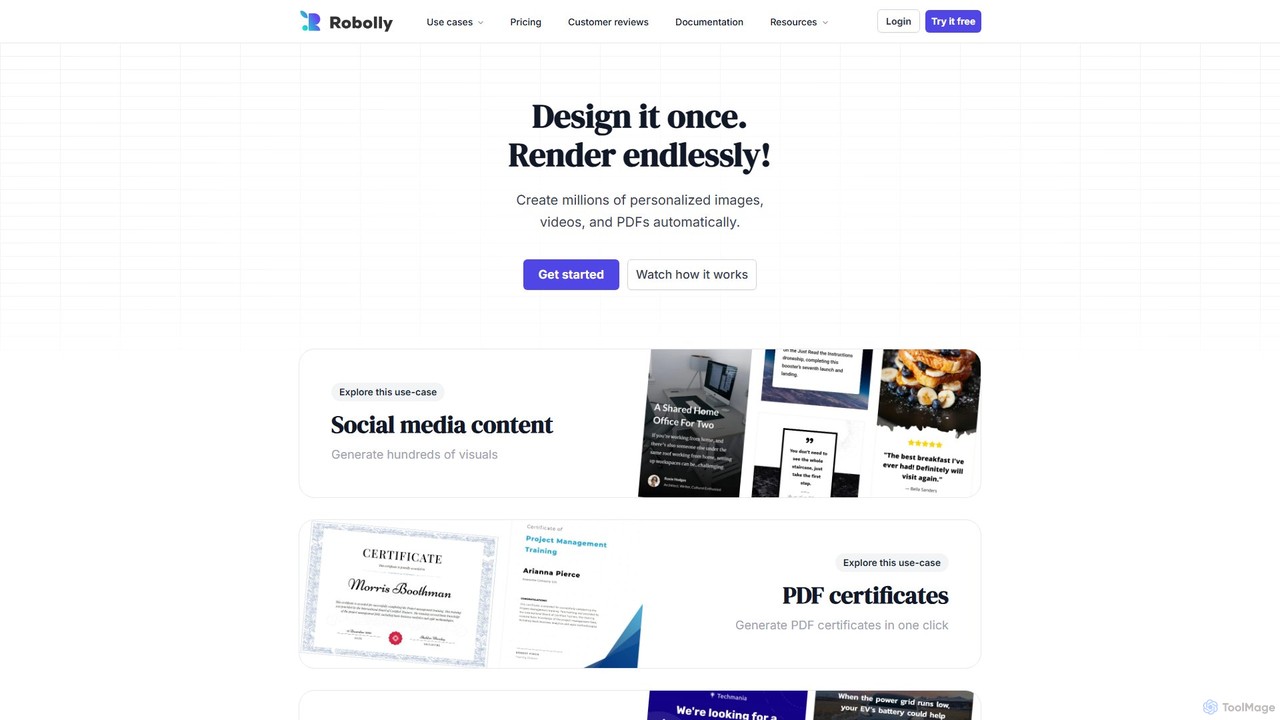
Robolly
Robolly is an all-in-one platform for automated visual content generation. Design a template once and use its API and bulk generation tools to create millions of personalized images, videos, and PDFs on-demand. It's ideal for marketers, developers, and businesses looking to scale their content production efficiently.
Image Generation
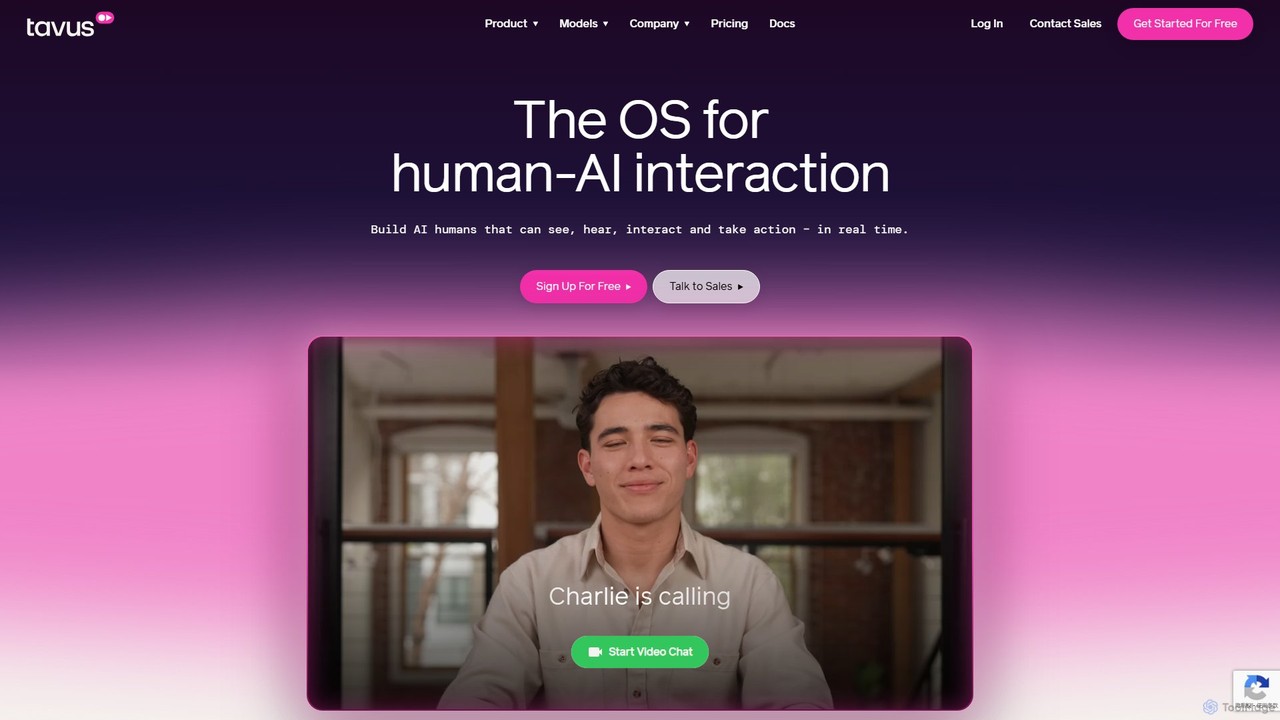
Tavus
Tavus is an advanced API platform for developers, designed to create and deploy lifelike, emotionally intelligent AI humans for real-time video conversations. It provides an end-to-end operating system for human-AI interaction, enabling businesses to scale personalized communication in recruitment, tutoring, healthcare, and more. With its frontier AI models for face-rendering, speech, and perception, Tavus brings a new dimension of realism and engagement to digital experiences.
Virtual Assistant
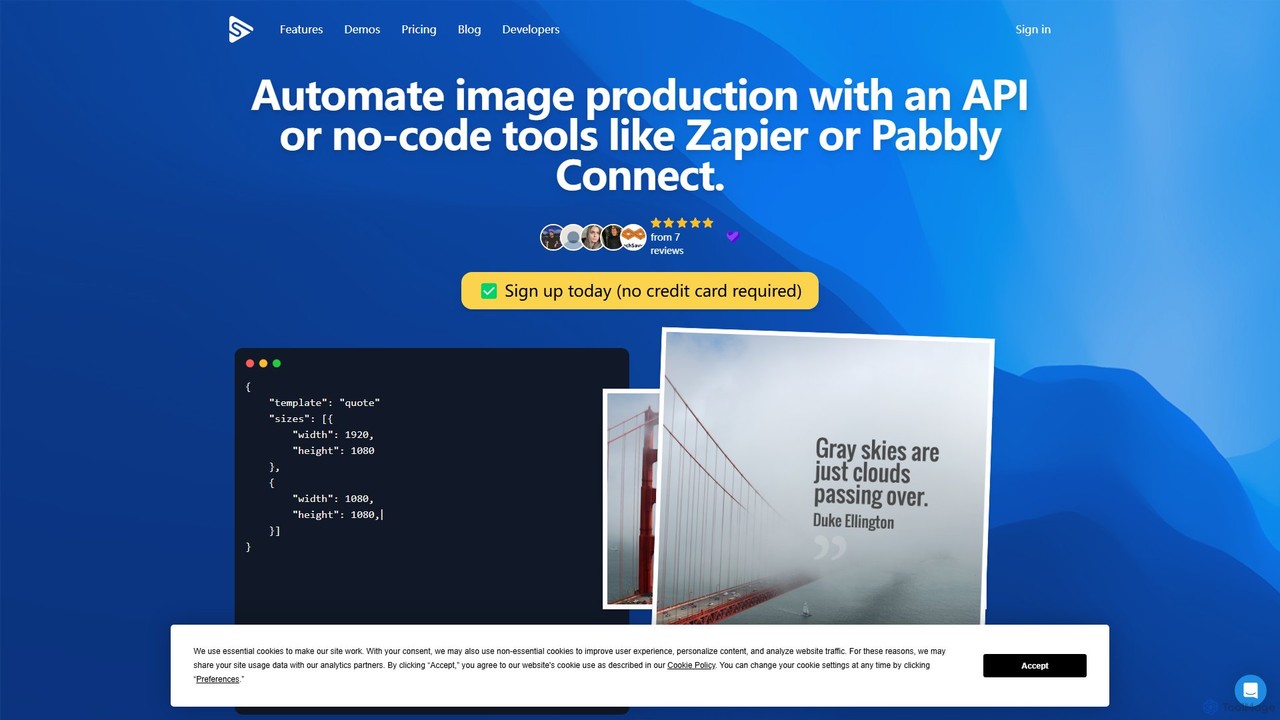
Switchboard Canvas
Switchboard Canvas is a powerful API and no-code platform for automating image and PDF generation. Create dynamic, personalized visuals from templates for marketing, e-commerce, and social media. Integrate with tools like Canva, Zapier, and Airtable to streamline your content workflow.
Image Generation
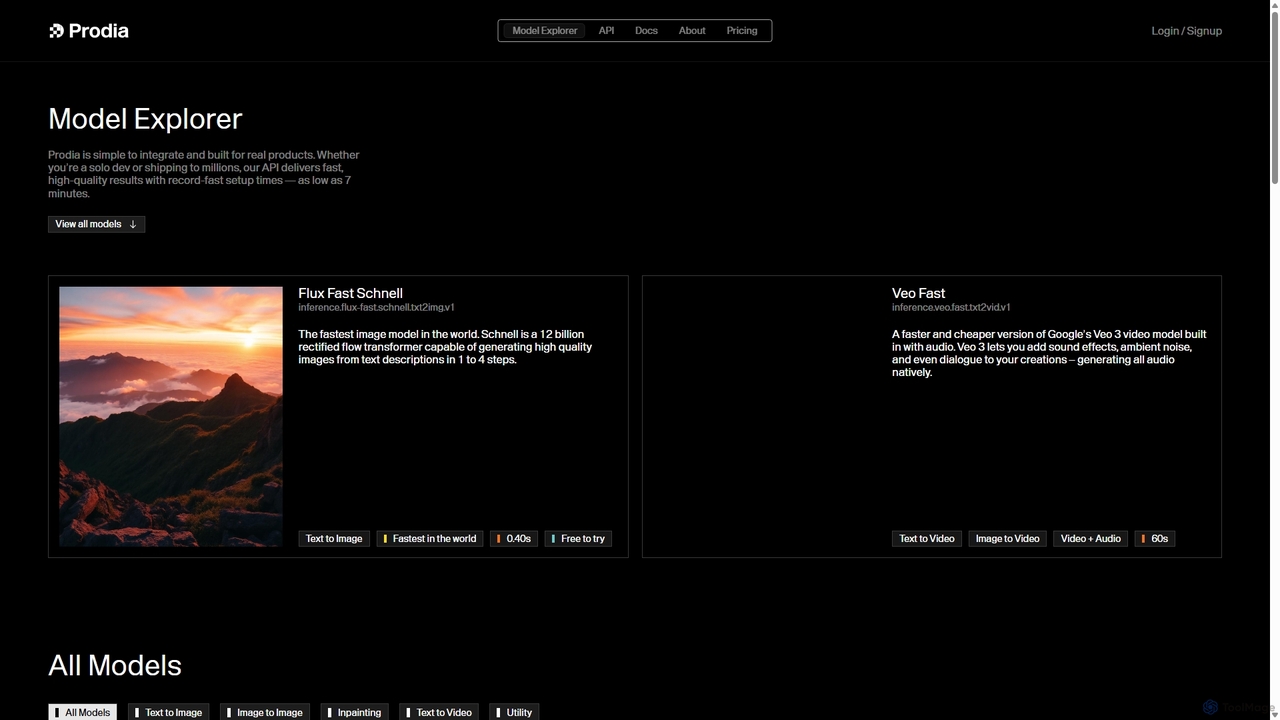
Prodia
Prodia is a developer-first API platform that enables seamless integration of fast, high-quality generative AI models into any application. It offers a diverse range of models for text-to-image, text-to-video, image editing, and more, designed for scalability and record-fast setup times.
Image Generation
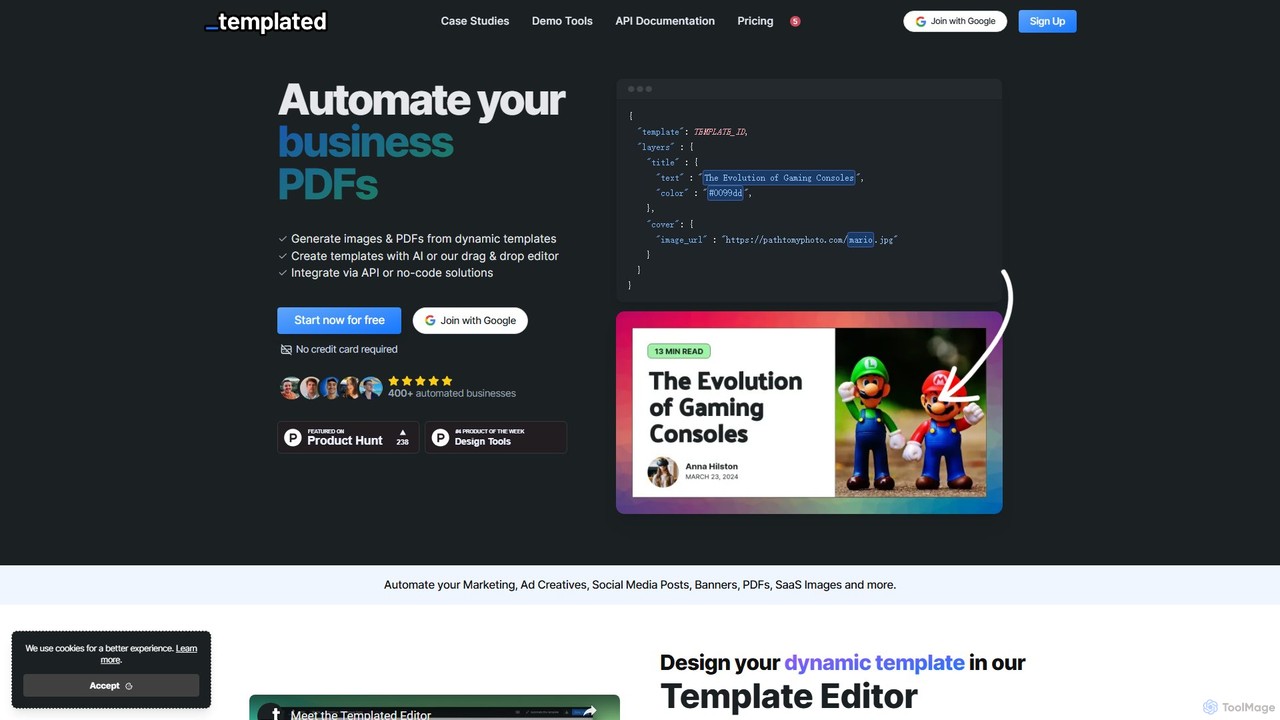
Templated
Templated is an API-first platform for automating the generation of images and PDFs from dynamic templates. It empowers businesses to create personalized marketing assets, social media content, ad creatives, and documents at scale. With an AI template generator, a user-friendly drag-and-drop editor, and seamless integrations with no-code platforms like Zapier and Make, Templated streamlines creative workflows for developers and marketers alike.
Image Generation
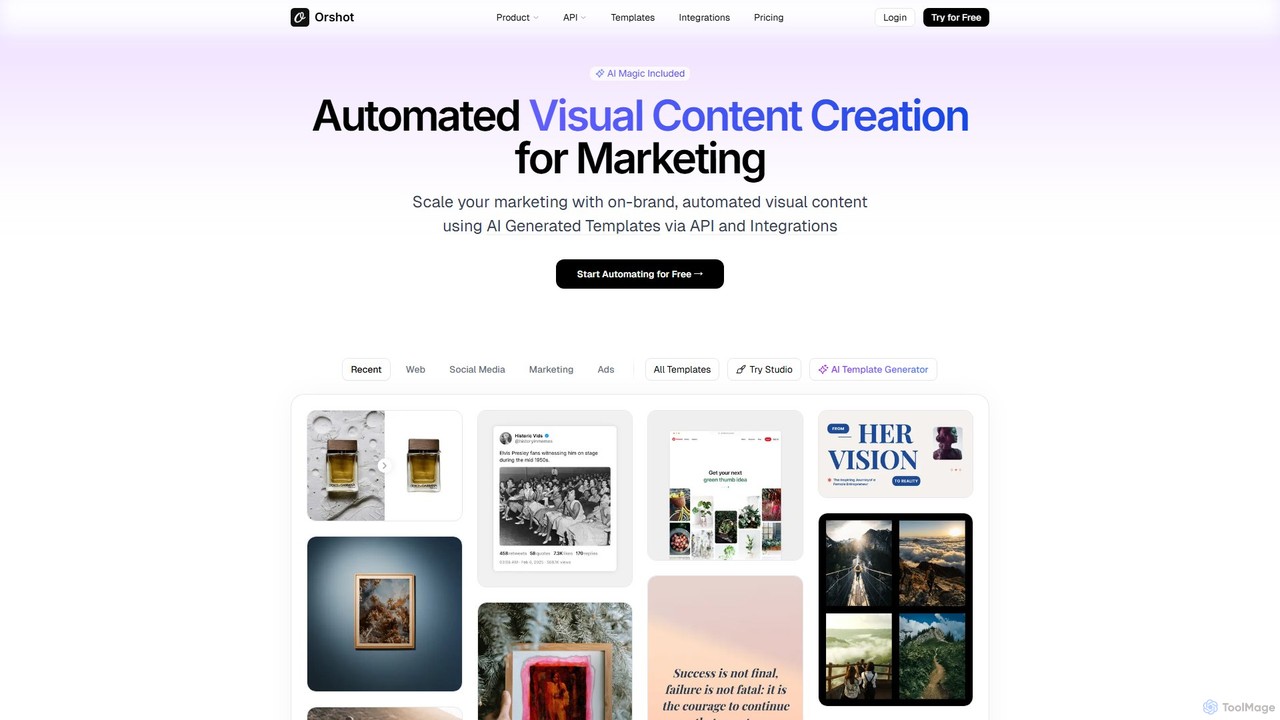
Orshot
Orshot is an AI-powered platform for automated visual content creation, designed for marketing teams. It enables users to scale their marketing efforts by generating on-brand, dynamic images and PDFs from templates via a robust API and various integrations like Zapier and n8n. It's ideal for automating social media graphics, e-commerce visuals, and personalized marketing assets.
Image Generation
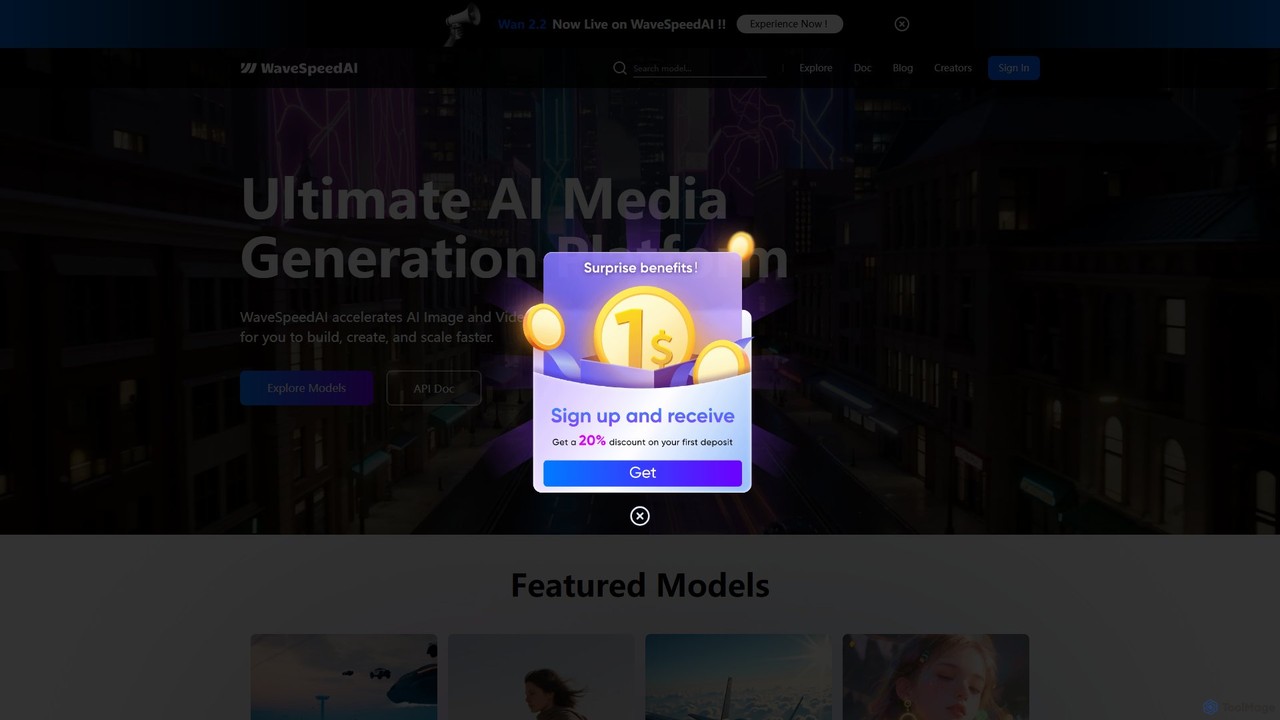
WaveSpeedAI
WaveSpeedAI is a high-performance, unified API platform designed to accelerate AI image, video, and audio generation. It provides developers and creators with a single point of access to a vast library of state-of-the-art models from providers like Google, ByteDance, and Kuaishou, enabling faster building, creation, and scaling of multimodal AI applications.
Speech Synthesis
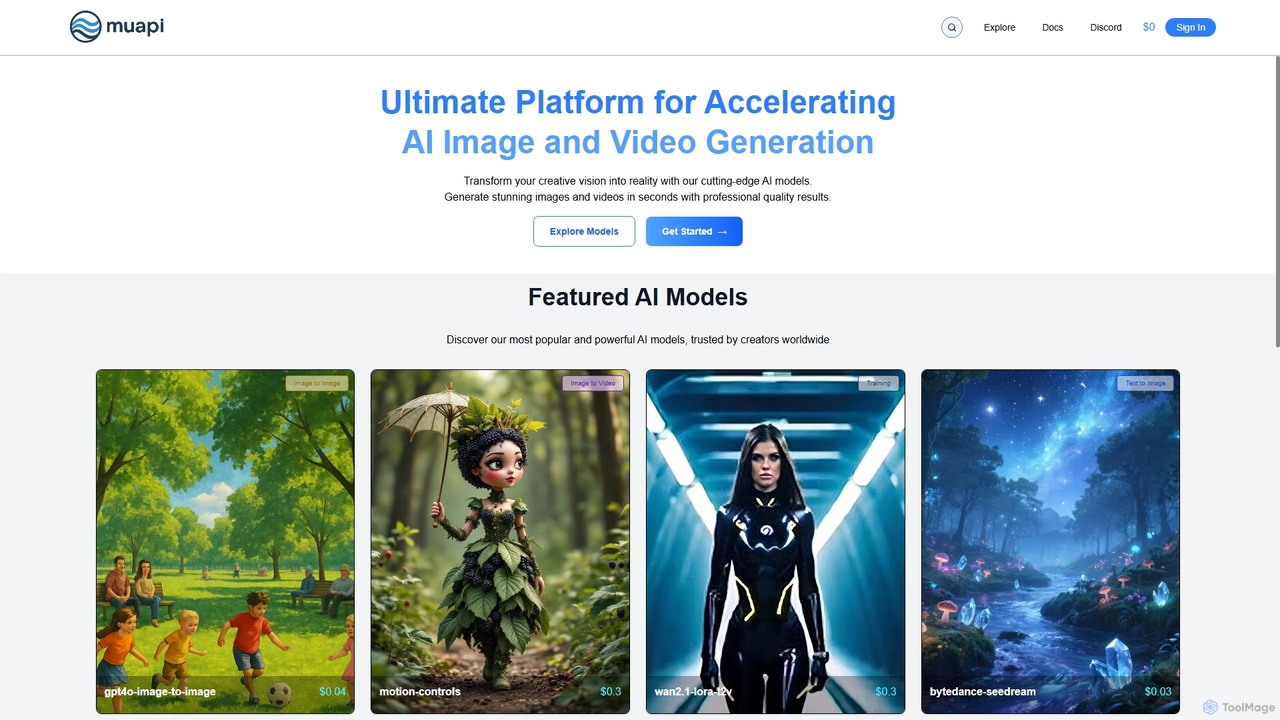
Muapi
Muapi is a powerful API platform designed to accelerate AI image and video generation. It provides developers and creators with unified access to a diverse range of cutting-edge AI models. With Muapi, you can easily integrate functionalities like text-to-video, image-to-video, consistent character generation, and style transfer into your applications. The platform simplifies the development process, offering a single API endpoint for multiple advanced generative AI tasks, backed by a clear, pay-as-you-go pricing structure.
Api
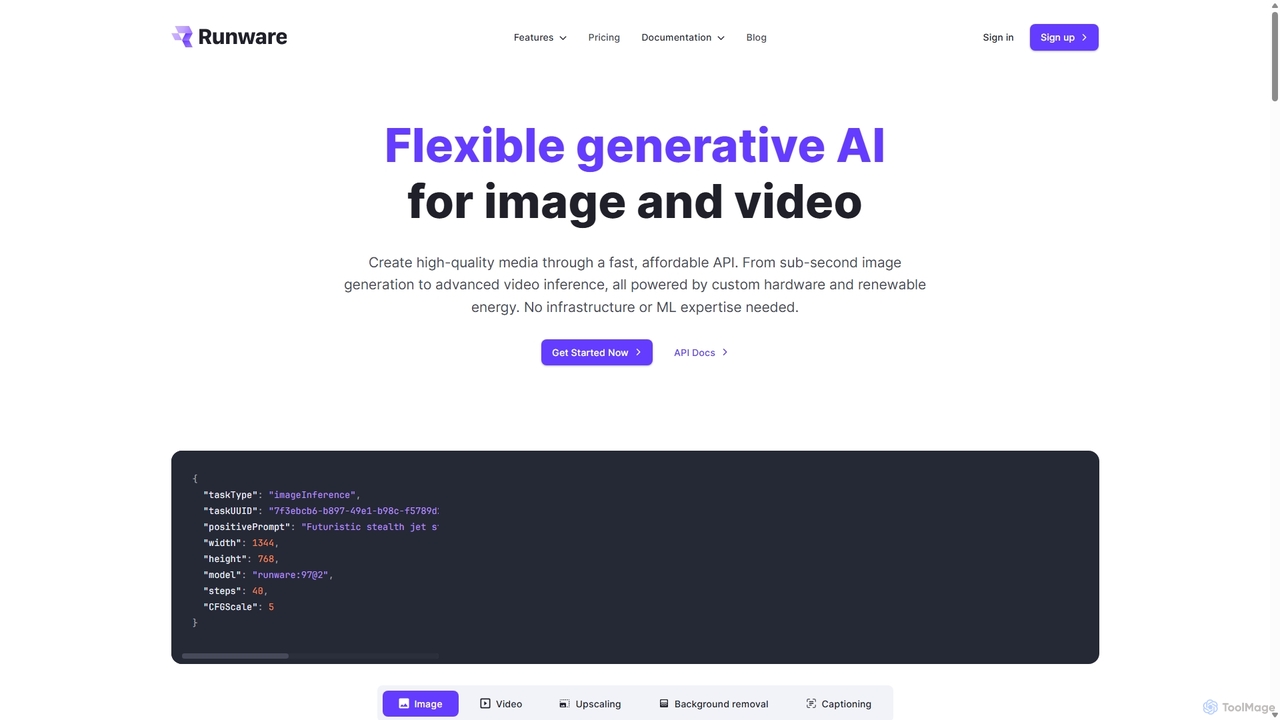
Runware
Runware provides a high-performance, low-cost API for developers to integrate generative AI for image and video creation. Leveraging custom hardware and renewable energy, it offers industry-leading inference speeds for over 300,000 models, including Stable Diffusion, FLUX.1, and Kling. It's a scalable, easy-to-use platform that requires no ML expertise, designed for building next-generation AI-native applications.
Api Platform
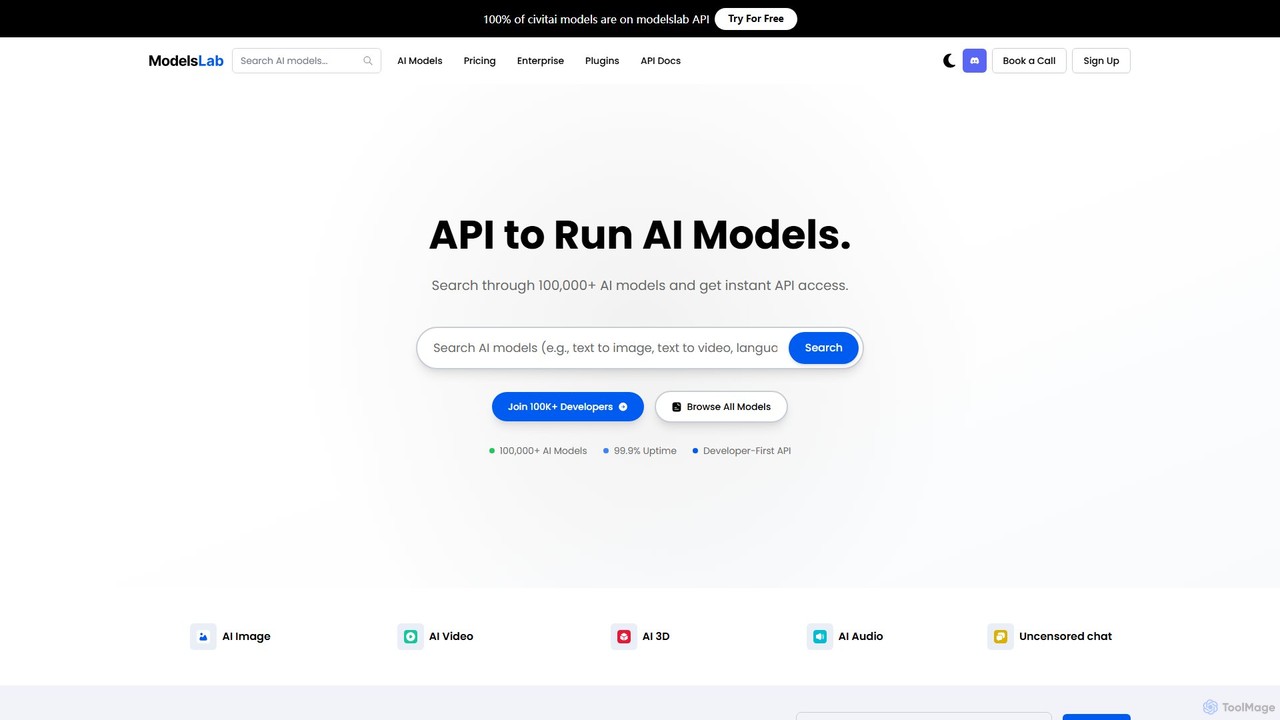
ModelsLab
A developer-first API platform offering unified access to over 100,000 AI models for image, video, audio, 3D, and text generation. It simplifies development with a single API, one subscription, and robust, scalable infrastructure for building advanced AI applications.
3D Model Generation
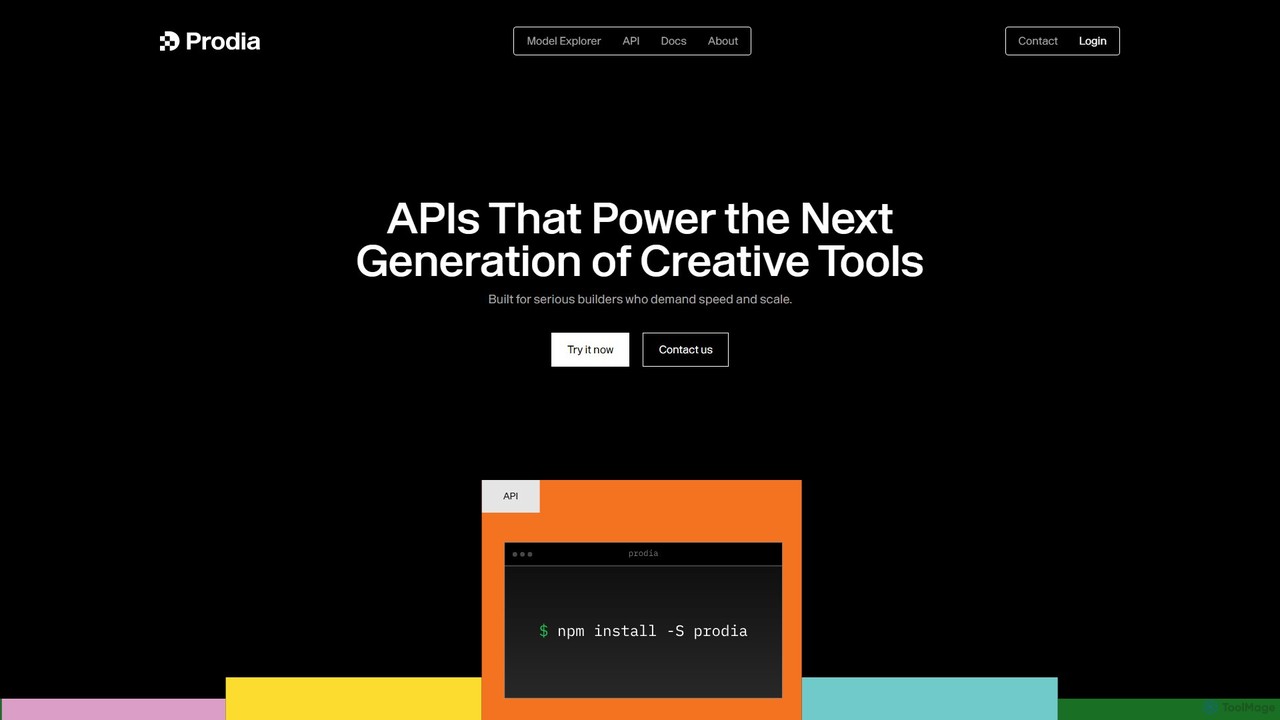
Prodia
Prodia is a high-speed, scalable generative AI API for developers. It enables seamless integration of image and video generation into applications, offering ultra-low latency and eliminating the need for GPU infrastructure management. Built for production, it powers the next generation of creative tools.
Api
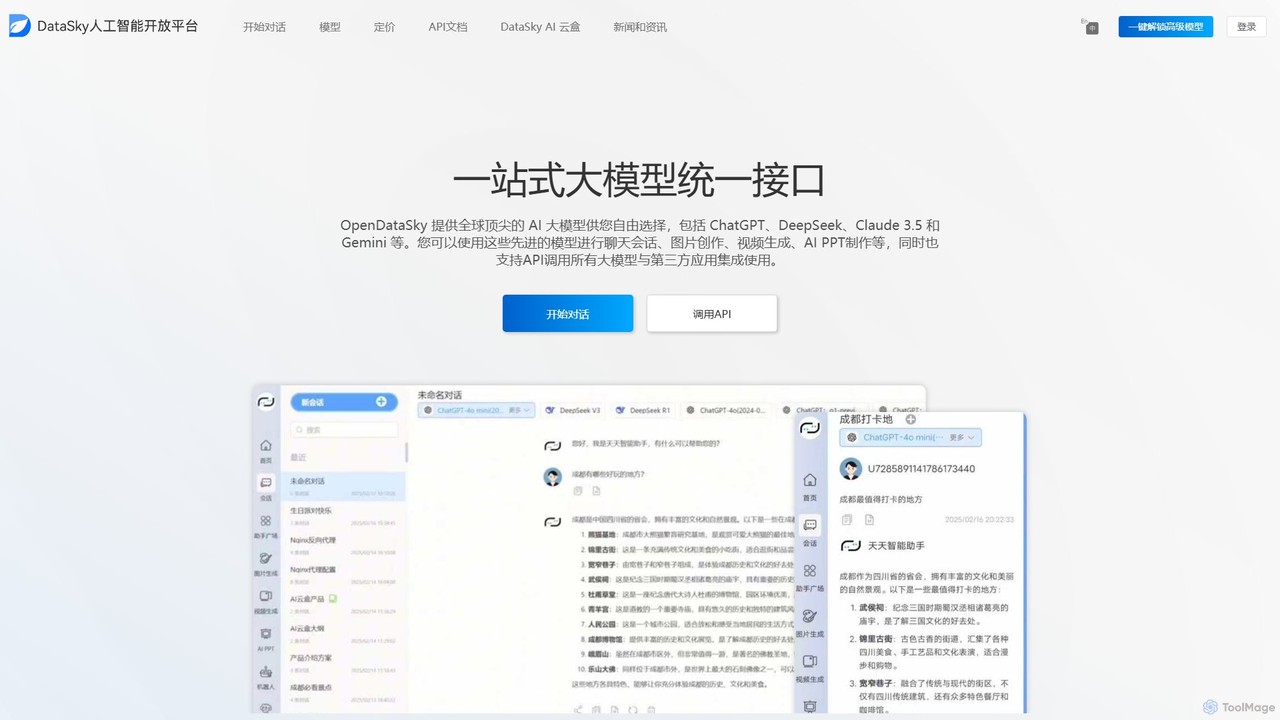
OpenDataSky
OpenDataSky is a unified AI platform providing access to leading large language models like GPT, Claude, and DeepSeek through a single API. It supports chat, image/video generation, and AI presentations, with an optional private deployment solution (AI Cloud Box) for enterprises.
Presentation
veo3api
veo3api offers a cost-effective, stable, and scalable API for Google's Veo 3 model, enabling developers to easily integrate advanced AI video generation. It supports text-to-video, image-to-video, synchronized audio, and 4K/1080p output with robust developer tools.
Api
Duply
Duply is a visual automation platform that enables users to automatically generate personalized images and videos at scale. Using dynamic URLs, a powerful API, or no-code integrations with Zapier and Make.com, you can create countless variations from a single template. It's designed for marketers, developers, and businesses to streamline their visual content creation workflows, saving significant time and effort.
Image Generation
Replicate
Replicate is a cloud platform for developers to run, fine-tune, and deploy AI models via a simple API. It eliminates the need for managing complex infrastructure, offering access to thousands of models with pay-per-use pricing and automatic scaling.
Machine Learning