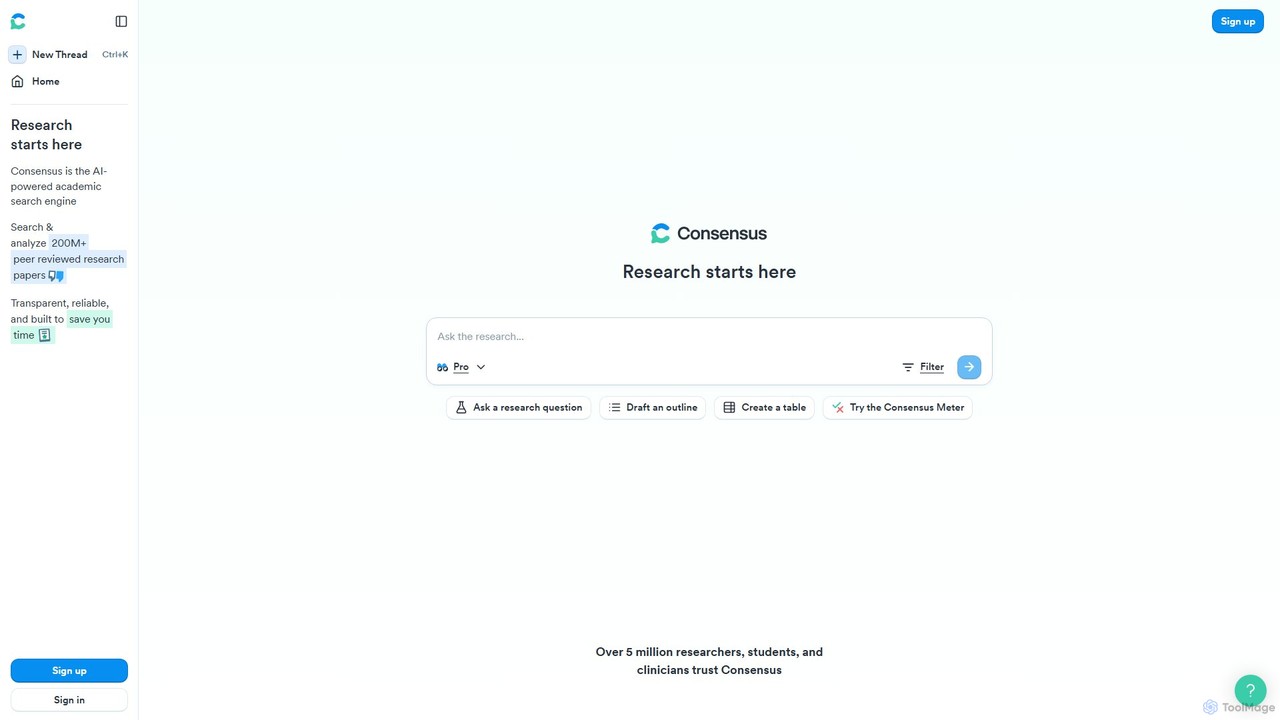
Consensus is an AI-powered search engine designed for scientific research. It searches over 200 million peer-reviewed papers to provide evidence-based, synthesized answers to user questions, saving time for researchers, students, and professionals by extracting key findings directly from scientific literature.
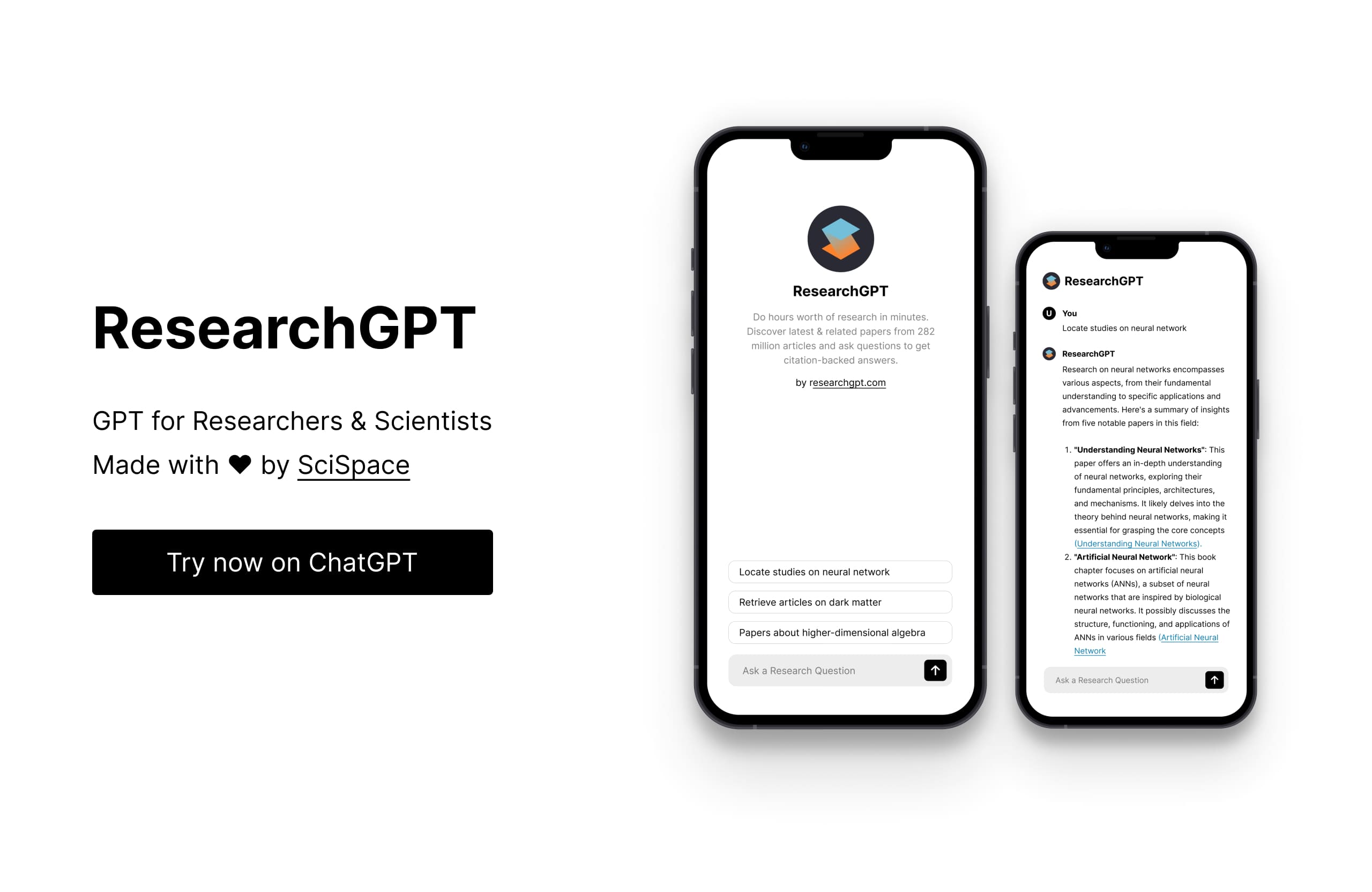
An AI research assistant built on ChatGPT, designed to streamline academic literature searches. It finds relevant papers, synthesizes information, and provides answers backed by direct citations, transforming the way researchers and students conduct literature reviews.
Product overview
Consensus Product overview
Consensus is an AI-powered search engine designed for scientific research. It searches over 200 million peer-reviewed papers to provide evidence-based, synthesized answers to user questions, saving time for researchers, students, and professionals by extracting key findings directly from scientific literature.
ResearchGPT Product overview
An AI research assistant built on ChatGPT, designed to streamline academic literature searches. It finds relevant papers, synthesizes information, and provides answers backed by direct citations, transforming the way researchers and students conduct literature reviews.
Detailed feature comparison
| Feature | Consensus | ResearchGPT |
|---|---|---|
| Primary category | Learning | Learning |
| Added | 2025-08-10 | 2025-08-10 |
| Pricing | Freemium | Paid |
| Official website | consensus.app | www.researchgpt.com |
| Product type | Website | Website |
| Performance data | ||
| User rating | Not verified | Not verified |
| Comments | 0 | 0 |
| Monthly visits | 5.7M | 3.1K |
| Monthly growth | -2.5% | 50.4% |
| Favorites | 99 | 79 |
| Details | View details | View details |
Consensus vs ResearchGPT monthly traffic
Compare Consensus and ResearchGPT by monthly reach, traffic trend, visit depth, top regions, and acquisition sources.
How to interpret the traffic data
In the Consensus vs ResearchGPT monthly traffic comparison, Consensus currently shows 5.7M visits and ResearchGPT shows 3.1K; Consensus has about 1,837.7 times the visible traffic of ResearchGPT, an absolute difference of about 5.7M visits. This reflects visible reach, not feature quality or paid users.
Both tools provide verified traffic details, so monthly trends, visit depth, regions, and acquisition sources can be compared on the same basis.
Consensus monthly traffic:
Latest traffic
Monthly traffic trend
- 2025/9: 3.5M Monthly visits
- 2026/1: 3.9M Monthly visits
- 2026/2: 4M Monthly visits
- 2026/3: 5.1M Monthly visits
- 2026/4: 5.9M Monthly visits
- 2026/5: 5.7M Monthly visits
Top regions
Top 5 countries/regions
| Country/region | Percentage | Traffic |
|---|---|---|
| 🇮🇩Indonesia | 35.36% | 2M |
| 🇺🇸United States | 29.41% | 1.7M |
| 🇵🇪Peru | 12.81% | 735.4K |
| 🇮🇳India | 11.61% | 666.5K |
| 🇩🇪Germany | 10.81% | 620.6K |
Traffic sources
| Source type | Percentage | Traffic |
|---|---|---|
| Direct | 85.92% | 4.9M |
| Referral | 12.3% | 706.1K |
| 1.78% | 102.2K |
Search keywords
ResearchGPT monthly traffic:
Latest traffic
Monthly traffic trend
- 2025/9: 15.5K Monthly visits
- 2026/1: 3.2K Monthly visits
- 2026/2: 3.3K Monthly visits
- 2026/3: 1.9K Monthly visits
- 2026/4: 2.1K Monthly visits
- 2026/5: 3.1K Monthly visits
Top regions
Top 5 countries/regions
| Country/region | Percentage | Traffic |
|---|---|---|
| 🇺🇸United States | 45.03% | 1.4K |
| 🇮🇳India | 37.46% | 1.2K |
| 🇹🇷Turkey | 14.23% | 445 |
| 🇬🇧United Kingdom | 3.28% | 102 |
Search keywords
Usage comparison
Compare the core capabilities of Consensus and ResearchGPT
Consensus Core features
ResearchGPT Core features
Use cases
Consensus Use cases
ResearchGPT Use cases
Consensus vs ResearchGPT:In-depth comparison and selection guidance
First decide whether the products solve the same kind of need
This in-depth Consensus vs ResearchGPT comparison uses only the product records, taxonomy, audience, traffic, and community signals available on this page. Consensus is primarily listed under “Learning”, while ResearchGPT is primarily listed under “Learning”, so the first decision is whether your actual task matches their recorded scope.
The structured fields currently show these decision-relevant differences: Pricing (Consensus: Freemium; ResearchGPT: Paid); Monthly visits (Consensus: 5.7M; ResearchGPT: 3.1K); Monthly growth (Consensus: -2.5%; ResearchGPT: 50.4%); Favorites (Consensus: 99; ResearchGPT: 79); Website (Consensus: consensus.app; ResearchGPT: www.researchgpt.com). These facts are more useful for selection than brand visibility alone.
What market visibility and monthly traffic mean
In the Consensus vs ResearchGPT monthly traffic comparison, Consensus currently shows 5.7M visits and ResearchGPT shows 3.1K; Consensus has about 1,837.7 times the visible traffic of ResearchGPT, an absolute difference of about 5.7M visits. This reflects visible reach, not feature quality or paid users.
Both tools provide verified traffic details, so monthly trends, visit depth, regions, and acquisition sources can be compared on the same basis.
If public market visibility is an important first-pass criterion, investigate Consensus first. The final choice should still follow taxonomy, use case, and a real trial because higher traffic does not prove broader capabilities or better workflow fit.
Product positioning, use cases, and roles
Consensus and ResearchGPT currently overlap in shared categories: Learning; shared tags: literature review and research. This can place both on the same shortlist, but it does not prove equal implementation, depth, or cost.
Consensus's unique categories/tags are Medical, Writing, Literature Review, academic search, AI search engine, data analysis, evidence-based, and fact-checking; ResearchGPT's are Writing Assistant, Academic Research, academic, assistant, chatgpt, citation, gpt, and papers. These unique fields are the strongest differentiators: validate the product whose recorded scope matches the task instead of following traffic alone.
What ratings, comments, and favorites can tell you
Consensus has no verified rating, 0 comments, 99 favorites, and 92 likes;ResearchGPT has no verified rating, 0 comments, 79 favorites, and 85 likes。
Neither product has enough rating or comment samples for a credible reputation ranking.
Selection guidance by actual need
When to evaluate Consensus first
Put Consensus on the priority trial list when the task aligns with “Learning” and especially Medical, Writing, Literature Review, academic search, AI search engine, and data analysis. This follows recorded positioning and does not imply unlisted capabilities are absent.
Consensus also currently records: pricing is freemium, product type is website, 5.7M verified monthly visits, no verified user rating. Verify any hard requirement around price, platform, or reach before trial, and do not let sparse review data substitute for testing.
When to evaluate ResearchGPT first
Put ResearchGPT on the priority trial list when the task aligns with “Learning” and especially Writing Assistant, Academic Research, academic, assistant, chatgpt, and citation. This follows recorded positioning and does not imply unlisted capabilities are absent.
ResearchGPT also currently records: pricing is paid, product type is website, 3.1K verified monthly visits, no verified user rating. Verify any hard requirement around price, platform, or reach before trial, and do not let sparse review data substitute for testing.
How to validate the recommendation before deciding
The available data describes positioning, public visibility, and community signals, but it cannot prove output quality, speed, integration effort, privacy, or long-term cost in your workflow. Before deciding, run the same representative tasks in Consensus and ResearchGPT, then record completion time, accuracy, manual corrections, and the real paid threshold. A like-for-like trial turns this comparison into a defensible adoption decision.
Comparison FAQ
How should I choose between Consensus and ResearchGPT?
Where does this comparison data come from?
What do unknown fields mean?
Related AI tools

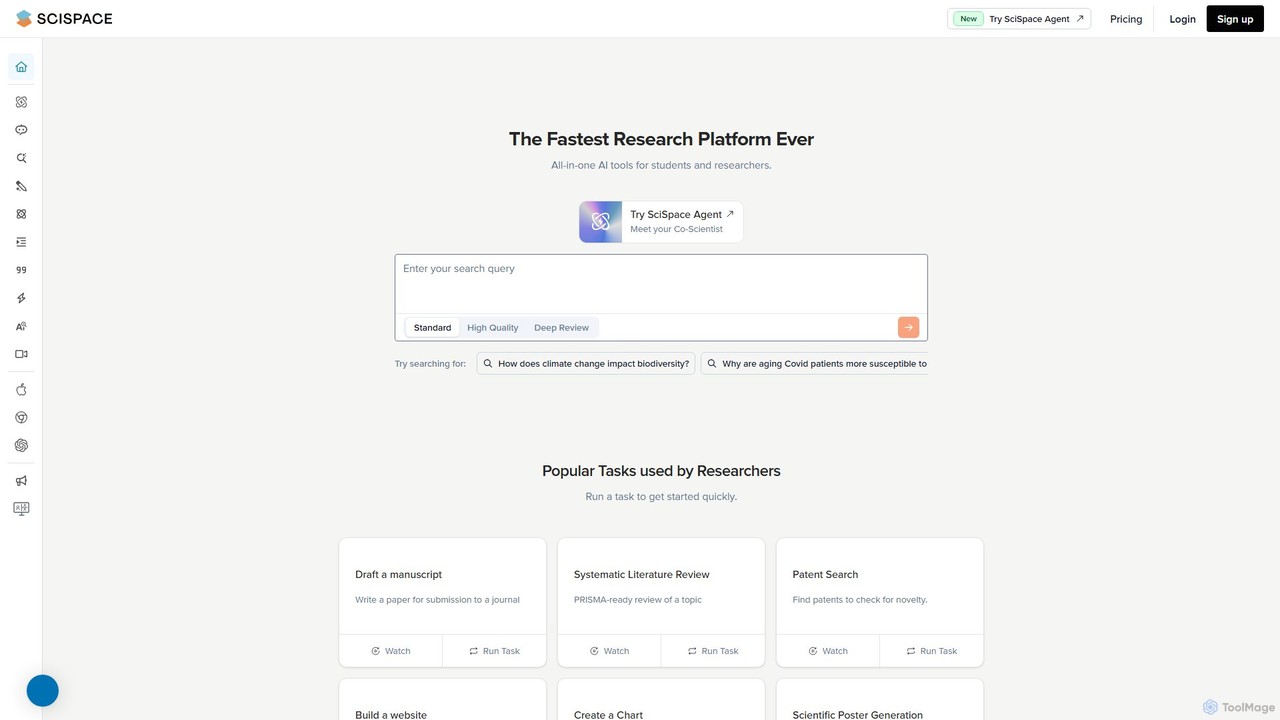
SciSpace
SciSpace is an all-in-one AI-powered platform designed for students and researchers. It simplifies the process of finding, understanding, and writing academic papers with tools like an AI Copilot for explaining complex texts, a literature review generator, a paraphraser, and a vast repository of over 200 million articles.
Student Tools
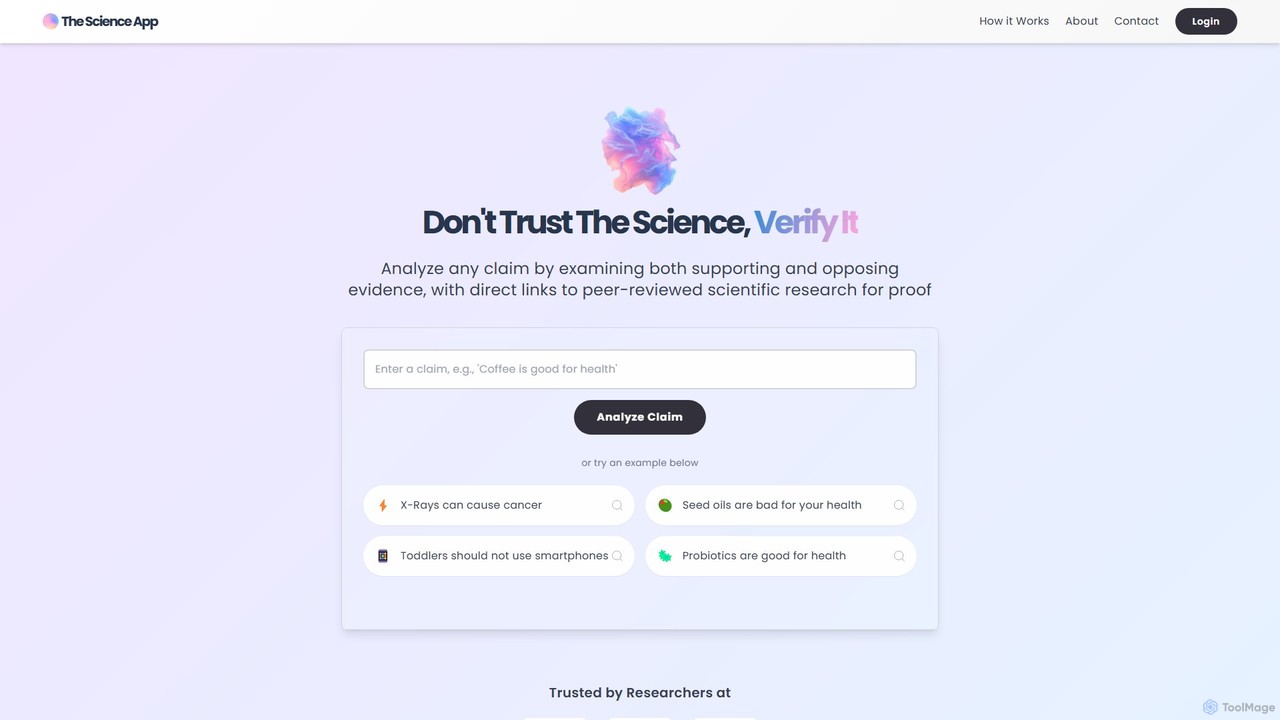
The Science App
The Science App is an AI-powered tool that analyzes any scientific claim by examining both supporting and opposing evidence. It searches peer-reviewed research to provide a balanced perspective, with direct links to the original scientific papers for verification. Ideal for researchers, students, and curious minds, it makes complex scientific information accessible and promotes evidence-based decision-making.
Fact Checking
BioGPT
BioGPT is an AI-powered research assistant designed for the biology and life sciences community. It helps researchers, students, and professionals solve complex biological problems by analyzing scientific papers, designing experiments, interpreting data, generating hypotheses, and creating lab protocols, all based on cutting-edge research.
Learning
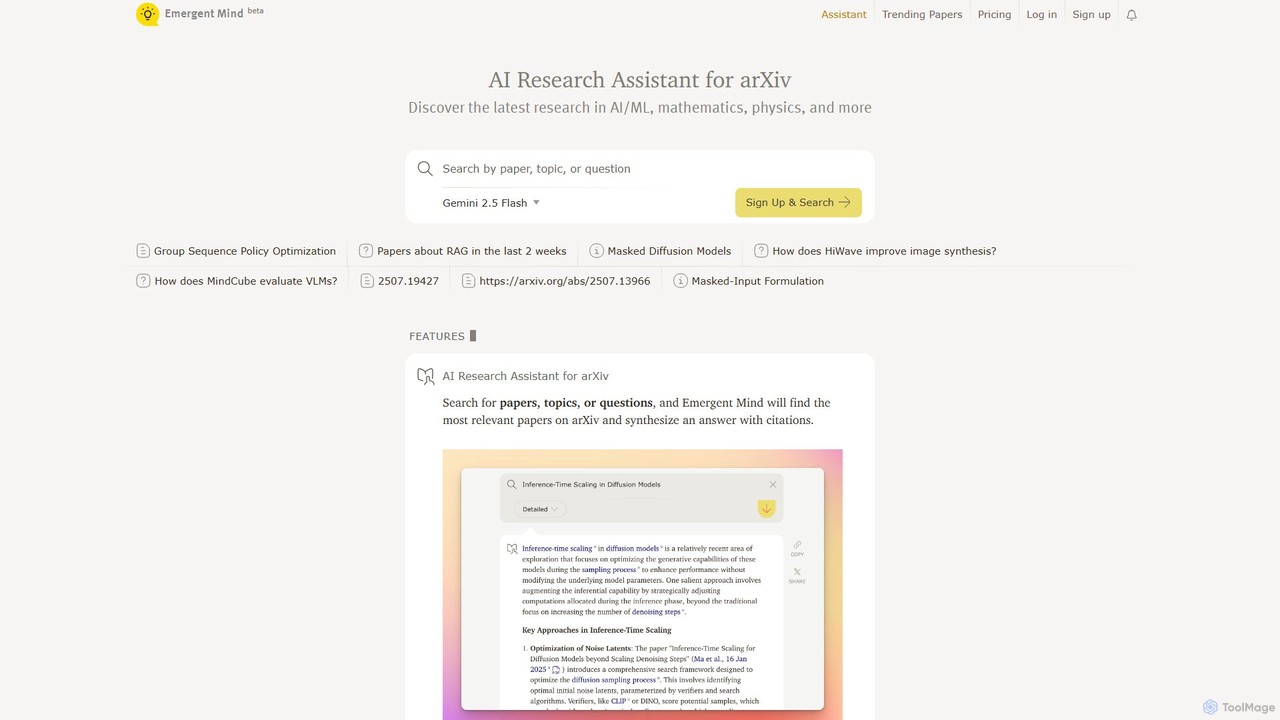
Emergent Mind
Emergent Mind is an AI research assistant for arXiv that helps users discover, understand, and discuss the latest scientific papers. It synthesizes answers from multiple papers, tracks trending research, and aggregates social media discussions, streamlining the research process for academics, students, and professionals.
Machine Learning
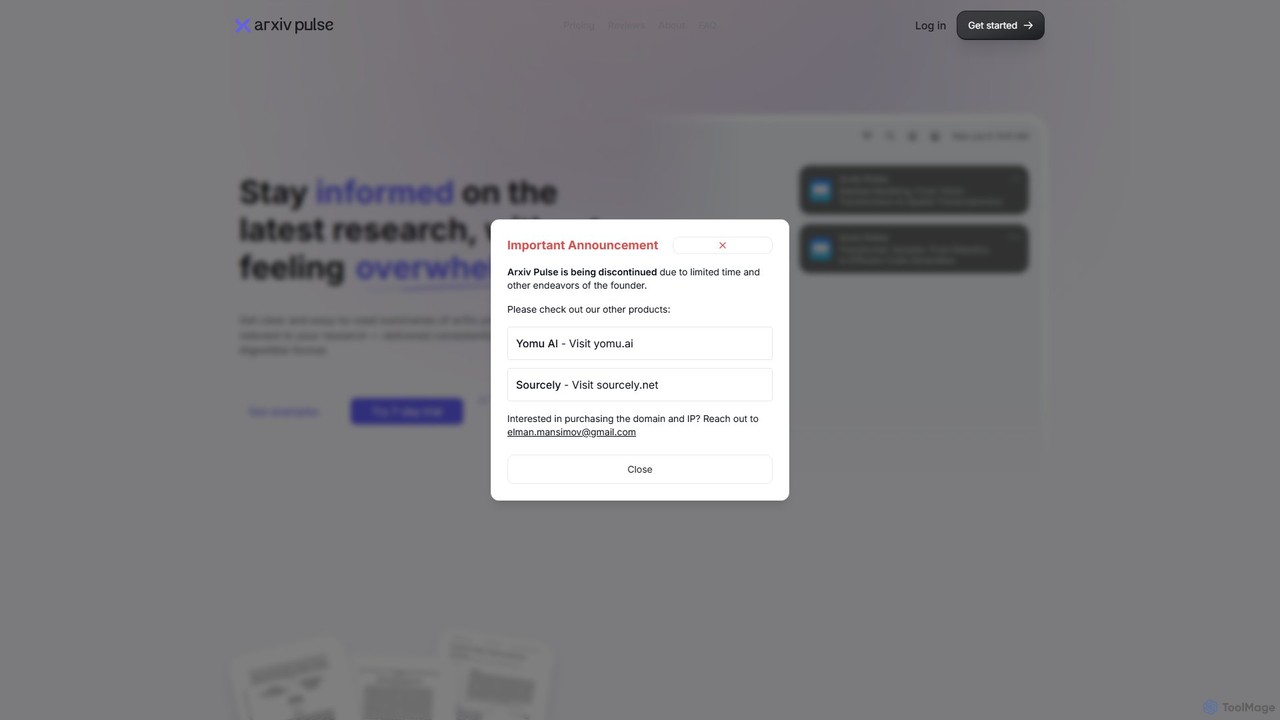
ArXiv Pulse
ArXiv Pulse is an AI-powered service that helps researchers and innovators stay updated with the latest scientific papers from arXiv. It delivers personalized, easy-to-read summaries of relevant preprints directly to your inbox, saving you time and preventing information overload.
Academic Research
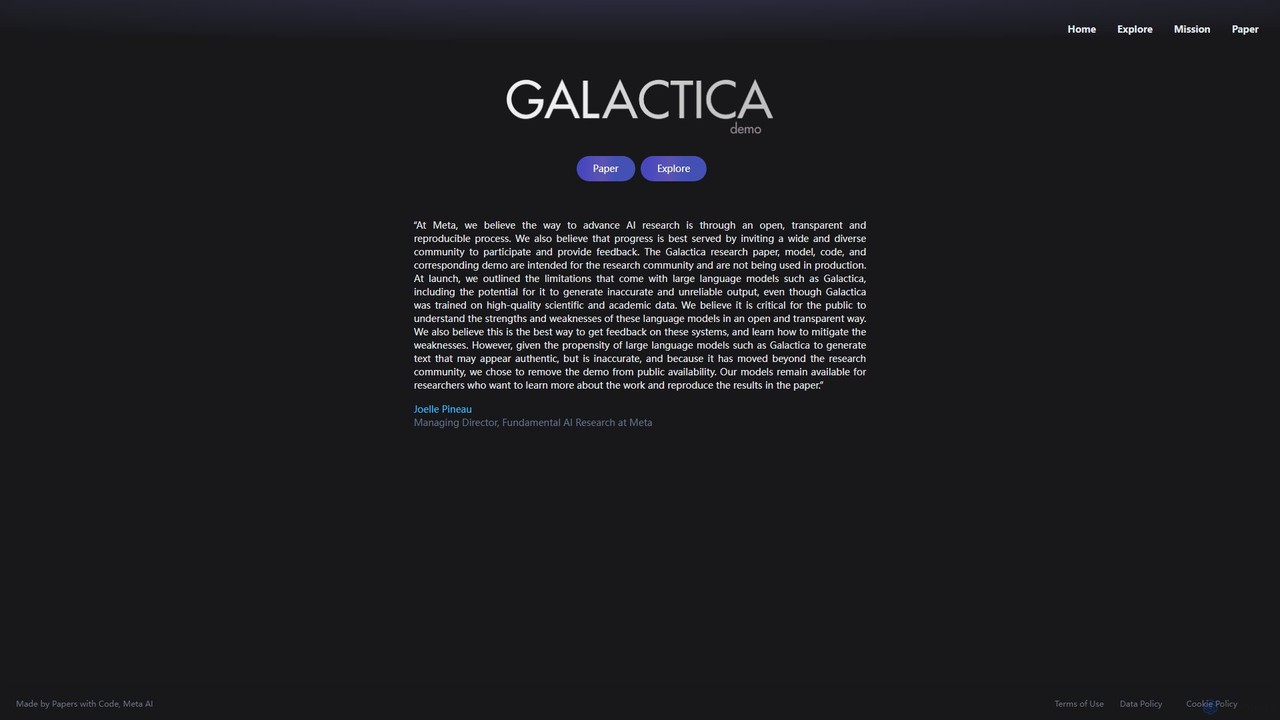
Galactica
Galactica is a large language model from Meta AI, specifically trained on over 48 million scientific papers, textbooks, and reference materials. It's designed to assist researchers by organizing scientific knowledge, suggesting citations, answering complex questions, writing scientific code, and explaining mathematical formulas. Although its public demo is discontinued, the open-source model remains available for the research community to advance scientific discovery.
Code Assistant
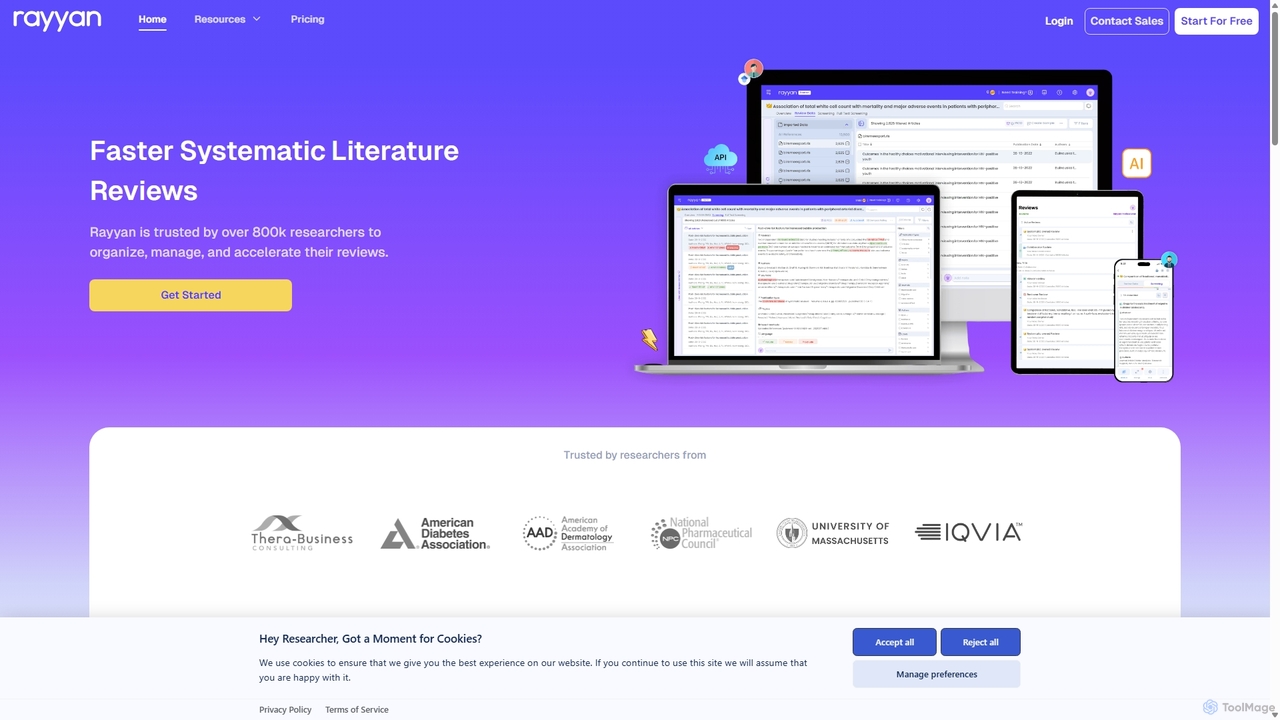
Rayyan
Rayyan is an AI-powered platform designed for researchers to accelerate systematic and literature reviews. It streamlines the process with features like automated screening, duplicate detection, and real-time collaboration, saving researchers up to 90% of their screening time. Trusted by over 800,000 users, it supports the entire review lifecycle from data import to final reporting.
Academic
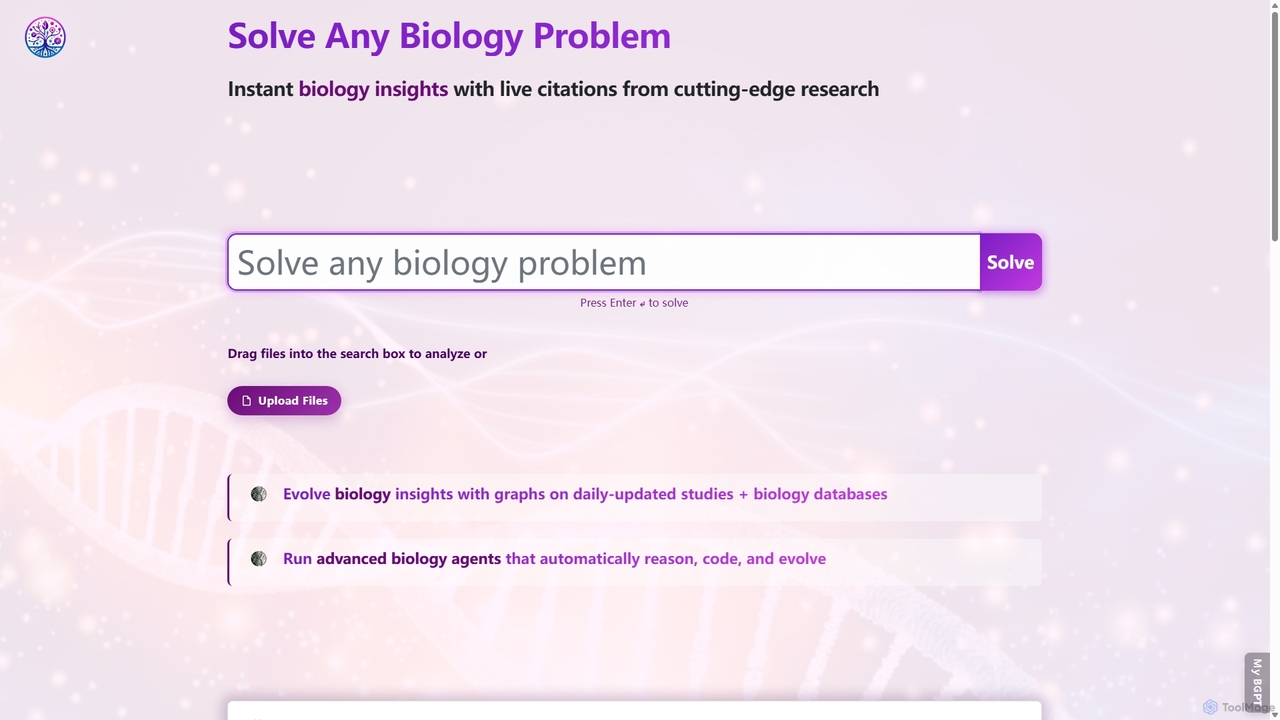
BioGPT
BioGPT is a specialized AI assistant for biologists, researchers, and students. It accelerates scientific discovery by solving complex biology problems, reviewing papers, analyzing data, visualizing results, designing experiments, and testing hypotheses across fields like genomics, neuroscience, and cancer biology.
Research
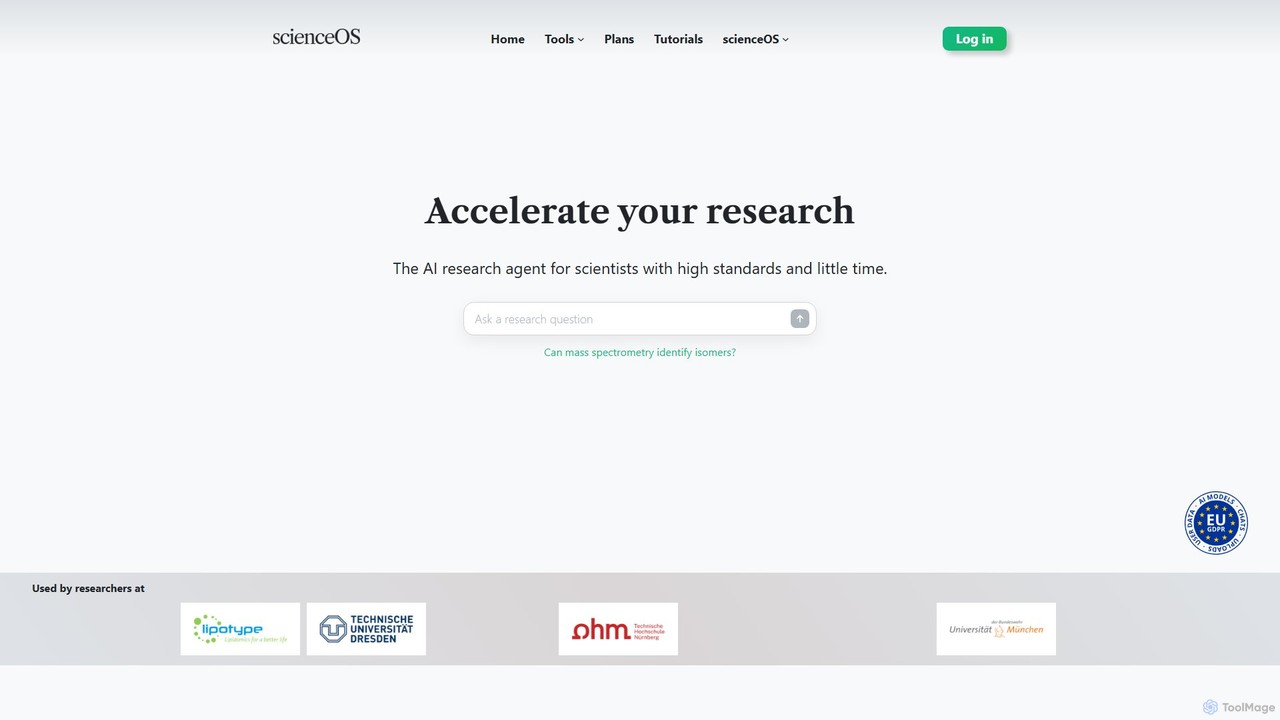
scienceOS
scienceOS is an AI-powered research agent designed for scientists and researchers. It accelerates scientific discovery by allowing users to chat with a database of over 225 million papers, analyze multiple PDF documents simultaneously, and manage references with an integrated AI library. The platform helps generate overviews, create diagrams, discover related papers, and perform citation analysis, streamlining the entire research workflow.
Academic Research
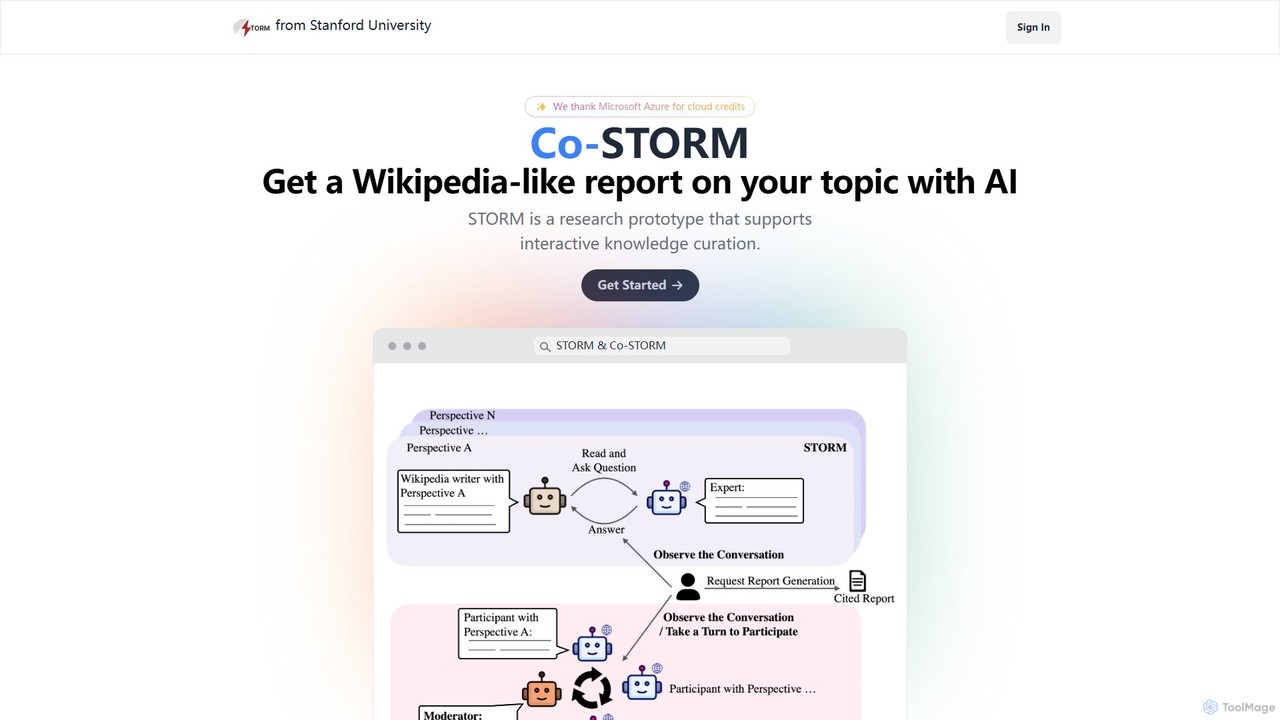
STORM
STORM is an AI research prototype from Stanford University that automates the generation of comprehensive, Wikipedia-like reports on any topic. It supports interactive knowledge curation, allowing users to guide the research process, edit outlines, and produce well-structured, cited articles efficiently.
Learning
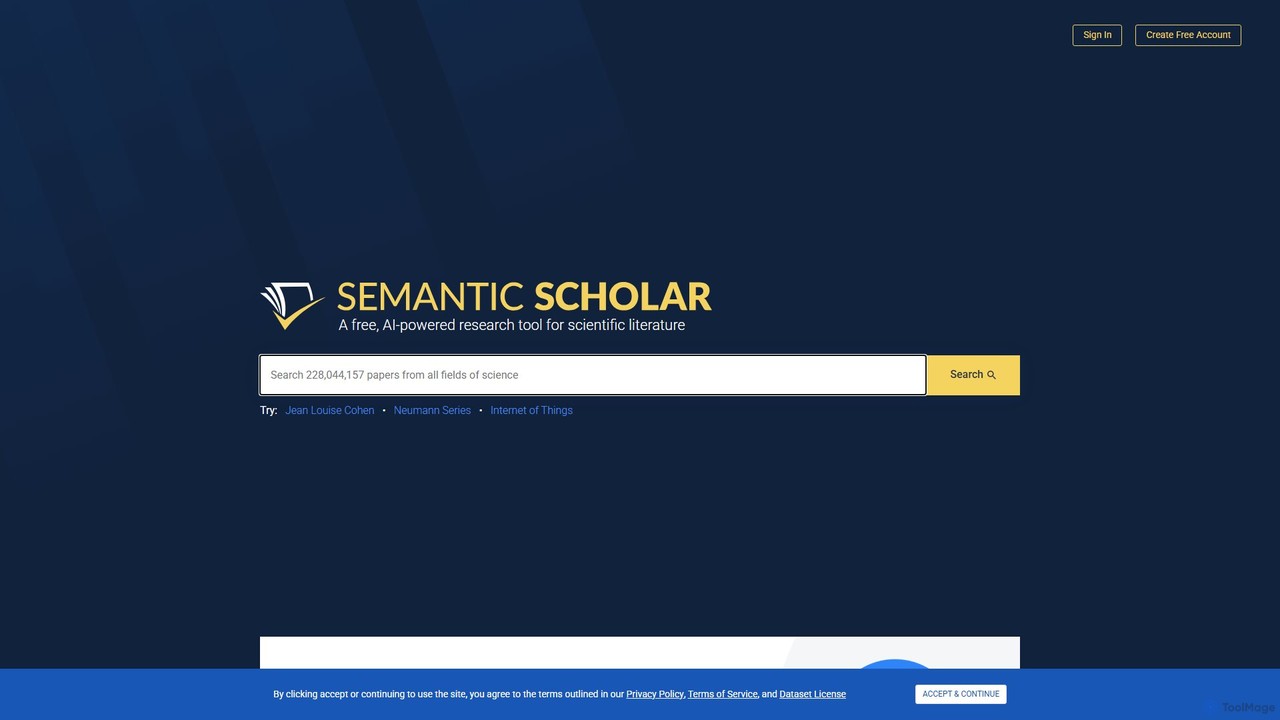
Semantic Scholar
A free, AI-powered research tool from the Allen Institute for AI that helps scholars discover and understand scientific literature. It uses AI to analyze over 200 million papers, providing features like semantic search, influential citation analysis, and paper summaries to accelerate scientific breakthroughs.

Apis
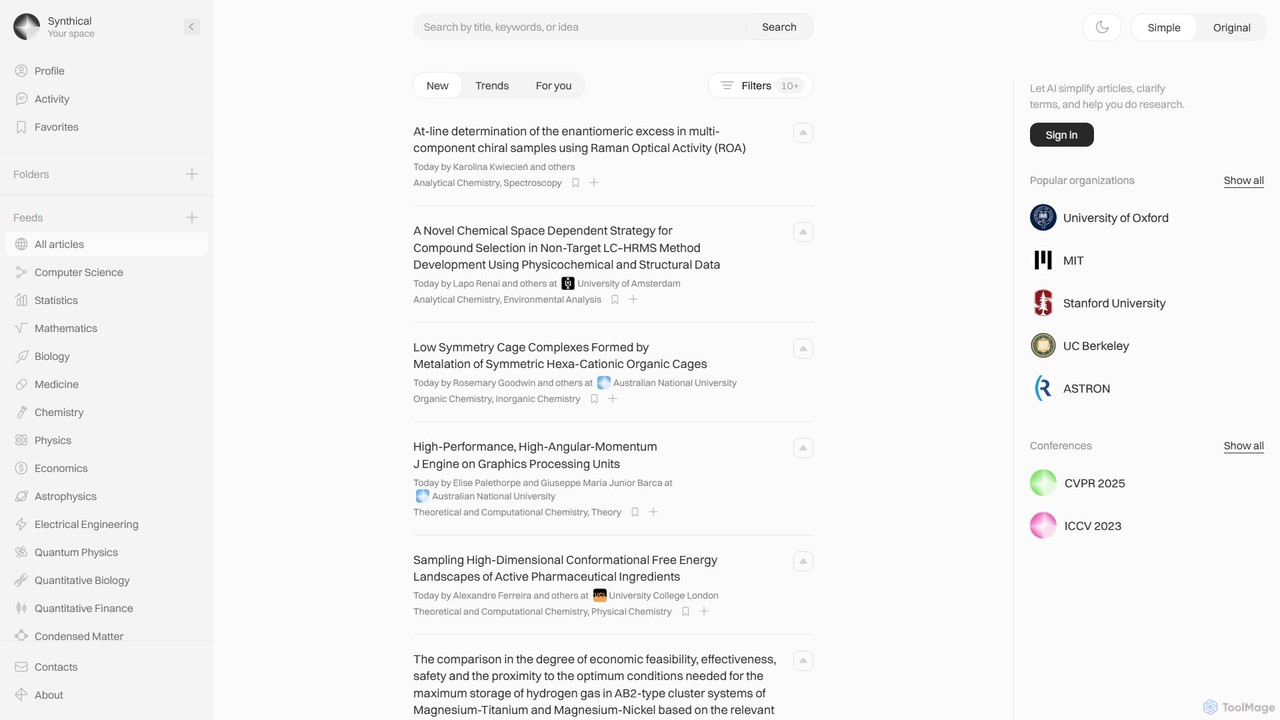
Synthical
Synthical is an AI-powered research environment designed for academics, students, and scientists. It aggregates scientific papers from diverse fields like Computer Science, Biology, and Physics, using AI to simplify complex articles, define terms, and accelerate the research process. Organize your work with personalized feeds, folders, and favorites.
Research
summarizepaper
An AI-powered tool for summarizing arXiv research papers. It provides concise summaries, key points, and layman's explanations. Users can also chat with papers via an AI assistant to ask specific questions, making complex scientific research accessible to everyone.
Academic
gptsci
gptsci is a pioneering suite of AI tools designed to accelerate scientific research. It leverages fine-tuned GPT models to assist researchers with literature reviews, data analysis, hypothesis generation, and creating presentations, aiming to make scientific discovery more efficient and accessible.
Learning
StataGPT
StataGPT (Estima) is an AI-powered assistant designed for economists, researchers, and students. It specializes in generating, debugging, and explaining STATA code to streamline data analysis, replicate research results, and scale causal inference, filling a critical gap where general AI models fall short.
Learning