ToolMage
Sign in
Descope
Authentication · 289.3K monthly visits

Descope is a customer identity and access management (CIAM) platform that enables developers to easily add authentication, user management, and authorization to any application. It offers a visual drag-and-drop workflow builder, comprehensive SDKs, and APIs to create secure and frictionless user journeys, from passwordless login to enterprise-grade SSO.

VS
Supabase
Backend · 29.3M monthly visits

Supabase is an open-source Firebase alternative, providing a complete backend solution built on Postgres. It offers a suite of tools including a database, authentication, instant APIs, edge functions, real-time subscriptions, storage, and vector embeddings to accelerate application development from prototype to production.

Descope vs Supabase: pricing, features, traffic, and use cases

Compare Descope and Supabase across positioning, pricing, traffic, and user feedback using structured factual data.

Updated Aug 20, 2026

Product overview

Descope Product overview

Descope is a customer identity and access management (CIAM) platform that enables developers to easily add authentication, user management, and authorization to any application. It offers a visual drag-and-drop workflow builder, comprehensive SDKs, and APIs to create secure and frictionless user journeys, from passwordless login to enterprise-grade SSO.

Preview

Supabase Product overview

Supabase is an open-source Firebase alternative, providing a complete backend solution built on Postgres. It offers a suite of tools including a database, authentication, instant APIs, edge functions, real-time subscriptions, storage, and vector embeddings to accelerate application development from prototype to production.

Preview

Detailed feature comparison

FeatureDescopeSupabase
Primary categoryAuthenticationBackend
Added2025-08-142025-08-10
PricingFreemiumFreemium
Official websitewww.descope.comsupabase.com
Product typeWebsiteWebsite
Performance data
User ratingNot verifiedNot verified
Comments00
Monthly visits289.3K29.3M
Monthly growth-1.7%11.7%
Favorites113128
DetailsView detailsView details

Descope vs Supabase monthly traffic

Compare Descope and Supabase by monthly reach, traffic trend, visit depth, top regions, and acquisition sources.

How to interpret the traffic data

In the Descope vs Supabase monthly traffic comparison, Descope currently shows 289.3K visits and Supabase shows 29.3M; Supabase has about 101.1 times the visible traffic of Descope, an absolute difference of about 29M visits. This reflects visible reach, not feature quality or paid users.

Both tools provide verified traffic details, so monthly trends, visit depth, regions, and acquisition sources can be compared on the same basis.

Descope monthly traffic:

Latest traffic

Monthly visits
289.3K
Avg. visit duration
1:09
Pages per visit
5.08
Bounce rate
27.27%
Data updated 2026-06-15

Monthly traffic trend

  • 2025/9: 203.4K Monthly visits
  • 2026/1: 216.1K Monthly visits
  • 2026/2: 196.4K Monthly visits
  • 2026/3: 248K Monthly visits
  • 2026/4: 294.3K Monthly visits
  • 2026/5: 289.3K Monthly visits

Top regions

Top 5 countries/regions
Country/regionPercentageTraffic
🇺🇸United States79.51%230K
🇮🇳India14.2%41.1K
🇮🇱Israel3.89%11.3K
🇩🇪Germany1.21%3.5K
🇬🇧United Kingdom1.19%3.4K

Traffic sources

Source typePercentageTraffic
Referral51.68%149.5K
Direct44.84%129.7K
Email3.48%10.1K

Search keywords

descopedescope pricingjwtmcpwebauthn flow

Supabase monthly traffic:

Latest traffic

Monthly visits
29.3M
Avg. visit duration
9:51
Pages per visit
10.22
Bounce rate
25.08%
Data updated 2026-06-15

Monthly traffic trend

  • 2025/9: 13.8M Monthly visits
  • 2026/1: 18.6M Monthly visits
  • 2026/2: 20.1M Monthly visits
  • 2026/3: 25.3M Monthly visits
  • 2026/4: 26.2M Monthly visits
  • 2026/5: 29.3M Monthly visits

Top regions

Top 5 countries/regions
Country/regionPercentageTraffic
🇺🇸United States47.42%13.9M
🇮🇳India23%6.7M
🇧🇷Brazil13.44%3.9M
🇬🇧United Kingdom8.16%2.4M
🇵🇰Pakistan7.98%2.3M

Traffic sources

Source typePercentageTraffic
Direct94.28%27.6M
Referral3.43%1M
Email2.29%669.9K

Search keywords

supa basesupabasesupabase loginsupabase pricingsuperbase
Traffic-based selection guidance: If public market visibility is an important first-pass criterion, investigate Supabase first. The final choice should still follow taxonomy, use case, and a real trial because higher traffic does not prove broader capabilities or better workflow fit.

Usage comparison

Compare the core capabilities of Descope and Supabase

Descope Core features

No Code & Low Code
Authentication
Identity Management

Supabase Core features

No Code & Low Code
Backend
Database
Platform As A Service

Use cases

Descope Use cases

authentication
developer tools
API
CIAM
identity management
MFA
no-code
passwordless
SDK
security
SSO
user management

Supabase Use cases

authentication
developer tools
AI
BaaS
backend as a service
database
firebase alternative
open source
postgres
serverless
vector database

Descope vs Supabase:In-depth comparison and selection guidance

First decide whether the products solve the same kind of need

This in-depth Descope vs Supabase comparison uses only the product records, taxonomy, audience, traffic, and community signals available on this page. Descope is primarily listed under “Authentication”, while Supabase is primarily listed under “Backend”, so the first decision is whether your actual task matches their recorded scope.

The structured fields currently show these decision-relevant differences: Primary category (Descope: Authentication; Supabase: Backend); Monthly visits (Descope: 289.3K; Supabase: 29.3M); Monthly growth (Descope: -1.7%; Supabase: 11.7%); Favorites (Descope: 113; Supabase: 128); Website (Descope: www.descope.com; Supabase: supabase.com). These facts are more useful for selection than brand visibility alone.

What market visibility and monthly traffic mean

In the Descope vs Supabase monthly traffic comparison, Descope currently shows 289.3K visits and Supabase shows 29.3M; Supabase has about 101.1 times the visible traffic of Descope, an absolute difference of about 29M visits. This reflects visible reach, not feature quality or paid users.

Both tools provide verified traffic details, so monthly trends, visit depth, regions, and acquisition sources can be compared on the same basis.

If public market visibility is an important first-pass criterion, investigate Supabase first. The final choice should still follow taxonomy, use case, and a real trial because higher traffic does not prove broader capabilities or better workflow fit.

Product positioning, use cases, and roles

Descope and Supabase currently overlap in shared categories: No Code & Low Code; shared tags: authentication and developer tools. This can place both on the same shortlist, but it does not prove equal implementation, depth, or cost.

Descope's unique categories/tags are Authentication, Identity Management, API, CIAM, identity management, MFA, no-code, and passwordless; Supabase's are Backend, Database, Platform As A Service, AI, BaaS, backend as a service, database, and firebase alternative. These unique fields are the strongest differentiators: validate the product whose recorded scope matches the task instead of following traffic alone.

What ratings, comments, and favorites can tell you

Descope has no verified rating, 0 comments, 113 favorites, and 100 likes;Supabase has no verified rating, 0 comments, 128 favorites, and 138 likes。

Neither product has enough rating or comment samples for a credible reputation ranking.

Selection guidance by actual need

When to evaluate Descope first

Put Descope on the priority trial list when the task aligns with “Authentication” and especially Authentication, Identity Management, API, CIAM, identity management, and MFA. This follows recorded positioning and does not imply unlisted capabilities are absent.

Descope also currently records: pricing is freemium, product type is website, 289.3K verified monthly visits, no verified user rating. Verify any hard requirement around price, platform, or reach before trial, and do not let sparse review data substitute for testing.

When to evaluate Supabase first

Put Supabase on the priority trial list when the task aligns with “Backend” and especially Backend, Database, Platform As A Service, AI, BaaS, and backend as a service. This follows recorded positioning and does not imply unlisted capabilities are absent.

Supabase also currently records: pricing is freemium, product type is website, 29.3M verified monthly visits, no verified user rating. Verify any hard requirement around price, platform, or reach before trial, and do not let sparse review data substitute for testing.

How to validate the recommendation before deciding

The available data describes positioning, public visibility, and community signals, but it cannot prove output quality, speed, integration effort, privacy, or long-term cost in your workflow. Before deciding, run the same representative tasks in Descope and Supabase, then record completion time, accuracy, manual corrections, and the real paid threshold. A like-for-like trial turns this comparison into a defensible adoption decision.

Comparison FAQ

How should I choose between Descope and Supabase?
Compare positioning, pricing, taxonomy, and traffic maturity, then verify the latest details on each official website.
Where does this comparison data come from?
The factual baseline is derived from product, taxonomy, traffic, and community data. Reviewed editorial conclusions show their source and verification date.
What do unknown fields mean?
Unknown means there is not enough reliable evidence; the page does not fill gaps with assumptions.

Related AI tools

Stytch
Freemium

Stytch

Stytch is a developer-first identity platform for building secure and scalable authentication and authorization. It offers a comprehensive suite of tools, including passwordless login, SSO, multi-factor authentication, and advanced fraud protection. Designed for both human users and AI agents, Stytch simplifies complex auth flows for B2B SaaS and consumer applications, enabling teams to focus on core product development.

Authentication
Visits 736.9KFavorites 160Likes 138
TypingDNA
Freemium

TypingDNA

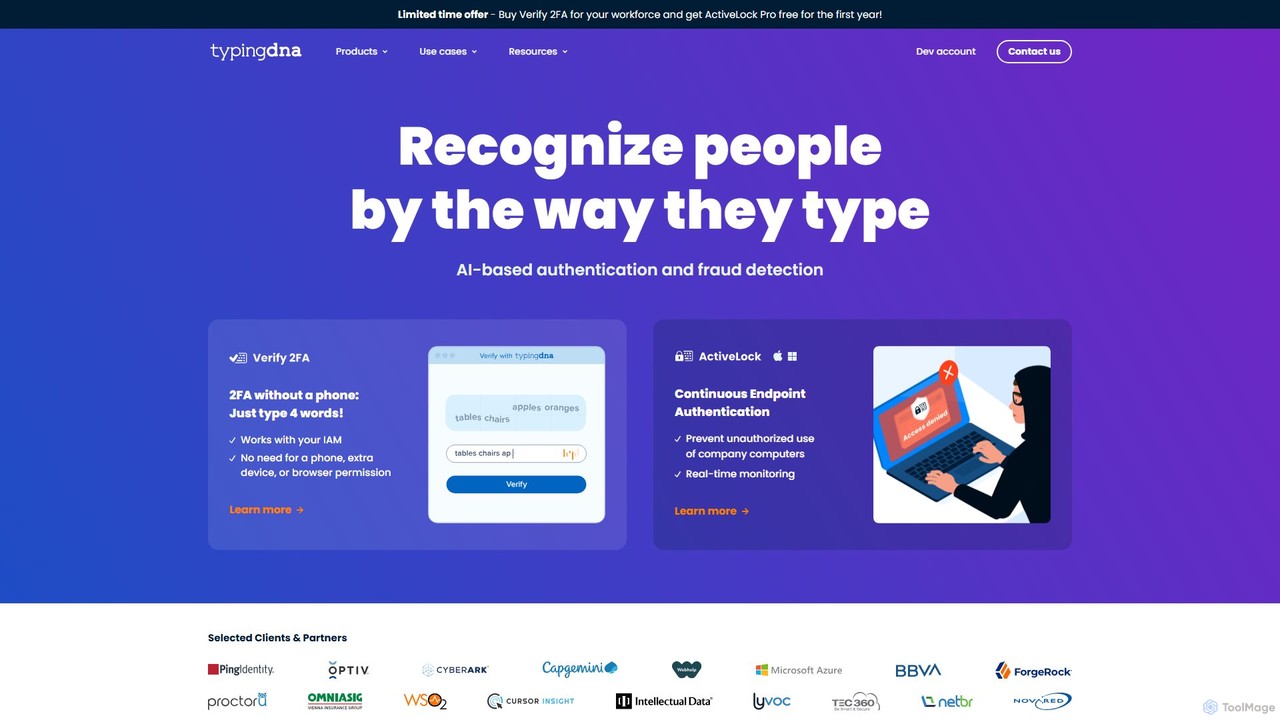
TypingDNA offers advanced user authentication through typing biometrics. It verifies users based on their unique typing patterns, providing a frictionless and secure alternative to traditional 2FA. Its solutions include a ready-to-use 2FA product and a flexible Authentication API for custom integrations, enhancing security for finance, education, and enterprise applications without compromising user experience.

Api
Visits 29.5KFavorites 154Likes 153
Unbody
Freemium

Unbody

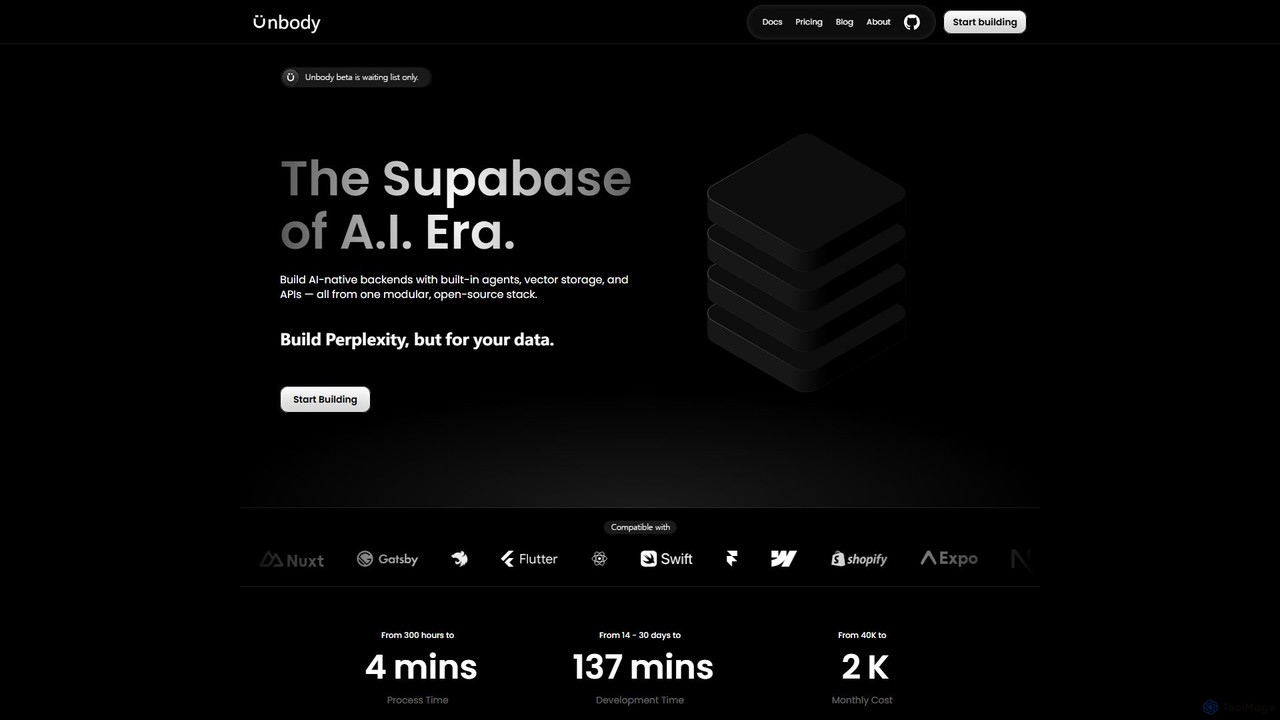
Unbody is an AI-native development stack, described as the "Supabase of the AI Era." It provides developers with a modular, open-source backend featuring built-in agents, vector storage, and a unified API. This allows for the rapid and cost-effective creation of intelligent, adaptive applications by transforming any data into a queryable knowledge base, eliminating the need for fragmented systems and complex AI pipelines.

Vector Database
Visits 4.3KFavorites 150Likes 146
Hypi
Freemium

Hypi

Hypi is a low-code platform designed to accelerate application development. It provides a serverless backend, instant GraphQL APIs, and real-time data synchronization, enabling developers and businesses to build and scale applications faster and more efficiently without managing infrastructure.

Backend As A Service (Baas)
Visits 4.2KFavorites 162Likes 133
Convex
Freemium

Convex

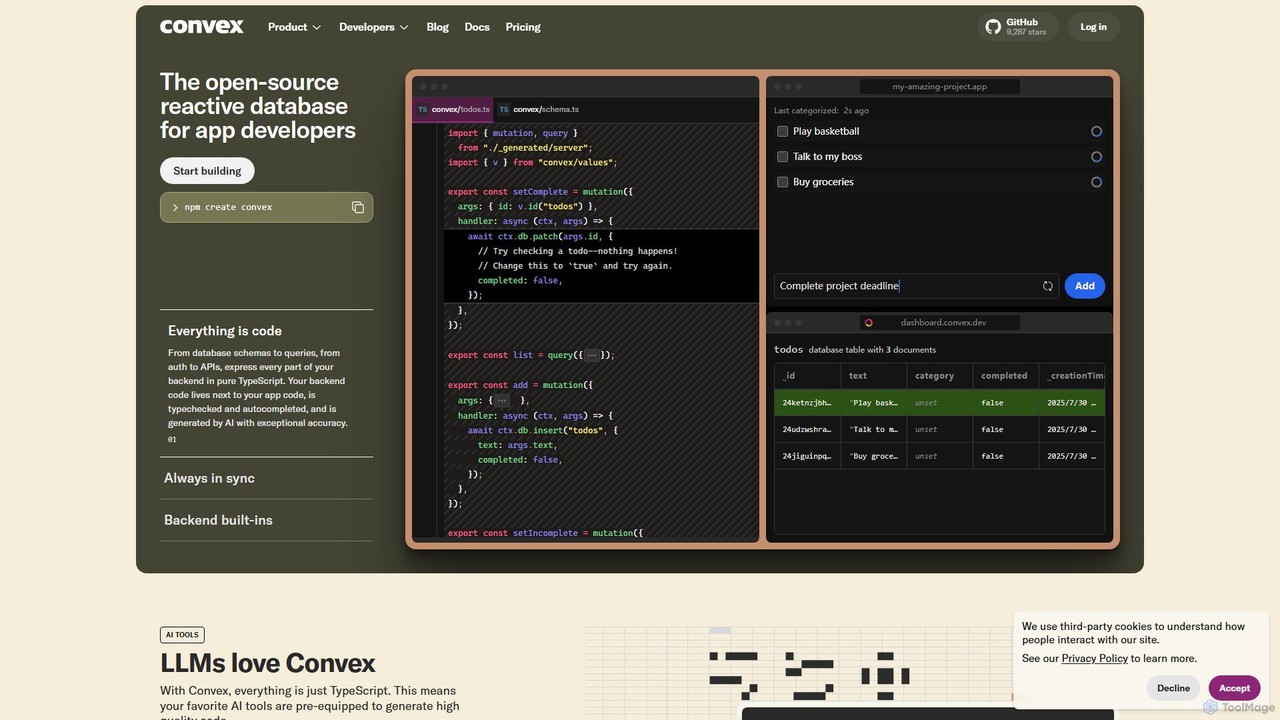
Convex is a backend-as-a-service platform for web developers, offering a reactive TypeScript database that simplifies building full-stack, real-time applications. It provides serverless functions, file storage, and vector search with end-to-end type safety, making it a powerful, developer-friendly alternative to Firebase.

Backend
Visits 696.7KFavorites 146Likes 138
BuildShip
Freemium

BuildShip

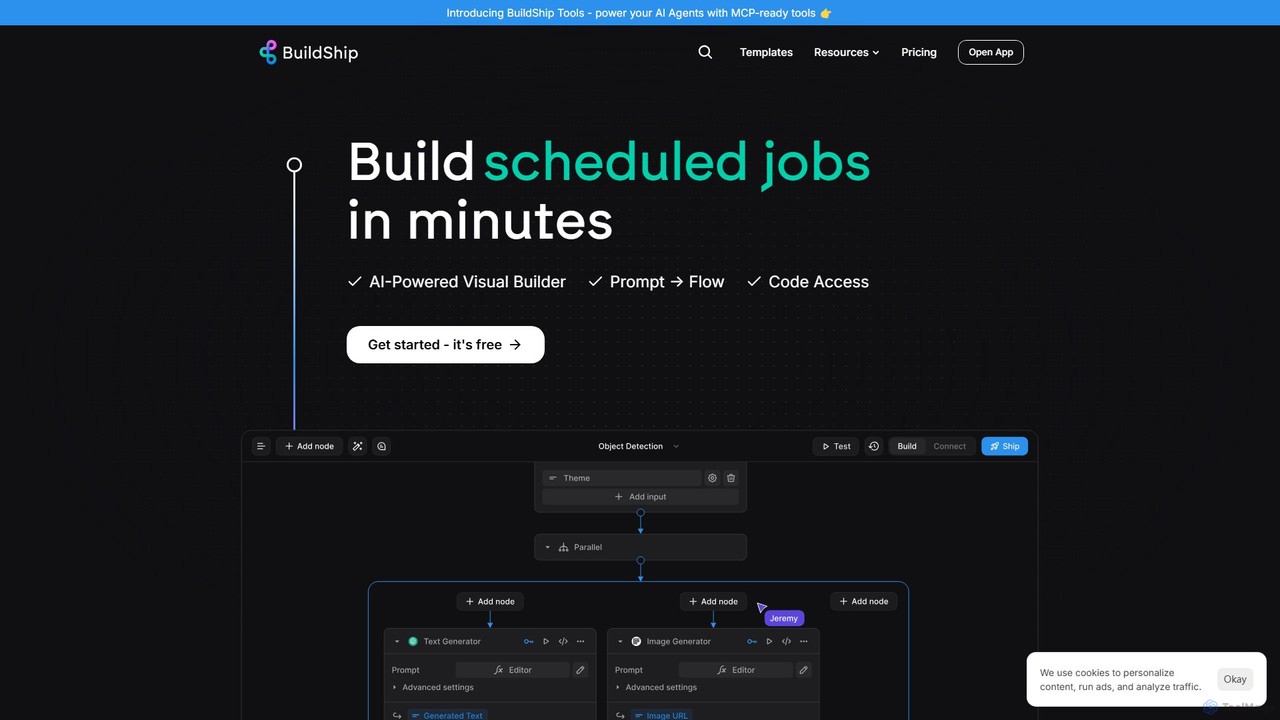
BuildShip is a low-code, AI-powered platform for visually building backend workflows, APIs, and scheduled jobs. Connect any AI model, database, or tool using a drag-and-drop interface or natural language prompts. Go from idea to a scalable, production-ready backend in minutes, with the flexibility to use JavaScript/TypeScript for advanced customization. Ideal for developers and creators alike.

Api
Visits 55.1KFavorites 128Likes 129
Gadget
Freemium

Gadget

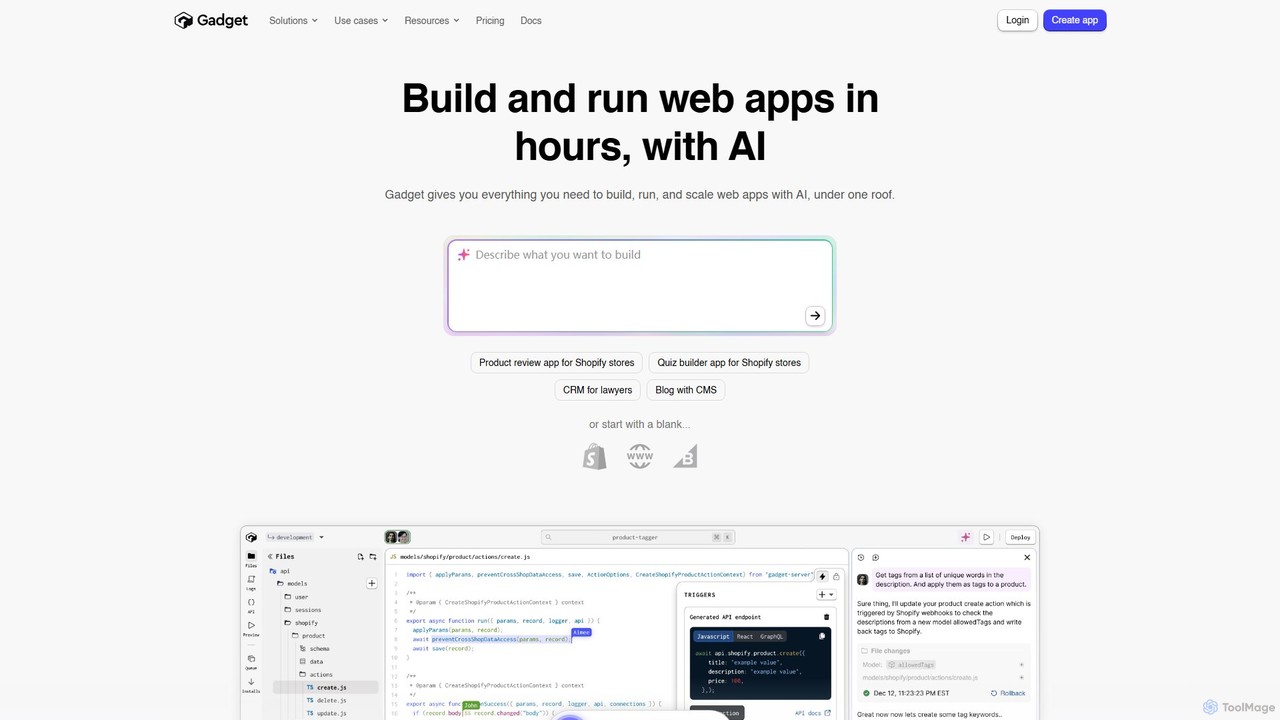
Gadget is an all-in-one, serverless development platform designed to accelerate full-stack web application development, especially for the Shopify ecosystem. It automates backend infrastructure, including databases, APIs, and authentication, allowing developers to build and launch scalable apps, like Shopify apps, significantly faster. An integrated AI assistant further streamlines the coding process.

Backend
Visits 51.9KFavorites 120Likes 120
Koxy AI
Freemium

Koxy AI

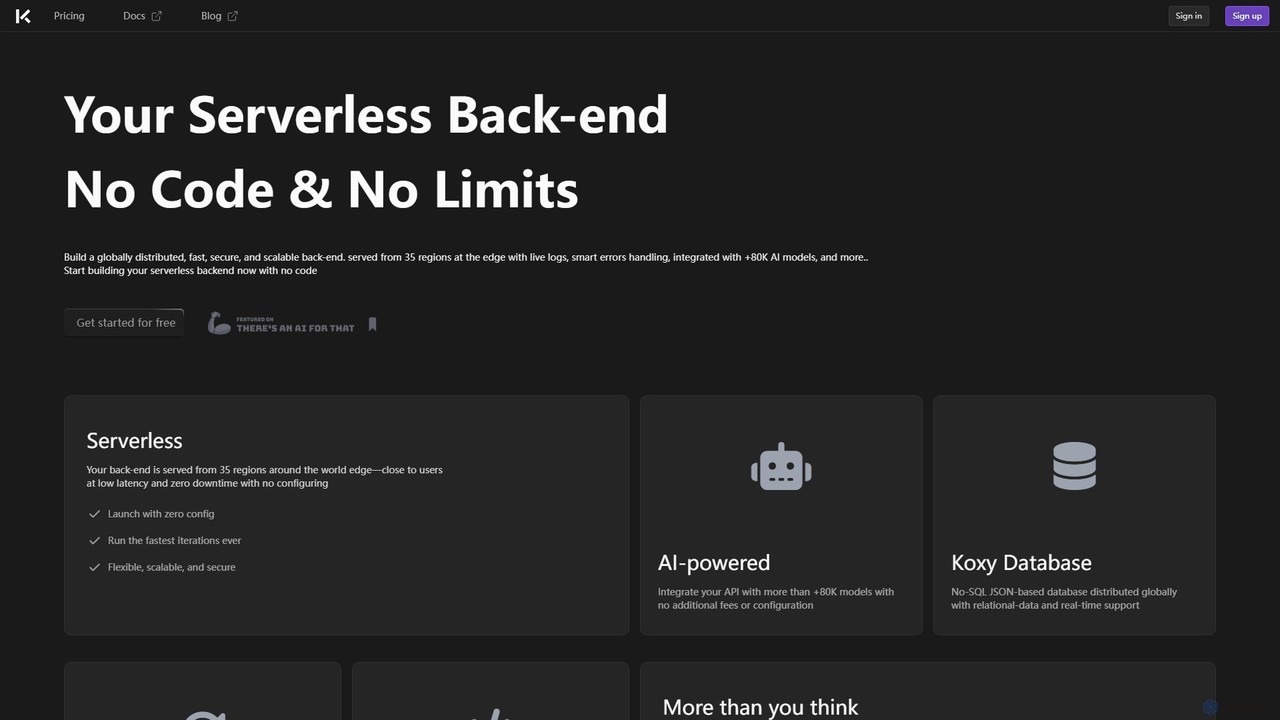
Koxy AI is a no-code platform for building AI-powered, serverless back-ends. It enables developers and creators to build globally distributed, fast, and scalable applications by integrating with over 80,000 AI models, a real-time No-SQL database, and custom cloud functions without writing complex back-end code.

Backend
Visits 9.8KFavorites 94Likes 100
Backmesh
Freemium

Backmesh

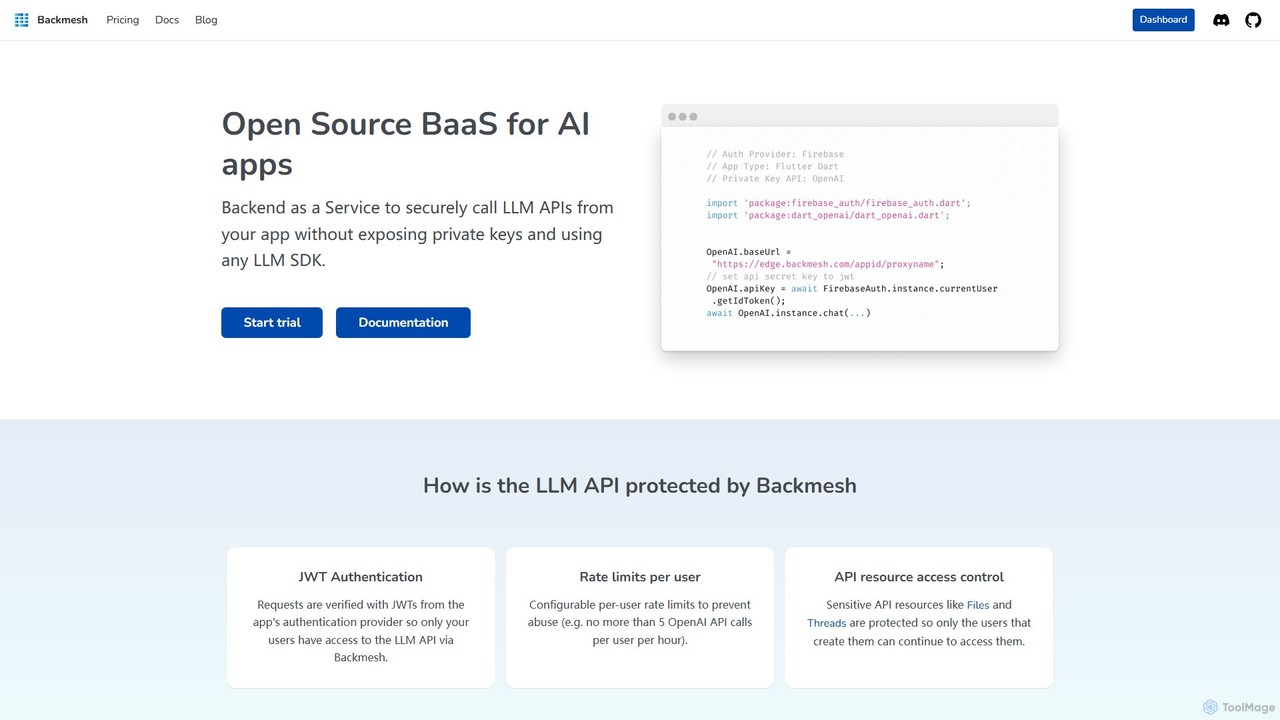
Backmesh is an open-source Backend as a Service (BaaS) designed for AI applications. It acts as a secure LLM API Gatekeeper, allowing developers to call LLM APIs like OpenAI and Gemini directly from web or mobile apps without exposing private keys. It offers features like JWT authentication, per-user rate limiting, and built-in analytics to manage and monitor API usage effectively.

Api
Visits 4.3KFavorites 130Likes 121
Pangea
Freemium

Pangea

Pangea is a developer-first platform offering a suite of API-based security services. It provides essential security guardrails for web and AI applications, enabling developers to easily embed features like secure audit logging, data redaction, threat intelligence, and authentication. Pangea is designed to accelerate development while ensuring applications are secure and compliant from the start.

Security
Visits 15.6KFavorites 151Likes 140
Metorial
Freemium

Metorial

Metorial is an integration platform for AI agents, enabling developers to quickly build, deploy, and monitor powerful agentic AI applications. It provides seamless connections to hundreds of tools, data sources, and APIs via its serverless Model Context Protocol (MCP) platform, offering robust SDKs, observability, and enterprise-grade security for scalable AI solutions.

Agentic Ai
Visits 11.9KFavorites 120Likes 122
MACH-AI
Freemium

MACH-AI

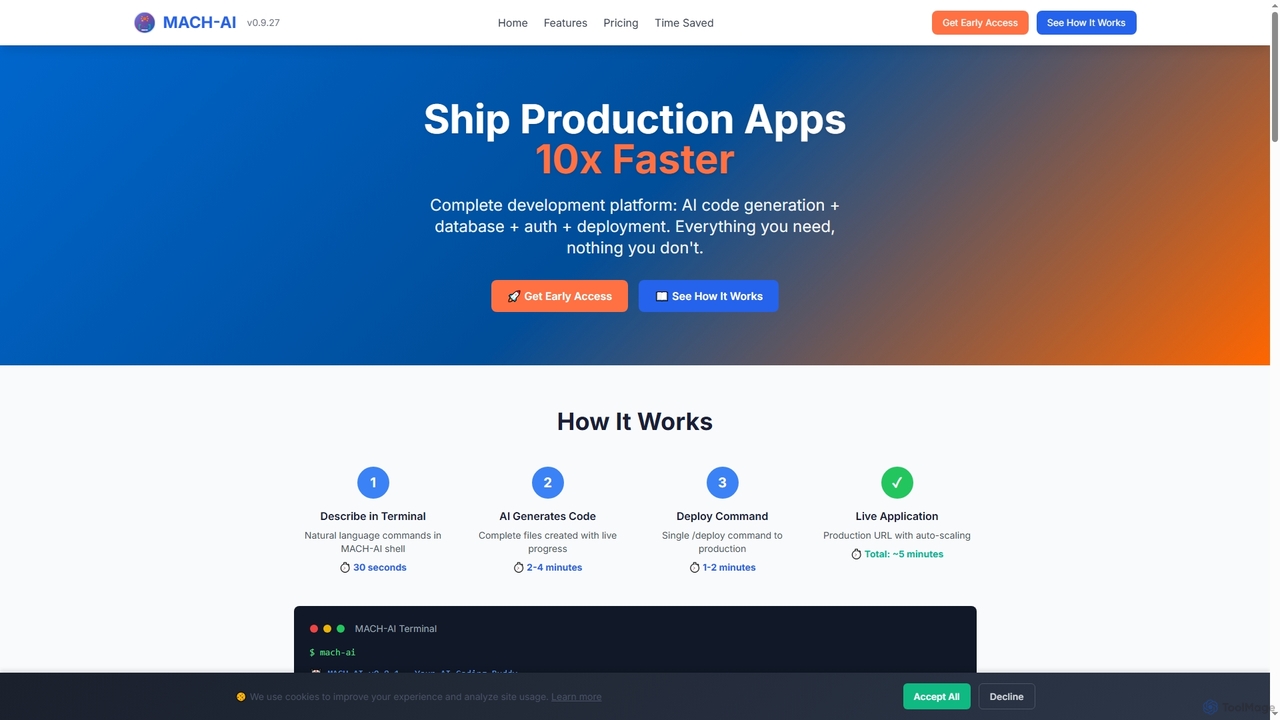
MACH-AI is an AI coding assistant and complete development platform that transforms concepts into production-ready cloud applications in minutes. It integrates AI code generation, built-in database, authentication, and one-command deployment, enabling developers to build and launch scalable web applications 10x faster across Python, JavaScript, and TypeScript.

Application Deployment
Visits 5.5KFavorites 33Likes 32
LoginLlama
Freemium

LoginLlama

LoginLlama is an AI-powered API for developers that detects suspicious logins in real-time. By analyzing user behavior, IP origin, and other factors, it helps prevent account takeovers, credential stuffing, and phishing attacks. Integrate with a few lines of code to enhance your application's security and build customer trust.

Api
Visits 4.5KFavorites 138Likes 111
Onvo AI
Paid

Onvo AI

Onvo AI is a powerful platform for building and embedding AI-driven dashboards and reports directly into your applications. It replaces complex SQL queries with simple natural language prompts, allowing both technical and non-technical users to create stunning data visualizations effortlessly. This solution saves significant engineering resources and empowers your teams and customers with secure, self-service analytics.

Business Intelligence
Visits 4.2KFavorites 118Likes 124
Myple
Freemium

Myple

Myple is a comprehensive platform for developers to build, scale, and secure production-ready AI applications. It offers a suite of tools including open-source SDKs, a powerful CLI, customizable templates, and integrations with popular services. With features like vector storage, agent tool management, and robust security, Myple streamlines the entire AI development lifecycle, from initial build to deployment and monitoring, enabling teams to deliver personalized AI experiences with an excellent developer experience (DX).

Deployment
Visits 4.2KFavorites 121Likes 113