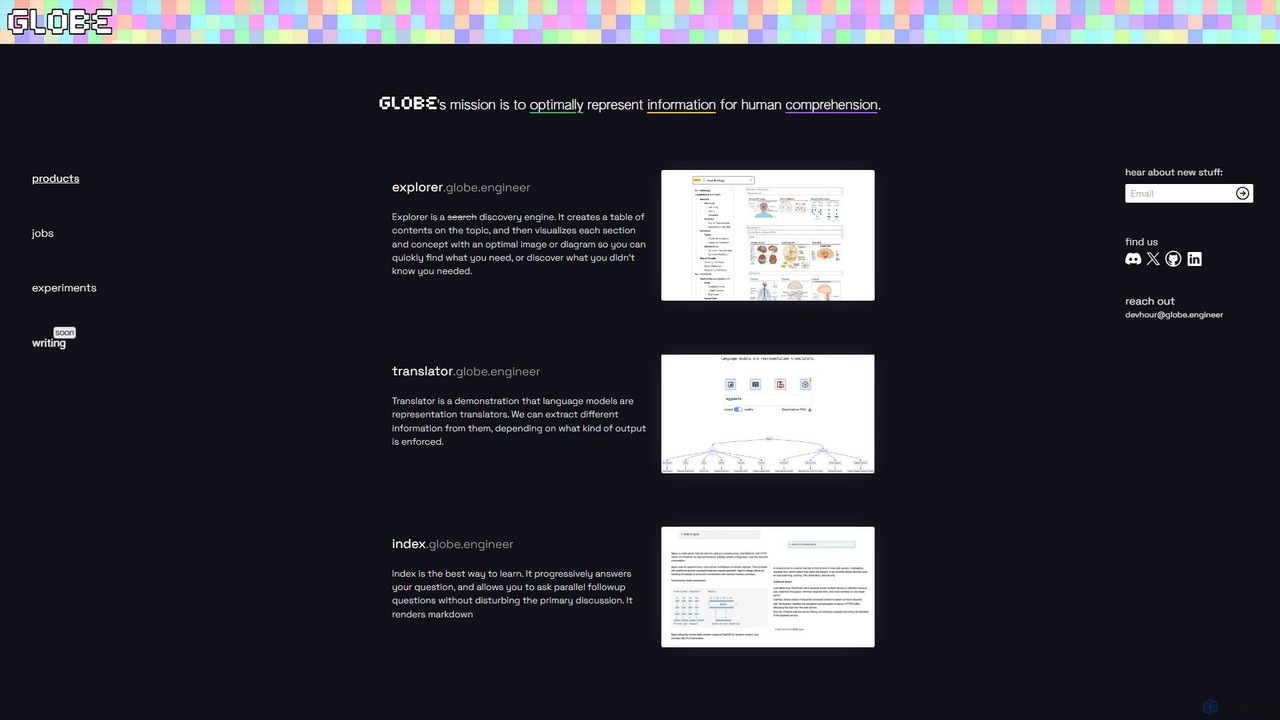
Globe. is an AI-powered ecosystem designed to revolutionize information comprehension. It features a suite of tools including a visual search engine (Explorer), an interactive learning tool (Index), and a representation translator. Globe. aims to optimally represent complex information, making it easier for users to discover, learn, and understand any topic.

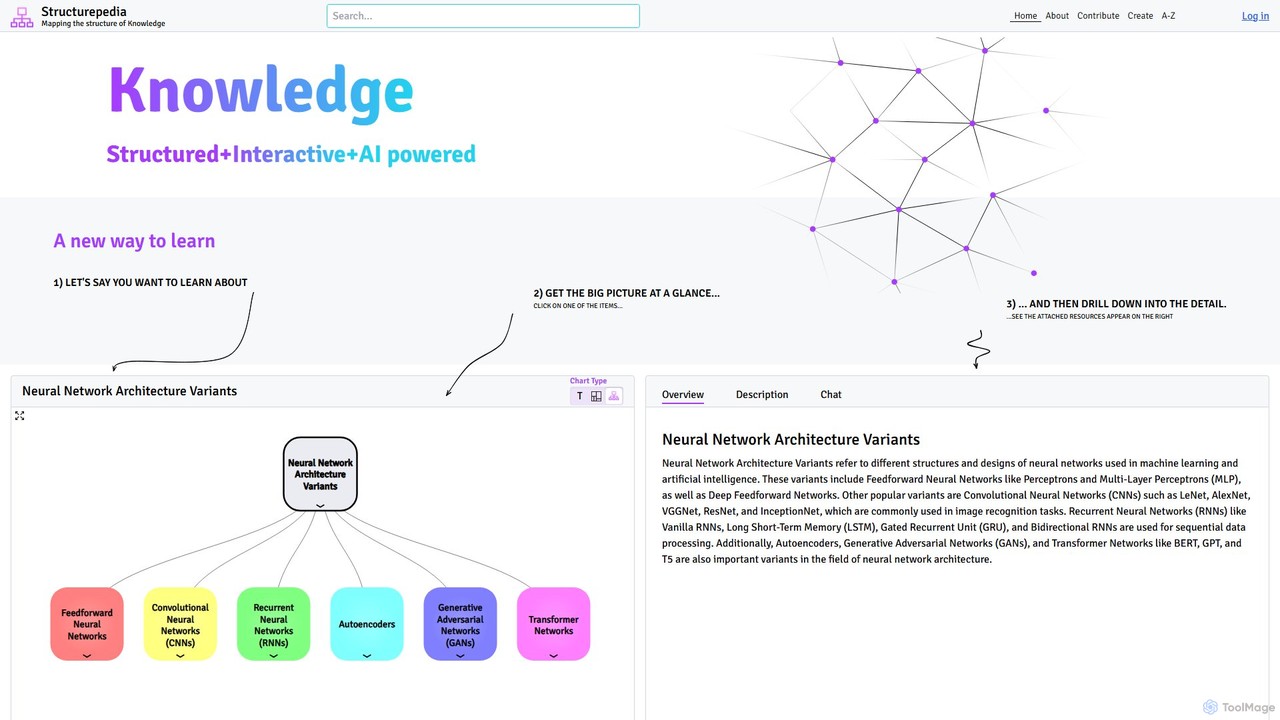
Structurepedia is an AI-powered knowledge platform that transforms complex topics into interactive, structured diagrams or "Knowledge Trees." It combines the features of a search engine and an encyclopedia to provide a visual, hierarchical way of learning, making it easier to grasp the big picture and drill down into details.
Product overview
Globe. Product overview
Globe. is an AI-powered ecosystem designed to revolutionize information comprehension. It features a suite of tools including a visual search engine (Explorer), an interactive learning tool (Index), and a representation translator. Globe. aims to optimally represent complex information, making it easier for users to discover, learn, and understand any topic.
Structurepedia Product overview
Structurepedia is an AI-powered knowledge platform that transforms complex topics into interactive, structured diagrams or "Knowledge Trees." It combines the features of a search engine and an encyclopedia to provide a visual, hierarchical way of learning, making it easier to grasp the big picture and drill down into details.
Detailed feature comparison
| Feature | Globe. | Structurepedia |
|---|---|---|
| Primary category | Learning | Learning |
| Added | 2025-08-15 | 2025-08-11 |
| Pricing | Not verified | Freemium |
| Official website | globe.engineer | structurepedia.org |
| Product type | Website | Website |
| Performance data | ||
| User rating | Not verified | Not verified |
| Comments | 0 | 0 |
| Monthly visits | 62.4K | 4K |
| Monthly growth | 28.7% | Not verified |
| Favorites | 87 | 92 |
| Details | View details | View details |
Globe. vs Structurepedia monthly traffic
Compare Globe. and Structurepedia by monthly reach, traffic trend, visit depth, top regions, and acquisition sources.
How to interpret the traffic data
In the Globe. vs Structurepedia monthly traffic comparison, Globe. currently shows 62.4K visits and Structurepedia shows 4K; Globe. has about 15.7 times the visible traffic of Structurepedia, an absolute difference of about 58.4K visits. This reflects visible reach, not feature quality or paid users.
Only Globe. has complete third-party traffic details; Structurepedia uses visits recorded inside ToolMage. These scopes cannot estimate market share directly, and on-site views should not be treated as the product’s total website traffic.
Globe. monthly traffic:
Latest traffic
Monthly traffic trend
- 2025/9: 104K Monthly visits
- 2026/1: 89.6K Monthly visits
- 2026/2: 72.7K Monthly visits
- 2026/3: 59.9K Monthly visits
- 2026/4: 48.5K Monthly visits
- 2026/5: 62.4K Monthly visits
Top regions
Top 5 countries/regions
| Country/region | Percentage | Traffic |
|---|---|---|
| 🇺🇸United States | 42.13% | 26.3K |
| 🇮🇳India | 21% | 13.1K |
| 🇻🇳Vietnam | 17.18% | 10.7K |
| 🇨🇳China | 10.56% | 6.6K |
| 🇲🇽Mexico | 9.13% | 5.7K |
Traffic sources
| Source type | Percentage | Traffic |
|---|---|---|
| Direct | 67.28% | 42K |
| Referral | 31.64% | 19.7K |
| 1.08% | 674 |
Search keywords
Structurepedia monthly traffic:
Latest traffic
Usage comparison
Compare the core capabilities of Globe. and Structurepedia
Globe. Core features
Structurepedia Core features
Use cases
Globe. Use cases
Structurepedia Use cases
Globe. vs Structurepedia:In-depth comparison and selection guidance
First decide whether the products solve the same kind of need
This in-depth Globe. vs Structurepedia comparison uses only the product records, taxonomy, audience, traffic, and community signals available on this page. Globe. is primarily listed under “Learning”, while Structurepedia is primarily listed under “Learning”, so the first decision is whether your actual task matches their recorded scope.
The structured fields currently show these decision-relevant differences: Pricing (Globe.: Not disclosed; Structurepedia: Freemium); Monthly visits (Globe.: 62.4K; Structurepedia: 4K); Favorites (Globe.: 87; Structurepedia: 92); Website (Globe.: globe.engineer; Structurepedia: structurepedia.org); Added (Globe.: 2025-08-15; Structurepedia: 2025-08-11). These facts are more useful for selection than brand visibility alone.
What market visibility and monthly traffic mean
In the Globe. vs Structurepedia monthly traffic comparison, Globe. currently shows 62.4K visits and Structurepedia shows 4K; Globe. has about 15.7 times the visible traffic of Structurepedia, an absolute difference of about 58.4K visits. This reflects visible reach, not feature quality or paid users.
Only Globe. has complete third-party traffic details; Structurepedia uses visits recorded inside ToolMage. These scopes cannot estimate market share directly, and on-site views should not be treated as the product’s total website traffic.
The current traffic scope is not sufficient for a reliable product ranking. Treat monthly visits as a market-interest signal, then decide using taxonomy, use cases, pricing, and a like-for-like trial rather than reading exposure as product capability.
Product positioning, use cases, and roles
Globe. and Structurepedia currently overlap in shared categories: Learning and Research; shared tags: knowledge management, learning tool, and research assistant. This can place both on the same shortlist, but it does not prove equal implementation, depth, or cost.
Globe.'s unique categories/tags are Search Engines, AI-powered search, concept mapping, data representation, information visualization, interactive learning, llm, and search engine; Structurepedia's are Visualization, AI encyclopedia, data visualization, knowledge graph, mind mapping, and structured learning. These unique fields are the strongest differentiators: validate the product whose recorded scope matches the task instead of following traffic alone.
What ratings, comments, and favorites can tell you
Globe. has no verified rating, 0 comments, 87 favorites, and 92 likes;Structurepedia has no verified rating, 0 comments, 92 favorites, and 91 likes。
Neither product has enough rating or comment samples for a credible reputation ranking.
Selection guidance by actual need
When to evaluate Globe. first
Put Globe. on the priority trial list when the task aligns with “Learning” and especially Search Engines, AI-powered search, concept mapping, data representation, information visualization, and interactive learning. This follows recorded positioning and does not imply unlisted capabilities are absent.
Globe. also currently records: pricing is not verified, product type is website, 62.4K verified monthly visits, no verified user rating. Verify any hard requirement around price, platform, or reach before trial, and do not let sparse review data substitute for testing.
When to evaluate Structurepedia first
Put Structurepedia on the priority trial list when the task aligns with “Learning” and especially Visualization, AI encyclopedia, data visualization, knowledge graph, mind mapping, and structured learning. This follows recorded positioning and does not imply unlisted capabilities are absent.
Structurepedia also currently records: pricing is freemium, product type is website, 4K on-site monthly views, no verified user rating. Verify any hard requirement around price, platform, or reach before trial, and do not let sparse review data substitute for testing.
How to validate the recommendation before deciding
The available data describes positioning, public visibility, and community signals, but it cannot prove output quality, speed, integration effort, privacy, or long-term cost in your workflow. Before deciding, run the same representative tasks in Globe. and Structurepedia, then record completion time, accuracy, manual corrections, and the real paid threshold. A like-for-like trial turns this comparison into a defensible adoption decision.
Comparison FAQ
How should I choose between Globe. and Structurepedia?
Where does this comparison data come from?
What do unknown fields mean?
Related AI tools

Emdash
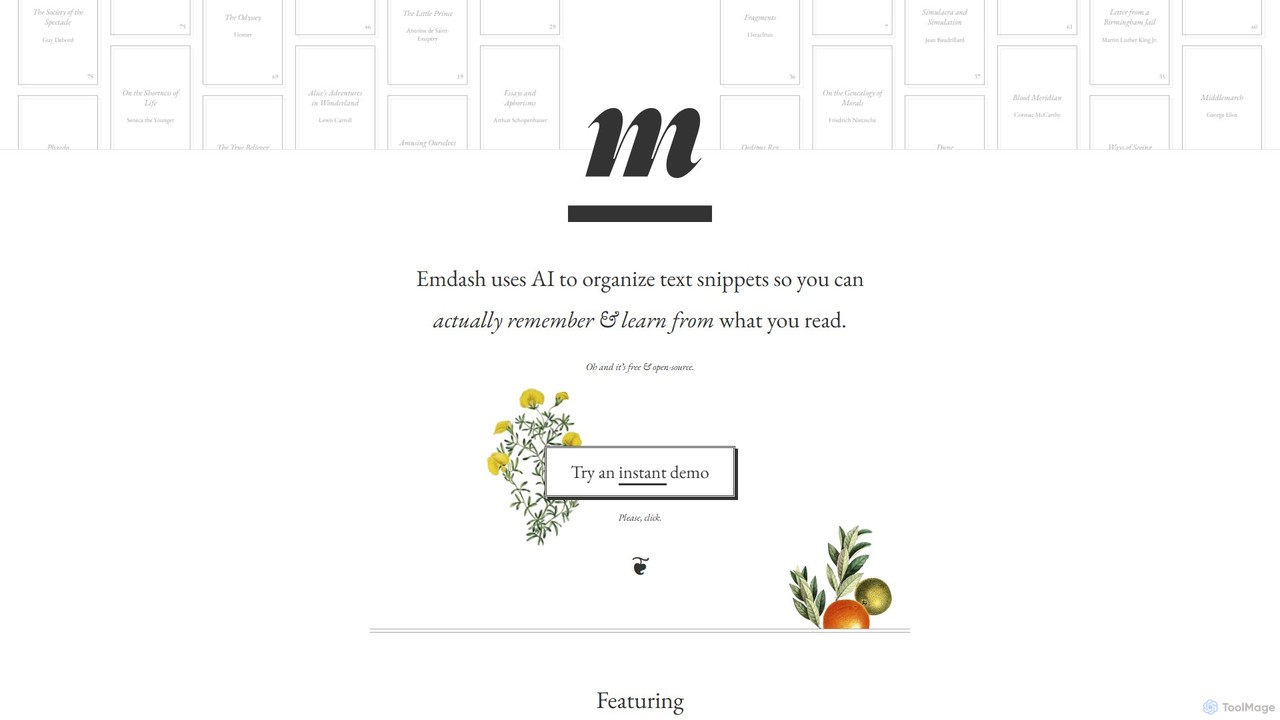
Emdash is a free, open-source AI tool designed for readers to organize, analyze, and learn from their book highlights. It uses on-device AI to find conceptual connections between passages, offers powerful semantic search, and allows users to tag, rate, and annotate their snippets. With flexible import/export options (including Kindle), Emdash helps you turn passive reading into active learning without compromising your privacy.
Research
Base
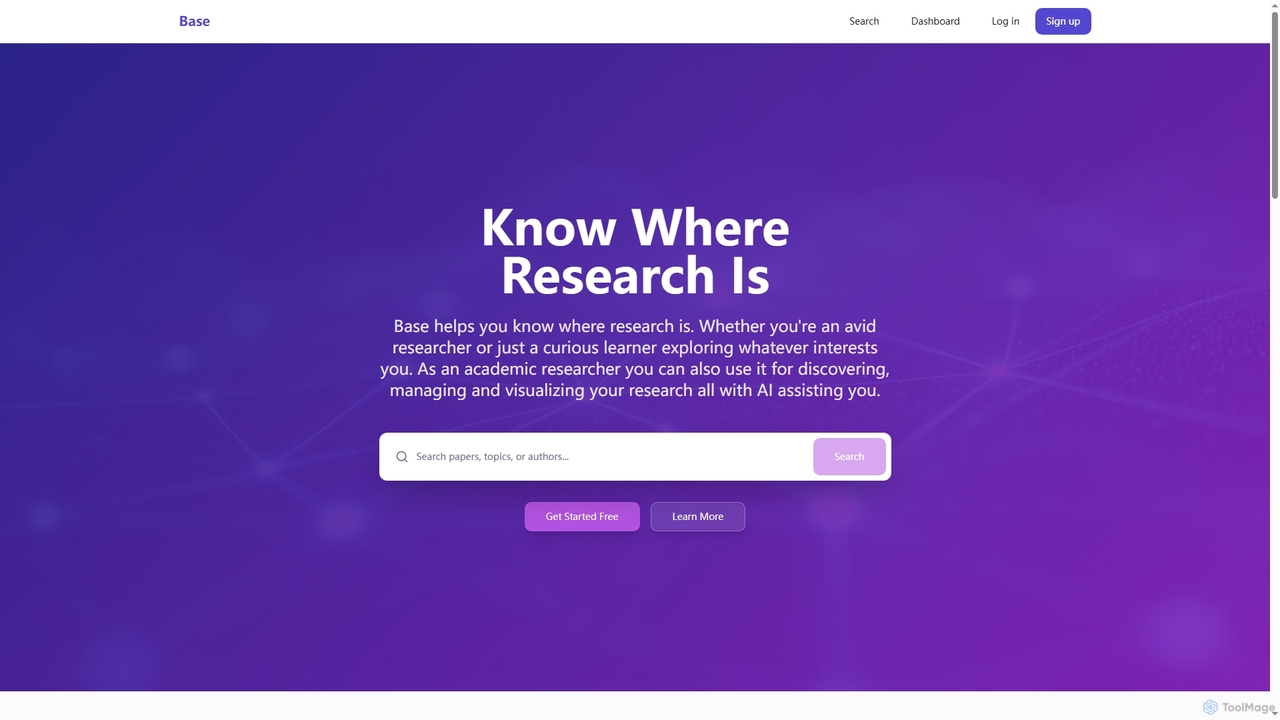
Base is an AI-powered research platform for academics and learners. It enables searching over 240 million papers, visualizing research landscapes with interactive graphs, organizing findings, and using an AI chat to uncover deeper insights from credible sources.
Academic
SearchSaga
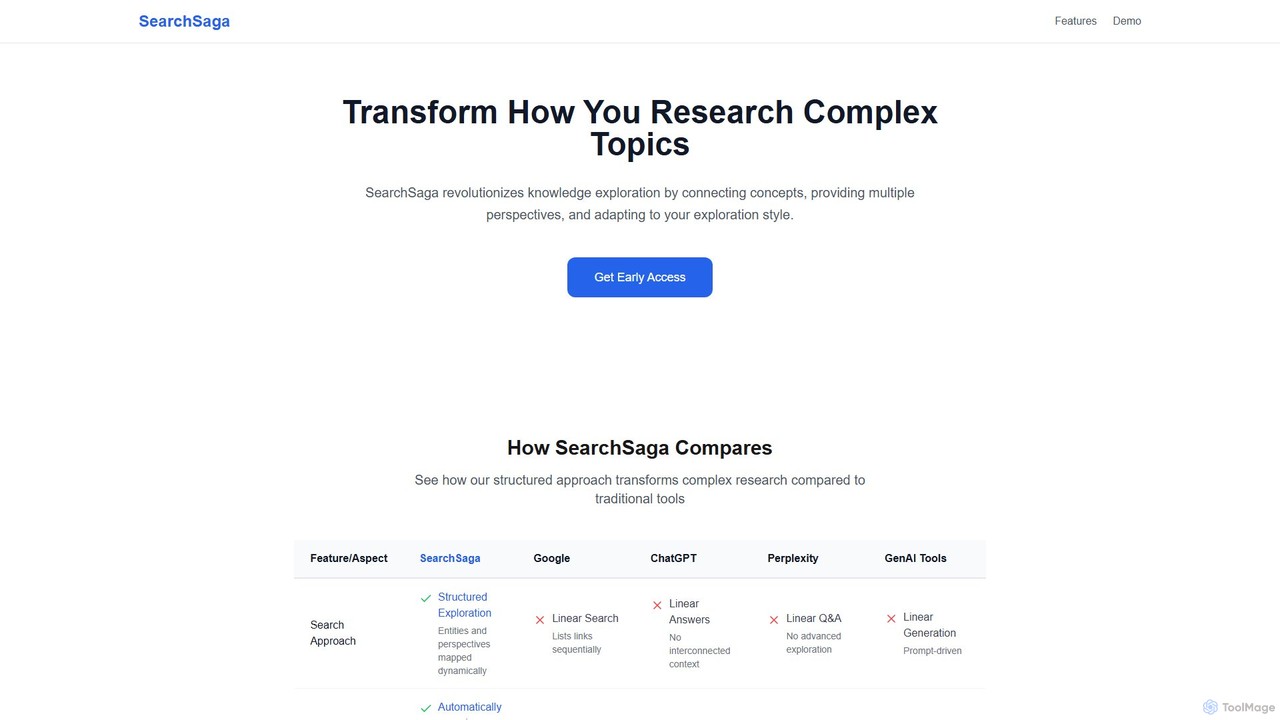
SearchSaga is an AI-powered research platform that transforms complex topic exploration. Instead of linear search results, it creates dynamic knowledge maps, connecting concepts and allowing users to analyze subjects from multiple perspectives like technical, economic, and environmental. Ideal for researchers, students, and professionals seeking deep, structured understanding.
Data Visualization

diabrowser
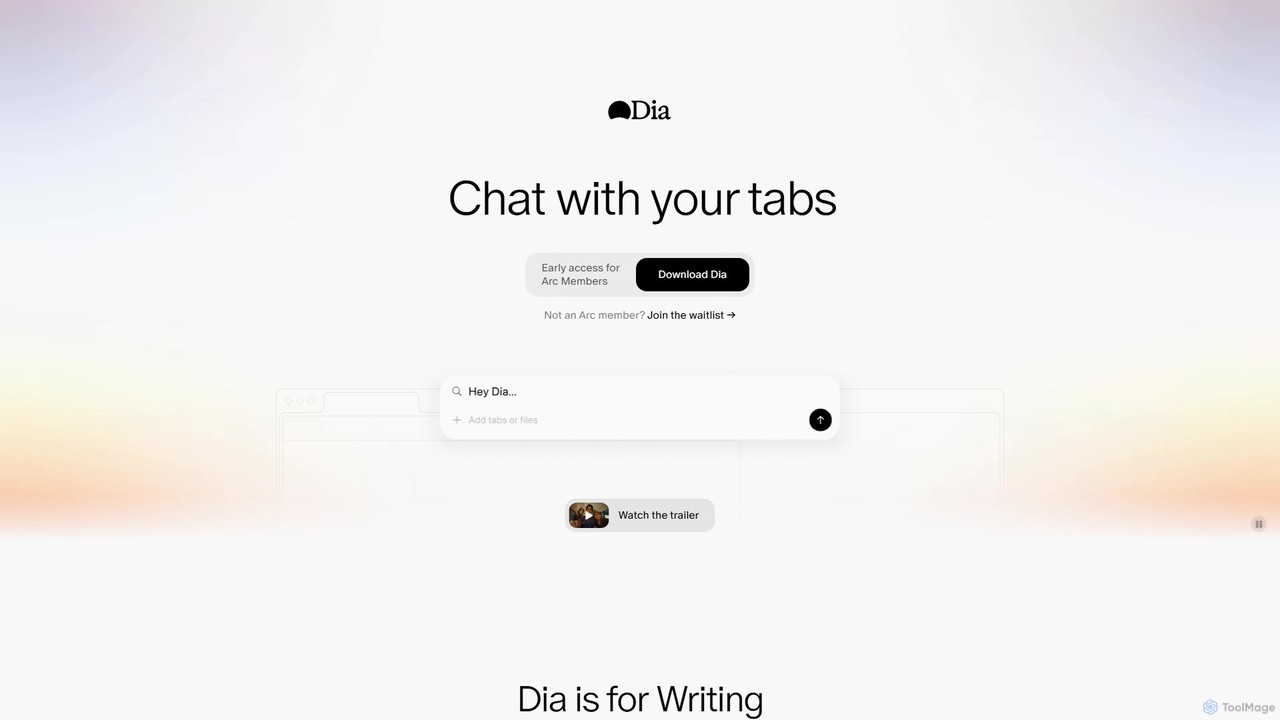
Dia is a revolutionary AI-powered browser for macOS that allows you to chat directly with your open tabs. It acts as a contextual assistant for writing, research, learning, and planning, synthesizing information across multiple pages to provide instant, relevant answers and content without constant copy-pasting.
Learning
Khoj AI
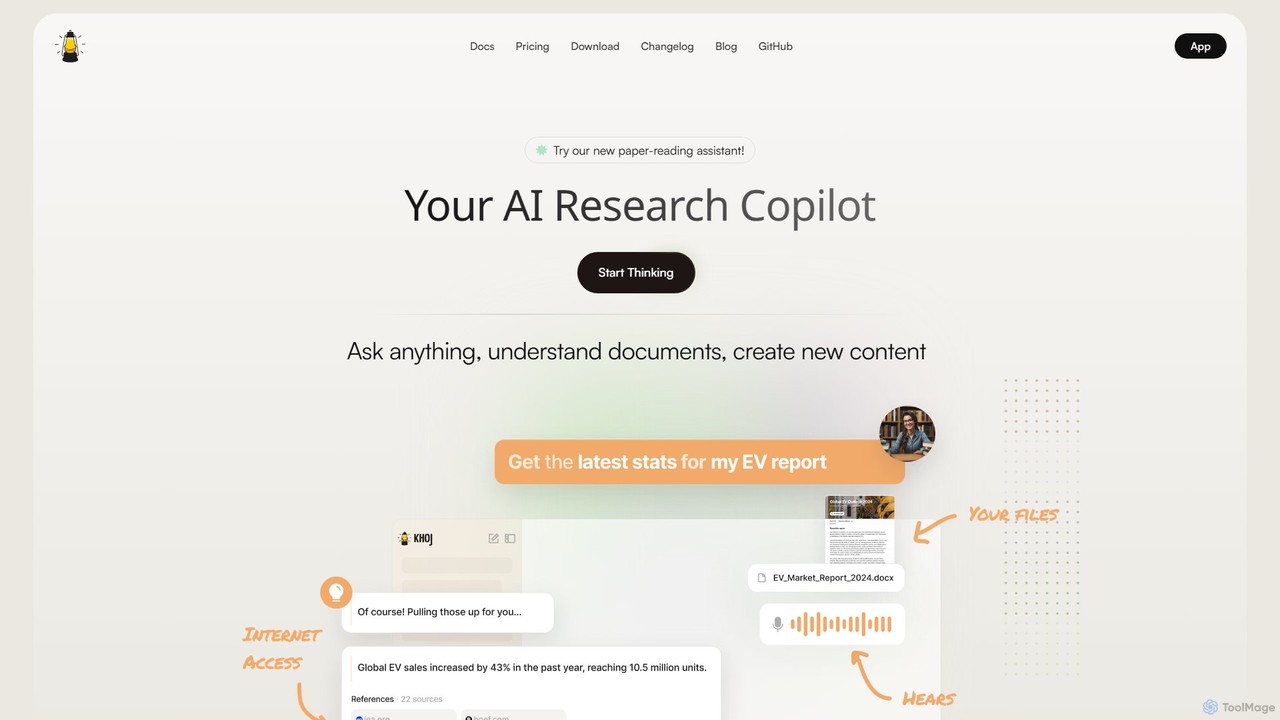
Khoj AI is your personal AI research copilot, acting as a second brain. It integrates with your documents and the web to answer complex questions, create content, visualize concepts, and automate research tasks. Highly customizable, it supports various AI models and offers cross-platform access.
Api
NotebookLM
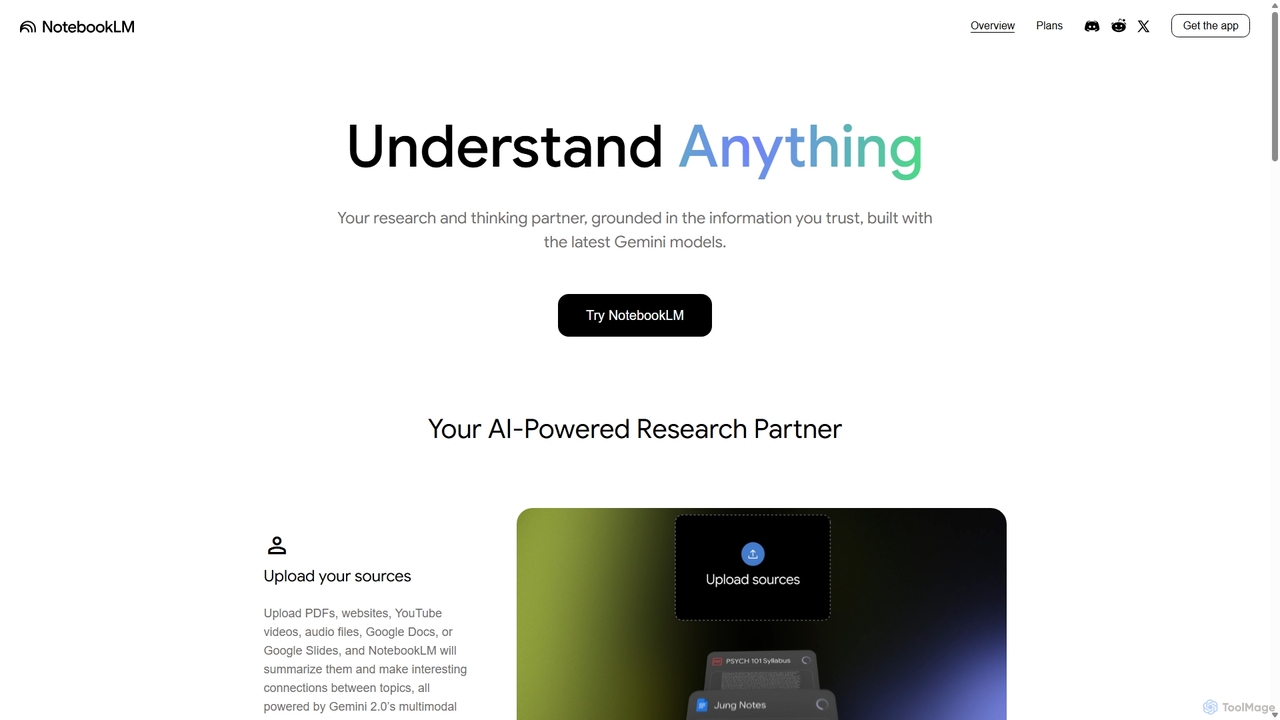
NotebookLM is an AI-powered research assistant and thinking partner from Google. It helps you understand, synthesize, and generate insights from your own documents. Upload PDFs, Google Docs, websites, and more to create a personalized knowledge base, then ask questions, get summaries, and brainstorm new ideas, with all responses grounded in your source material.
Knowledge Management
Liner
Liner is an AI-powered research assistant and web highlighter that enhances your online reading and research. It acts as an AI copilot, providing instant, fact-checked answers and summaries on search result pages and websites. Highlight text on any webpage or PDF, organize your findings into collections, and accelerate your learning and productivity.
Search
Scholarcy
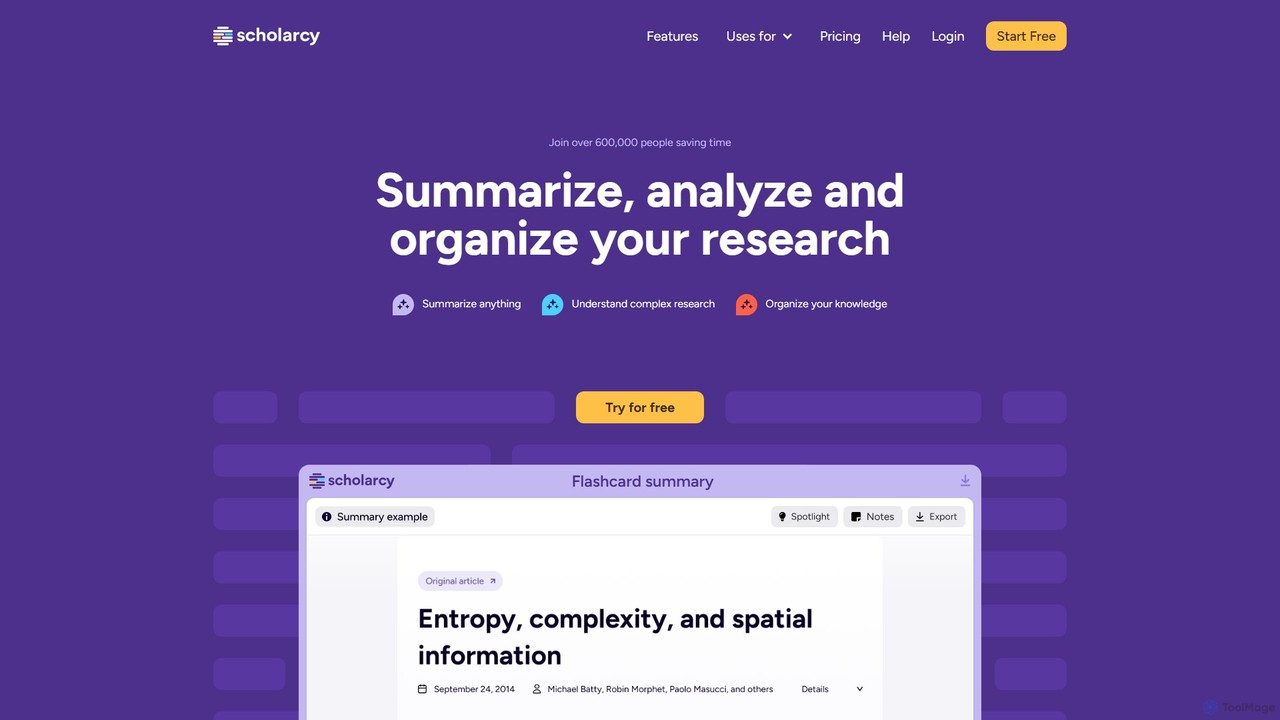
Scholarcy is an AI-powered research assistant that transforms long articles, papers, and book chapters into interactive summary flashcards. It helps students, researchers, and academics to quickly read, understand, and analyze complex texts. By highlighting key findings, extracting references, and enabling critical analysis, Scholarcy streamlines the literature review process and boosts research productivity.
Academic
Podwise
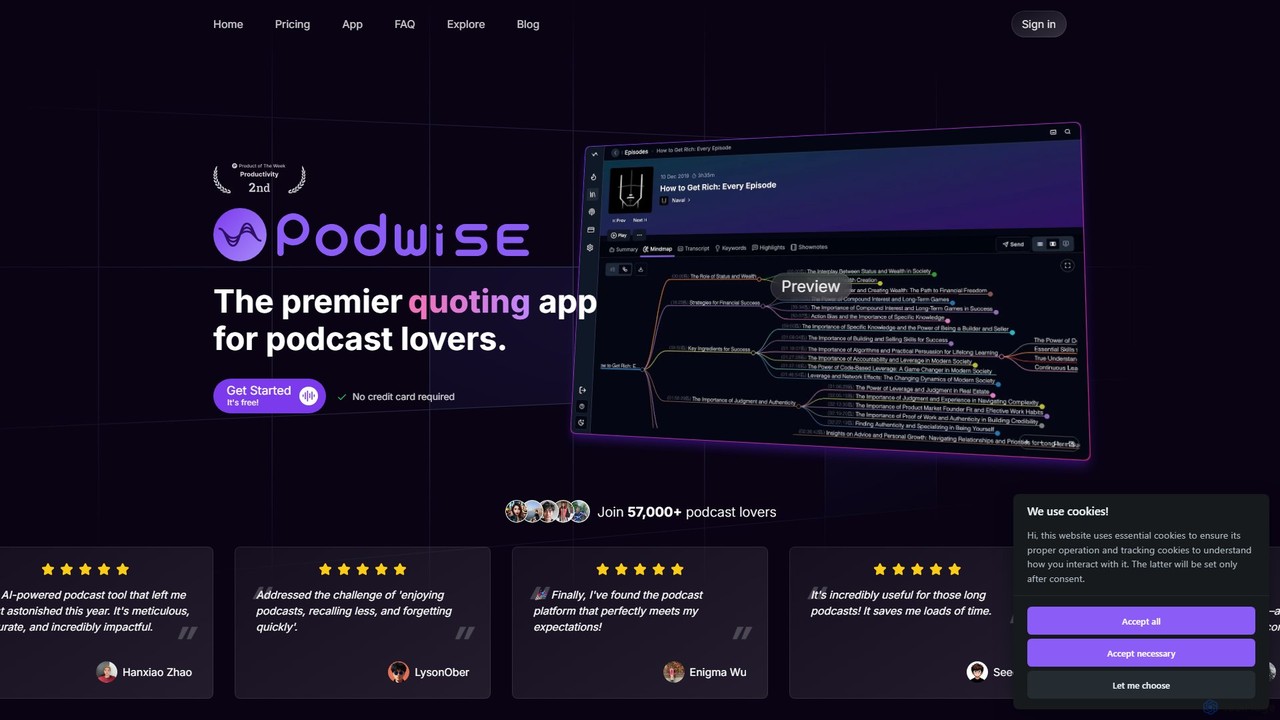
Podwise is an AI-powered tool for podcast listeners to extract structured knowledge at 10x speed. It generates summaries, outlines, mind maps, and transcripts from podcast episodes and YouTube videos. Seamlessly integrate with your knowledge management tools like Notion and Obsidian to build your second brain and never lose valuable insights again.
Podcast Tools
Snipd
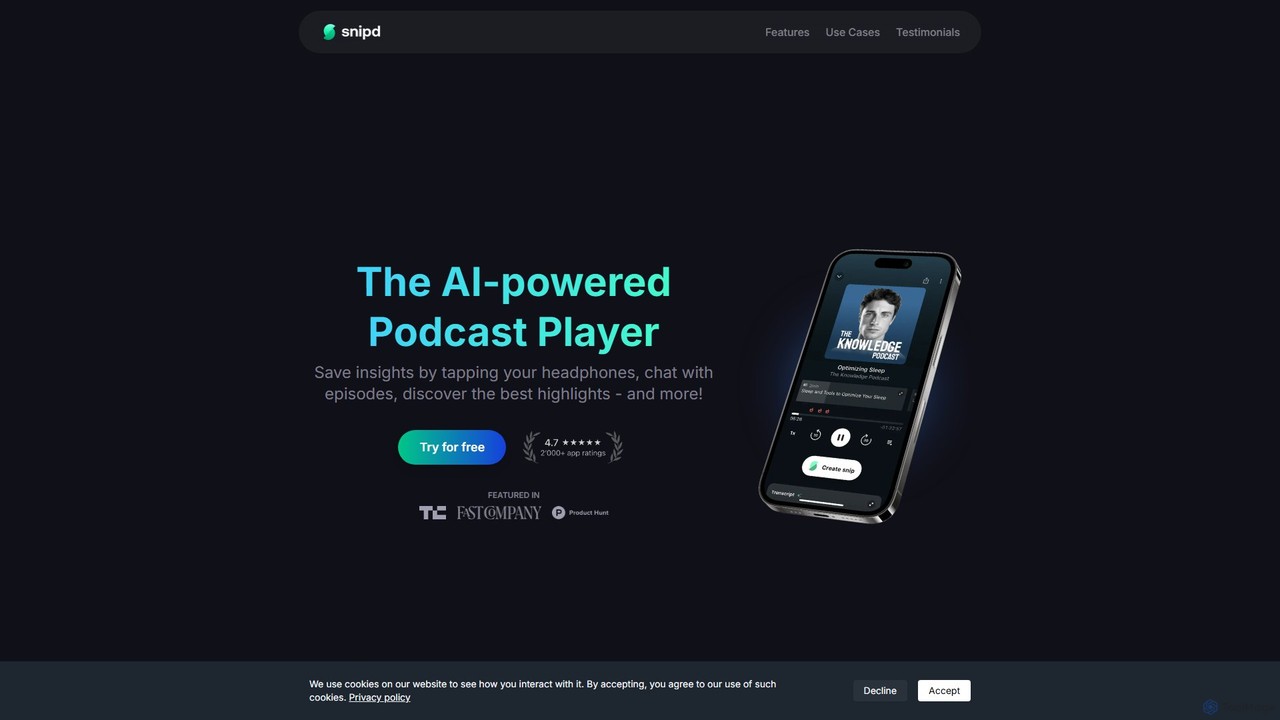
Snipd is an AI-powered podcast player that transforms passive listening into active learning. Capture key insights with a tap of your headphones, get AI-generated summaries and transcripts, and even chat with episodes to ask questions. It also supports audiobooks and YouTube videos, syncing your notes seamlessly with tools like Notion and Readwise.
Podcast
Eightify
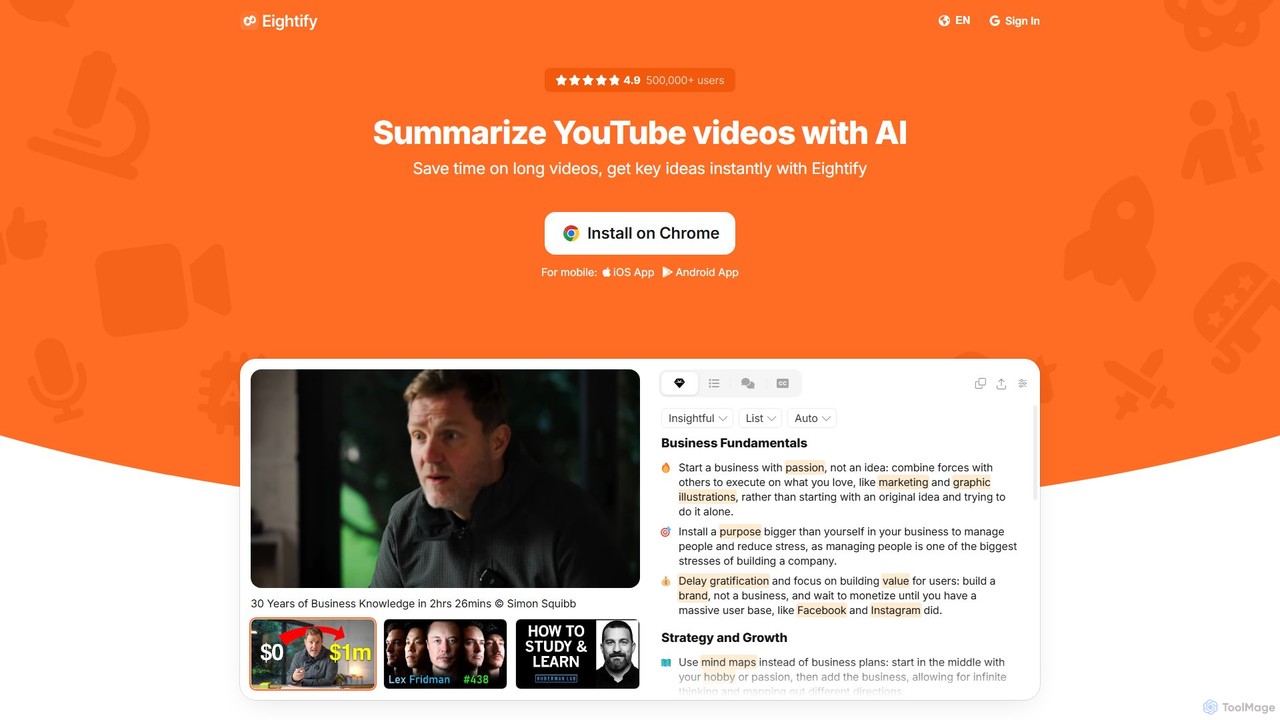
Eightify is an AI-powered YouTube video summarizer that saves you time by generating concise, accurate summaries. Available as a browser extension and mobile app, it extracts key ideas, provides timestamped outlines, and transcribes video content. With support for over 40 languages, it's the perfect tool for professionals, students, and content creators to quickly grasp the essence of long videos, boosting productivity and learning efficiency.
Learning
Otio
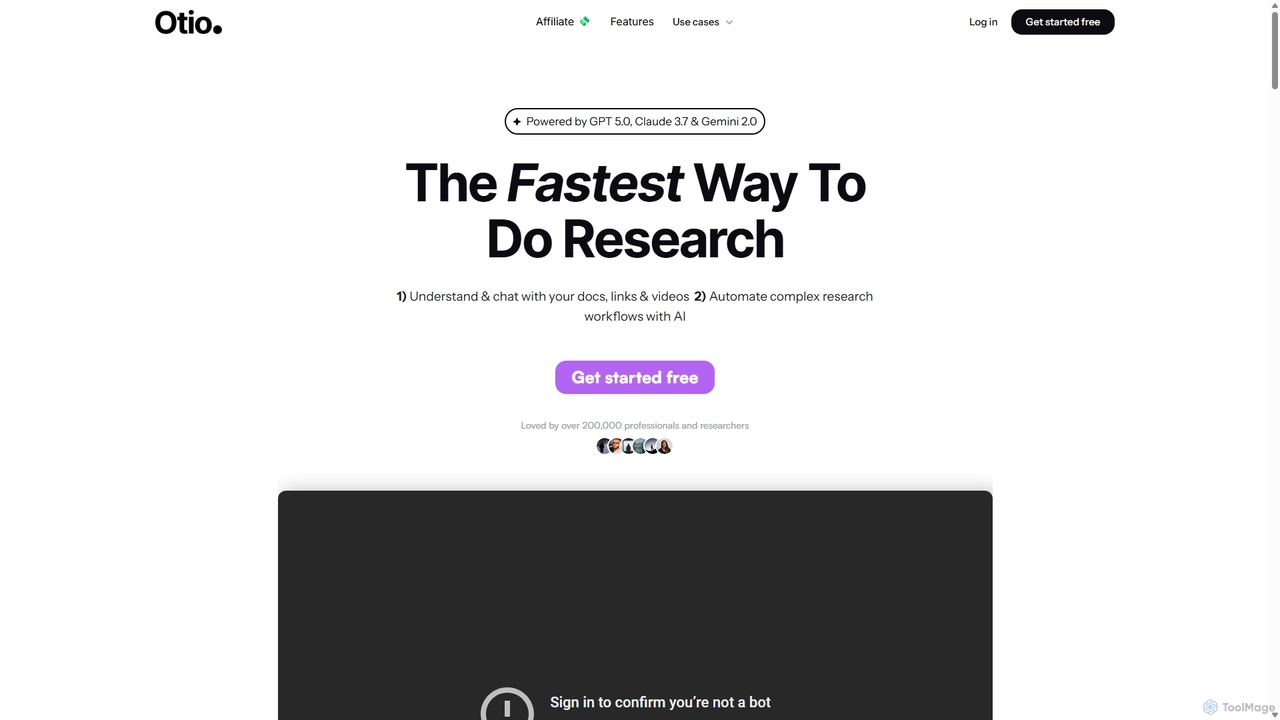
Otio is an AI-powered research and writing partner that streamlines your workflow. It allows you to understand and chat with documents, links, and videos, automate complex research tasks, and draft reports in an integrated AI editor. It's designed for students, researchers, and professionals to extract insights and produce high-quality written content efficiently.
Workflow
Heuristica
Heuristica is an AI-powered visual learning platform that helps students, teachers, and researchers create dynamic mind maps and concept maps. It integrates with various knowledge sources like academic databases, YouTube, and PDFs to visualize, organize, and expand complex ideas. Users can instantly generate study materials, chat with their maps, and personalize their learning experience with custom prompts on an infinite canvas.
Learning
PodPulse
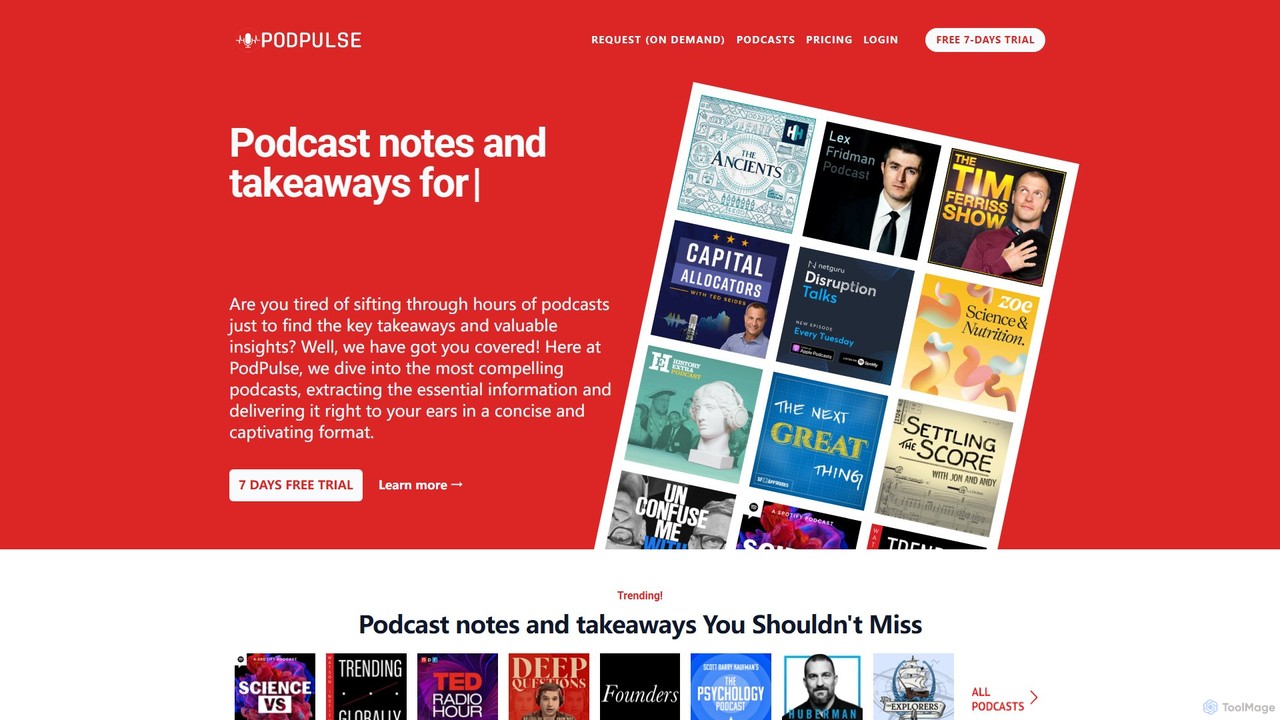
PodPulse is an AI-powered service that transforms lengthy podcasts into concise summaries, key takeaways, and actionable notes. Designed for lifelong learners and busy individuals, it helps you absorb more knowledge in less time. Features include on-demand summaries, highlight saving, and Bionic Reading® for enhanced accessibility.
Podcast Tools