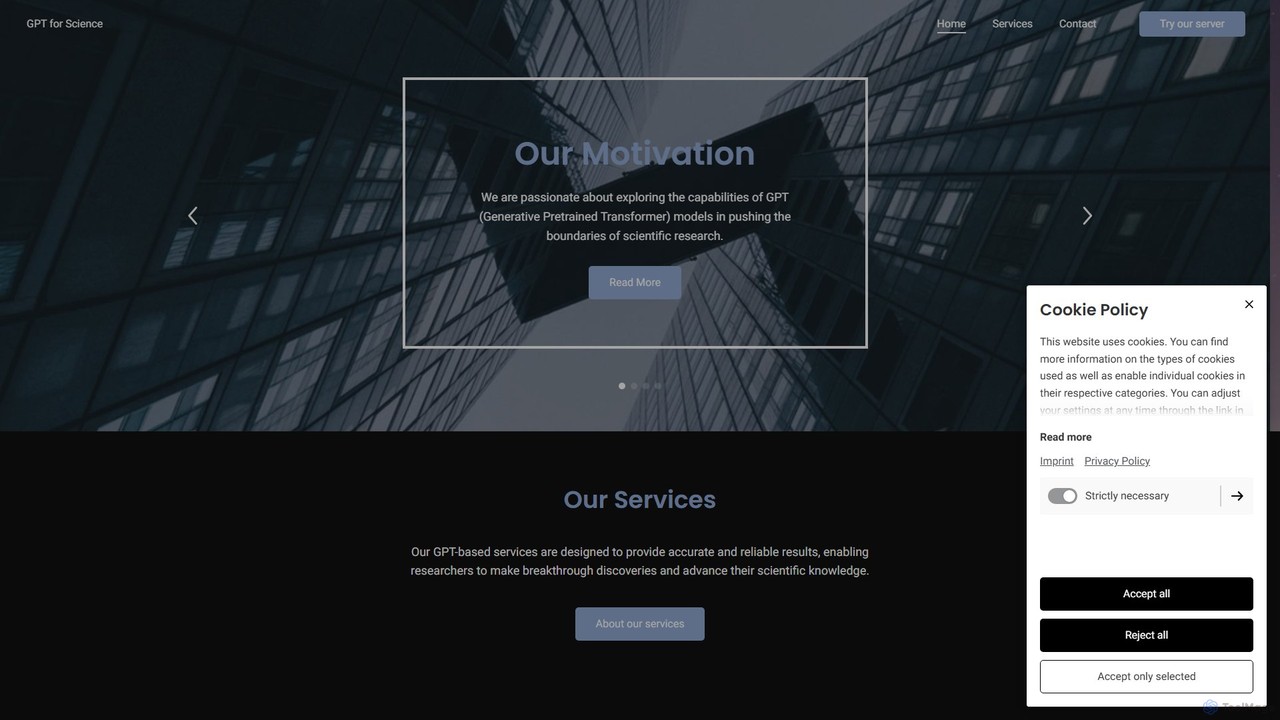
gptsci is a pioneering suite of AI tools designed to accelerate scientific research. It leverages fine-tuned GPT models to assist researchers with literature reviews, data analysis, hypothesis generation, and creating presentations, aiming to make scientific discovery more efficient and accessible.

OpenRead is an AI-powered research platform designed to streamline the entire research workflow. It integrates paper discovery, reading, note-taking, and analysis into a single, seamless experience. Users can interact with documents via AI chat, compare multiple papers, generate summaries, and visualize research connections, significantly boosting research efficiency and depth.
Product overview
gptsci Product overview
gptsci is a pioneering suite of AI tools designed to accelerate scientific research. It leverages fine-tuned GPT models to assist researchers with literature reviews, data analysis, hypothesis generation, and creating presentations, aiming to make scientific discovery more efficient and accessible.
OpenRead Product overview
OpenRead is an AI-powered research platform designed to streamline the entire research workflow. It integrates paper discovery, reading, note-taking, and analysis into a single, seamless experience. Users can interact with documents via AI chat, compare multiple papers, generate summaries, and visualize research connections, significantly boosting research efficiency and depth.
Detailed feature comparison
| Feature | gptsci | OpenRead |
|---|---|---|
| Primary category | Learning | Academic Tools |
| Added | 2025-08-06 | 2025-08-11 |
| Pricing | Not verified | Freemium |
| Official website | gptsci.com | www.openread.academy |
| Product type | Website | Website |
| Performance data | ||
| User rating | Not verified | Not verified |
| Comments | 0 | 0 |
| Monthly visits | 21.2K | 78.8K |
| Monthly growth | 2.3% | -7.9% |
| Favorites | 109 | 148 |
| Details | View details | View details |
gptsci vs OpenRead monthly traffic
Compare gptsci and OpenRead by monthly reach, traffic trend, visit depth, top regions, and acquisition sources.
How to interpret the traffic data
In the gptsci vs OpenRead monthly traffic comparison, gptsci currently shows 21.2K visits and OpenRead shows 78.8K; OpenRead has about 3.7 times the visible traffic of gptsci, an absolute difference of about 57.5K visits. This reflects visible reach, not feature quality or paid users.
Both tools provide verified traffic details, so monthly trends, visit depth, regions, and acquisition sources can be compared on the same basis.
OpenRead is registered at the www.openread.academy/zh subpage. Because the current data does not state whether other host pages are excluded, treat this as domain-level context rather than independent traffic for one product or project.
gptsci monthly traffic:
Latest traffic
Monthly traffic trend
- 2025/9: 7.7K Monthly visits
- 2026/1: 14K Monthly visits
- 2026/2: 14.3K Monthly visits
- 2026/3: 19.2K Monthly visits
- 2026/4: 20.8K Monthly visits
- 2026/5: 21.2K Monthly visits
Top regions
Top 5 countries/regions
| Country/region | Percentage | Traffic |
|---|---|---|
| 🇺🇸United States | 39.47% | 8.4K |
| 🇮🇳India | 22.22% | 4.7K |
| 🇻🇳Vietnam | 16.55% | 3.5K |
| 🇫🇷France | 12.71% | 2.7K |
| 🇮🇩Indonesia | 9.05% | 1.9K |
Search keywords
OpenRead monthly traffic:
Latest traffic
Monthly traffic trend
- 2026/1: 98.1K Monthly visits
- 2026/2: 70.8K Monthly visits
- 2026/3: 93.5K Monthly visits
- 2026/4: 85.6K Monthly visits
- 2026/5: 78.8K Monthly visits
Top regions
Top 5 countries/regions
| Country/region | Percentage | Traffic |
|---|---|---|
| 🇮🇩Indonesia | 55.79% | 44K |
| 🇮🇶Iraq | 20.76% | 16.4K |
| 🇪🇬Egypt | 8% | 6.3K |
| 🇺🇸United States | 7.84% | 6.2K |
| 🇲🇽Mexico | 7.61% | 6K |
Traffic sources
| Source type | Percentage | Traffic |
|---|---|---|
| Direct | 89.02% | 70.1K |
| Referral | 8.08% | 6.4K |
| 2.9% | 2.3K |
Search keywords
Usage comparison
Compare the core capabilities of gptsci and OpenRead
gptsci Core features
OpenRead Core features
Use cases
gptsci Use cases
OpenRead Use cases
gptsci vs OpenRead:In-depth comparison and selection guidance
First decide whether the products solve the same kind of need
This in-depth gptsci vs OpenRead comparison uses only the product records, taxonomy, audience, traffic, and community signals available on this page. gptsci is primarily listed under “Learning”, while OpenRead is primarily listed under “Academic Tools”, so the first decision is whether your actual task matches their recorded scope.
The structured fields currently show these decision-relevant differences: Primary category (gptsci: Learning; OpenRead: Academic Tools); Pricing (gptsci: Not disclosed; OpenRead: Freemium); Monthly visits (gptsci: 21.2K; OpenRead: 78.8K); Monthly growth (gptsci: 2.3%; OpenRead: -7.9%); Favorites (gptsci: 109; OpenRead: 148). These facts are more useful for selection than brand visibility alone.
What market visibility and monthly traffic mean
In the gptsci vs OpenRead monthly traffic comparison, gptsci currently shows 21.2K visits and OpenRead shows 78.8K; OpenRead has about 3.7 times the visible traffic of gptsci, an absolute difference of about 57.5K visits. This reflects visible reach, not feature quality or paid users.
Both tools provide verified traffic details, so monthly trends, visit depth, regions, and acquisition sources can be compared on the same basis.
OpenRead is registered at the www.openread.academy/zh subpage. Because the current data does not state whether other host pages are excluded, treat this as domain-level context rather than independent traffic for one product or project.
OpenRead is registered under a www.openread.academy subpath, so its large visible total may include the host platform. The current data does not justify choosing OpenRead for traffic alone; shortlist by unique taxonomy and use case, then validate with the same tasks.
Product positioning, use cases, and roles
gptsci and OpenRead currently overlap in shared categories: Document Analysis; shared tags: academic research, literature review, and research assistant. This can place both on the same shortlist, but it does not prove equal implementation, depth, or cost.
gptsci's unique categories/tags are Learning, Presentation, Academic, data analysis, gpt, hypothesis generation, powerpoint automation, and science chatbot; OpenRead's are Academic Tools, Literature Review, AI chat, knowledge management, paper summarizer, PDF analysis, and scientific research. These unique fields are the strongest differentiators: validate the product whose recorded scope matches the task instead of following traffic alone.
What ratings, comments, and favorites can tell you
gptsci has no verified rating, 0 comments, 109 favorites, and 112 likes;OpenRead has no verified rating, 0 comments, 148 favorites, and 154 likes。
Neither product has enough rating or comment samples for a credible reputation ranking.
Selection guidance by actual need
When to evaluate gptsci first
Put gptsci on the priority trial list when the task aligns with “Learning” and especially Learning, Presentation, Academic, data analysis, gpt, and hypothesis generation. This follows recorded positioning and does not imply unlisted capabilities are absent.
gptsci also currently records: pricing is not verified, product type is website, 21.2K verified monthly visits, no verified user rating. Verify any hard requirement around price, platform, or reach before trial, and do not let sparse review data substitute for testing.
When to evaluate OpenRead first
Put OpenRead on the priority trial list when the task aligns with “Academic Tools” and especially Academic Tools, Literature Review, AI chat, knowledge management, paper summarizer, and PDF analysis. This follows recorded positioning and does not imply unlisted capabilities are absent.
OpenRead also currently records: pricing is freemium, product type is website, 78.8K monthly visits shown for the registered host (subpage scope unknown), no verified user rating. Verify any hard requirement around price, platform, or reach before trial, and do not let sparse review data substitute for testing.
How to validate the recommendation before deciding
The available data describes positioning, public visibility, and community signals, but it cannot prove output quality, speed, integration effort, privacy, or long-term cost in your workflow. Before deciding, run the same representative tasks in gptsci and OpenRead, then record completion time, accuracy, manual corrections, and the real paid threshold. A like-for-like trial turns this comparison into a defensible adoption decision.
Comparison FAQ
How should I choose between gptsci and OpenRead?
Where does this comparison data come from?
What do unknown fields mean?
Related AI tools

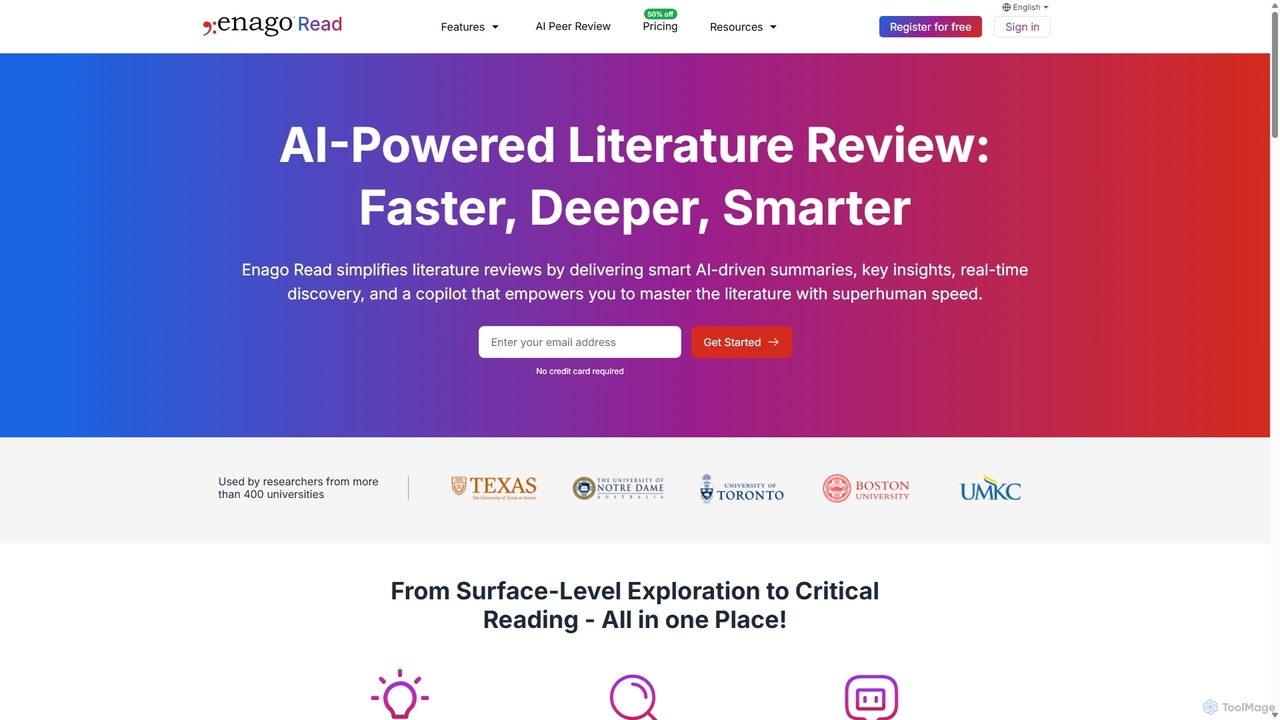
Enago Read
Enago Read is an AI-powered research assistant designed to accelerate literature reviews. It helps researchers and students discover, read, and analyze academic papers with features like AI-generated summaries, key insights, and an interactive AI Copilot to chat with documents. It streamlines the entire research workflow from exploration to critical analysis.
Research
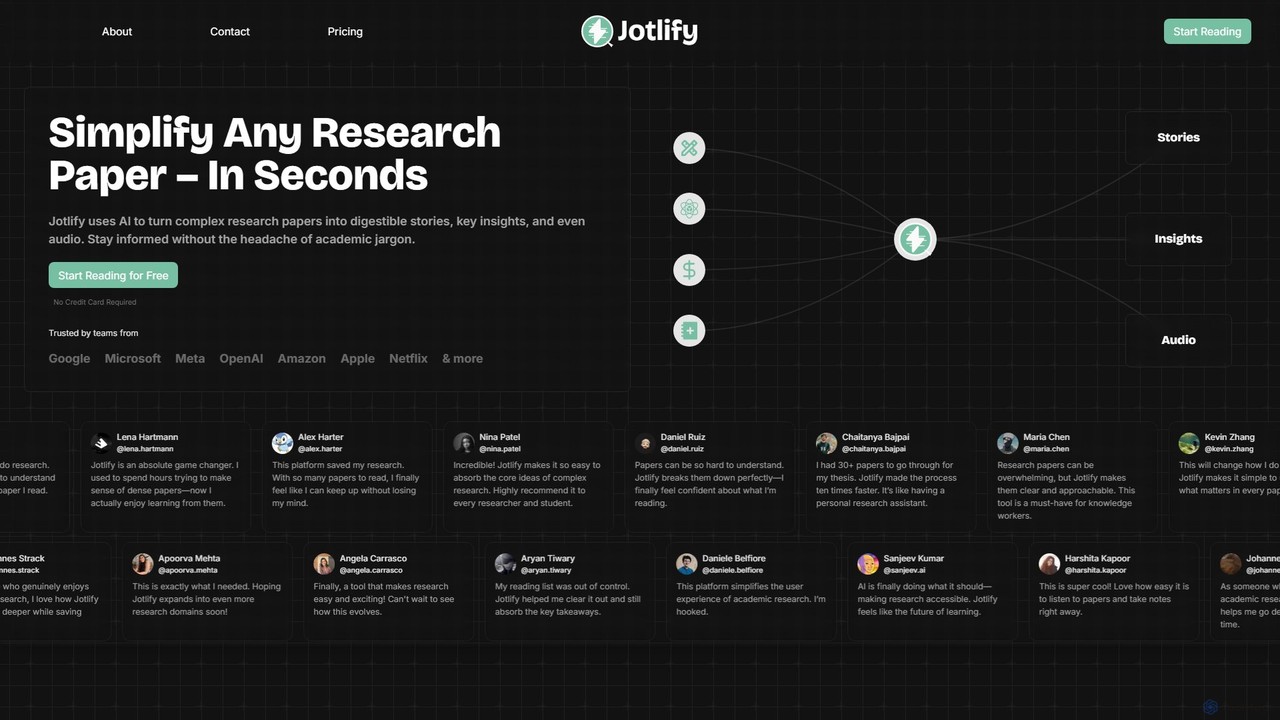
Jotlify
Jotlify is an AI-powered platform that transforms dense academic research papers into easy-to-understand summaries, key insights, and audio narrations. It helps students, researchers, and professionals save time, overcome jargon, and stay updated with the latest breakthroughs in their fields.
Text To Speech
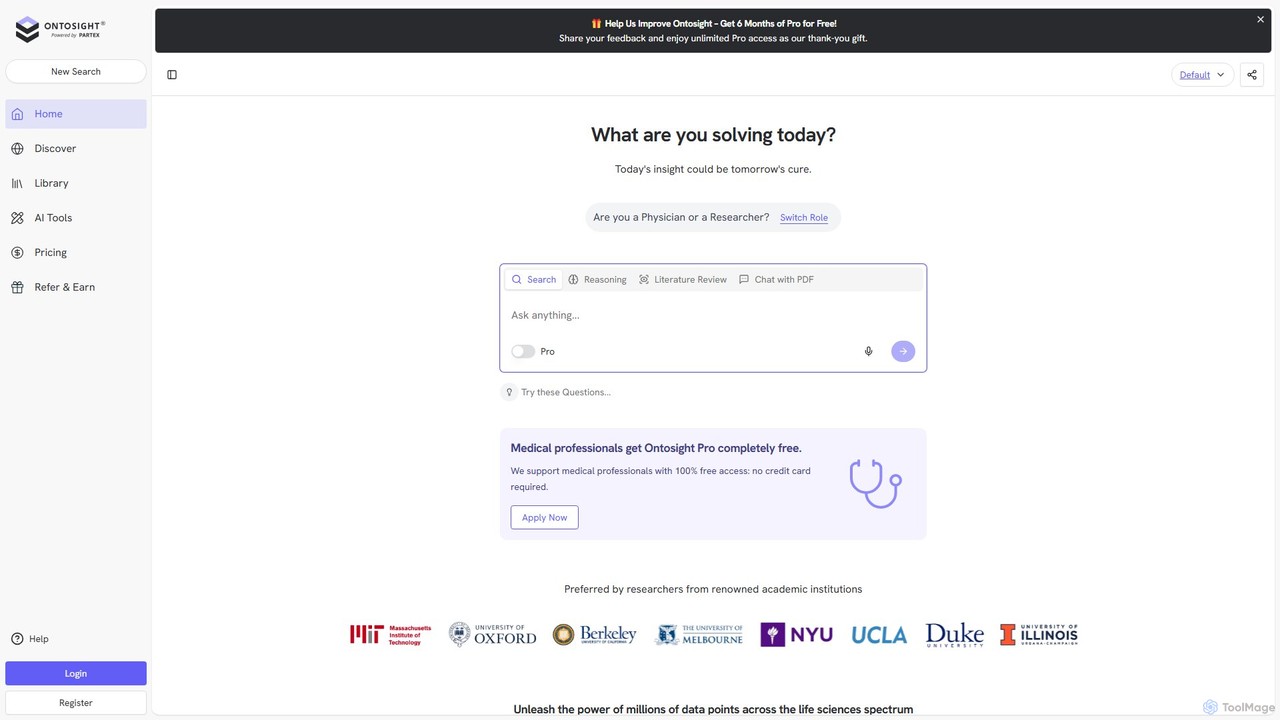
Ontosight
Ontosight is an AI-powered research assistant designed for physicians, scientists, and students in the life sciences and medical fields. It accelerates research by providing direct, cited answers from millions of scientific papers. Features include advanced search, literature review automation, PDF interaction, and a paraphrasing tool to enhance writing and collaboration.
Academic
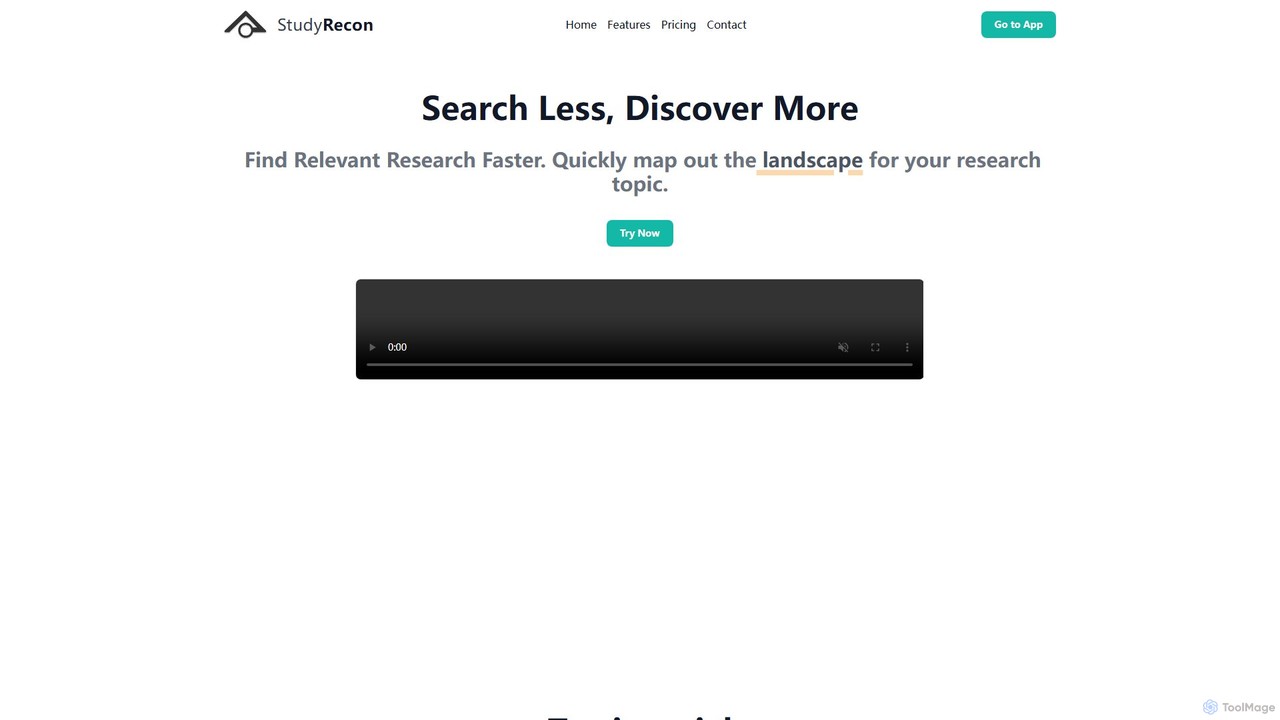
StudyRecon
StudyRecon is an AI-powered literature review tool designed to help researchers and academics accelerate their work. It streamlines the process of finding, analyzing, and summarizing relevant scientific papers. By providing a visual landscape of research topics, suggesting relevant queries, and offering concise summaries, it enables users to conduct comprehensive literature reviews in a fraction of the time.
Higher Education
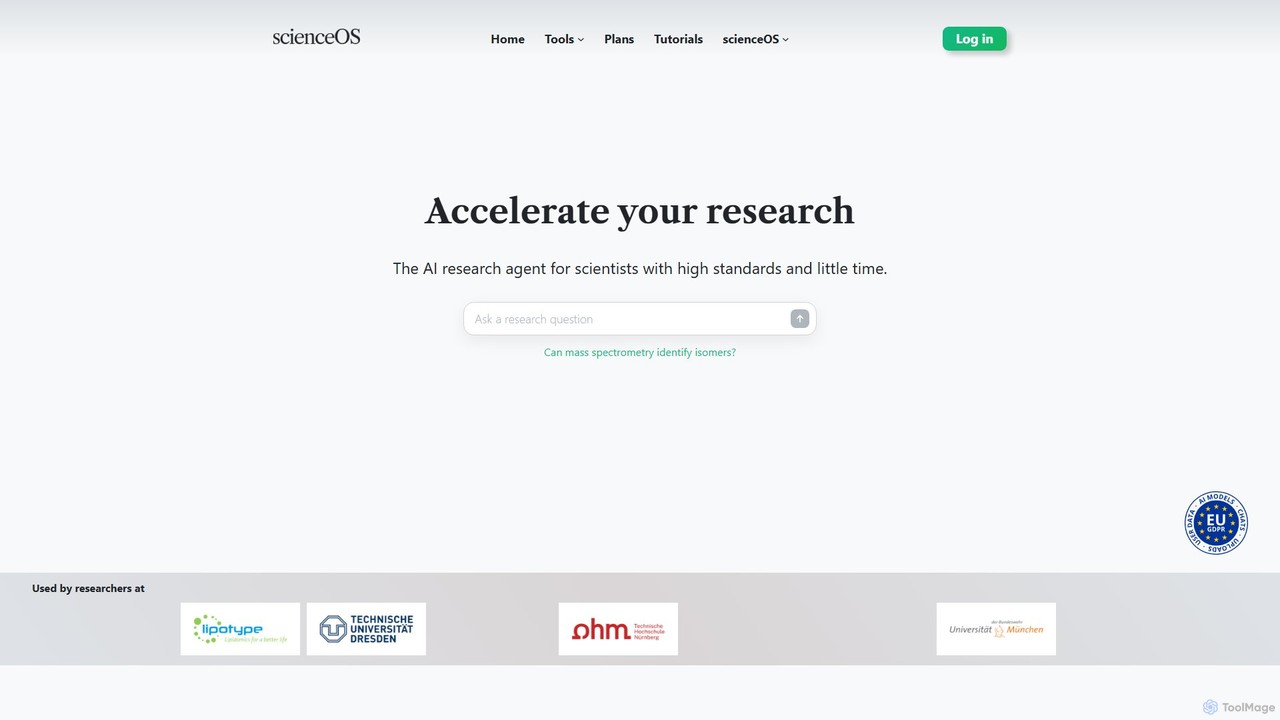
scienceOS
scienceOS is an AI-powered research agent designed for scientists and researchers. It accelerates scientific discovery by allowing users to chat with a database of over 225 million papers, analyze multiple PDF documents simultaneously, and manage references with an integrated AI library. The platform helps generate overviews, create diagrams, discover related papers, and perform citation analysis, streamlining the entire research workflow.
Academic Research
papertalk.io
papertalk.io is an AI-powered research assistant that allows you to chat with your documents. Upload research papers, articles, or any PDF, and instantly get summaries, explanations, and answers to your questions, accelerating your literature review and comprehension.
Study Aid
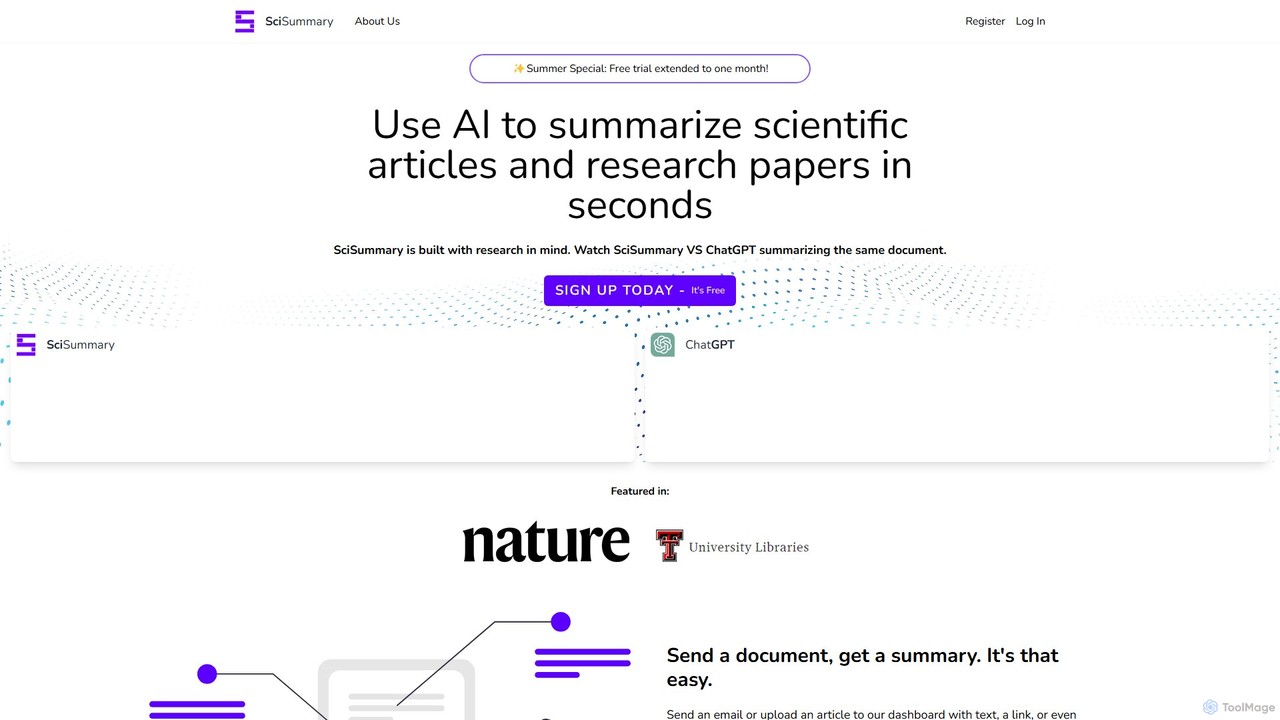
SciSummary
SciSummary is an AI-powered tool that summarizes scientific articles and research papers in seconds. Designed for researchers, students, and scientists, it helps you quickly digest complex documents, analyze figures and tables, and even chat with your papers to extract key insights efficiently.
Students
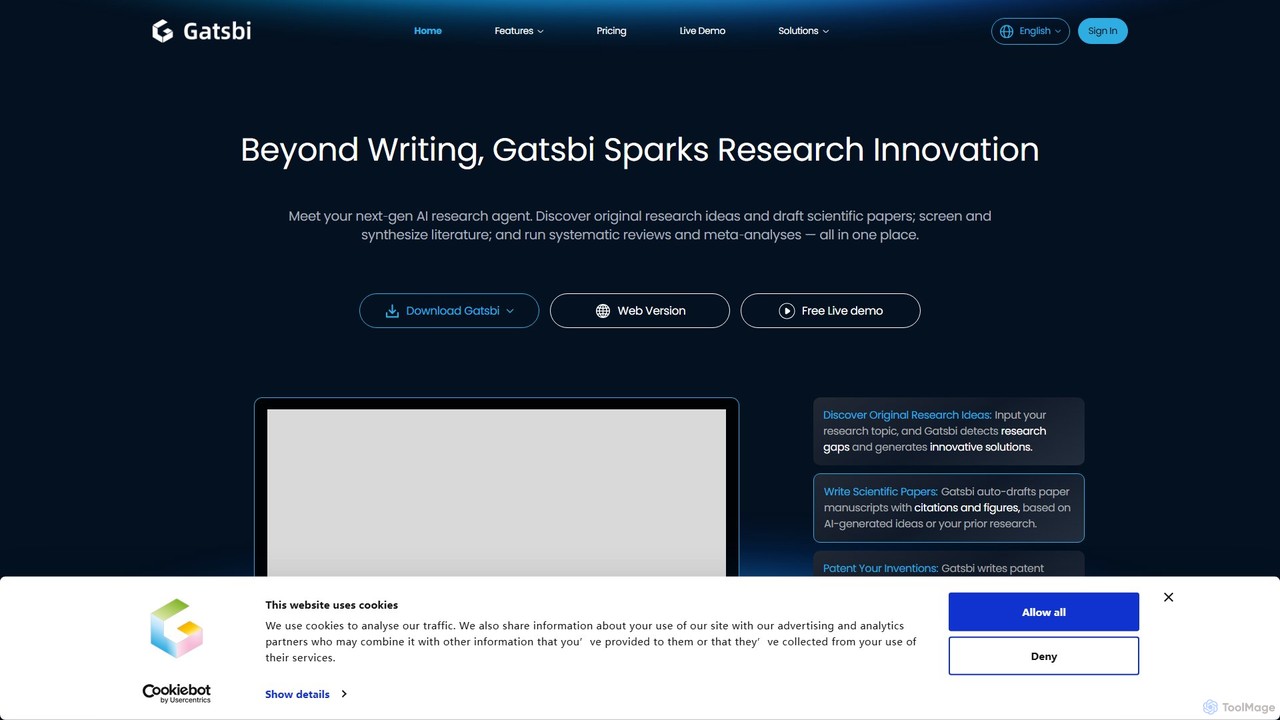
Gatsbi
Gatsbi is an all-in-one AI research assistant designed to accelerate innovation. It helps researchers, engineers, and students discover original research ideas, draft scientific papers and patent disclosures, and conduct systematic literature reviews and meta-analyses, streamlining the entire workflow from ideation to publication.
Research
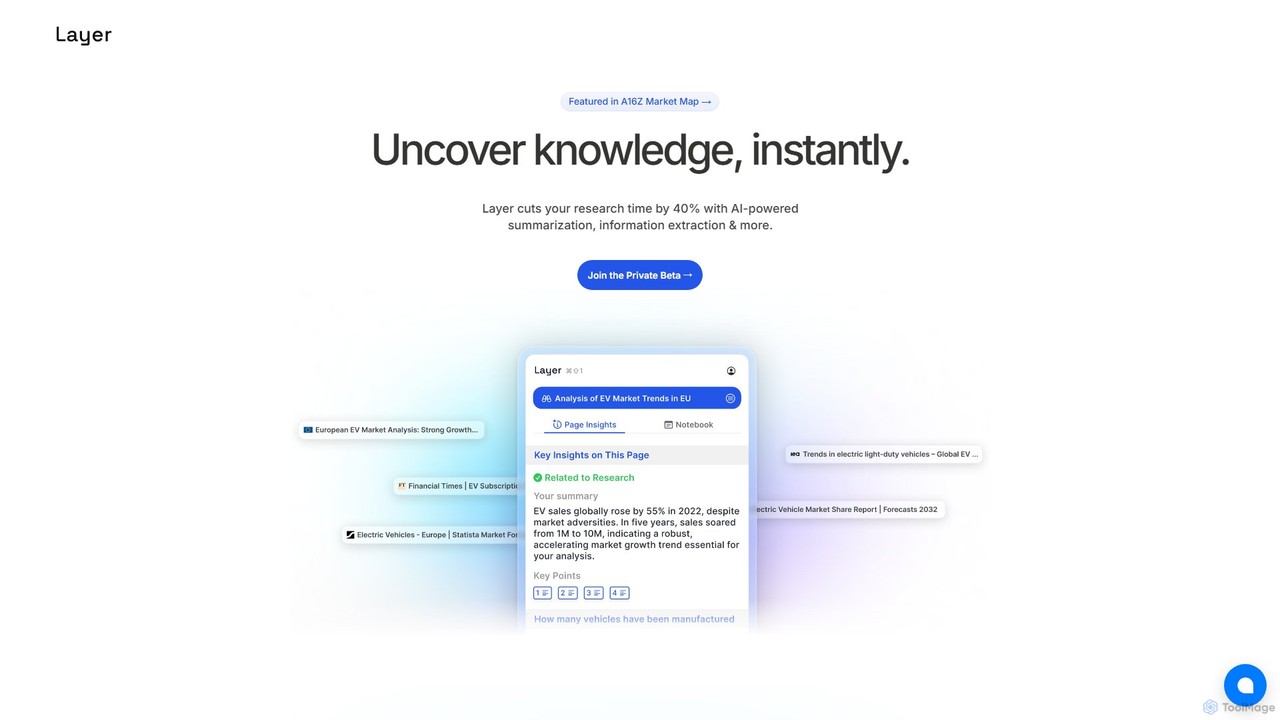
Layer
Layer is an AI research copilot designed to accelerate your workflow. It leverages AI for advanced summarization, information extraction, and semantic search, cutting research time by up to 40% and helping you uncover insights from complex documents effortlessly.
Academic
Profundo
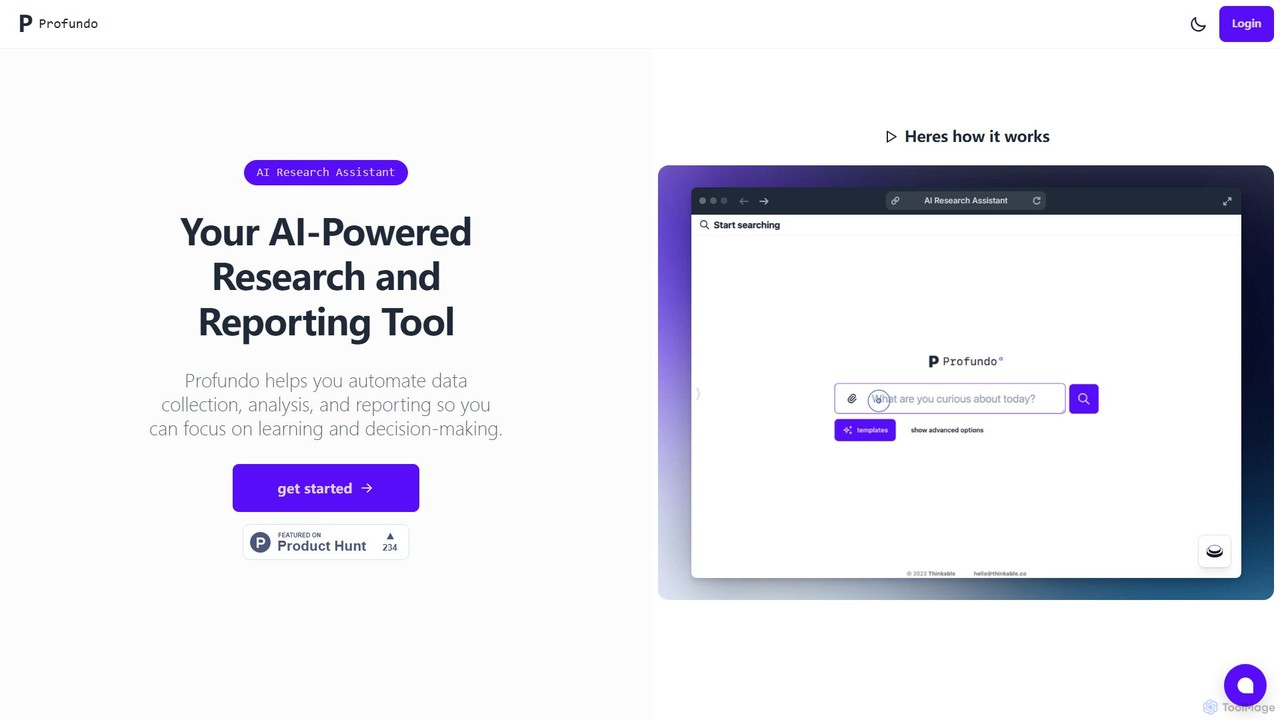
Profundo is an AI-powered research and reporting assistant designed to automate data collection, analysis, and report generation. It streamlines the research process for academics, professionals, and individuals, enabling them to conduct deep research efficiently, save time, and make informed decisions with highly accurate, AI-driven insights.
Market Intelligence
AnswerThis
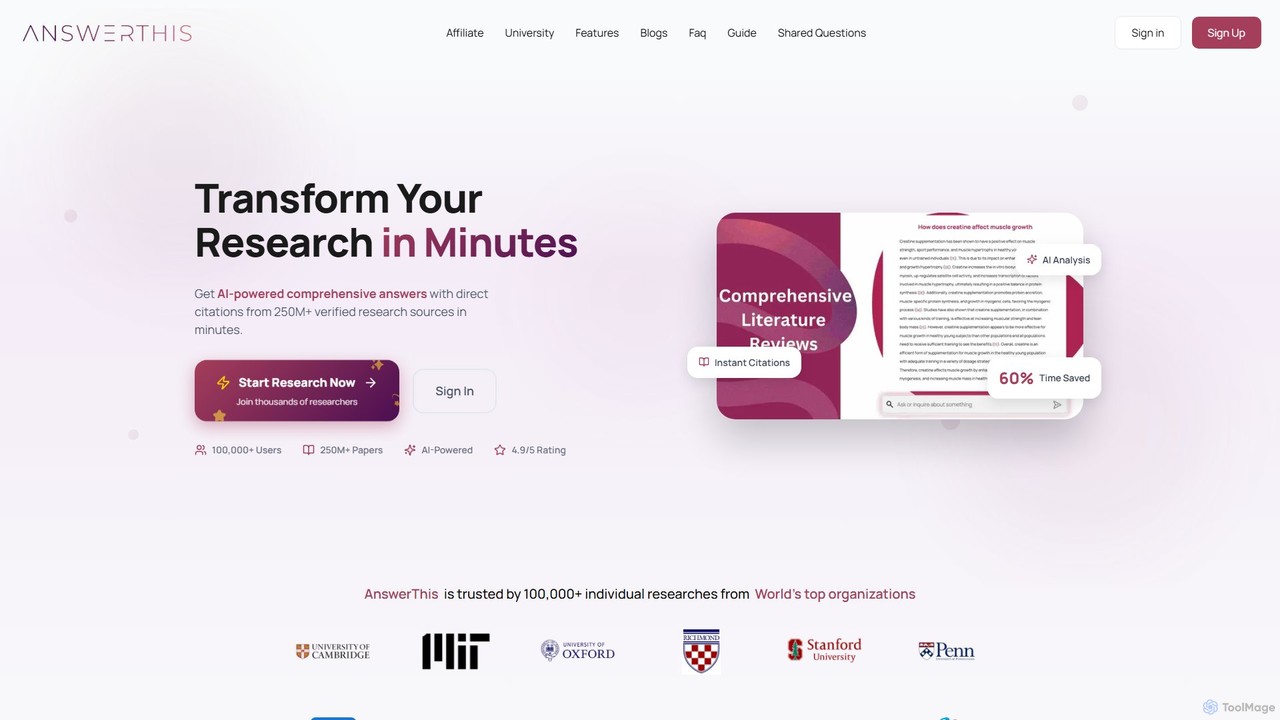
AnswerThis is an AI-powered research assistant designed to accelerate academic and professional research. It searches a vast database of over 250 million verified research papers to provide comprehensive, synthesized answers with direct, line-by-line citations. The platform offers a suite of tools for literature reviews, data analysis, and academic writing, saving users up to 60% of their research time while maintaining academic integrity.
Academic
Anara
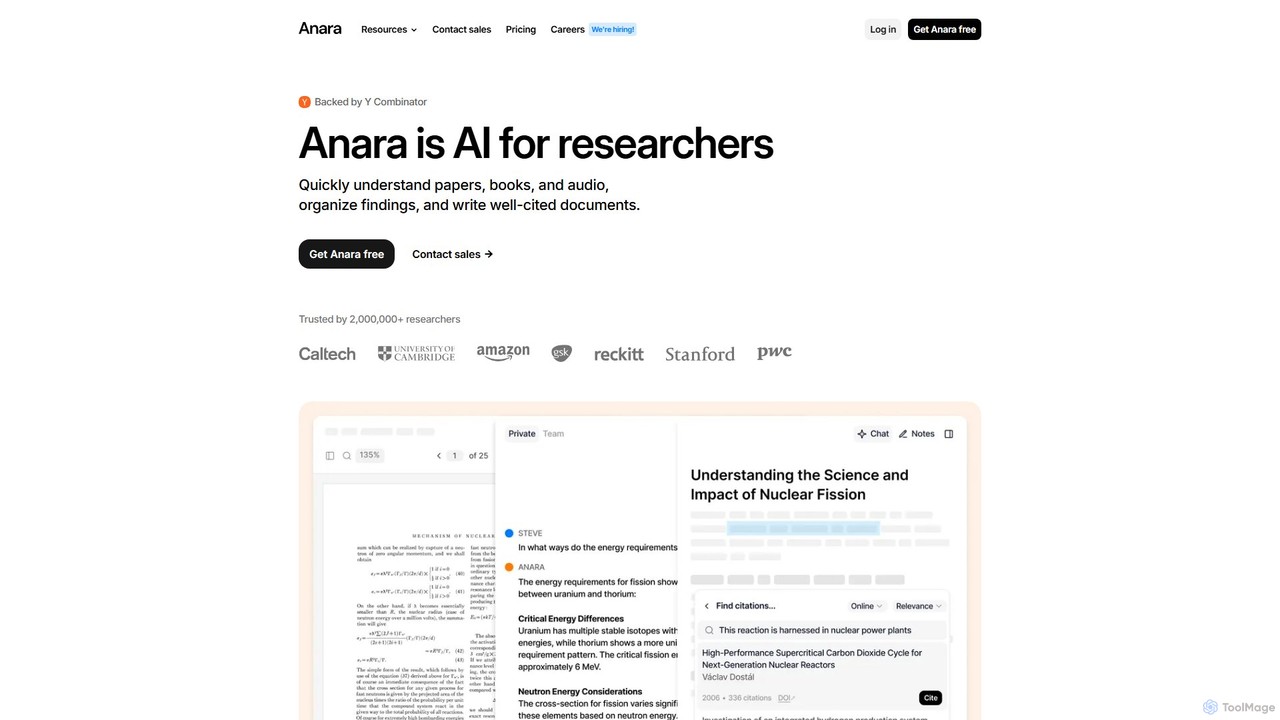
Anara (formerly Unriddle) is an AI-powered research platform designed to accelerate your workflow. It helps you quickly understand complex documents, books, audio, and video files, organize findings efficiently, and write well-cited papers. It provides referenced answers, ensuring accuracy and verifiability for all AI-generated insights.
Academic
Lateral
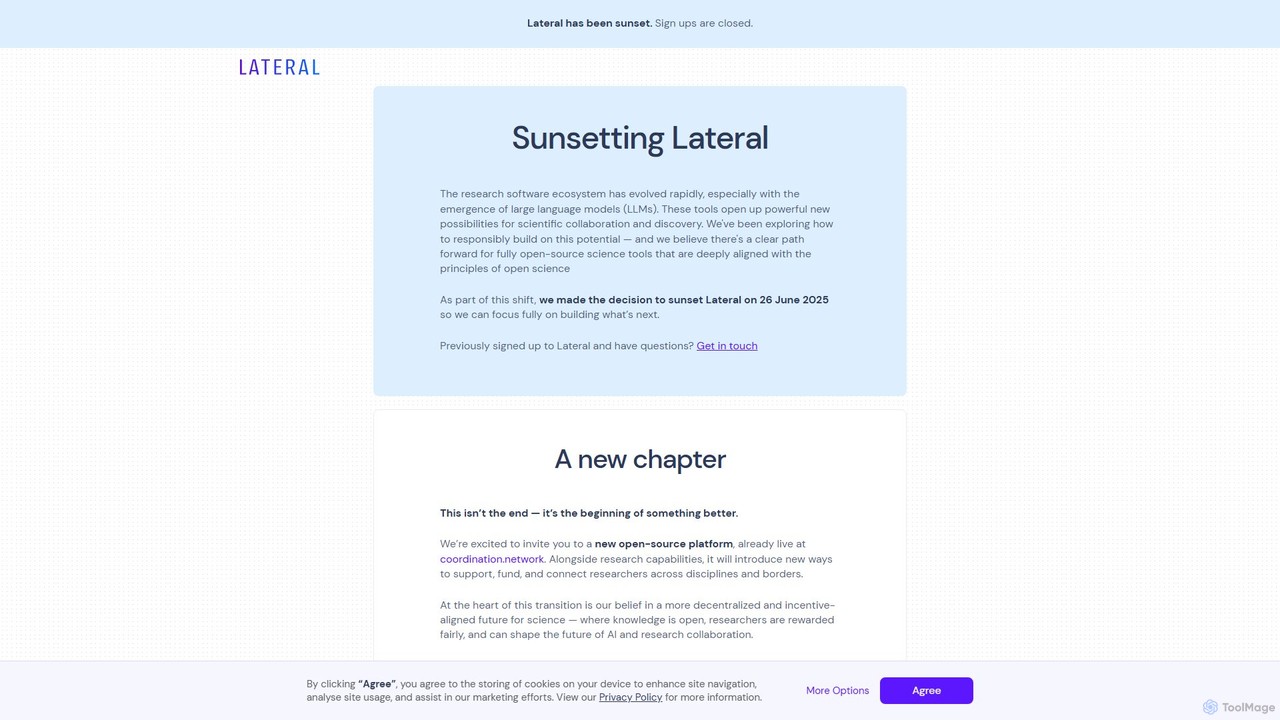
Lateral is an AI-powered research assistant designed for academics, students, and professionals. It helps you rapidly search, organize, and synthesize information from multiple documents, transforming the literature review and document analysis process into a fast and structured workflow.
Academia
Scholaread
Scholaread is an AI-powered research assistant designed to streamline the academic workflow. It helps researchers and students discover, read, and understand scholarly papers more efficiently. Key features include AI-driven search, intelligent document summarization, bilingual side-by-side translation, and smart reflowing for optimal reading on any device. With multi-platform support and writing assistance, Scholaread aims to be an all-in-one solution for academic research.
Academic
Paper Pilot
Paper Pilot is an AI-powered research productivity platform designed for researchers, students, and academics. It streamlines the research process by offering AI-driven search across millions of papers, instant summarization, multi-document chat, and intuitive organization tools like Research Boards. Engage with up to 50 papers simultaneously to accelerate literature reviews and enhance comprehension.
Academic