ToolMage
Sign in
Graphite Note
Business Intelligence · 15.3K monthly visits

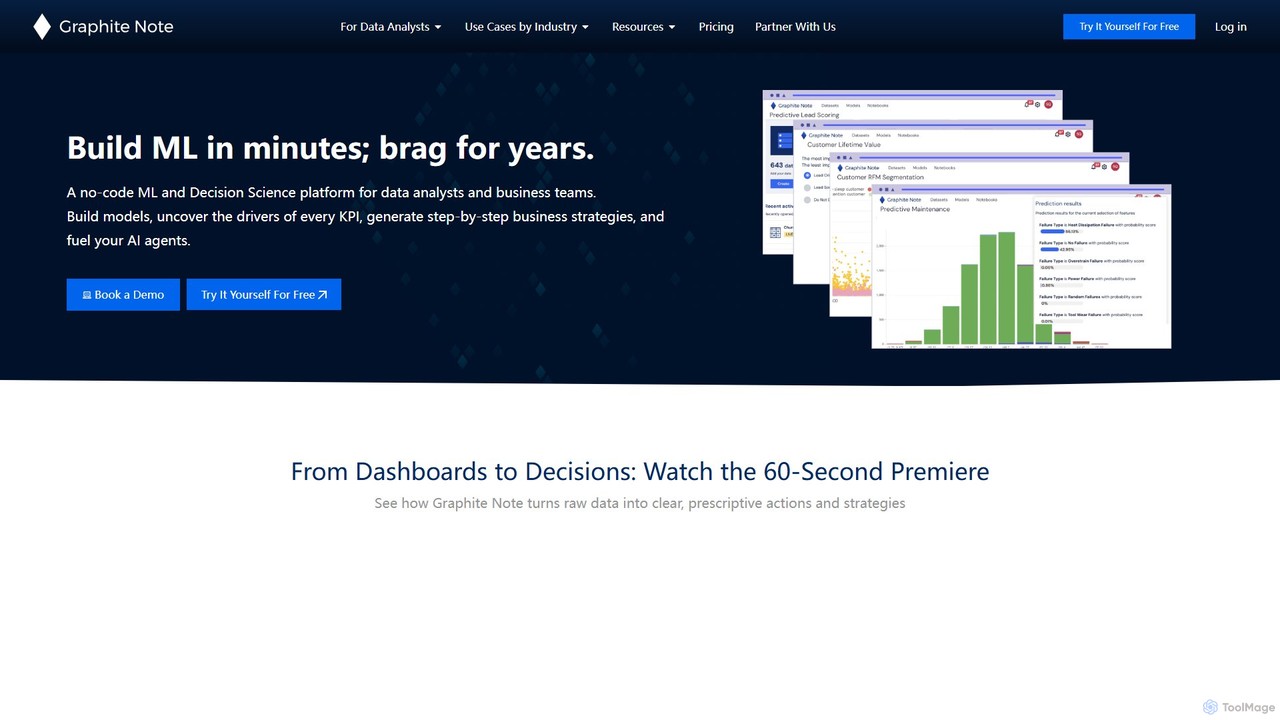
Graphite Note is a no-code AI platform designed for data analysts and business users to build, deploy, and manage predictive analytics models. It simplifies machine learning, enabling users to gain actionable insights from their data, optimize marketing campaigns, and make data-driven decisions without any coding expertise. The platform supports various data sources and automates model selection to deliver fast and accurate results.

VS
Julius AI
Developer Tools · 872.4K monthly visits

Julius AI is your AI Data Analyst, designed to interpret, analyze, and visualize complex data effortlessly. Connect your data from spreadsheets, databases, or PDFs, ask questions in natural language, and receive instant insights, charts, and reports. No coding is required, but it also supports Python, R, and SQL for advanced users, making data analysis accessible to everyone.

Graphite Note vs Julius AI: pricing, features, traffic, and use cases

Compare Graphite Note and Julius AI across positioning, pricing, traffic, and user feedback using structured factual data.

Updated Aug 21, 2026

Product overview

Graphite Note Product overview

Graphite Note is a no-code AI platform designed for data analysts and business users to build, deploy, and manage predictive analytics models. It simplifies machine learning, enabling users to gain actionable insights from their data, optimize marketing campaigns, and make data-driven decisions without any coding expertise. The platform supports various data sources and automates model selection to deliver fast and accurate results.
Preview

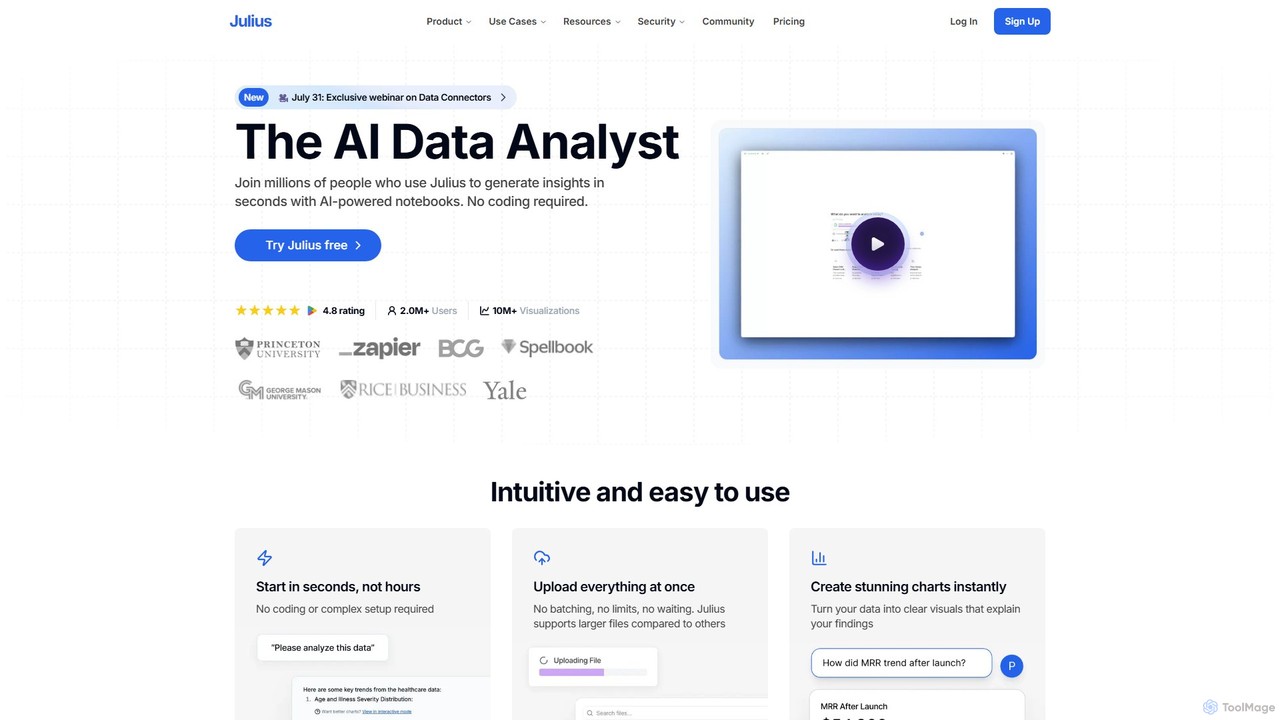
Julius AI Product overview

Julius AI is your AI Data Analyst, designed to interpret, analyze, and visualize complex data effortlessly. Connect your data from spreadsheets, databases, or PDFs, ask questions in natural language, and receive instant insights, charts, and reports. No coding is required, but it also supports Python, R, and SQL for advanced users, making data analysis accessible to everyone.

Preview

Detailed feature comparison

FeatureGraphite NoteJulius AI
Primary categoryBusiness IntelligenceDeveloper Tools
Added2025-08-072025-08-14
PricingFreemiumFreemium
Official websitegraphite-note.comjulius.ai
Product typeWebsiteWebsite
Performance data
User ratingNot verifiedNot verified
Comments00
Monthly visits15.3K872.4K
Monthly growth-7.7%0.3%
Favorites127109
DetailsView detailsView details

Graphite Note vs Julius AI monthly traffic

Compare Graphite Note and Julius AI by monthly reach, traffic trend, visit depth, top regions, and acquisition sources.

How to interpret the traffic data

In the Graphite Note vs Julius AI monthly traffic comparison, Graphite Note currently shows 15.3K visits and Julius AI shows 872.4K; Julius AI has about 57.1 times the visible traffic of Graphite Note, an absolute difference of about 857.1K visits. This reflects visible reach, not feature quality or paid users.

Both tools provide verified traffic details, so monthly trends, visit depth, regions, and acquisition sources can be compared on the same basis.

Graphite Note monthly traffic:

Latest traffic

Monthly visits
15.3K
Avg. visit duration
0:15
Pages per visit
1.65
Bounce rate
42.09%
Data updated 2026-06-15

Monthly traffic trend

  • 2025/9: 12.3K Monthly visits
  • 2026/1: 19.8K Monthly visits
  • 2026/2: 17.3K Monthly visits
  • 2026/3: 23.2K Monthly visits
  • 2026/4: 16.6K Monthly visits
  • 2026/5: 15.3K Monthly visits

Top regions

Top 5 countries/regions
Country/regionPercentageTraffic
🇺🇸United States38.55%5.9K
🇻🇳Vietnam20.19%3.1K
🇮🇳India19.38%3K
🇧🇷Brazil11.87%1.8K
🇮🇩Indonesia10.01%1.5K

Search keywords

algorithmic bias examples with imagesbivariate scoring model marketingfree ai code generator without loginfree ai for programming no singupis 2000 rows enough for machine learning

Julius AI monthly traffic:

Latest traffic

Monthly visits
872.4K
Avg. visit duration
1:55
Pages per visit
3.9
Bounce rate
41.15%
Data updated 2026-06-15

Monthly traffic trend

  • 2025/9: 1.2M Monthly visits
  • 2026/1: 713.1K Monthly visits
  • 2026/2: 755.3K Monthly visits
  • 2026/3: 795.1K Monthly visits
  • 2026/4: 869.7K Monthly visits
  • 2026/5: 872.4K Monthly visits

Top regions

Top 5 countries/regions
Country/regionPercentageTraffic
🇮🇳India45.12%393.6K
🇺🇸United States32.77%285.9K
🇨🇴Colombia8.05%70.2K
🇧🇷Brazil7.6%66.3K
🇬🇧United Kingdom6.46%56.4K

Traffic sources

Source typePercentageTraffic
Direct73.96%645.2K
Referral18.38%160.4K
Email7.66%66.8K

Search keywords

ai analysisjulias aijuliusjulius aijulius ia
Traffic-based selection guidance: If public market visibility is an important first-pass criterion, investigate Julius AI first. The final choice should still follow taxonomy, use case, and a real trial because higher traffic does not prove broader capabilities or better workflow fit.

Usage comparison

Compare the core capabilities of Graphite Note and Julius AI

Graphite Note Core features

Marketing Analytics
Business Intelligence
Platform

Julius AI Core features

Marketing Analytics
Developer Tools
Spreadsheets

Use cases

Graphite Note Use cases

business intelligence
data analysis
machine learning
marketing analytics
no-code
ai model builder
AutoML
Data Storytelling
predictive analytics

Julius AI Use cases

business intelligence
data analysis
machine learning
marketing analytics
no-code
AI notebook
data science
data visualization
financial analysis
python
R
spreadsheet analysis
SQL

Graphite Note vs Julius AI:In-depth comparison and selection guidance

First decide whether the products solve the same kind of need

This in-depth Graphite Note vs Julius AI comparison uses only the product records, taxonomy, audience, traffic, and community signals available on this page. Graphite Note is primarily listed under “Business Intelligence”, while Julius AI is primarily listed under “Developer Tools”, so the first decision is whether your actual task matches their recorded scope.

The structured fields currently show these decision-relevant differences: Primary category (Graphite Note: Business Intelligence; Julius AI: Developer Tools); Monthly visits (Graphite Note: 15.3K; Julius AI: 872.4K); Monthly growth (Graphite Note: -7.7%; Julius AI: 0.3%); Favorites (Graphite Note: 127; Julius AI: 109); Website (Graphite Note: graphite-note.com; Julius AI: julius.ai). These facts are more useful for selection than brand visibility alone.

What market visibility and monthly traffic mean

In the Graphite Note vs Julius AI monthly traffic comparison, Graphite Note currently shows 15.3K visits and Julius AI shows 872.4K; Julius AI has about 57.1 times the visible traffic of Graphite Note, an absolute difference of about 857.1K visits. This reflects visible reach, not feature quality or paid users.

Both tools provide verified traffic details, so monthly trends, visit depth, regions, and acquisition sources can be compared on the same basis.

If public market visibility is an important first-pass criterion, investigate Julius AI first. The final choice should still follow taxonomy, use case, and a real trial because higher traffic does not prove broader capabilities or better workflow fit.

Product positioning, use cases, and roles

Graphite Note and Julius AI currently overlap in shared categories: Marketing Analytics; shared tags: business intelligence, data analysis, machine learning, marketing analytics, and no-code. This can place both on the same shortlist, but it does not prove equal implementation, depth, or cost.

Graphite Note's unique categories/tags are Business Intelligence, Platform, ai model builder, AutoML, Data Storytelling, and predictive analytics; Julius AI's are Developer Tools, Spreadsheets, AI notebook, data science, data visualization, financial analysis, python, and R. These unique fields are the strongest differentiators: validate the product whose recorded scope matches the task instead of following traffic alone.

What ratings, comments, and favorites can tell you

Graphite Note has no verified rating, 0 comments, 127 favorites, and 130 likes;Julius AI has no verified rating, 0 comments, 109 favorites, and 111 likes。

Neither product has enough rating or comment samples for a credible reputation ranking.

Selection guidance by actual need

When to evaluate Graphite Note first

Put Graphite Note on the priority trial list when the task aligns with “Business Intelligence” and especially Business Intelligence, Platform, ai model builder, AutoML, Data Storytelling, and predictive analytics. This follows recorded positioning and does not imply unlisted capabilities are absent.

Graphite Note also currently records: pricing is freemium, product type is website, 15.3K verified monthly visits, no verified user rating. Verify any hard requirement around price, platform, or reach before trial, and do not let sparse review data substitute for testing.

When to evaluate Julius AI first

Put Julius AI on the priority trial list when the task aligns with “Developer Tools” and especially Developer Tools, Spreadsheets, AI notebook, data science, data visualization, and financial analysis. This follows recorded positioning and does not imply unlisted capabilities are absent.

Julius AI also currently records: pricing is freemium, product type is website, 872.4K verified monthly visits, no verified user rating. Verify any hard requirement around price, platform, or reach before trial, and do not let sparse review data substitute for testing.

How to validate the recommendation before deciding

The available data describes positioning, public visibility, and community signals, but it cannot prove output quality, speed, integration effort, privacy, or long-term cost in your workflow. Before deciding, run the same representative tasks in Graphite Note and Julius AI, then record completion time, accuracy, manual corrections, and the real paid threshold. A like-for-like trial turns this comparison into a defensible adoption decision.

Comparison FAQ

How should I choose between Graphite Note and Julius AI?
Compare positioning, pricing, taxonomy, and traffic maturity, then verify the latest details on each official website.
Where does this comparison data come from?
The factual baseline is derived from product, taxonomy, traffic, and community data. Reviewed editorial conclusions show their source and verification date.
What do unknown fields mean?
Unknown means there is not enough reliable evidence; the page does not fill gaps with assumptions.

Related AI tools

Deepnote
Freemium

Deepnote

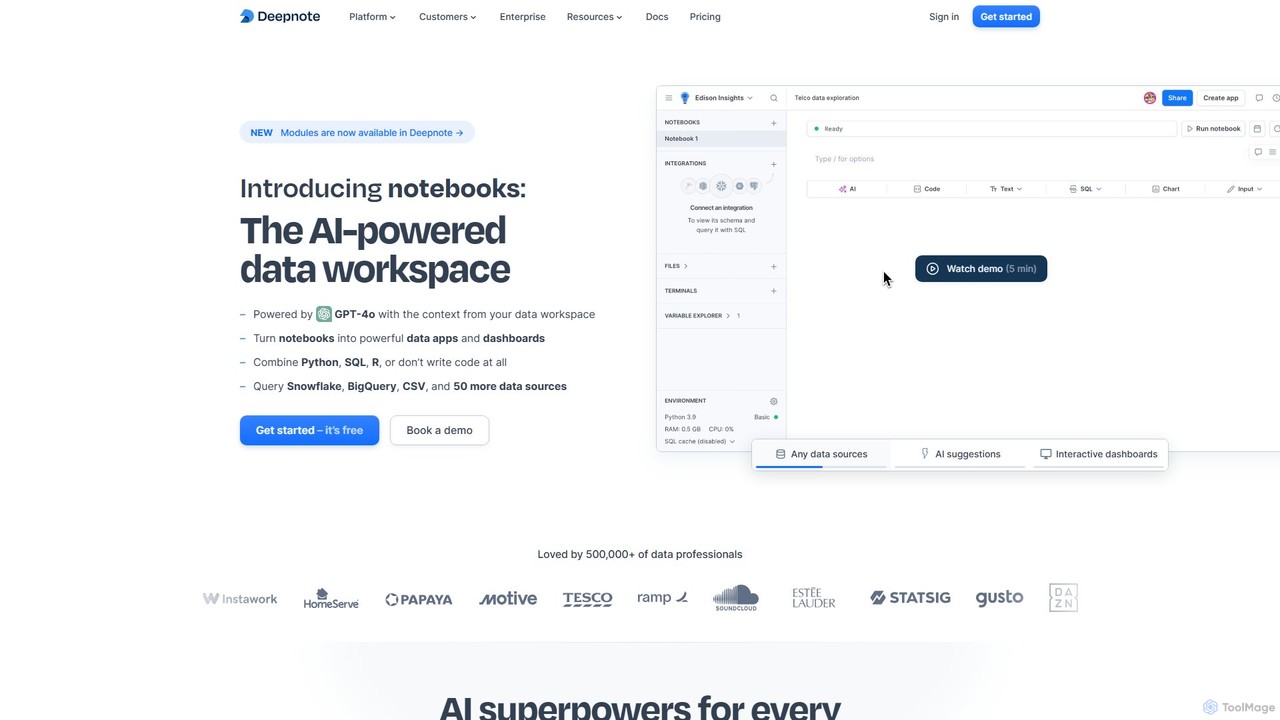
Deepnote is an AI-powered, collaborative data science notebook for teams. It unifies Python, SQL, and R in a single cloud-based workspace, enabling users to explore data, build machine learning models, and create interactive dashboards and apps with ease. Powered by GPT-4o, it automates analysis and code generation, making data science accessible to all skill levels.

Business Intelligence
Visits 197.3KFavorites 106Likes 127
Airbook
Freemium

Airbook

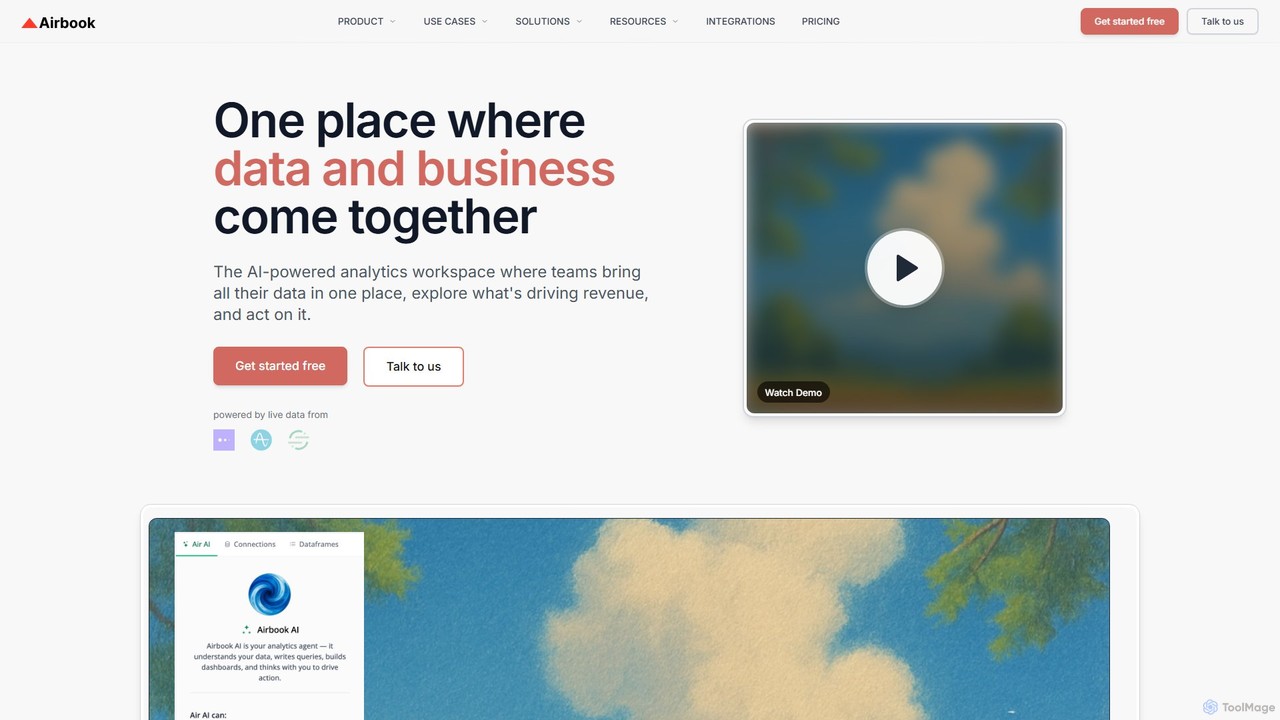
Airbook is an AI-powered Go-to-Market (GTM) data platform that unifies data from CRM, marketing, finance, and product tools into a single collaborative workspace. It enables teams to analyze data using natural language, SQL, or a no-code builder, create dashboards, and activate insights to drive revenue growth.

Business Intelligence
Visits 6.4KFavorites 137Likes 126
Datrics
Paid

Datrics

Datrics is a no-code/low-code AI and data analytics platform designed to democratize data science. It enables users to build automated data pipelines, create machine learning models, and generate insights through a drag-and-drop interface, with specialized solutions for healthcare, finance, and retail.

Finance
Visits 6KFavorites 132Likes 134
Analyst Intelligence
Freemium

Analyst Intelligence

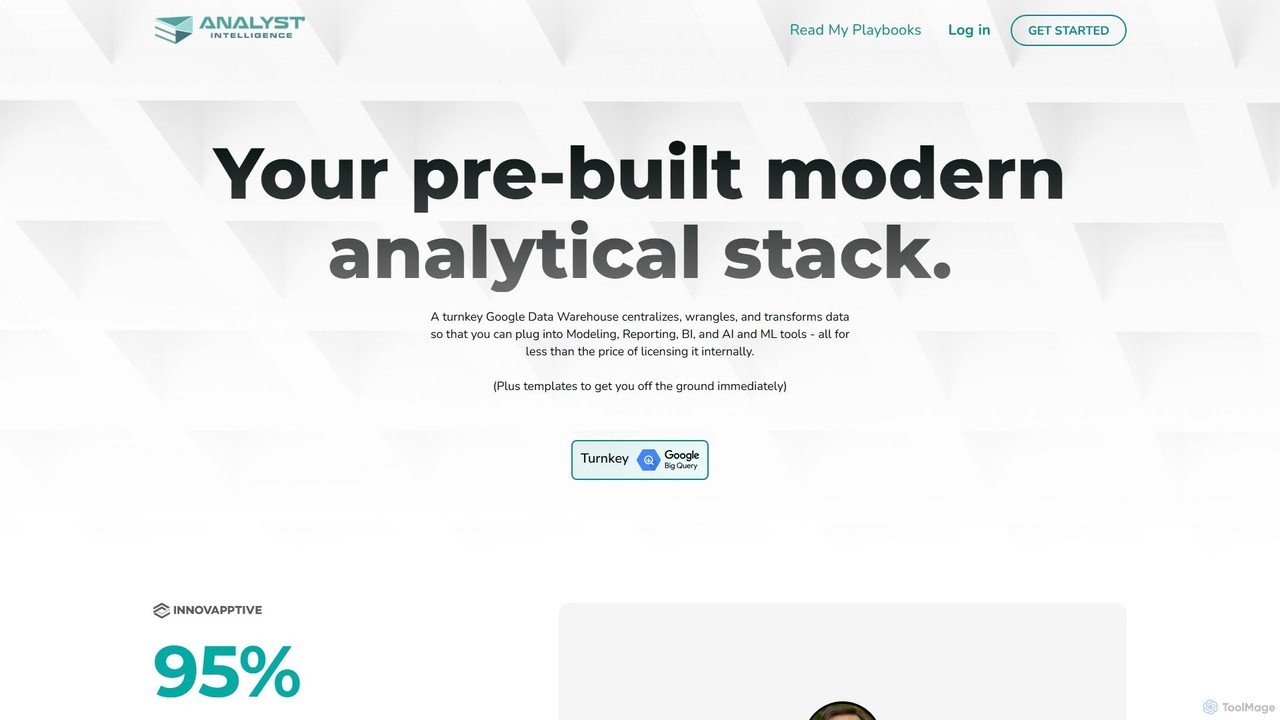
Analyst Intelligence is an AI-powered data analytics platform built on Google Cloud, designed for FP&A, Rev Ops, and BI teams. It simplifies data consolidation, cleaning, and analysis through a no-code interface and AI-assisted SQL. The platform centralizes data in a secure Google BigQuery warehouse, enabling advanced forecasting, automated reporting, and seamless integration with tools like Google Sheets, without requiring engineering resources.

Business Intelligence
Visits 4.8KFavorites 119Likes 119
dflux
Paid

dflux

dflux is a unified, no-code/low-code data science platform that empowers businesses to perform end-to-end data engineering, build machine learning models, and create interactive visualizations. It streamlines the entire data lifecycle from integration and preparation to model deployment and MLOps, making advanced analytics accessible to both technical and non-technical users.

Business Intelligence
Visits 4.2KFavorites 106Likes 106
Hex
Freemium

Hex

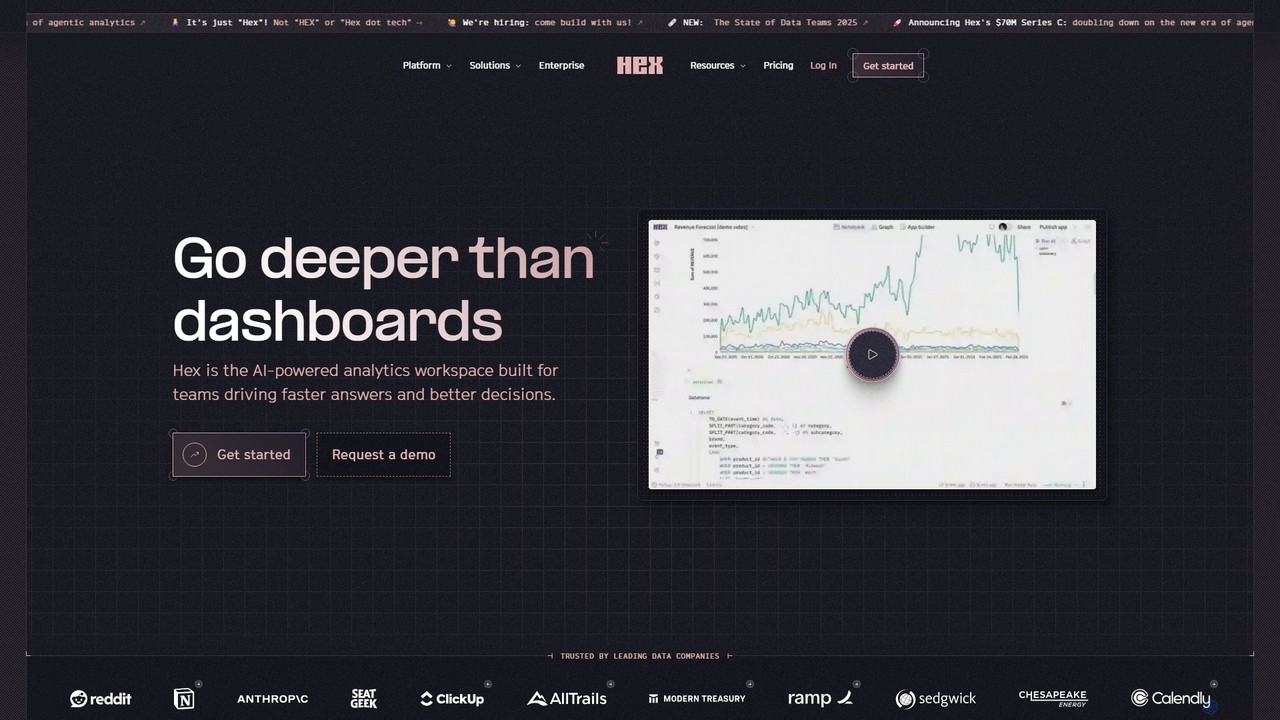
Hex is an AI-powered analytics workspace designed for teams. It integrates notebooks for Python and SQL, interactive data apps, and self-serve exploration into a single collaborative platform, enabling faster, data-driven decision-making.

Data Science
Visits 604.9KFavorites 137Likes 145
OpenDoc AI
Paid

OpenDoc AI

OpenDoc AI is a next-generation, no-code AI platform that empowers users to automate data workflows, generate business insights, and build custom AI models using simple natural language prompts. It connects to various data sources, making data science accessible to everyone, regardless of technical expertise.

No Code
Visits 7.5KFavorites 138Likes 140
Briefer
Freemium

Briefer

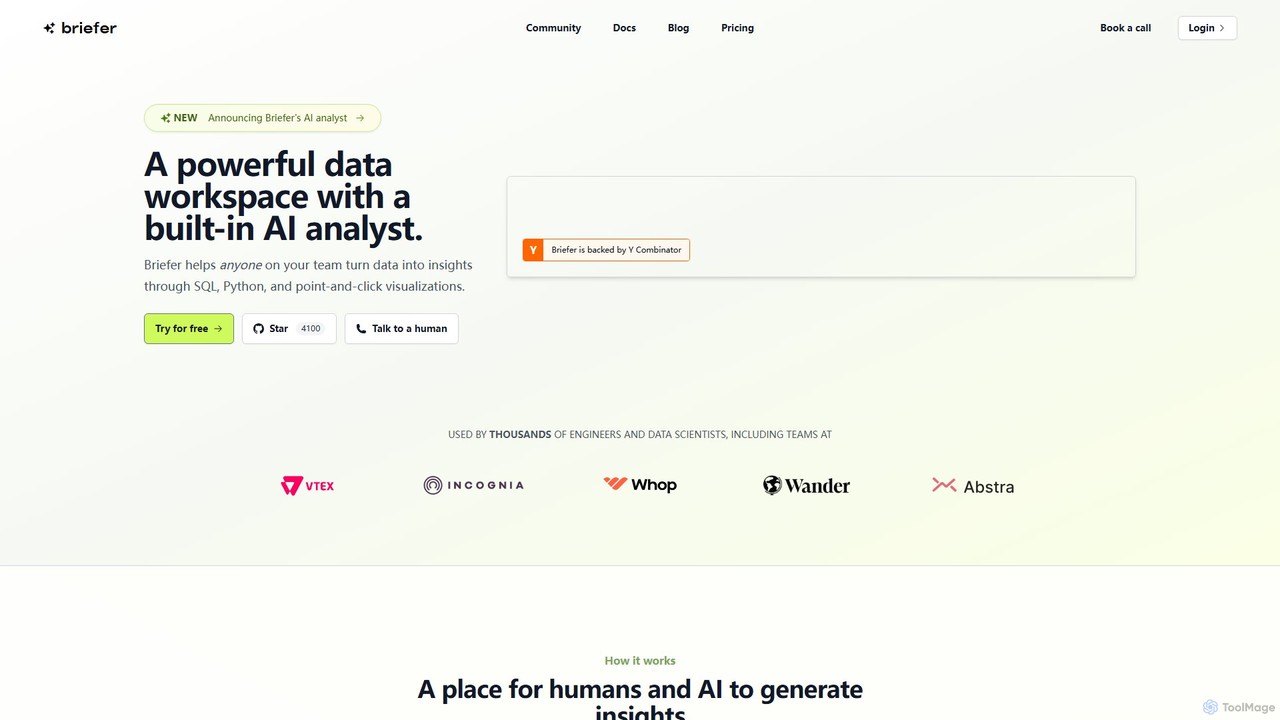
Briefer is a collaborative data platform featuring a built-in AI analyst. It empowers teams to transform data into actionable insights using SQL, Python, and interactive visualizations within a unified workspace. Designed for both technical and non-technical users, it streamlines data analysis, reporting, and real-time collaboration, accelerating data-driven decision-making. It is backed by Y Combinator and offers both cloud-hosted and self-hosted open-source versions.

Database
Visits 6.4KFavorites 126Likes 110
Analyzr
Paid

Analyzr

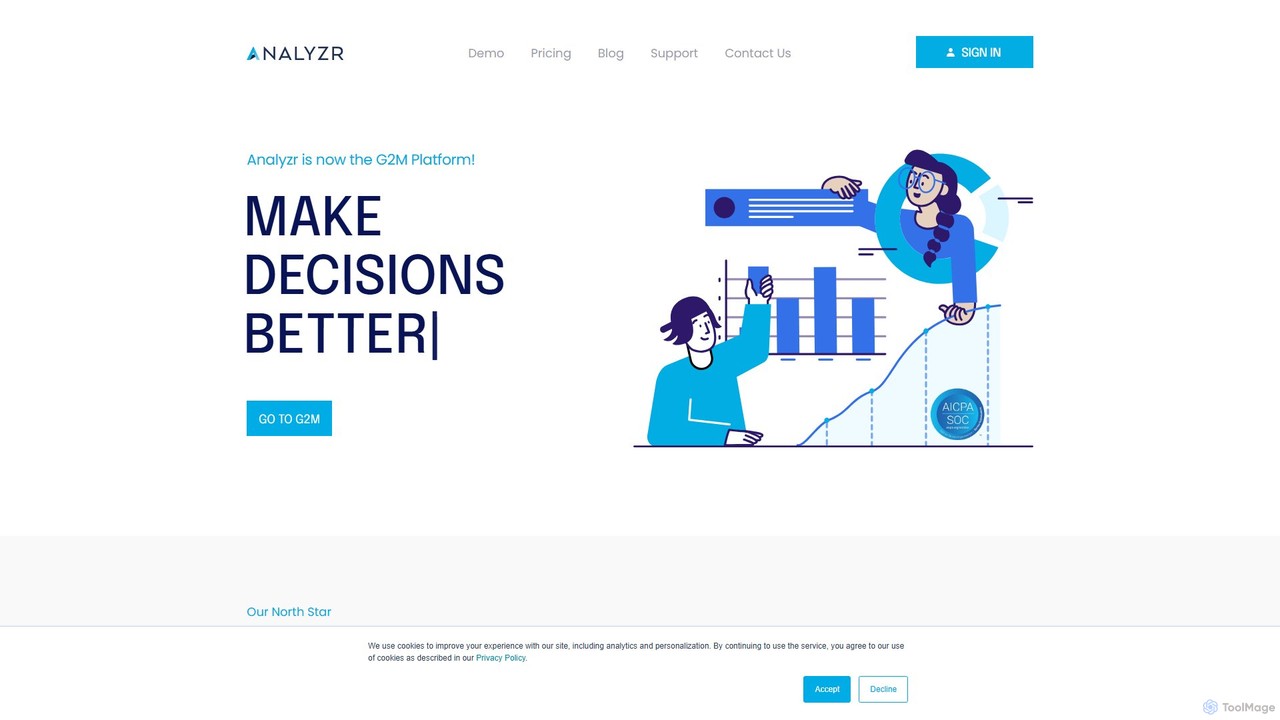
Analyzr is a no-code predictive analytics platform that empowers businesses to build custom machine learning models. It simplifies data analysis, enabling users to uncover insights for customer clustering, propensity scoring, and forecasting without requiring engineering expertise.

Predictive Analytics
Visits 5.4KFavorites 112Likes 113
PredictEasy
Freemium

PredictEasy

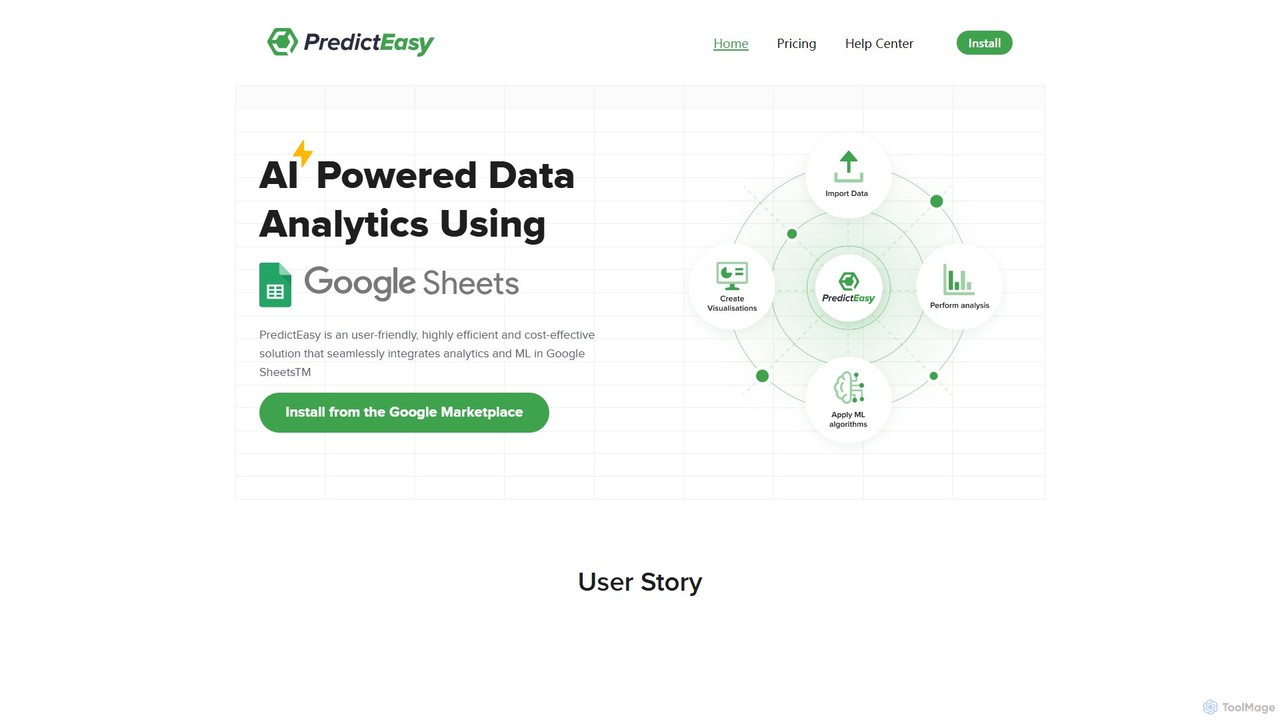
PredictEasy is a powerful no-code AI add-on for Google Sheets that democratizes data analytics. It allows users to perform advanced tasks like predictive modeling, time-series forecasting, NLP, and statistical analysis with just a few clicks. Ideal for business professionals, researchers, and data analysts, it transforms your spreadsheet into a sophisticated data science tool, enabling data-driven decisions without writing any code.

Business Intelligence
Visits 4.3KFavorites 116Likes 129
Coupler.io
Freemium

Coupler.io

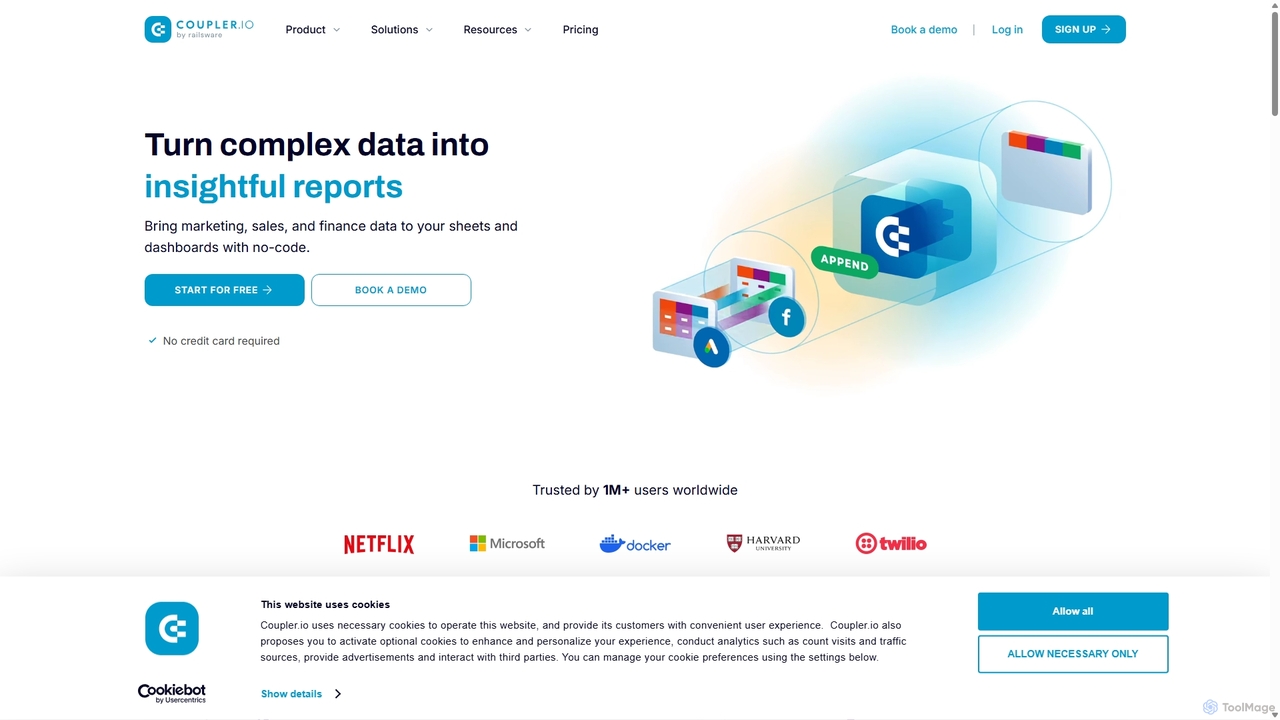
Coupler.io is a no-code data analytics and automation platform that helps businesses connect disparate data sources from marketing, sales, and finance apps to spreadsheets, data warehouses, or BI tools. It automates data collection, transforms raw data into analysis-ready formats, and provides AI-powered insights and pre-built dashboard templates for faster, smarter decision-making.

Business Intelligence
Visits 252KFavorites 144Likes 110
Akkio
Freemium

Akkio

Akkio is a no-code AI platform for generative business intelligence and predictive analytics. It empowers users, especially in media and marketing agencies, to connect data, build machine learning models, and generate insights through natural language chat, without needing data science expertise.

Business Intelligence
Visits 56.8KFavorites 106Likes 113
Supaboard
Freemium

Supaboard

Supaboard is an AI-powered business intelligence platform that connects all your data sources into a unified hub. It transforms raw data into actionable insights and live dashboards, allowing teams to make data-backed decisions quickly without needing to write code or wrangle spreadsheets.

Business Intelligence
Visits 35.2KFavorites 135Likes 130
Fabi.ai
Freemium

Fabi.ai

Fabi.ai is an AI-powered business intelligence and data analysis platform designed for lean teams. It integrates SQL, Python, and AI to help users build dashboards, automate workflows, and explore data 10x faster. The platform offers an all-in-one collaborative environment, reducing context switching and enabling both technical and non-technical users to derive insights from their data sources like data warehouses, Google Sheets, and more.

Business Intelligence
Visits 22KFavorites 96Likes 128
mlclever
Freemium

mlclever

mlclever is a no-code AI analytics platform that instantly generates interactive dashboards and builds predictive models. It automates data analysis, visualization, and machine learning, empowering business users to uncover insights from their data for sales, finance, and marketing without any technical expertise.

Business Intelligence
Visits 22KFavorites 135Likes 129