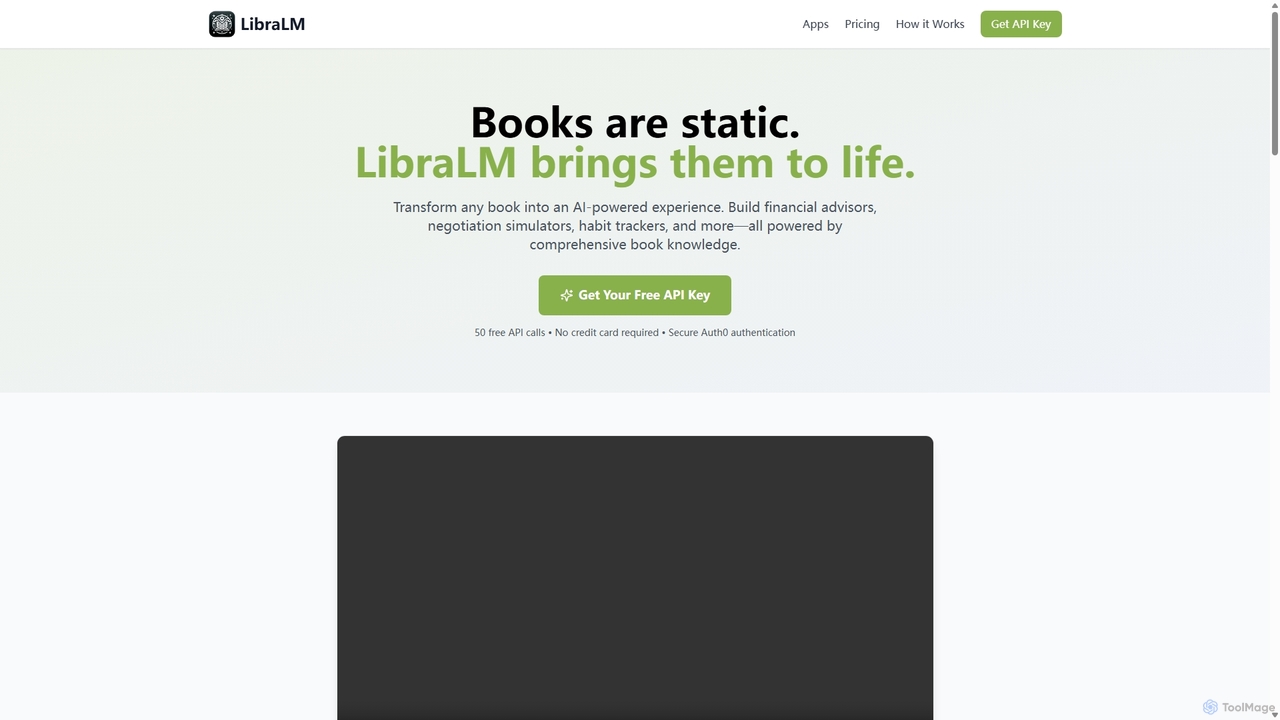
Libralm is a no-code platform that transforms bestselling book summaries into interactive AI-powered applications. In minutes, users can create games, simulators, and advisors based on the core concepts of over 50 popular books, integrating directly with tools like Claude Desktop.
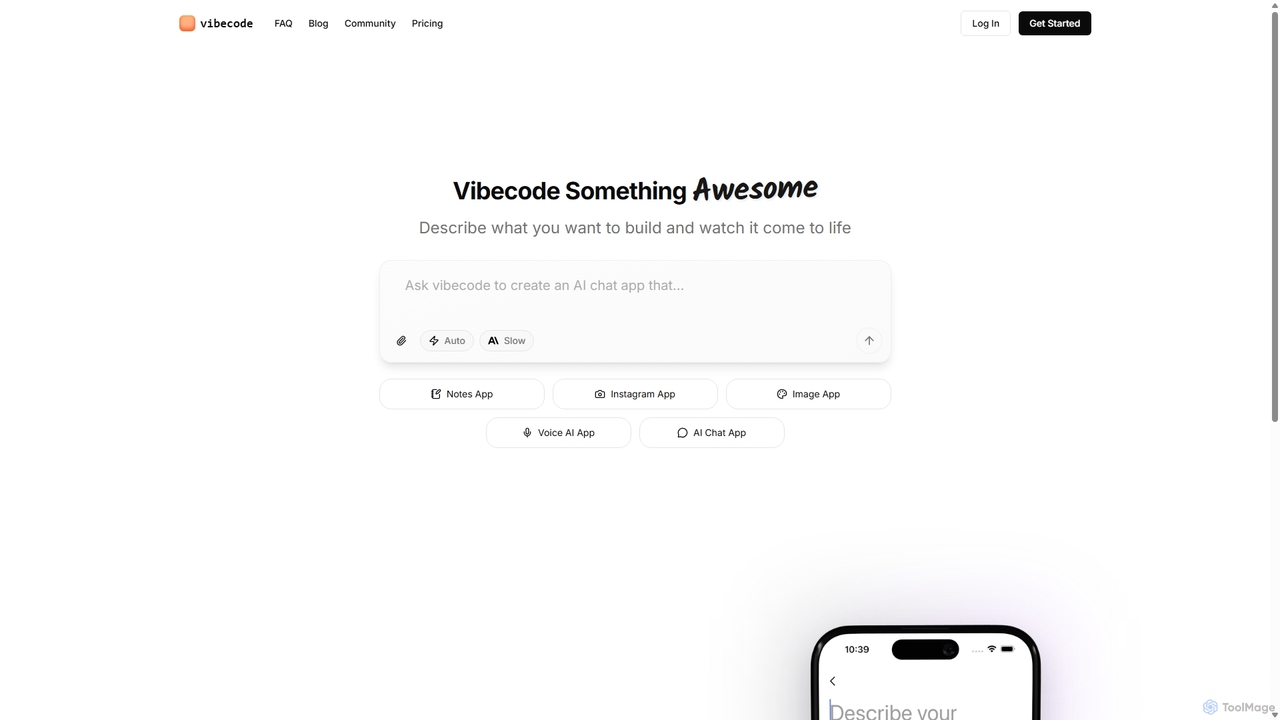
Vibecode is an AI-powered mobile app builder that transforms text descriptions into functional, native React Native applications. It enables users, from non-technical creators to professional developers, to rapidly prototype, test via App Clips, and deploy mobile apps without writing code from scratch.
Product overview
Libralm Product overview
Libralm is a no-code platform that transforms bestselling book summaries into interactive AI-powered applications. In minutes, users can create games, simulators, and advisors based on the core concepts of over 50 popular books, integrating directly with tools like Claude Desktop.
Vibecode Product overview
Vibecode is an AI-powered mobile app builder that transforms text descriptions into functional, native React Native applications. It enables users, from non-technical creators to professional developers, to rapidly prototype, test via App Clips, and deploy mobile apps without writing code from scratch.
Detailed feature comparison
| Feature | Libralm | Vibecode |
|---|---|---|
| Primary category | No Code Platform | Mobile App Building |
| Added | 2025-09-15 | 2025-09-10 |
| Pricing | Freemium | Freemium |
| Official website | libralm.com | vibecodeapp.com |
| Product type | Website | Website |
| Performance data | ||
| User rating | Not verified | Not verified |
| Comments | 0 | 0 |
| Monthly visits | 4.2K | 367.1K |
| Monthly growth | Not verified | 12.1% |
| Favorites | 147 | 109 |
| Details | View details | View details |
Libralm vs Vibecode monthly traffic
Compare Libralm and Vibecode by monthly reach, traffic trend, visit depth, top regions, and acquisition sources.
How to interpret the traffic data
In the Libralm vs Vibecode monthly traffic comparison, Libralm currently shows 4.2K visits and Vibecode shows 367.1K; Vibecode has about 87 times the visible traffic of Libralm, an absolute difference of about 362.9K visits. This reflects visible reach, not feature quality or paid users.
Only Vibecode has complete third-party traffic details; Libralm uses visits recorded inside ToolMage. These scopes cannot estimate market share directly, and on-site views should not be treated as the product’s total website traffic.
Libralm monthly traffic:
Latest traffic
Vibecode monthly traffic:
Latest traffic
Monthly traffic trend
- 2025/9: 210.1K Monthly visits
- 2026/1: 550.9K Monthly visits
- 2026/2: 435.3K Monthly visits
- 2026/3: 384.6K Monthly visits
- 2026/4: 327.4K Monthly visits
- 2026/5: 367.1K Monthly visits
Top regions
Top 5 countries/regions
| Country/region | Percentage | Traffic |
|---|---|---|
| 🇺🇸United States | 56.69% | 208.1K |
| 🇮🇳India | 15.67% | 57.5K |
| 🇻🇳Vietnam | 14.96% | 54.9K |
| 🇧🇷Brazil | 7.52% | 27.6K |
| 🇩🇪Germany | 5.16% | 18.9K |
Traffic sources
| Source type | Percentage | Traffic |
|---|---|---|
| Direct | 77.25% | 283.6K |
| Referral | 22.07% | 81K |
| 0.68% | 2.5K |
Search keywords
Usage comparison
Compare the core capabilities of Libralm and Vibecode
Libralm Core features
Vibecode Core features
Use cases
Libralm Use cases
Vibecode Use cases
Best suited roles
Libralm Best suited roles
Vibecode Best suited roles
Libralm vs Vibecode:In-depth comparison and selection guidance
First decide whether the products solve the same kind of need
This in-depth Libralm vs Vibecode comparison uses only the product records, taxonomy, audience, traffic, and community signals available on this page. Libralm is primarily listed under “No Code Platform”, while Vibecode is primarily listed under “Mobile App Building”, so the first decision is whether your actual task matches their recorded scope.
The structured fields currently show these decision-relevant differences: Primary category (Libralm: No Code Platform; Vibecode: Mobile App Building); Monthly visits (Libralm: 4.2K; Vibecode: 367.1K); Favorites (Libralm: 147; Vibecode: 109); Website (Libralm: libralm.com; Vibecode: vibecodeapp.com); Added (Libralm: 2025-09-15; Vibecode: 2025-09-10). These facts are more useful for selection than brand visibility alone.
What market visibility and monthly traffic mean
In the Libralm vs Vibecode monthly traffic comparison, Libralm currently shows 4.2K visits and Vibecode shows 367.1K; Vibecode has about 87 times the visible traffic of Libralm, an absolute difference of about 362.9K visits. This reflects visible reach, not feature quality or paid users.
Only Vibecode has complete third-party traffic details; Libralm uses visits recorded inside ToolMage. These scopes cannot estimate market share directly, and on-site views should not be treated as the product’s total website traffic.
The current traffic scope is not sufficient for a reliable product ranking. Treat monthly visits as a market-interest signal, then decide using taxonomy, use cases, pricing, and a like-for-like trial rather than reading exposure as product capability.
Product positioning, use cases, and roles
Libralm and Vibecode currently overlap in shared categories: Prototyping; shared tags: no-code and prototyping tool; shared roles: Entrepreneur, Marketing Manager, Product Manager, Software Developer, and Student. This can place both on the same shortlist, but it does not prove equal implementation, depth, or cost.
Libralm's unique categories/tags are No Code Platform, Learning Tools, AI application, app builder, book summary, business tools, Claude, and interactive learning; Vibecode's are Mobile App Building, No Code & Low Code, AI app builder, app generator, low-code, mobile app development, MVP builder, and portfolio project. These unique fields are the strongest differentiators: validate the product whose recorded scope matches the task instead of following traffic alone.
What ratings, comments, and favorites can tell you
Libralm has no verified rating, 0 comments, 147 favorites, and 164 likes;Vibecode has no verified rating, 0 comments, 109 favorites, and 100 likes。
Neither product has enough rating or comment samples for a credible reputation ranking.
Selection guidance by actual need
When to evaluate Libralm first
Put Libralm on the priority trial list when the task aligns with “No Code Platform” and especially No Code Platform, Learning Tools, AI application, app builder, book summary, and business tools, or the users include Content Creator, Educator, and Life Coach. This follows recorded positioning and does not imply unlisted capabilities are absent.
Libralm also currently records: pricing is freemium, product type is website, 4.2K on-site monthly views, no verified user rating. Verify any hard requirement around price, platform, or reach before trial, and do not let sparse review data substitute for testing.
When to evaluate Vibecode first
Put Vibecode on the priority trial list when the task aligns with “Mobile App Building” and especially Mobile App Building, No Code & Low Code, AI app builder, app generator, low-code, and mobile app development, or the users include Founder and UI/UX Designer. This follows recorded positioning and does not imply unlisted capabilities are absent.
Vibecode also currently records: pricing is freemium, product type is website, 367.1K verified monthly visits, no verified user rating. Verify any hard requirement around price, platform, or reach before trial, and do not let sparse review data substitute for testing.
How to validate the recommendation before deciding
The available data describes positioning, public visibility, and community signals, but it cannot prove output quality, speed, integration effort, privacy, or long-term cost in your workflow. Before deciding, run the same representative tasks in Libralm and Vibecode, then record completion time, accuracy, manual corrections, and the real paid threshold. A like-for-like trial turns this comparison into a defensible adoption decision.
Comparison FAQ
How should I choose between Libralm and Vibecode?
Where does this comparison data come from?
What do unknown fields mean?
Related AI tools

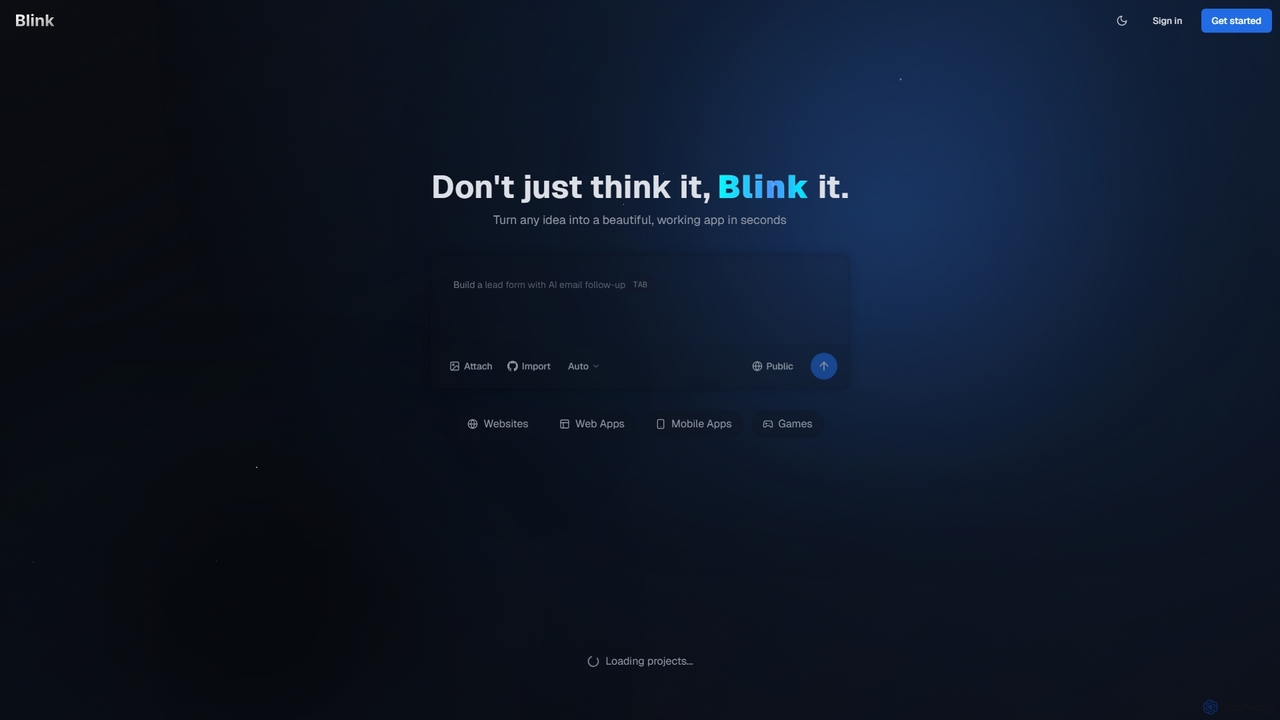
Blink
Blink is an AI-powered app developer that allows you to build websites, web apps, and mobile applications using plain English. No coding required. Simply describe your idea, and Blink's AI agent writes the code, sets up databases, and deploys your project automatically. It's designed for entrepreneurs and businesses to launch their ideas quickly and affordably.
No Code & Low Code
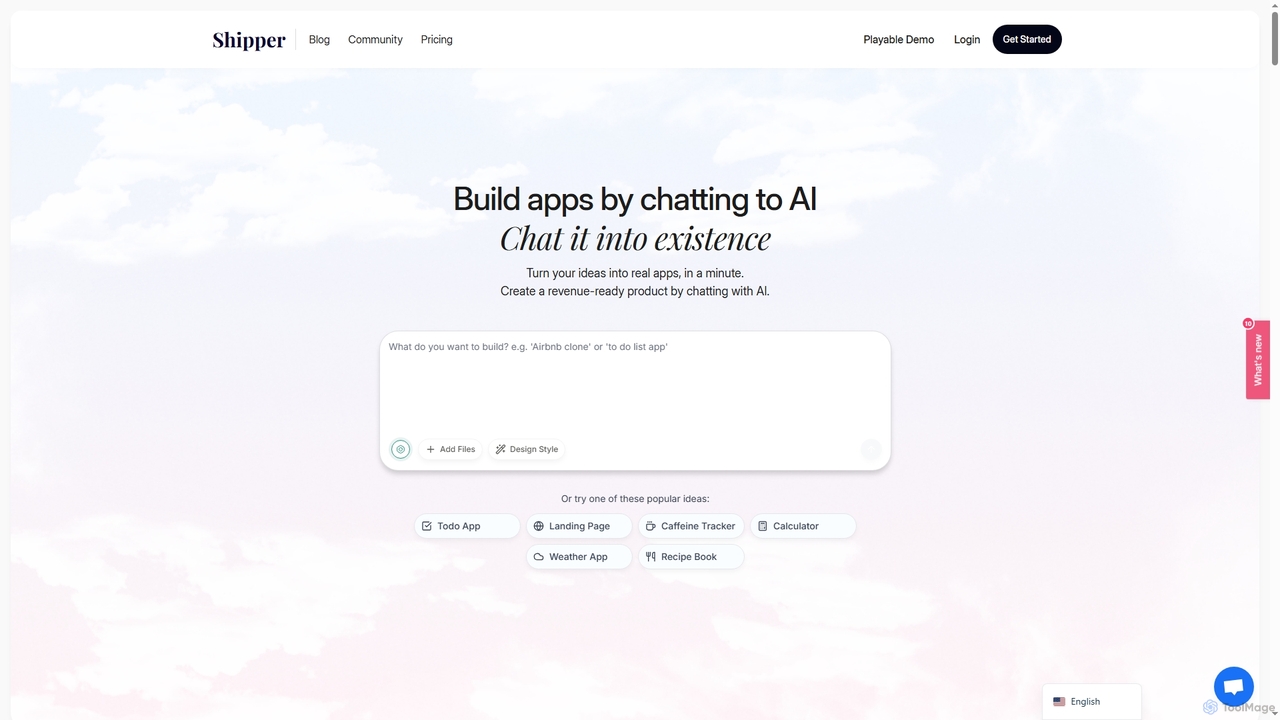
Shipper
Shipper is an AI-powered app builder that transforms your ideas into functional software through a simple chat interface. Designed for both non-technical creators and experienced developers, it allows you to build complete applications just by describing your concept in natural language.
No Code & Low Code
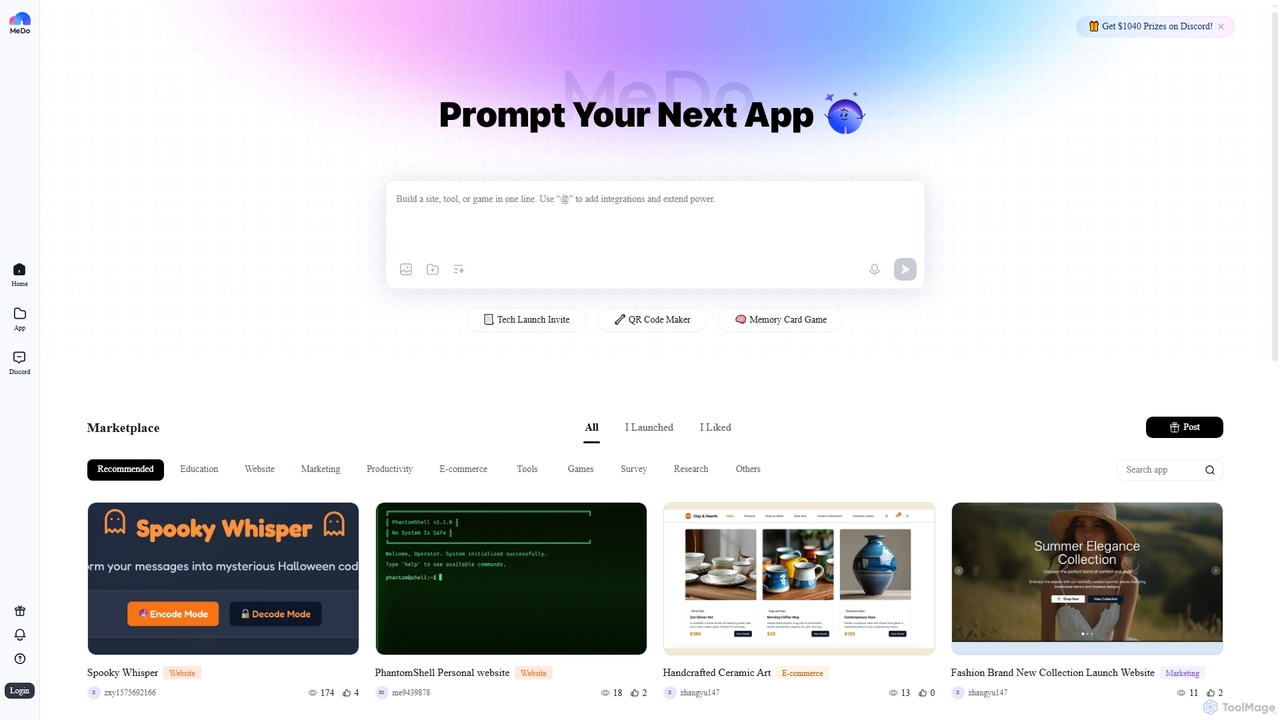
MeDo
MeDo is an AI-powered platform that enables users to generate functional applications, including websites, games, and WeChat Mini Programs, simply by writing a text prompt. It streamlines the development process, turning ideas into apps without extensive coding.
Low Code No Code
Gptengineer
gptengineer is an AI-powered development platform that enables users to build websites, web apps, and internal tools through conversational prompts. Simply describe your idea in plain English, and the AI will generate the code and a functional application, drastically accelerating the prototyping and development process for both developers and non-developers.
Code Generation
SparkVertex
SparkVertex is an AI-powered platform that transforms ideas into single-file, local-first web applications in minutes. It offers no-code and advanced modes, AI-driven code enhancement, and built-in monetization, allowing anyone to create, share, and sell lightweight software without complex setups.
Code Generation
Momen
Momen is a powerful no-code platform for building, launching, and scaling production-ready web applications and AI agents. It empowers non-technical founders and developers with a visual interface, AI workflow automation, robust scalability for millions of users, and built-in monetization tools. Momen offers the flexibility to start without code and later integrate custom JavaScript or React components, making it an ideal solution for projects of any size, from MVPs to complex business applications.
Ai App Builders
DreamFlow
DreamFlow is an AI-first development environment that transforms text prompts into cross-platform mobile applications. It integrates AI-powered code generation, a visual UI builder, and a full-featured code editor to accelerate the entire app development lifecycle for Flutter, from idea to deployment.
Code Generation
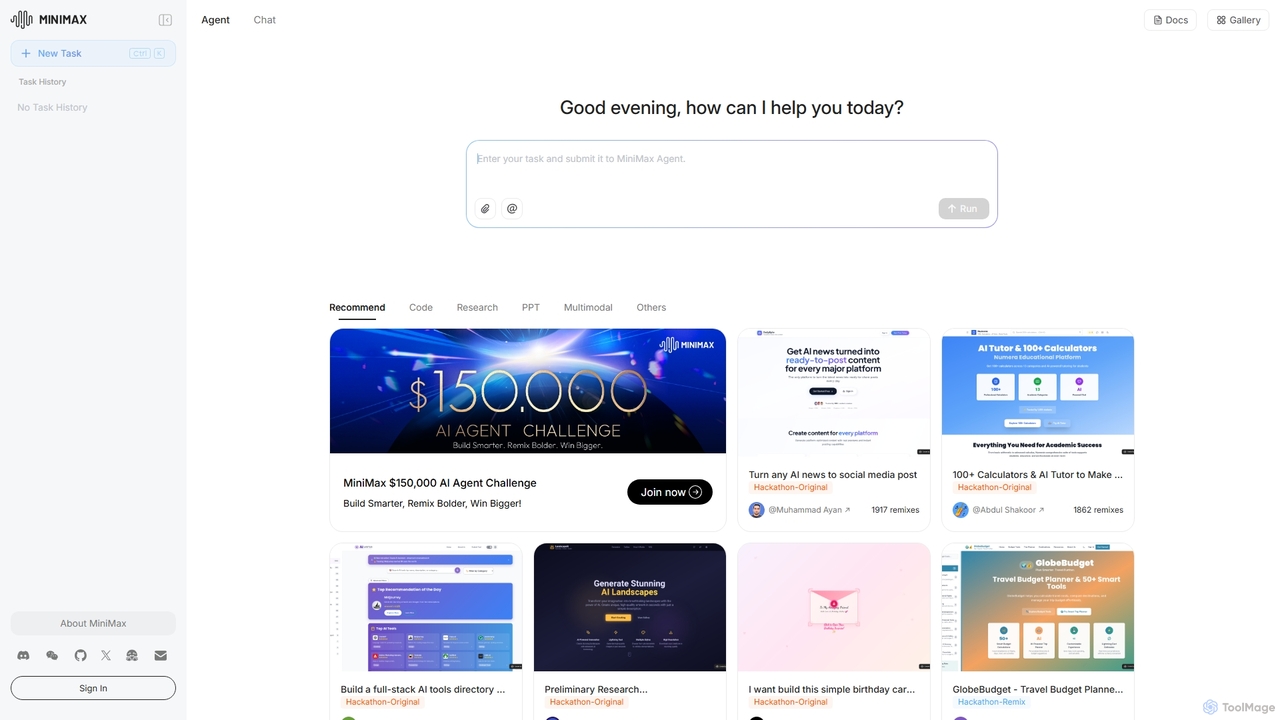
MiniMax Agent
MiniMax Agent is a powerful AI agent platform designed to automate complex tasks, from building full-stack websites and generating presentations to conducting in-depth research. By leveraging natural language prompts, users can minimize effort and maximize intelligence, creating sophisticated digital products and content with unprecedented speed and efficiency. The platform features a collaborative gallery for sharing and remixing projects.
Low Code No Code
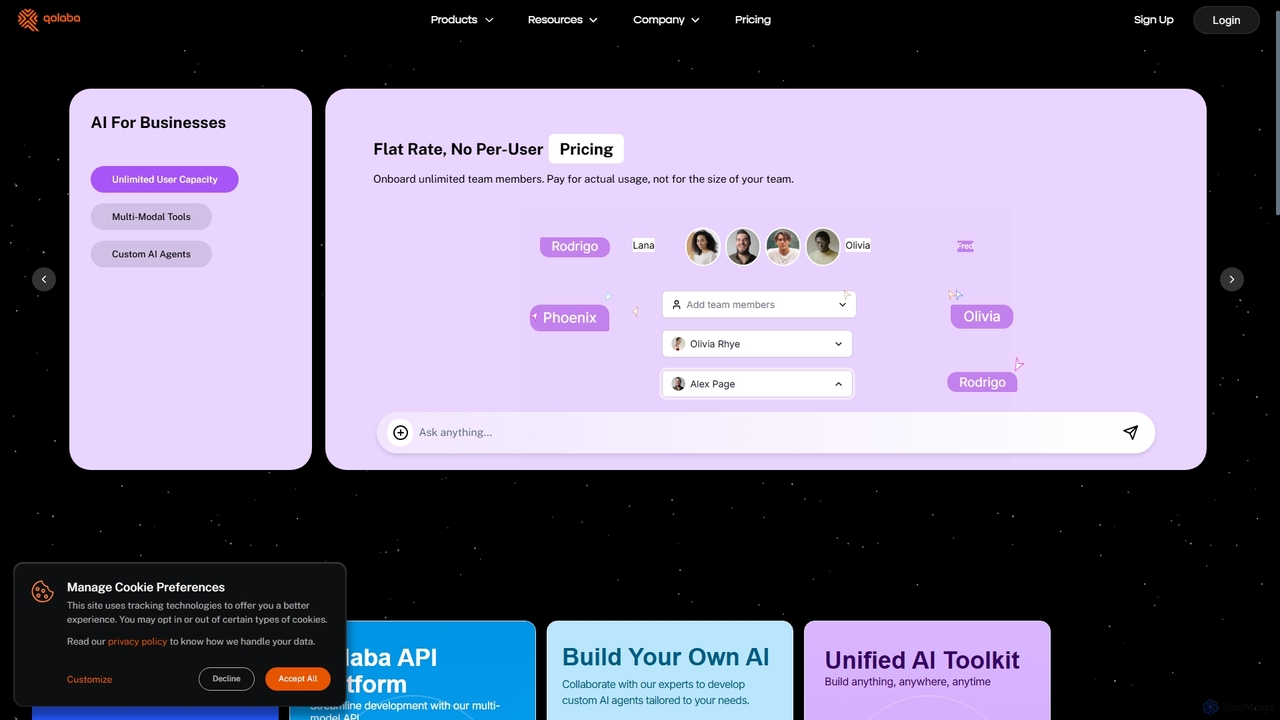
Qolaba
Qolaba is a unified AI studio and API platform providing access to a wide range of generative AI models like GPT-4o, Claude, and SDXL for text, image, video, and speech generation. It caters to individuals, developers, and businesses with features like a no-code AI agent builder, knowledge base interaction, and a flexible, credit-based pricing system, consolidating multiple AI tools into one subscription.
Automation
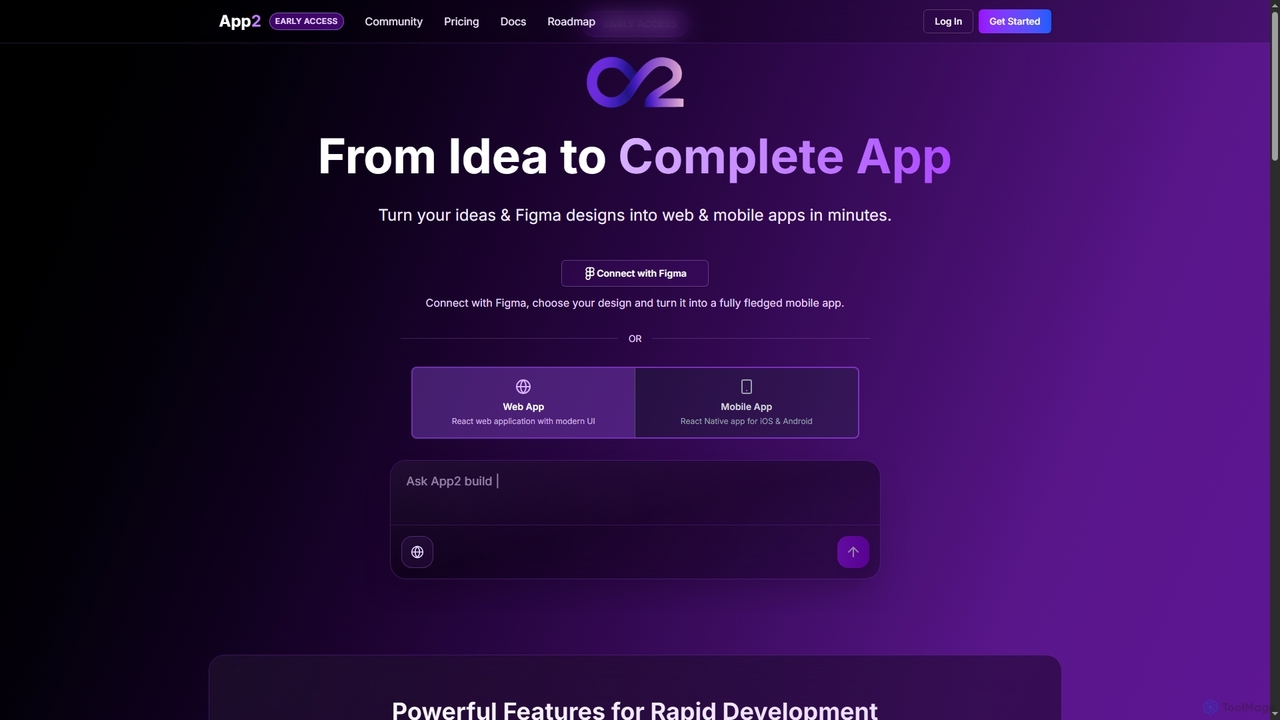
App2
App2 is an AI-powered platform that transforms ideas and Figma designs into production-ready web and mobile applications without code. Build, debug, and deploy React and React Native apps through conversational prompts, leveraging models like GPT-4, Claude, and Gemini.
Design To Code
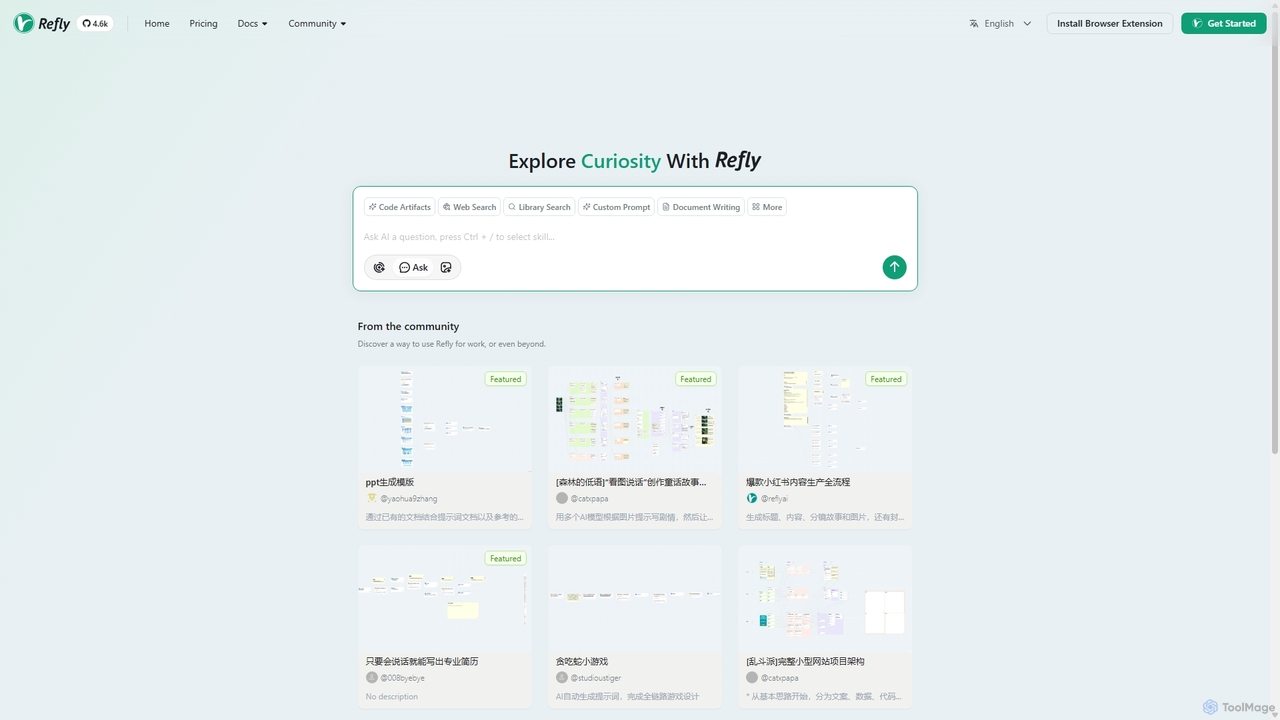
Refly.AI
Refly.AI is an open-source agentic workspace for advanced human-AI collaboration. It enables users to build, share, and execute complex AI workflows by chaining models, prompts, and tools. Ideal for automating tasks in content creation, coding, and data analysis to boost productivity.
Code Assistant
Brancher.ai
Brancher.ai is a no-code platform that empowers users to build and monetize custom AI applications by connecting various AI models. Create complex workflows and innovative tools with a simple drag-and-drop interface, without writing a single line of code. Share your creations with a community and unlock new revenue streams.
Application Builder
Aify
Aify is a no-code AI platform that empowers users to build custom AI-powered applications and automate complex workflows. Integrate top AI models through a visual drag-and-drop interface to create tools for content generation, data analysis, and process automation without writing any code.
Workflow Management
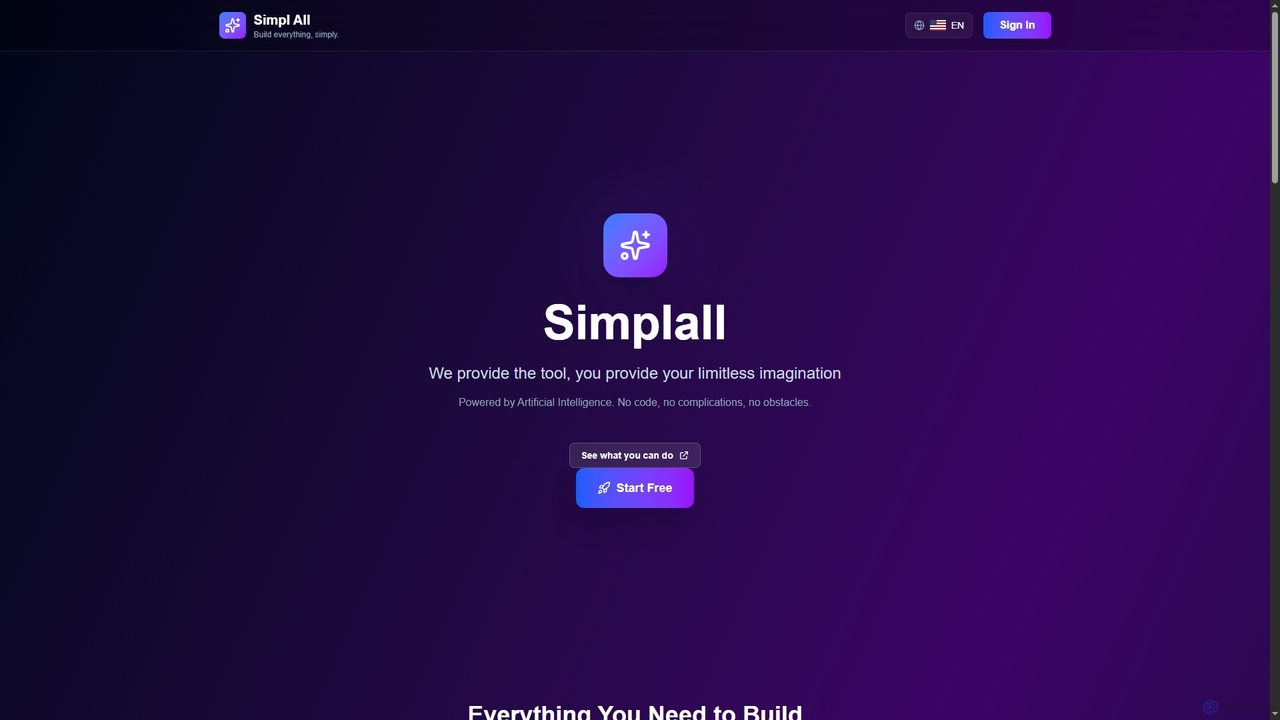
Simplall
Simplall is an AI-powered code generator that transforms natural language descriptions into functional web applications. It enables users, regardless of coding experience, to instantly create professional React apps, HTML websites, and interactive dashboards with live previews, clean code, and easy modification capabilities.
Code Generation
Jyek
Jyek is an AI agent platform that understands objectives, creates execution plans, uses tools, and delivers verifiable results for complex, multi-step tasks.
Automation