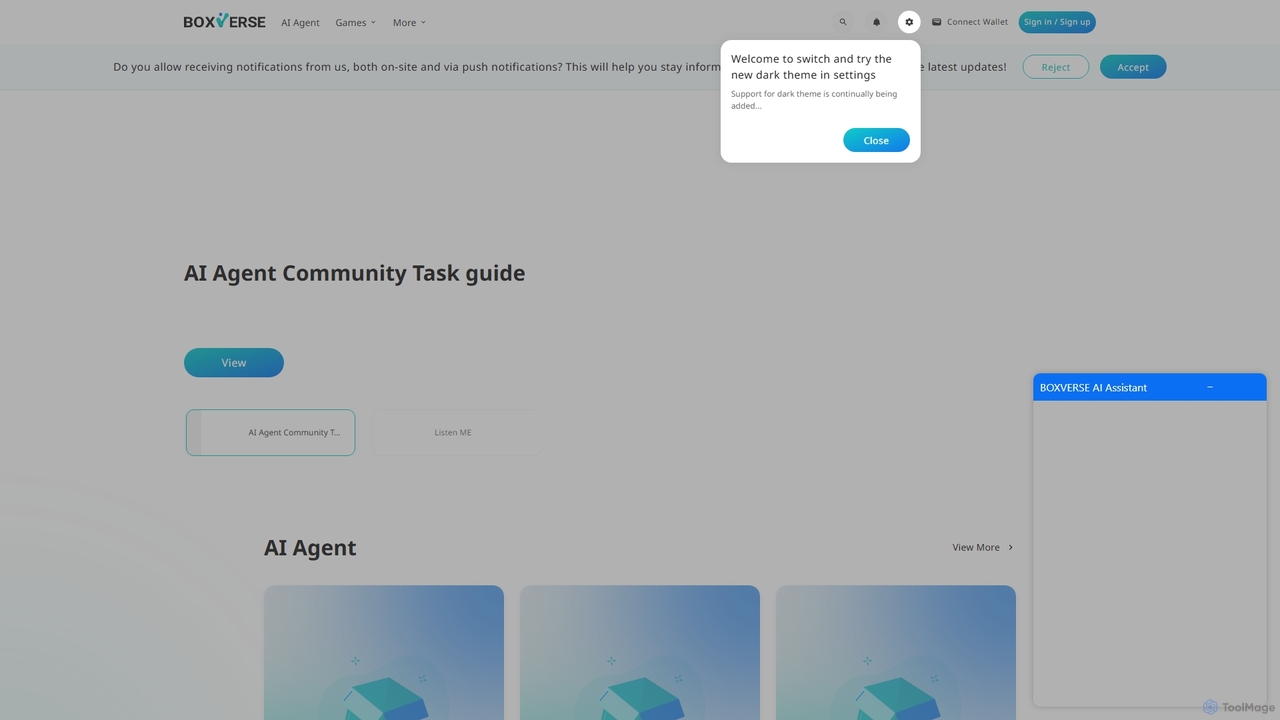
Lightchain is a revolutionary Layer 1 blockchain protocol that integrates Artificial Intelligence at its core. It features a novel Proof of Intelligence (PoI) consensus mechanism and an AI Virtual Machine (AIVM), designed to power intelligent decentralized applications (dApps) and transform computational work into valuable AI development.
O.systems is a foundational organization dedicated to shaping the decentralized AI era. It spearheads governance, research, and innovation for the O.XYZ ecosystem, aiming to build the world's first Sovereign Super Intelligence through a community-driven, transparent, and ethically-guided approach.
Product overview
Lightchain Product overview
Lightchain is a revolutionary Layer 1 blockchain protocol that integrates Artificial Intelligence at its core. It features a novel Proof of Intelligence (PoI) consensus mechanism and an AI Virtual Machine (AIVM), designed to power intelligent decentralized applications (dApps) and transform computational work into valuable AI development.
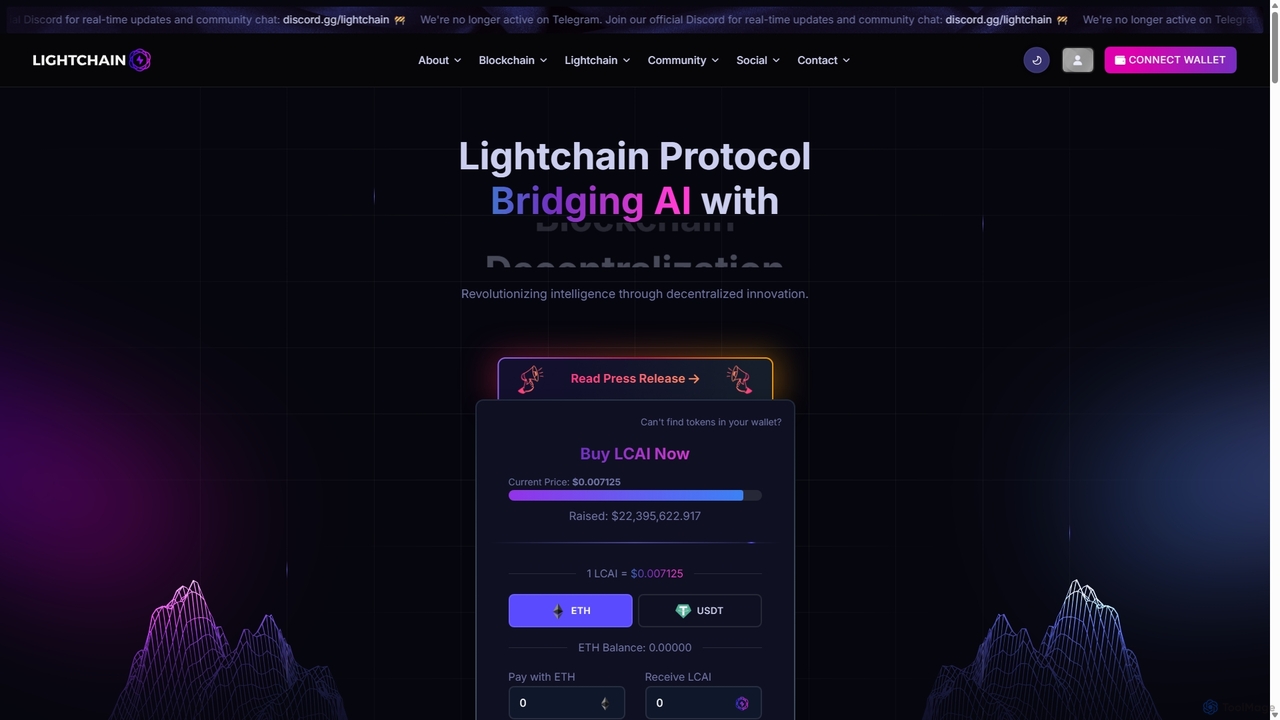
O.systems Product overview
O.systems is a foundational organization dedicated to shaping the decentralized AI era. It spearheads governance, research, and innovation for the O.XYZ ecosystem, aiming to build the world's first Sovereign Super Intelligence through a community-driven, transparent, and ethically-guided approach.
Detailed feature comparison
| Feature | Lightchain | O.systems |
|---|---|---|
| Primary category | Layer 1 | Dao |
| Added | 2025-09-06 | 2025-09-12 |
| Pricing | Paid | Not verified |
| Official website | lightchain.ai | o.systems |
| Product type | Website | Website |
| Performance data | ||
| User rating | Not verified | Not verified |
| Comments | 0 | 0 |
| Monthly visits | 44K | 4.1K |
| Monthly growth | -2.7% | Not verified |
| Favorites | 121 | 124 |
| Details | View details | View details |
Lightchain vs O.systems monthly traffic
Compare Lightchain and O.systems by monthly reach, traffic trend, visit depth, top regions, and acquisition sources.
How to interpret the traffic data
In the Lightchain vs O.systems monthly traffic comparison, Lightchain currently shows 44K visits and O.systems shows 4.1K; Lightchain has about 10.7 times the visible traffic of O.systems, an absolute difference of about 39.9K visits. This reflects visible reach, not feature quality or paid users.
Only Lightchain has complete third-party traffic details; O.systems uses visits recorded inside ToolMage. These scopes cannot estimate market share directly, and on-site views should not be treated as the product’s total website traffic.
Lightchain monthly traffic:
Latest traffic
Monthly traffic trend
- 2025/9: 113.9K Monthly visits
- 2026/1: 70.4K Monthly visits
- 2026/2: 40.3K Monthly visits
- 2026/3: 36.6K Monthly visits
- 2026/4: 45.2K Monthly visits
- 2026/5: 44K Monthly visits
Top regions
Top 5 countries/regions
| Country/region | Percentage | Traffic |
|---|---|---|
| 🇺🇸United States | 56.56% | 24.9K |
| 🇳🇬Nigeria | 14.48% | 6.4K |
| 🇧🇷Brazil | 10.76% | 4.7K |
| 🇻🇳Vietnam | 9.14% | 4K |
| 🇯🇵Japan | 9.06% | 4K |
Traffic sources
| Source type | Percentage | Traffic |
|---|---|---|
| Direct | 92.1% | 40.5K |
| Referral | 5.14% | 2.3K |
| 2.76% | 1.2K |
Search keywords
O.systems monthly traffic:
Latest traffic
Usage comparison
Compare the core capabilities of Lightchain and O.systems
Lightchain Core features
O.systems Core features
Use cases
Lightchain Use cases
O.systems Use cases
Best suited roles
Lightchain Best suited roles
O.systems Best suited roles
Lightchain vs O.systems:In-depth comparison and selection guidance
First decide whether the products solve the same kind of need
This in-depth Lightchain vs O.systems comparison uses only the product records, taxonomy, audience, traffic, and community signals available on this page. Lightchain is primarily listed under “Layer 1”, while O.systems is primarily listed under “Dao”, so the first decision is whether your actual task matches their recorded scope.
The structured fields currently show these decision-relevant differences: Primary category (Lightchain: Layer 1; O.systems: Dao); Pricing (Lightchain: Paid; O.systems: Not disclosed); Monthly visits (Lightchain: 44K; O.systems: 4.1K); Favorites (Lightchain: 121; O.systems: 124); Website (Lightchain: lightchain.ai; O.systems: o.systems). These facts are more useful for selection than brand visibility alone.
What market visibility and monthly traffic mean
In the Lightchain vs O.systems monthly traffic comparison, Lightchain currently shows 44K visits and O.systems shows 4.1K; Lightchain has about 10.7 times the visible traffic of O.systems, an absolute difference of about 39.9K visits. This reflects visible reach, not feature quality or paid users.
Only Lightchain has complete third-party traffic details; O.systems uses visits recorded inside ToolMage. These scopes cannot estimate market share directly, and on-site views should not be treated as the product’s total website traffic.
The current traffic scope is not sufficient for a reliable product ranking. Treat monthly visits as a market-interest signal, then decide using taxonomy, use cases, pricing, and a like-for-like trial rather than reading exposure as product capability.
Product positioning, use cases, and roles
Lightchain and O.systems currently overlap in shared categories: Cryptocurrency; shared tags: blockchain, cryptocurrency, and web3; shared roles: AI Researcher, Blockchain Developer, Crypto Investor, Data Scientist, Product Manager, and Venture Capitalist. This can place both on the same shortlist, but it does not prove equal implementation, depth, or cost.
Lightchain's unique categories/tags are Layer 1, Decentralized Applications, AI, AIVM, dApps, decentralized, developer tools, and layer 1; O.systems's are Dao, Decentralized Computing, Ai Ethics, AI governance, AI research, AI safety, DAO, and decentralized AI. These unique fields are the strongest differentiators: validate the product whose recorded scope matches the task instead of following traffic alone.
What ratings, comments, and favorites can tell you
Lightchain has no verified rating, 0 comments, 121 favorites, and 132 likes;O.systems has no verified rating, 0 comments, 124 favorites, and 116 likes。
Neither product has enough rating or comment samples for a credible reputation ranking.
Selection guidance by actual need
When to evaluate Lightchain first
Put Lightchain on the priority trial list when the task aligns with “Layer 1” and especially Layer 1, Decentralized Applications, AI, AIVM, dApps, and decentralized, or the users include Software Developer. This follows recorded positioning and does not imply unlisted capabilities are absent.
Lightchain also currently records: pricing is paid, product type is website, 44K verified monthly visits, no verified user rating. Verify any hard requirement around price, platform, or reach before trial, and do not let sparse review data substitute for testing.
When to evaluate O.systems first
Put O.systems on the priority trial list when the task aligns with “Dao” and especially Dao, Decentralized Computing, Ai Ethics, AI governance, AI research, and AI safety, or the users include AI Ethicist, Community Manager, and Policy Maker. This follows recorded positioning and does not imply unlisted capabilities are absent.
O.systems also currently records: pricing is not verified, product type is website, 4.1K on-site monthly views, no verified user rating. Verify any hard requirement around price, platform, or reach before trial, and do not let sparse review data substitute for testing.
How to validate the recommendation before deciding
The available data describes positioning, public visibility, and community signals, but it cannot prove output quality, speed, integration effort, privacy, or long-term cost in your workflow. Before deciding, run the same representative tasks in Lightchain and O.systems, then record completion time, accuracy, manual corrections, and the real paid threshold. A like-for-like trial turns this comparison into a defensible adoption decision.
Comparison FAQ
How should I choose between Lightchain and O.systems?
Where does this comparison data come from?
What do unknown fields mean?
Related AI tools

Story
Story is a blockchain-based infrastructure designed to tokenize and manage intellectual property (IP). It empowers creators, developers, and enterprises to register, license, and monetize their IP on-chain, providing programmable licensing, automated royalty distribution, and a new framework for AI data access.
Data Management
Protocol Labs
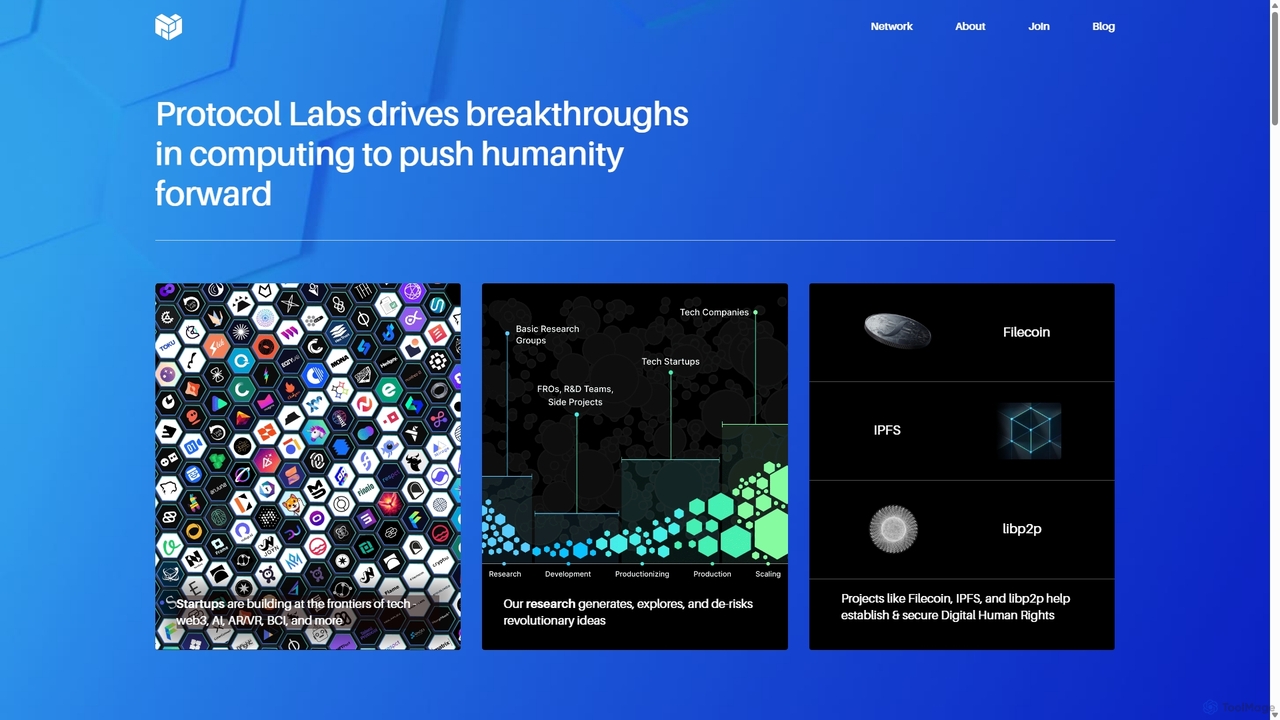
Protocol Labs is a research, development, and deployment lab for network protocols. It drives breakthroughs in computing, focusing on Web3, AI, and decentralized infrastructure. It's the creator of foundational technologies like IPFS and Filecoin, fostering a global innovation network of over 600 startups and organizations to build a more resilient and open internet.
Blockchain
Openfabric
Openfabric is a decentralized Layer-1 blockchain protocol designed for building, connecting, and monetizing AI applications. It creates a planetary-scale network that unites AI innovators, data providers, infrastructure providers, and users in a collaborative and fair marketplace, aiming to make AI accessible to everyone.
Decentralized Ai
Arbius
Arbius is a decentralized peer-to-peer network for machine learning, creating a global marketplace for AI compute. It enables model creators to monetize their work and users to access AI models in a censorship-resistant environment, powered by its native token, AIUS, and a Proof-of-Useful-Work mechanism.
Api
Ascn
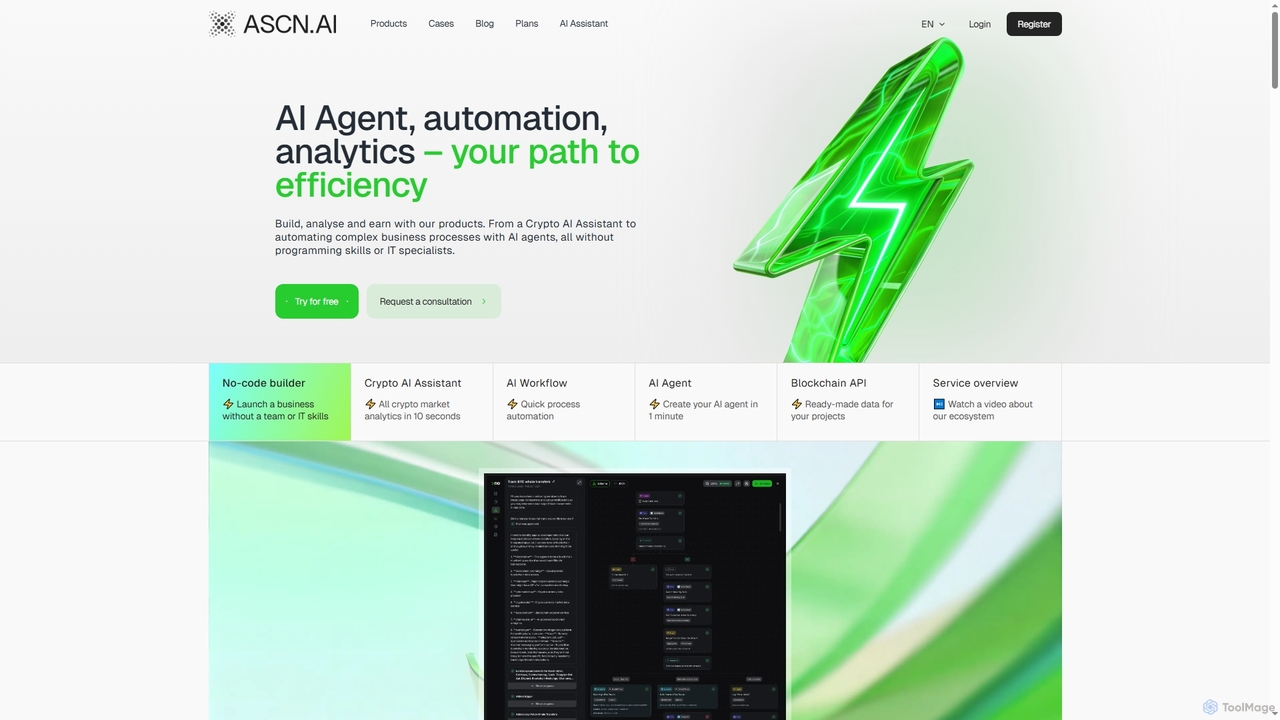
Ascn is an all-in-one AI ecosystem designed for crypto enthusiasts and businesses, offering powerful tools for market analysis, workflow automation, and AI agent creation without requiring programming skills. It provides a personal AI assistant for crypto, no-code builders, and robust APIs to streamline operations and enhance decision-making in the blockchain space.
Market Intelligence
World
World is a decentralized identity and financial network designed for the AI era. It provides a universal 'proof of personhood' through World ID, allowing users to verify their humanity online while preserving privacy. The ecosystem includes the World App for managing identity and finances, and the Worldcoin (WLD) token, aiming to create a globally inclusive and user-owned digital economy.
Cryptocurrency
Vana
Vana is a decentralized, open network for user-owned data. It empowers individuals to take control of their digital footprint, contribute it to community-governed Data Collectives, and earn rewards. Vana aims to create a transparent and equitable data economy to power the next generation of AI with ethically sourced, high-quality data.
Data Management
Isitsafe.io
Isitsafe.io is a community-driven review platform for cryptocurrency products, utilizing AI to detect fake reviews and ensure authenticity. It aims to enhance trust and transparency in the Web3 space, helping users make informed decisions and companies receive genuine feedback.
Review Platform
Rido Protocol
Rido Protocol is a decentralized Web3 framework that empowers users to own, control, and monetize their personal data. It enables programmable data generation and access control, bridging Web2 data into the Web3 ecosystem. By providing a data marketplace and supporting AI applications like decentralized recommenders and digital assistants, Rido aims to create a fair and user-centric data economy.
Data Platforms
Khorus
Khorus is a universal communication layer for intelligent systems, empowering developers to build and deploy next-gen AI applications through an on-chain Agent-to-Agent (A2A) architecture. It facilitates real-time collaboration, task delegation, and autonomous execution among AI agents and robotics, fostering a decentralized agent economy and marketplace for scalable modules and workflows.
Agent Orchestration
Cortex Labs
Cortex Labs is a decentralized, open-source public blockchain designed to run AI models and AI-powered dApps directly on-chain. It features the Cortex Virtual Machine (CVM) for efficient AI inference and a ZkRollup Layer 2 solution, ZkMatrix, for scalability. It aims to democratize AI by creating an ecosystem where developers can build, share, and monetize AI models within smart contracts.
Ai Platform
CryptoDo
CryptoDo is an AI-powered, multi-chain, no-code platform for building Web3 solutions. It enables users to create and deploy secure DApps and smart contracts, such as ERC-20 tokens, NFTs, and DAOs, in just minutes without any programming skills. The platform features a visual builder, pre-audited templates, and an AI module for advanced customization, making blockchain development accessible, fast, and cost-effective for businesses and individuals.
Blockchain
Coindive
Coindive is an AI-powered crypto portfolio and community tracker. It analyzes social media platforms like Twitter, Telegram, and Reddit to provide real-time insights into community sentiment and activity. This helps investors make informed decisions by understanding the context behind price movements, not just the numbers.
Cryptocurrency
Enzyme
Enzyme is a no-code platform that empowers creators, developers, and brands to design, launch, and manage Web3 projects. It provides a vast library of pre-built, secure smart contracts for NFTs, DAOs, DeFi, and more, enabling instant deployment on multiple blockchains without writing a single line of code.
Blockchain
boxtradex
boxtradex provides access to BOXVERSE, a community-focused, AEI-driven agentic platform that merges Web3 and AI. It offers users access to AI agents through an integrated solution designed for the decentralized digital landscape.
Blockchain