
Elementary Data Overview
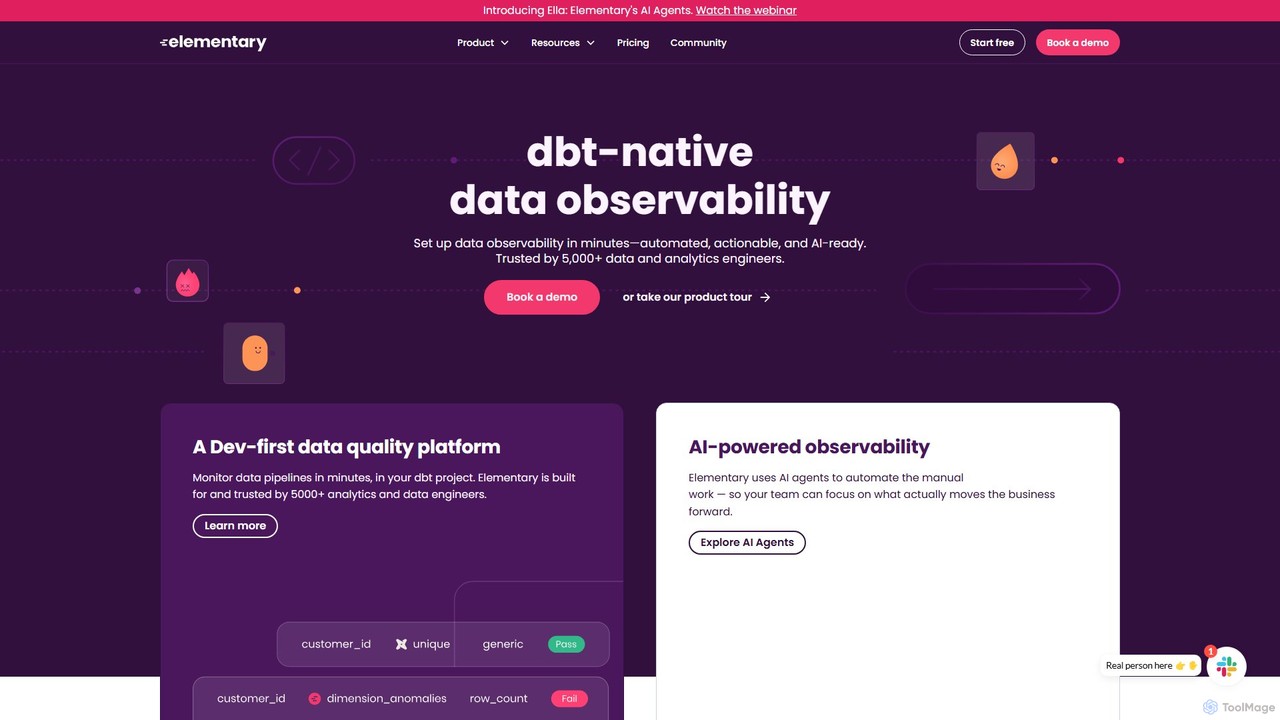
Elementary Data is a developer-first, dbt-native data observability platform trusted by thousands of data and analytics engineers. It is designed to operationalize data quality across the entire data lifecycle, from detection to resolution. By leveraging AI agents, Elementary automates manual tasks, allowing data teams to focus on high-impact activities that drive business value. The platform addresses the critical challenge of data quality, which is often the primary blocker to successful AI implementation and data product adoption, ensuring that bad inputs do not lead to broken models or untrustworthy decisions.
How to use Elementary Data
Getting started with Elementary Data is designed to be quick and seamless, especially for teams already using dbt. The process typically involves:
- Installation: Install the open-source Elementary dbt package as an SDK within your existing dbt project. This can be done in minutes.
- Configuration: Set up your environments and connect your data sources. Elementary only requires read access to metadata and test results, not your raw data, ensuring security and compliance (SOC-2 Type II certified).
- Monitoring: Once configured, Elementary automatically starts monitoring your data pipelines. It captures dbt test failures, detects anomalies in data freshness and volume, and collects performance metrics.
- Alerting & Triage: Use the Elementary Cloud Platform to manage alerts. You can customize routing rules to notify the right people or teams via Slack or other channels. The platform provides context, including lineage and owners, to help triage and resolve issues faster.
- Exploration & Governance: Utilize the native data catalog to explore schemas, view column-level lineage, and understand data health. AI agents can assist with test coverage discovery and automated triage.
Core Features of Elementary Data
- AI Agents (Ella): Automate manual work such as incident triage, test coverage discovery, performance optimization, and data governance to drive efficiency.
- Data Quality Tests: Manage dbt tests, native Elementary tests, and custom SQL tests from a single, unified platform.
- Automated Anomaly Detection: Proactively monitor data for freshness, volume, and schema anomalies without manual configuration.
- End-to-End Data Lineage: Visualize column-level lineage to understand data dependencies, trace issues to their source, and assess the impact of changes.
- Incident & Alerting Management: Cut through the noise with simplified, context-rich alerting. Route notifications to the right stakeholders and manage incidents from detection to resolution.
- Data Health Scores: Get a quick, high-level overview of your data's quality and reliability across different quality dimensions.
- Performance & Cost Monitoring: Identify and resolve bottlenecks in your data pipelines, track execution times, and monitor performance trends to optimize costs.
- Native Data Catalog: An enriched alternative to dbt docs, providing a centralized place for data discovery, metadata management, and understanding data assets.
Use Cases for Elementary Data
Elementary Data is versatile and supports various data-driven initiatives. For example, a company like Flock Safety used Elementary to establish a practical data governance program. By focusing on data quality and discovery, they built trust among business partners and analytics engineers. This led to increased data consumption, better collaboration, and more reliable decision-making. Other use cases include:
- Preventing AI Hallucinations: Ensuring high-quality data inputs for AI and machine learning models to prevent erroneous outputs and build trustworthy systems.
- Reducing Alert Fatigue: Data teams at companies like Hippo use Elementary to filter out noise and receive alerts only for genuine production failures, eliminating the 'nightmare' of constant, irrelevant notifications.
- Improving Stakeholder Confidence: Providing stakeholders with a clear, daily overview of data health, giving them confidence in the quality of the data they use for decisions.
- Establishing Data Trust: Using Elementary's testing, tagging, and metadata capabilities to create a 'golden standard' of trust in data assets.
Advantages of Elementary Data
The primary advantage of Elementary is its deep, native integration with the dbt ecosystem, making it a natural choice for modern data teams. Its developer-first approach ensures it fits seamlessly into existing workflows. The use of AI agents for automation significantly reduces manual effort and improves team efficiency. Furthermore, its comprehensive coverage of the entire data quality lifecycle—from testing and monitoring to incident resolution and governance—makes it an all-in-one solution. The platform is secure by design, never accessing raw data, and offers both a powerful open-source version and scalable cloud plans for enterprises.
Pricing and Plans
Elementary offers a flexible pricing model based on user seats, with a free open-source option and paid cloud plans. A 30-day free trial of the Essentials plan is available.
- Open Source (OSS): A self-hosted, free community version that thousands of teams use in production.
- Starter Plan: $650/month. Includes up to 2 users, detection and triage of data issues, automated anomaly detection, column-level lineage, and performance monitoring.
- Essentials Plan: $1600/month. Includes everything in Starter for up to 8 users, plus collaboration features, all AI agents, incident management, end-to-end lineage, and dedicated Slack support.
- Enterprise Plan: Custom pricing. Includes everything in Essentials with flexible seats, enterprise-grade security (RBAC, SCIM), advanced deployment options, premium support SLAs, and integrations with tools like Jira and PagerDuty.
Traffic
Latest traffic
Status
Monthly traffic trend
- 2025-9: 18.7K
- 2026-1: 17.0K
- 2026-2: 16.9K
- 2026-3: 18.3K
- 2026-4: 12.1K
- 2026-5: 16.0K
Geography
Top 5 countries / regions
- 🇺🇸United States48.2%
- 🇩🇪Germany25.0%
- 🇧🇷Brazil11.2%
- 🇮🇳India8.0%
- 🇫🇷France7.6%
Top keywords
| Keyword | Cost per click |
|---|---|
| dbt test accepted values | $0.00 |
| dbt tests relationship | $0.00 |
| elementary data | $0.00 |
| elementary performance alert | $0.00 |
| snowflake summit | $1.96 |
Elementary Data Alternatives
Metaplane
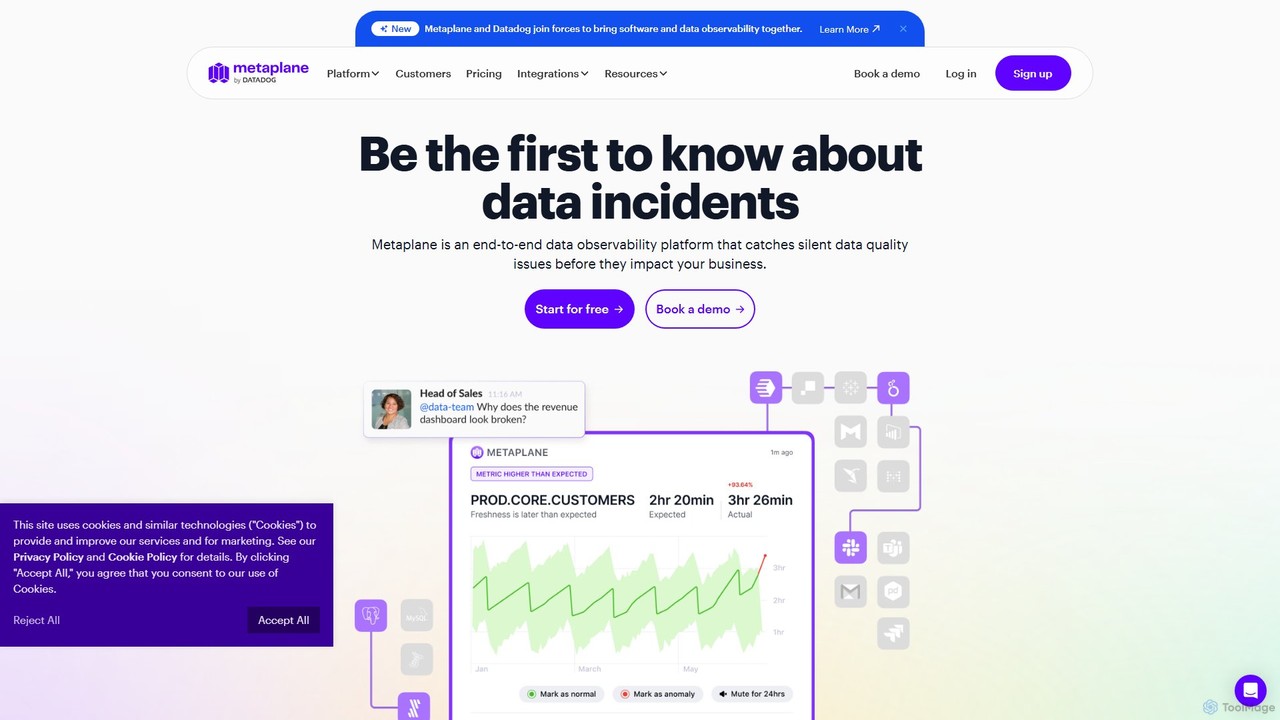
Metaplane is an end-to-end data observability platform for modern data teams. It uses machine learning to automatically monitor your data stack, detect silent data quality issues before they impact the business, and provide actionable alerts with full context.
Analytics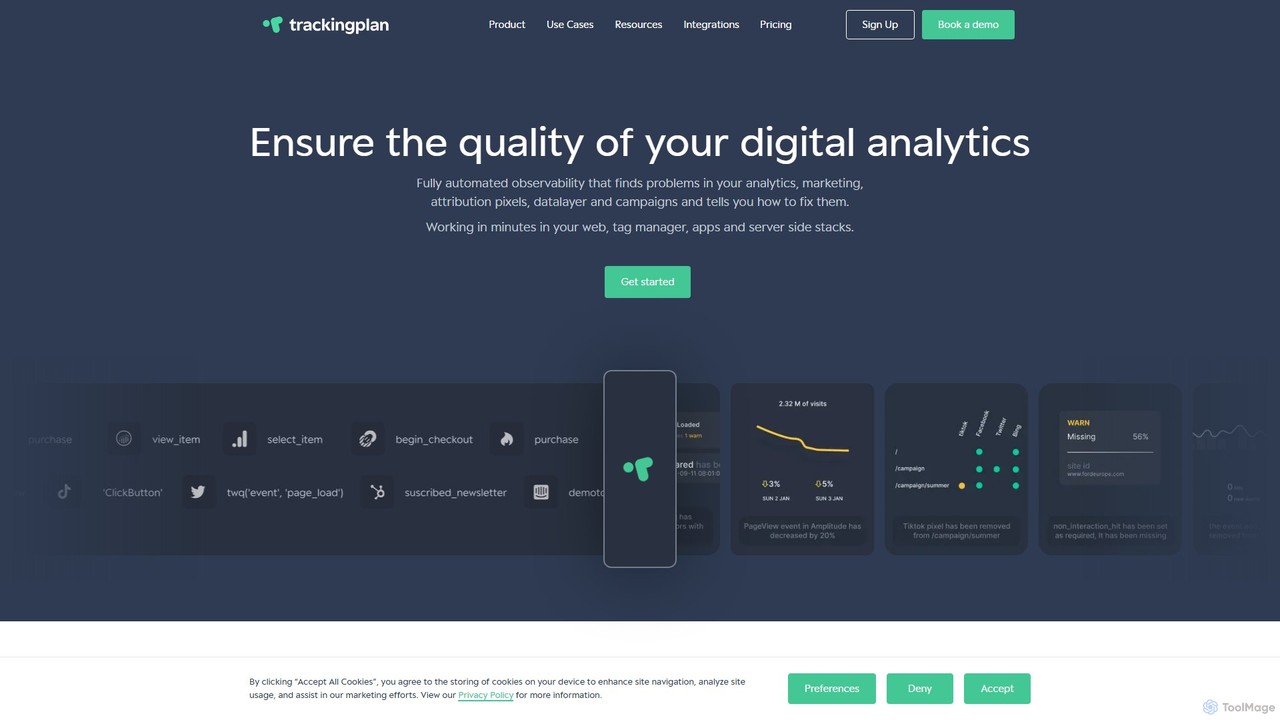
Trackingplan
Trackingplan is an automated data observability platform that ensures the quality of your digital analytics. It proactively detects and helps fix errors in your analytics implementations, marketing pixels, and campaign tracking in real-time. By eliminating manual audits, it saves time and ensures data integrity for data-driven decisions.
Observability
Secoda
Secoda is an AI-powered data platform that unifies data discovery, lineage, cataloging, and governance. It helps teams find, understand, and trust their data through an intelligent, centralized hub, enabling self-service analytics and scalable AI infrastructure.
Analytics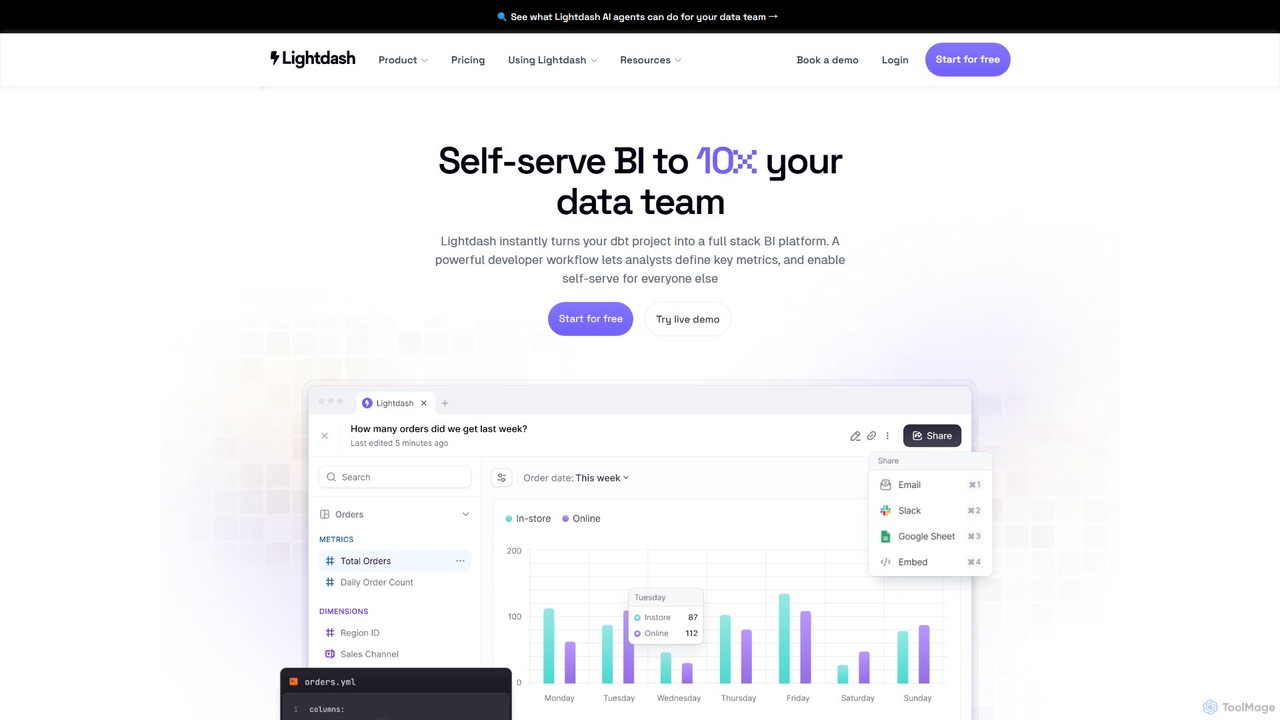
Lightdash
Lightdash is an open-source, AI-powered business intelligence (BI) platform built specifically for dbt. It empowers entire teams with self-serve analytics, allowing users to ask data questions in plain English. With developer-friendly workflows and no per-user pricing, it's designed to make data accessible to everyone, from data engineers to business stakeholders.
Data Science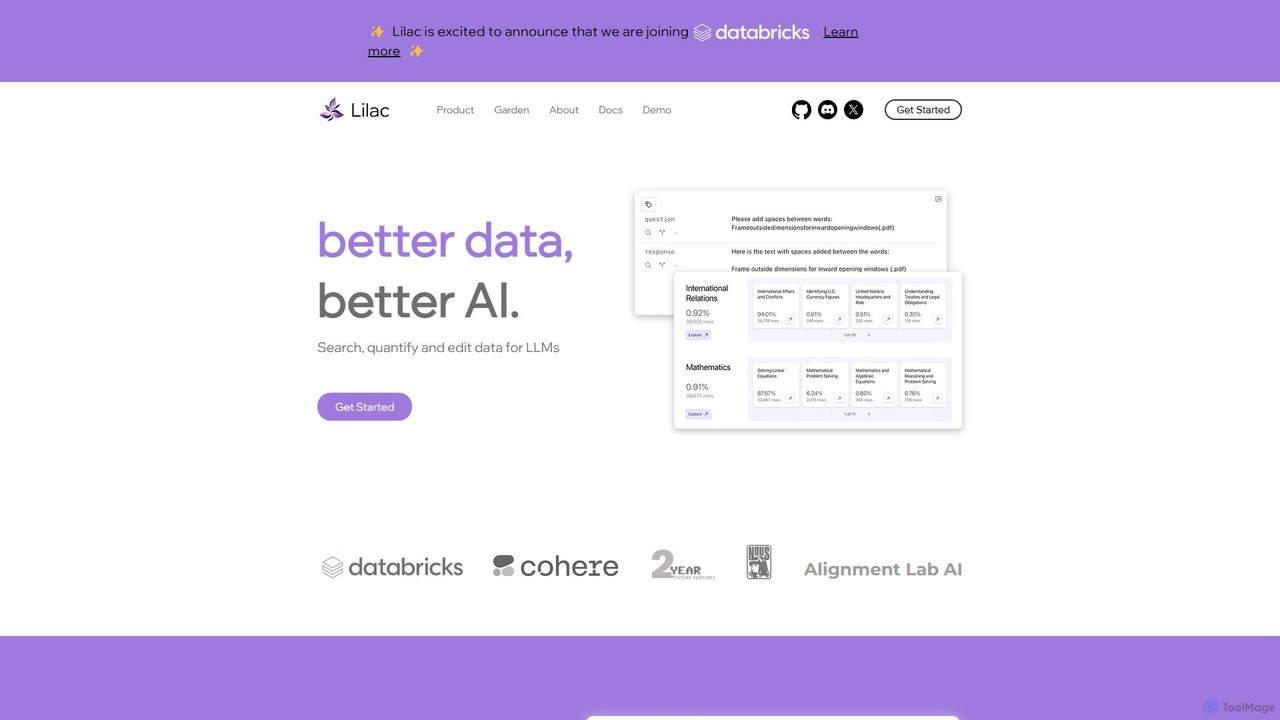
Lilac
Lilac is an open-source tool for data scientists and ML engineers to explore, clean, and improve datasets for large language models (LLMs). It offers powerful semantic search, data clustering, and quality analysis to build better AI.
Model TrainingElementary Data Categories
Elementary Data Embed Widget
Copy this embed code to place the badge on your blog, article, or product site and send readers directly to this ToolMage detail page.

Related AI tools
Metaplane
Metaplane is an end-to-end data observability platform for modern data teams. It uses machine learning to automatically monitor your data stack, detect silent data quality issues before they impact the business, and provide actionable alerts with full context.
AnalyticsSecoda
Secoda is an AI-powered data platform that unifies data discovery, lineage, cataloging, and governance. It helps teams find, understand, and trust their data through an intelligent, centralized hub, enabling self-service analytics and scalable AI infrastructure.
Analytics
Dagster
Dagster is a modern, open-source data orchestrator designed for building, scaling, and observing AI and data pipelines. It acts as a unified control plane, allowing teams to model data assets, track lineage, and ensure data quality with confidence. By integrating software engineering best practices like local testing and reusable components, Dagster helps data engineers and ML teams ship products faster and more reliably.
Machine Learning Operations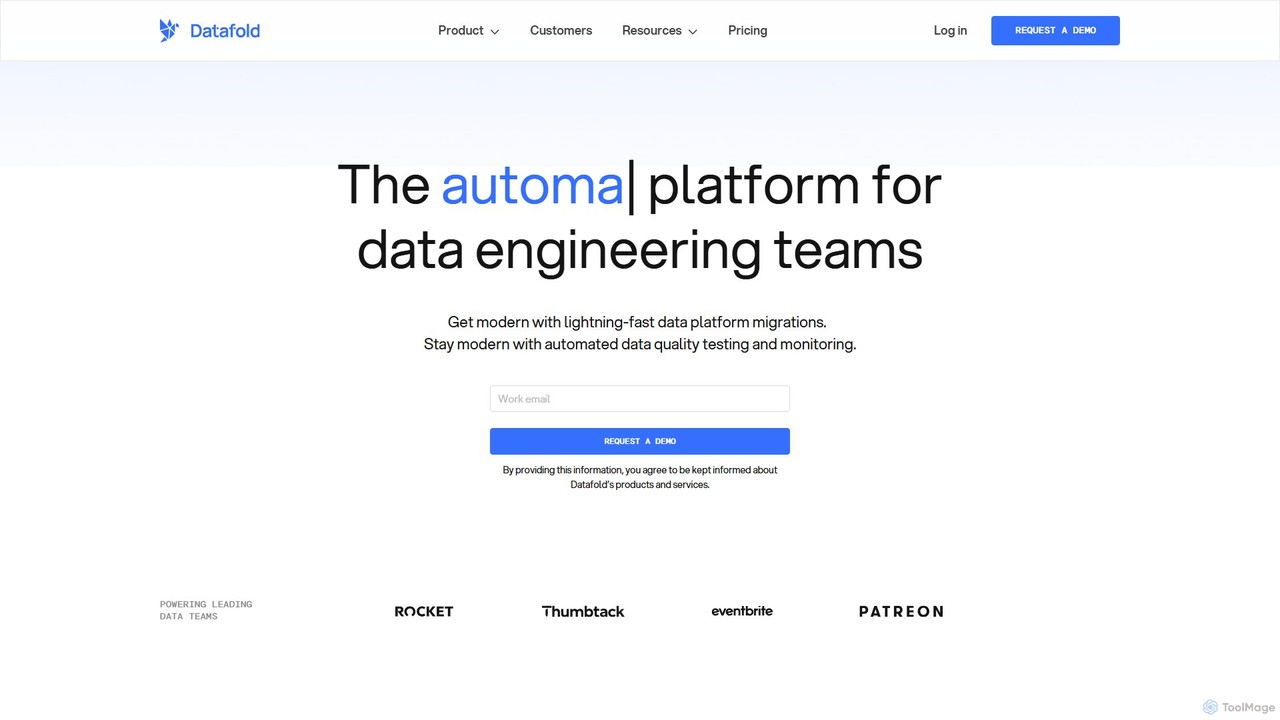
Datafold
Datafold is an AI-powered platform for data engineering teams that automates data quality testing, monitoring, and migrations. It uses data diffing to compare datasets, enabling proactive issue detection in CI/CD and ensuring 100% parity during complex data migrations, accelerating timelines by up to 6x.
Analytics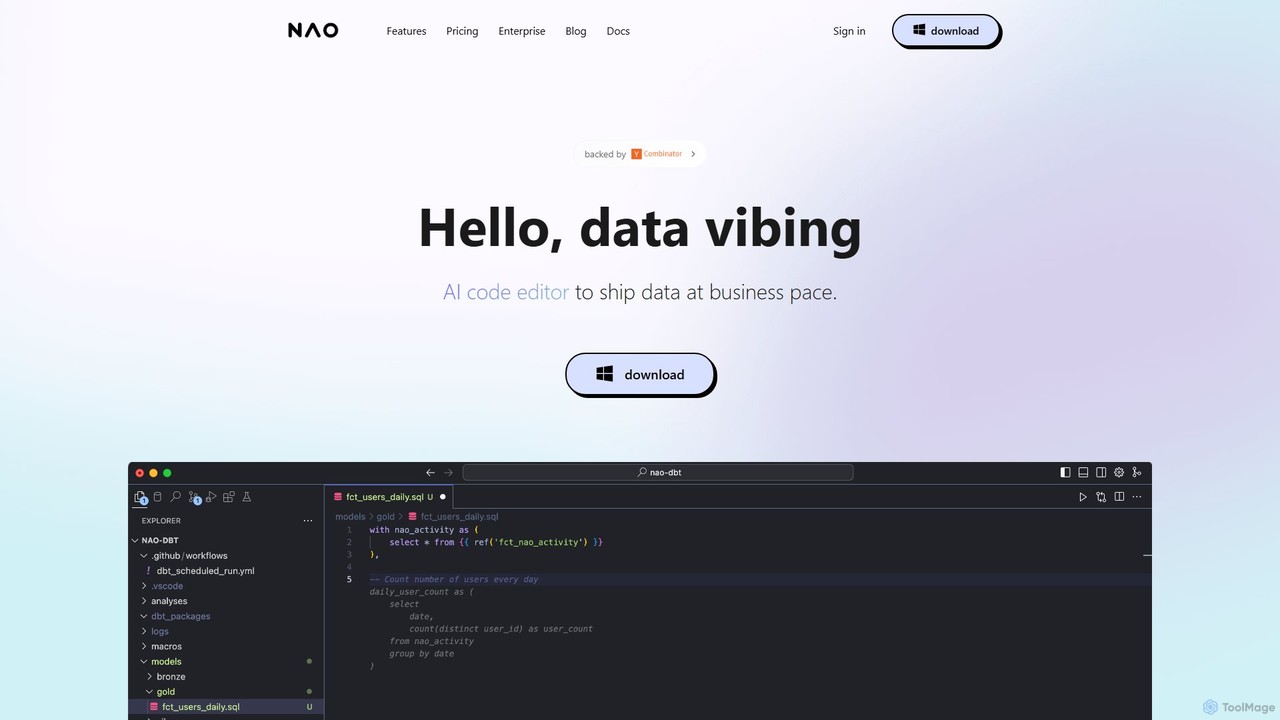
nao
nao is an AI-powered code editor designed for data teams. It streamlines SQL and Python data pipeline creation, dbt workflows, and analytics by natively connecting to your data warehouse. Its intelligent agent provides data-aware code suggestions, quality checks, and instant diff previews to help you ship data faster and more safely.
Analytics
Paradime
Paradime is an AI-powered ELT platform for analytics and AI, designed as a superior alternative to dbt Cloud. It integrates an AI-enhanced Code IDE, automated data pipelines (Bolt), and a FinOps cost-saving tool (Radar) into a single, unified platform. This empowers data teams to accelerate development, increase reliability, and significantly reduce data warehouse costs, streamlining the entire analytics engineering workflow.
Analytics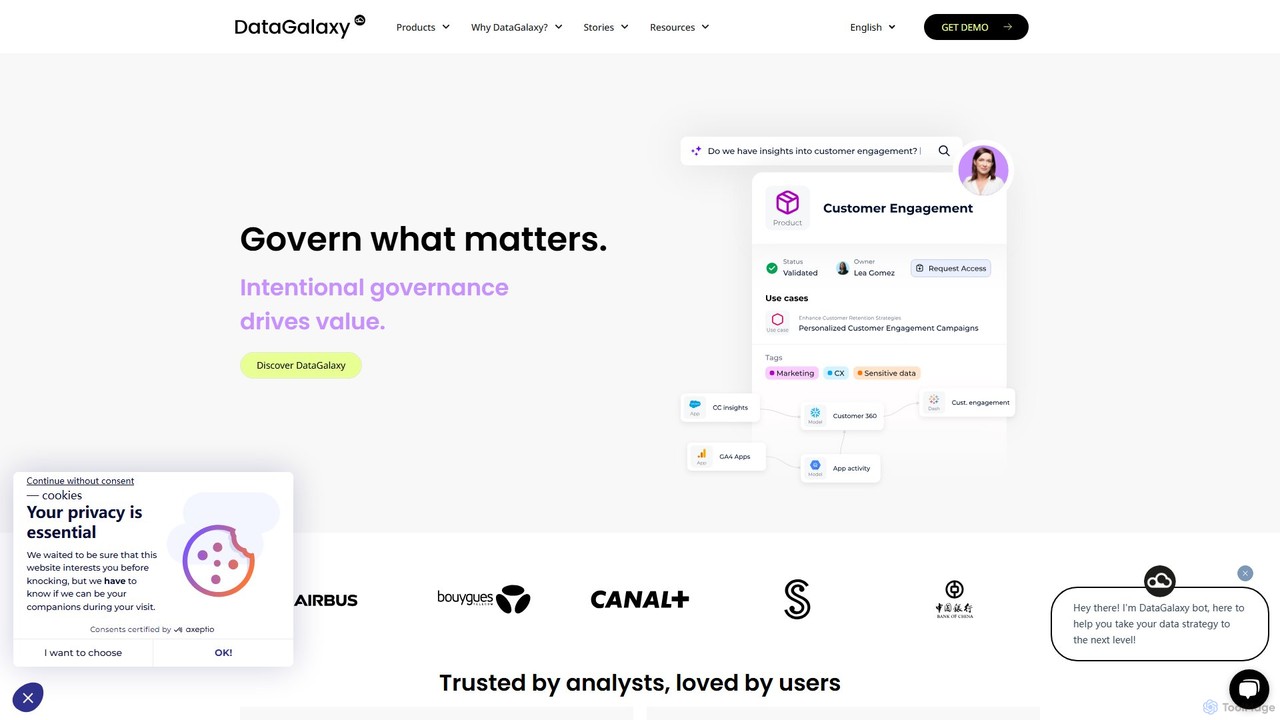
DataGalaxy
DataGalaxy is a comprehensive Value Governance Platform designed to bridge the gap between data assets and business outcomes. It empowers all data users, from executives to analysts, with an automated data catalog, AI-driven governance, and a data product marketplace. By centralizing data strategy, tracking value, and ensuring quality, DataGalaxy helps organizations transform their data into governed, reusable, and scalable products, driving informed decisions and maximizing data ROI.
AnalyticsTrackingplan
Trackingplan is an automated data observability platform that ensures the quality of your digital analytics. It proactively detects and helps fix errors in your analytics implementations, marketing pixels, and campaign tracking in real-time. By eliminating manual audits, it saves time and ensures data integrity for data-driven decisions.
Observability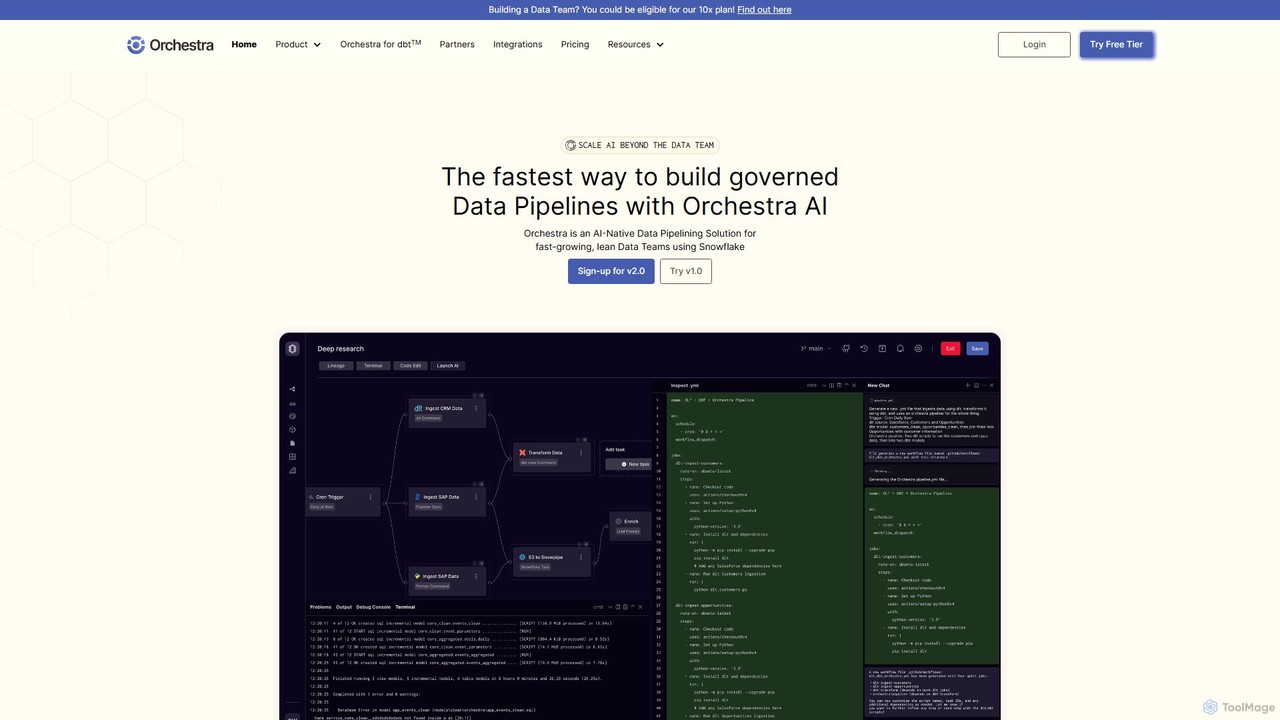
Orchestra
Orchestra is a unified control plane for data orchestration and pipelining, designed for lean data teams. It offers an AI-native solution to build, monitor, and manage governed data pipelines with end-to-end observability, proactive alerting, and extensive integrations. It simplifies complex data workflows, reduces maintenance time, and ensures data is reliable and AI-ready.
Business Intelligence
castordoc
CastorDoc, now Coalesce Catalog, is an AI-powered data catalog and governance platform. It enables self-service analytics by allowing users to find, understand, and trust data through natural language search, automated documentation, and end-to-end data lineage. It's designed to increase team productivity and foster a data-driven culture.
Intelligence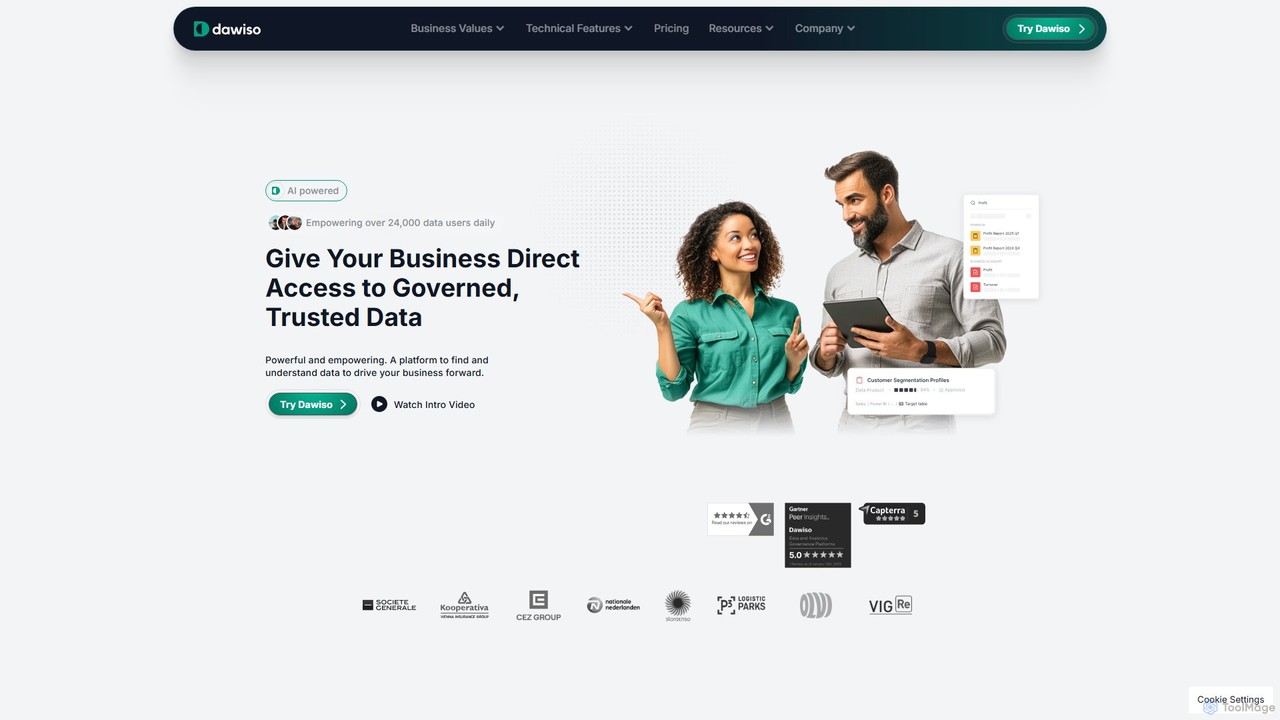
Dawiso
Dawiso is an AI-powered knowledge management and data governance platform. It helps organizations achieve data transparency, streamline compliance, and automate documentation. Using natural language search and AI-assisted writing, Dawiso makes complex data landscapes accessible and manageable for all users, from data engineers to business analysts.
Compliance
Jyek
Jyek is an AI agent platform that understands objectives, creates execution plans, uses tools, and delivers verifiable results for complex, multi-step tasks.
Automation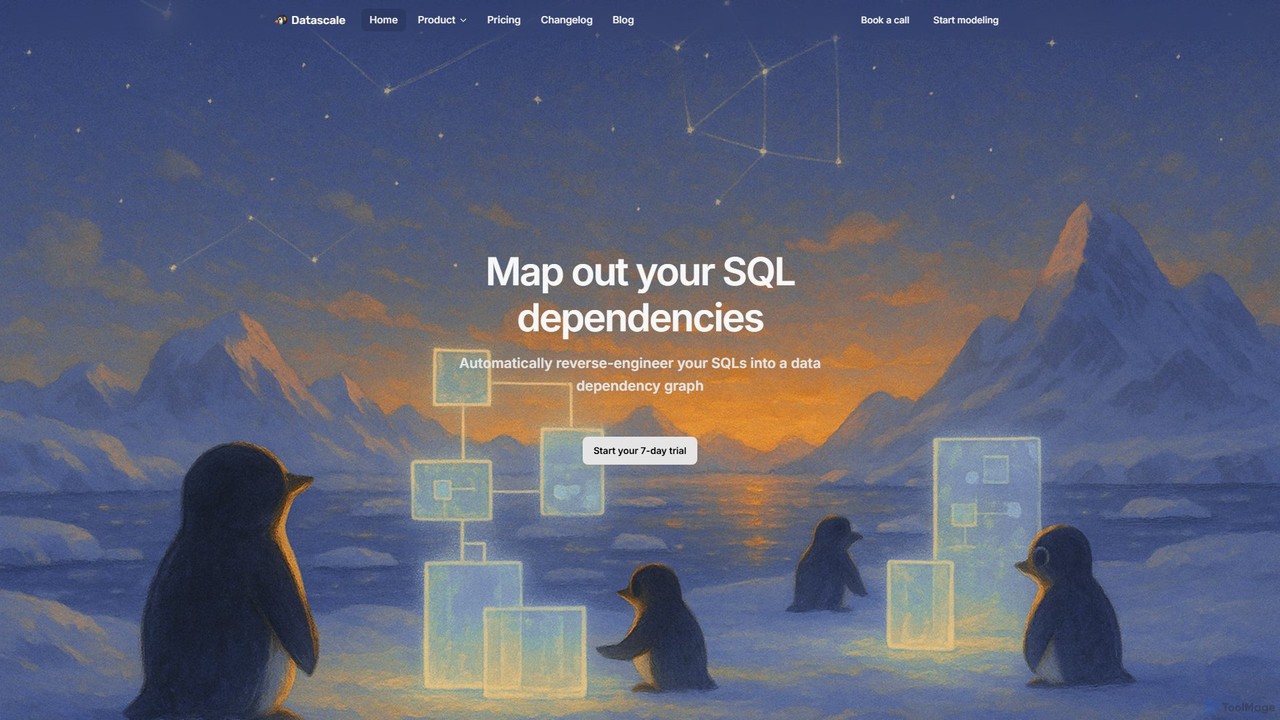
Datascale
Datascale is a cloud-based data modeling and lineage platform designed for modern data teams. It uses AI to automatically visualize SQL dependencies, creating interactive data lineage graphs and ER diagrams. The platform helps users understand data flow, document models visually, and manage a centralized data catalog. With GenAI-powered search and seamless API integration, Datascale simplifies data discovery, impact analysis, and collaboration, ensuring your data knowledge is always clear, connected, and up-to-date.
Analytics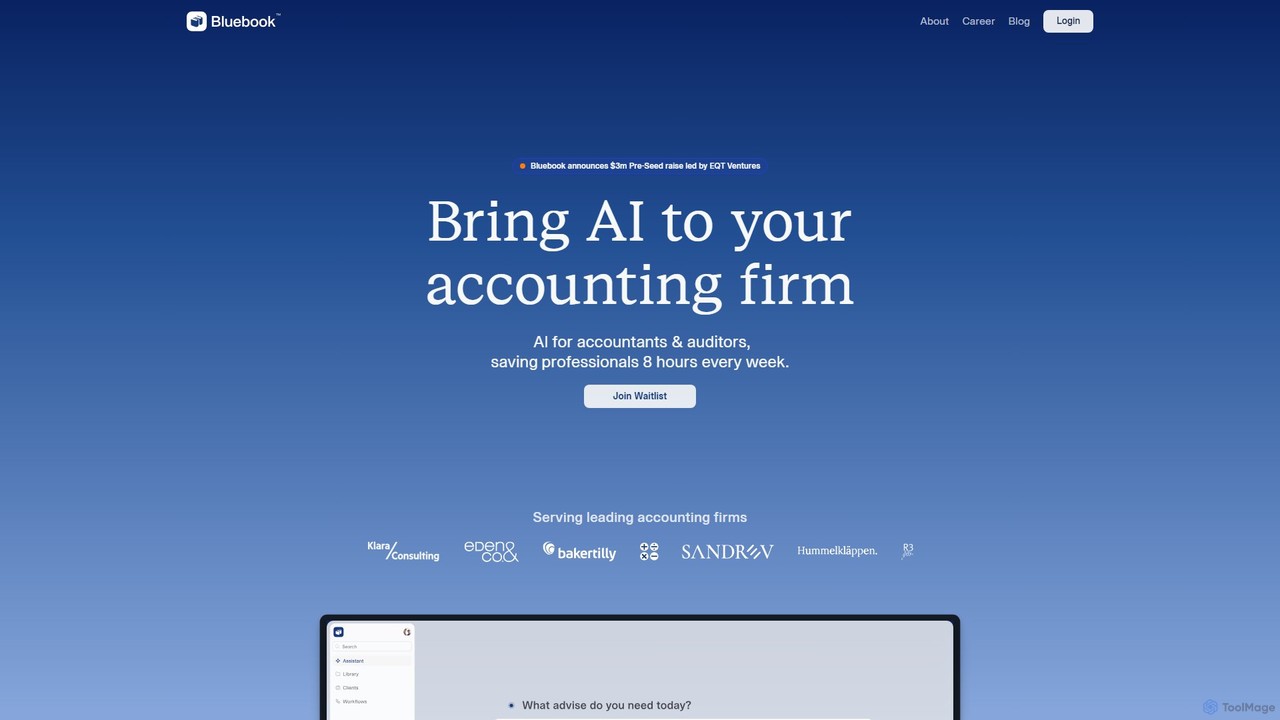
Bluebook
Bluebook provides AI agents for accounting firms to automate workflows, streamline monthly reviews, and conduct complex financial research. It's designed to increase firm capacity, reduce manual tasks, and allow accountants to focus on strategic client advisory.
Data Analysis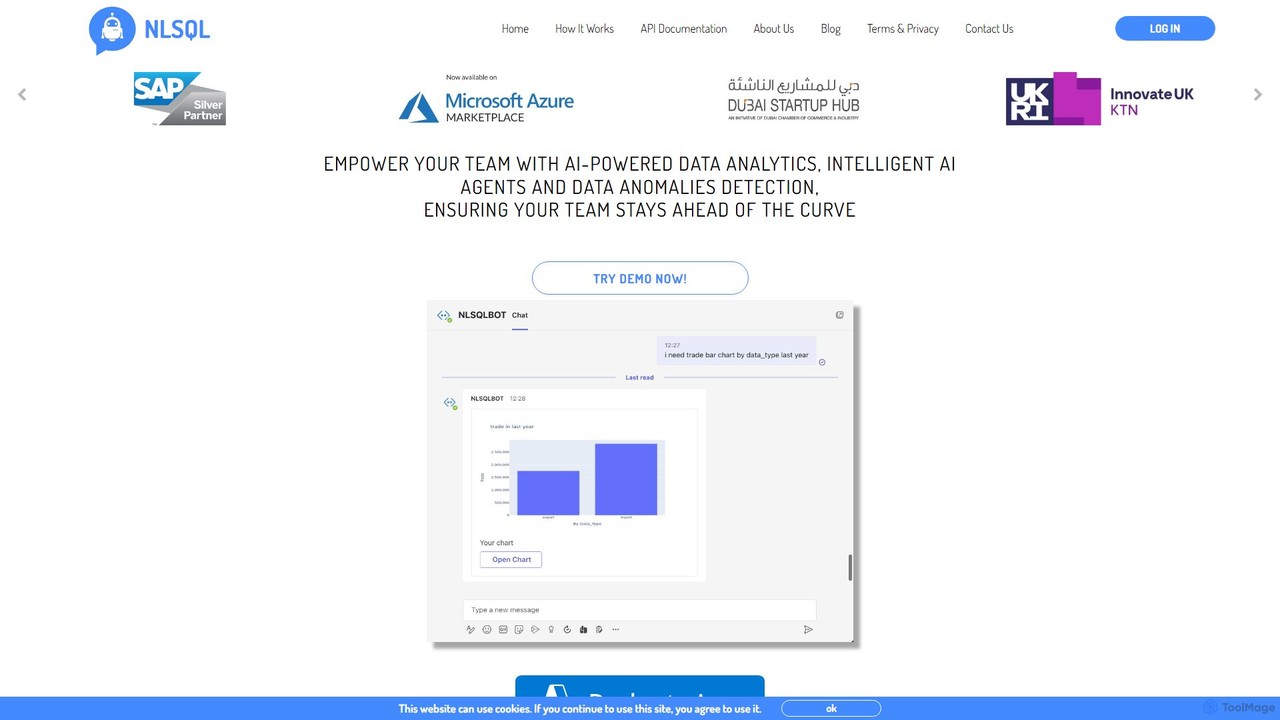
nlsql
nlsql is a B2B AI platform that empowers teams with self-service data analytics. It translates natural language questions into SQL queries, enabling non-technical users to interact with databases seamlessly. It also features intelligent AI agents and proactive data anomaly detection to drive faster, data-driven business decisions.
Business Intelligence
Elementary Data Comments (0)
Sign in to comment.
Sign inNo comments yet.