
Orchestra Overview
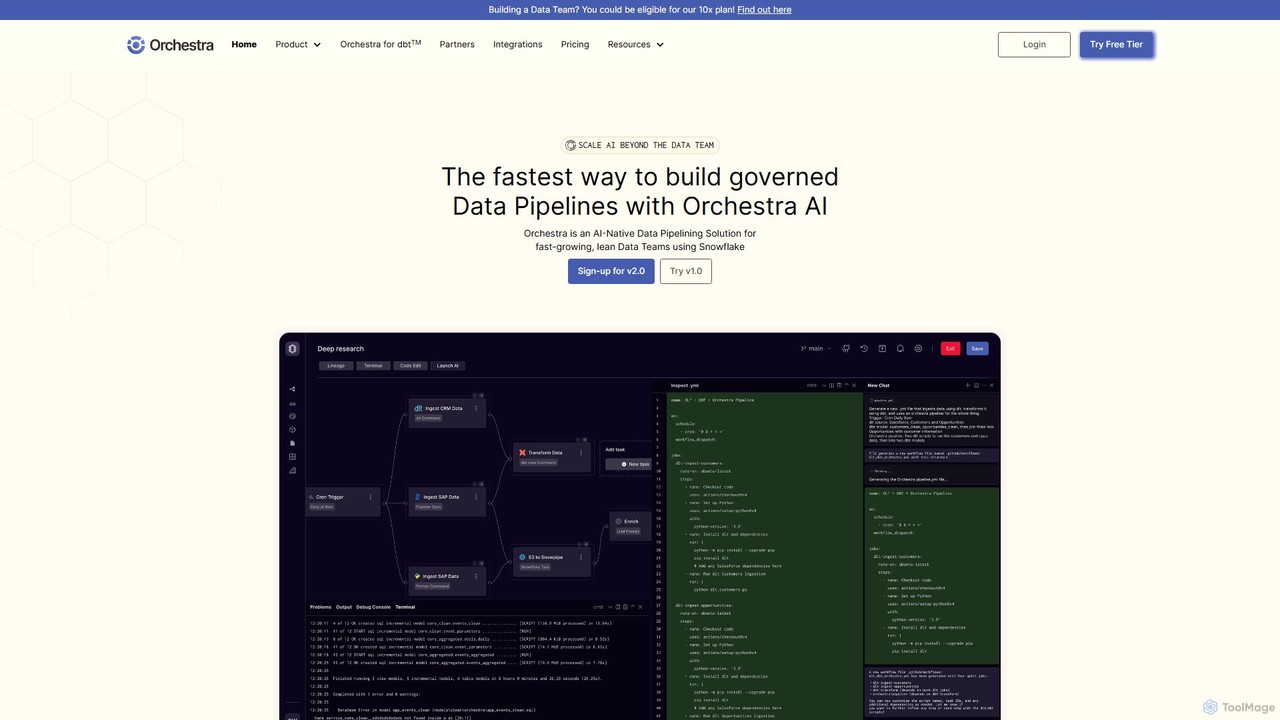
Orchestra is a comprehensive, AI-native data pipelining solution designed to serve as the backbone of the modern data stack for enterprises and fast-growing scale-ups. It provides a unified control plane for data and orchestration, empowering lean data teams to build, manage, and monitor governed data pipelines with unprecedented speed and efficiency. By abstracting away the complexity of underlying infrastructure, Orchestra allows teams to focus on delivering value and preparing data for AI applications, ensuring trust and reliability across the board.
The platform is built on the principle of declarative orchestration, which means users can define the 'what' of their data workflows, and Orchestra handles the 'how'. This approach significantly lowers the learning curve, making it accessible to a broader range of users, including analytics engineers and data analysts, not just seasoned data engineers. It aims to save up to 80% of the time typically spent on maintaining and debugging data infrastructure.
How to use Orchestra
Using Orchestra is a streamlined process designed for rapid implementation and ease of use:
- Connect Your Stack: Begin by integrating your existing data tools. Orchestra offers a vast library of managed integrations for popular services like Snowflake, dbt Core, Fivetran, Airbyte, BigQuery, Databricks, Power BI, and AWS Lambda. This allows you to bring your own stack and build without compromise.
- Build Data Pipelines: Utilize the intuitive, declarative GUI to construct your data pipelines. You can define tasks, set dependencies, and create complex workflows visually. For more advanced users, Orchestra supports Git-backed pipelines, allowing for version control and CI/CD practices using platforms like GitHub and Azure DevOps.
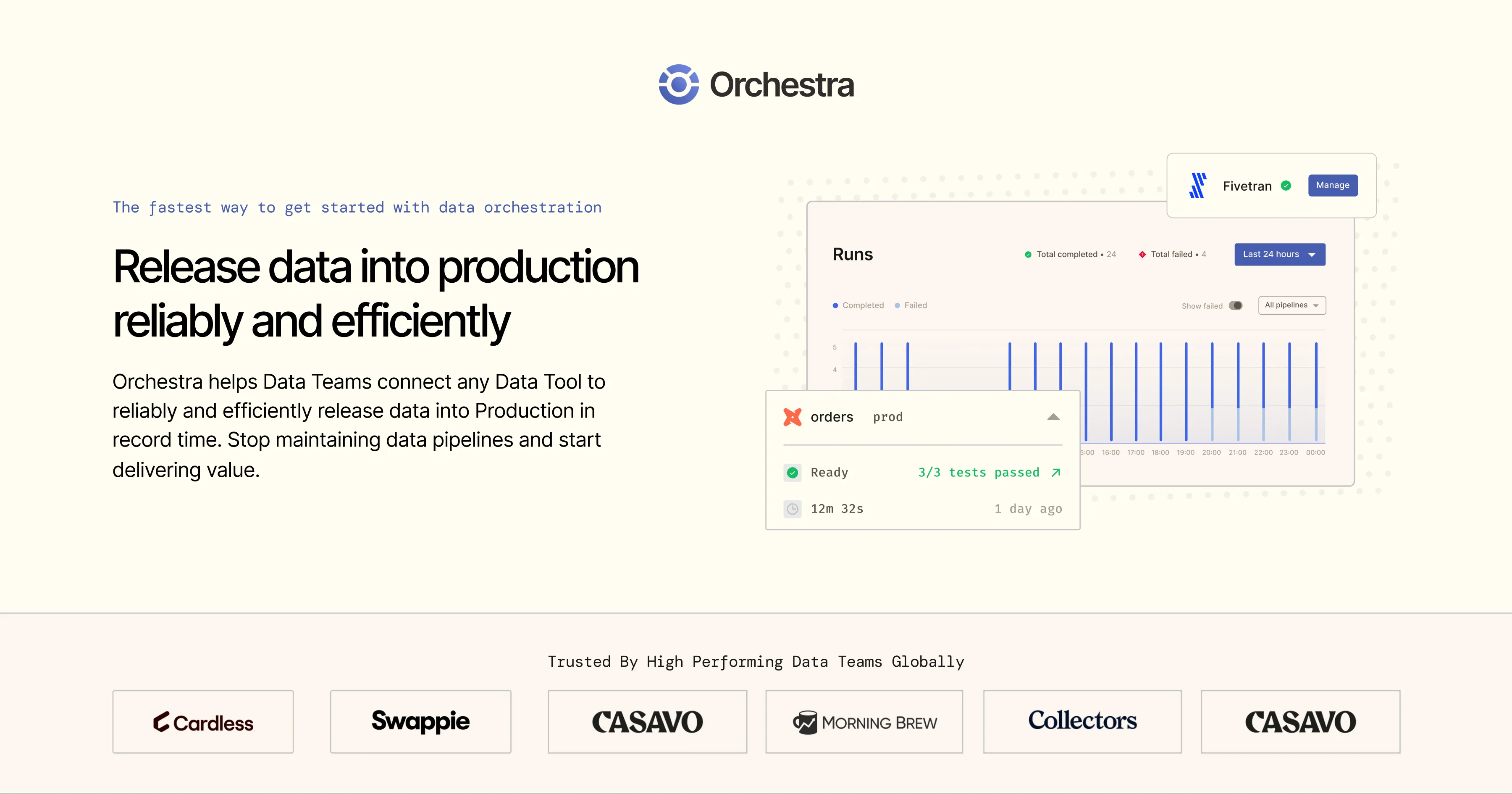
- Orchestrate and Monitor: Schedule and execute your jobs. The unified control plane provides a single pane of glass to view the status of all your end-to-end pipelines. You can see what's running, what has failed, and what's completed, all in one place.
- Observe and Alert: Leverage the full-stack data observability features. Orchestra automatically aggregates metadata and provides end-to-end data lineage, giving you a clear picture of your data's journey. Set up proactive, custom alerts to notify specific team members via Slack or other channels the moment an issue arises, often before downstream consumers are affected.
- Debug and Recover: When failures occur, Orchestra makes recovery simple. The visual lineage helps pinpoint the exact point of failure. You can then use features like 'rerun from failure' and auto-retries to resolve issues quickly, minimizing downtime and manual intervention.
Core Features of Orchestra
- Unified Control Plane: A centralized platform to see, manage, and monitor all data pipelines and orchestration tasks.
- Declarative Orchestration: An intuitive, low-code graphical interface for building and managing data workflows, making it accessible to non-engineers.
- Full-Stack Data Observability: Complete end-to-end data lineage, automated metadata collection, and real-time monitoring of data quality and pipeline health.
- Proactive Alerting: Customizable, targeted alerts that inform the right team members about failures or data quality issues before they impact business operations.
- Extensive Integrations: Seamless, managed connections to over 100 tools in the modern data stack, including data warehouses, ELT tools, BI platforms, and cloud services.
- Automated Recovery and Debugging: Features like auto-retries and the ability to rerun pipelines from the point of failure drastically reduce time spent on troubleshooting.
- Serverless Architecture: A fully managed, serverless backend that eliminates the need to maintain complex infrastructure, offering predictable and scalable pricing.
- Enterprise-Grade Security: SOC2 Type 2 and ISO 27001 compliant, offering features like Single Sign-On (SSO) and role-based access control (RBAC) to ensure data security.
Use Cases for Orchestra
Orchestra is versatile and can be applied to numerous data-related challenges:
- Modern Data Stack Automation: Orchestrate complex ELT pipelines, for example, triggering a Fivetran sync, running a dbt Core transformation job upon its completion, and then refreshing a Power BI or Tableau dashboard.
- AI and Machine Learning Pipelines: Ensure data is clean, reliable, and ready for AI models. Orchestra can trigger and monitor model training and deployment jobs in platforms like AWS Sagemaker.
- Cost Optimization: Migrate from expensive, compute-based orchestration tools like dbt Cloud or self-hosted Airflow to Orchestra's cost-effective serverless model, significantly lowering TCO.
- Empowering Citizen Data Professionals: Enable analytics engineers and data analysts to build and manage their own data pipelines, freeing up data engineering resources to focus on more complex challenges.
- Cross-Cloud and Hybrid Deployments: Manage data workflows that span multiple cloud providers (AWS, Azure, GCP) or on-premise systems using features like SSH tunneling.
Advantages of Orchestra
Teams choosing Orchestra benefit from a range of advantages:
- Speed and Agility: Implement data pipelines 10x faster than with legacy frameworks. Set up takes days, not months.
- Reduced Maintenance Overhead: Save up to 80% of time on maintenance thanks to automated debugging, lineage, and alerting.
- Lower Total Cost of Ownership (TCO): Predictable, fixed pricing models prevent runaway costs associated with compute-based billing.
- Enhanced Visibility and Trust: The unified view and proactive quality checks build stakeholder confidence in the data.
- Improved Team Collaboration: Provides a single source of truth for all data operations, improving cohesion between technical and non-technical team members.
Pricing and Plans
Orchestra offers transparent, scalable pricing plans:
- Lean Plan: $0/month. Ideal for individuals and small teams starting out. Includes 1 User, 1 Environment, 3 Pipelines, and 30 Daily Compute Minutes.
- Scale Up Plan: $600/month + $0.033/compute minute. Designed for growing data teams. Includes 5 Users, 2 Environments, 10 Pipelines, and 400 Daily Compute Minutes, plus more advanced features.
- Enterprise Plan: Custom pricing. A bespoke solution for large organizations with no limits on users, environments, pipelines, or compute, and includes premium support and security features.
Traffic
Latest traffic
Status
Monthly traffic trend
- 2025-9: 120.2K
- 2026-1: 97.4K
- 2026-2: 78.8K
- 2026-3: 83.8K
- 2026-4: 76.7K
- 2026-5: 70.7K
Geography
Top 5 countries / regions
- 🇺🇸United States40.2%
- 🇳🇬Nigeria17.9%
- 🇮🇳India15.3%
- 🇩🇪Germany14.4%
- 🇬🇧United Kingdom12.2%
Traffic sources
| Source type | Percentage |
|---|---|
Direct | 69.3% |
Referral | 30.7% |
Top keywords
| Keyword | Cost per click |
|---|---|
| claude pro vs max | $4.81 |
| is black better at formatting than ruff? | $0.00 |
| orchestra data | $0.00 |
| snowflake s3 equivalent | $0.00 |
| vscode reopen editor | $0.00 |
Orchestra Videos on YouTube
peter nguyen

SPEME Lab UNICAL


Orchestra

The Rock Orchestra


Abdallah Khalil
Orchestra Alternatives
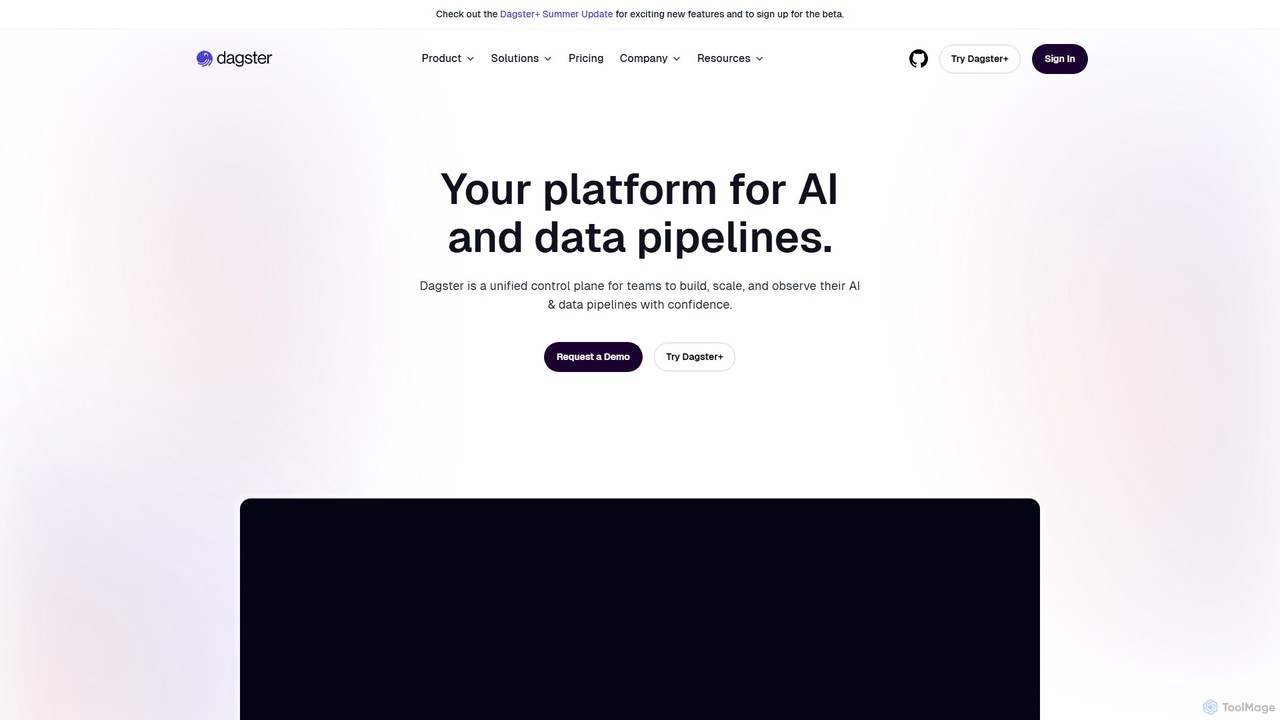
Dagster
Dagster is a modern, open-source data orchestrator designed for building, scaling, and observing AI and data pipelines. It acts as a unified control plane, allowing teams to model data assets, track lineage, and ensure data quality with confidence. By integrating software engineering best practices like local testing and reusable components, Dagster helps data engineers and ML teams ship products faster and more reliably.
Machine Learning Operations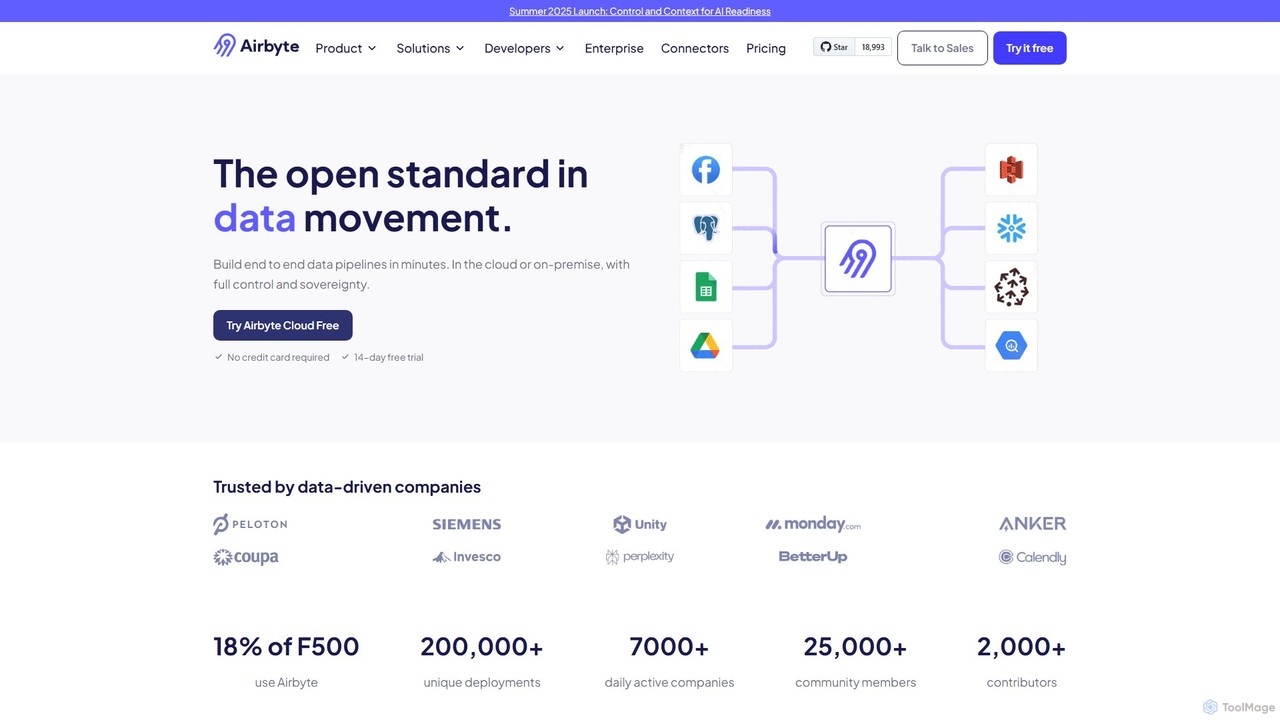
Airbyte
Airbyte is an open-source data integration platform that simplifies building and managing data pipelines. It enables you to move data from hundreds of sources to destinations like data warehouses, lakes, and vector databases in minutes, using a vast catalog of pre-built connectors or by creating your own with a low-code builder. It supports both cloud and self-hosted deployments, focusing on data security, governance, and scalability for modern data and AI applications.
Data Pipelines
Paradime
Paradime is an AI-powered ELT platform for analytics and AI, designed as a superior alternative to dbt Cloud. It integrates an AI-enhanced Code IDE, automated data pipelines (Bolt), and a FinOps cost-saving tool (Radar) into a single, unified platform. This empowers data teams to accelerate development, increase reliability, and significantly reduce data warehouse costs, streamlining the entire analytics engineering workflow.
Analytics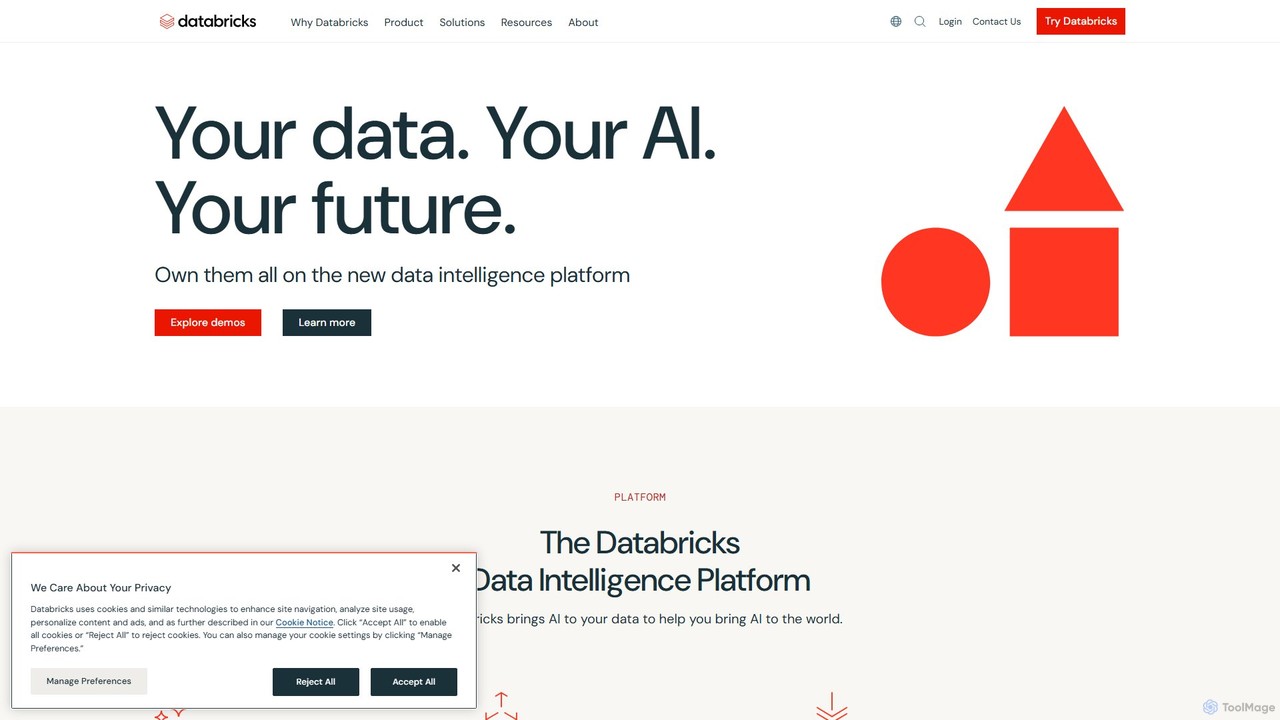
Databricks
Databricks is a unified Data Intelligence Platform that combines data warehousing and data lakes into a lakehouse architecture. It enables enterprises to manage the entire data lifecycle, from data engineering and ETL to business intelligence, data science, and large-scale generative AI applications, all on a single, collaborative platform.
Machine Learning Platform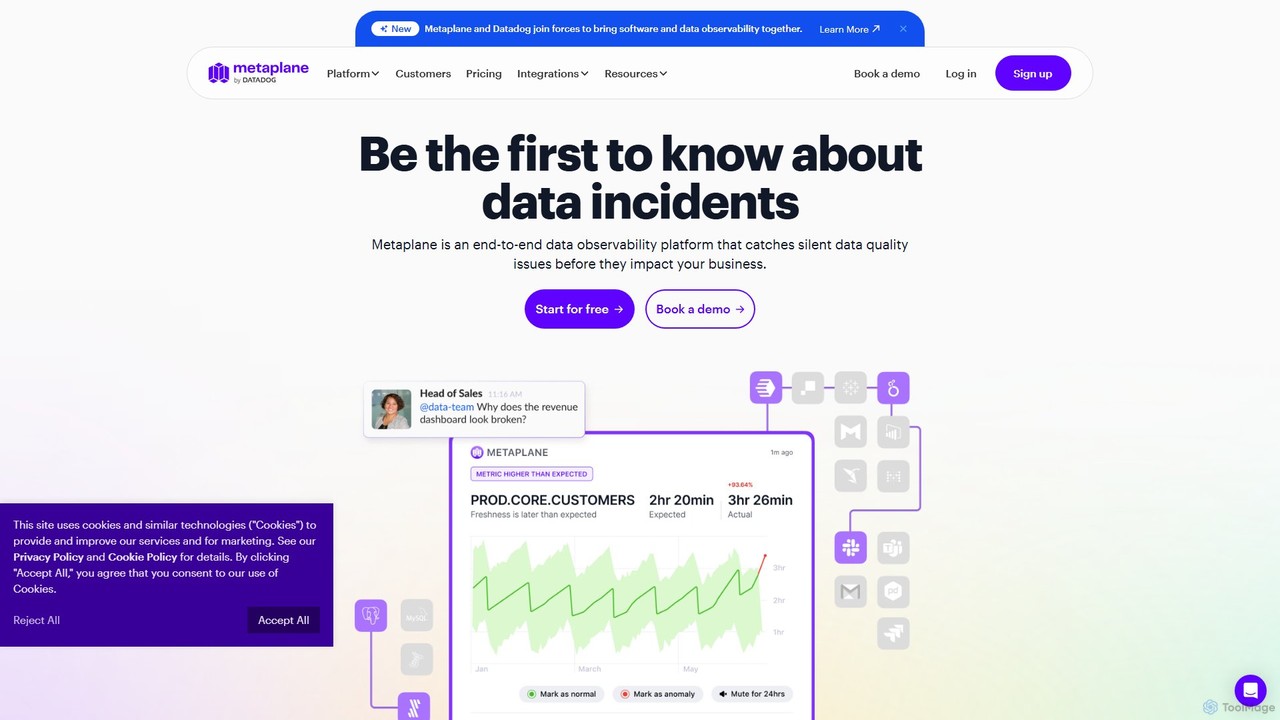
Metaplane
Metaplane is an end-to-end data observability platform for modern data teams. It uses machine learning to automatically monitor your data stack, detect silent data quality issues before they impact the business, and provide actionable alerts with full context.
AnalyticsOrchestra Categories
Orchestra Embed Widget
Copy this embed code to place the badge on your blog, article, or product site and send readers directly to this ToolMage detail page.

Related AI tools
Paradime
Paradime is an AI-powered ELT platform for analytics and AI, designed as a superior alternative to dbt Cloud. It integrates an AI-enhanced Code IDE, automated data pipelines (Bolt), and a FinOps cost-saving tool (Radar) into a single, unified platform. This empowers data teams to accelerate development, increase reliability, and significantly reduce data warehouse costs, streamlining the entire analytics engineering workflow.
AnalyticsDagster
Dagster is a modern, open-source data orchestrator designed for building, scaling, and observing AI and data pipelines. It acts as a unified control plane, allowing teams to model data assets, track lineage, and ensure data quality with confidence. By integrating software engineering best practices like local testing and reusable components, Dagster helps data engineers and ML teams ship products faster and more reliably.
Machine Learning OperationsMetaplane
Metaplane is an end-to-end data observability platform for modern data teams. It uses machine learning to automatically monitor your data stack, detect silent data quality issues before they impact the business, and provide actionable alerts with full context.
Analytics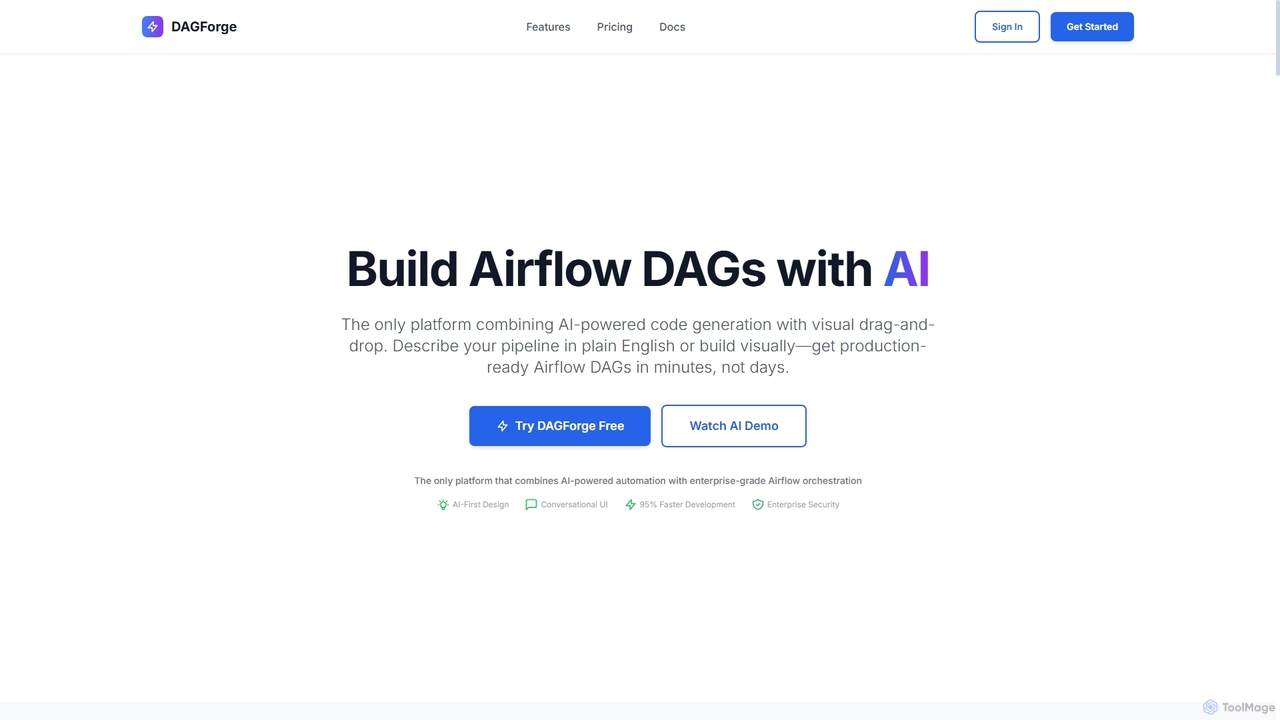
DAGForge
DAGForge is an AI-powered platform that combines conversational AI with a visual drag-and-drop interface to build production-ready Airflow DAGs 10x faster. It enables data professionals to describe data pipelines in plain English and deploy them in minutes, not days, streamlining data orchestration and development.
Workflow Automation
Jyek
Jyek is an AI agent platform that understands objectives, creates execution plans, uses tools, and delivers verifiable results for complex, multi-step tasks.
AutomationAirbyte
Airbyte is an open-source data integration platform that simplifies building and managing data pipelines. It enables you to move data from hundreds of sources to destinations like data warehouses, lakes, and vector databases in minutes, using a vast catalog of pre-built connectors or by creating your own with a low-code builder. It supports both cloud and self-hosted deployments, focusing on data security, governance, and scalability for modern data and AI applications.
Data Pipelines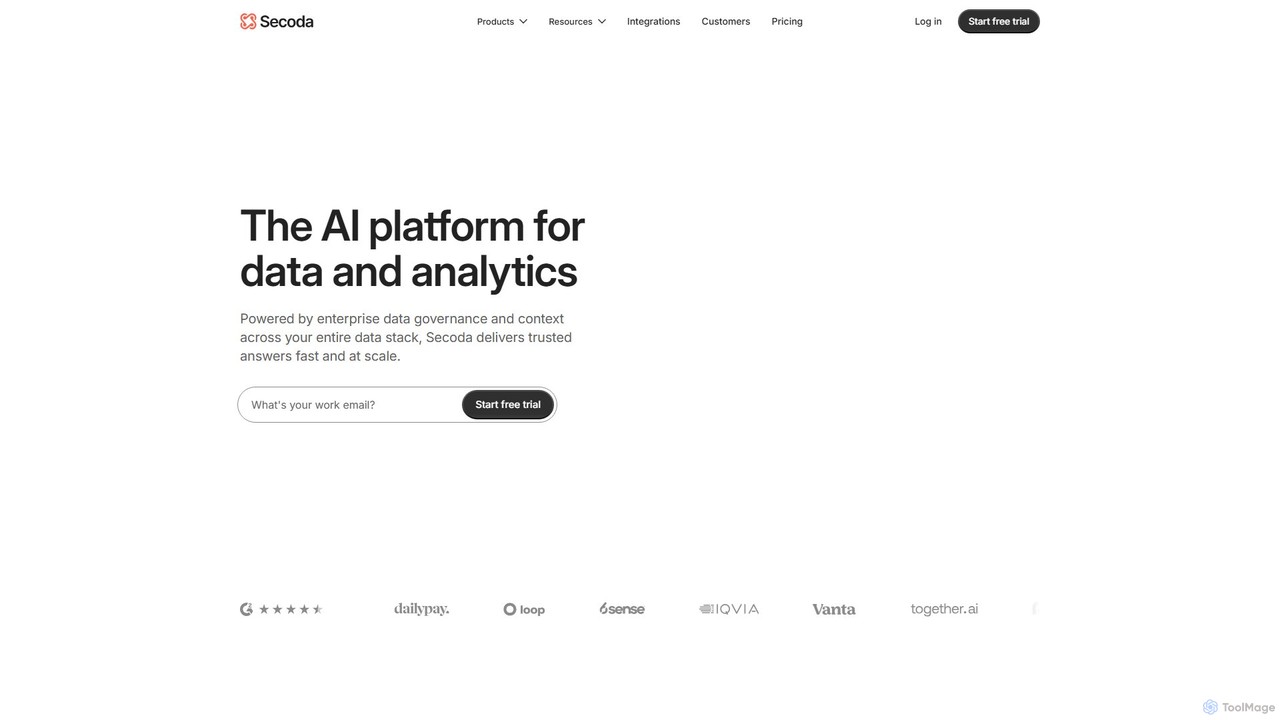
Secoda
Secoda is an AI-powered data platform that unifies data discovery, lineage, cataloging, and governance. It helps teams find, understand, and trust their data through an intelligent, centralized hub, enabling self-service analytics and scalable AI infrastructure.
Analytics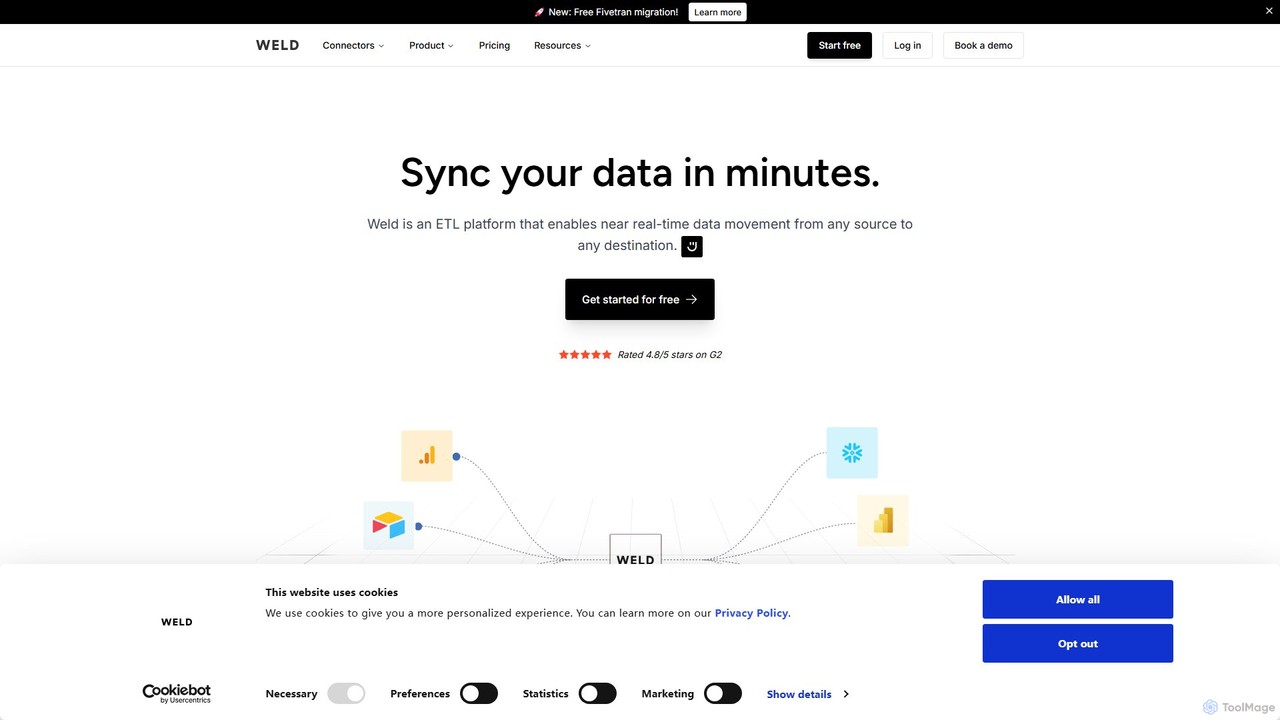
Weld
Weld is an AI-powered data platform that automates data integration and transformation. It centralizes data from all your SaaS tools and databases into a cloud warehouse like Snowflake or BigQuery. With its AI assistant, Ed, teams can easily clean, model, and prepare data for analytics, business intelligence, and AI applications, breaking down data silos and unlocking real-time insights.
Analytics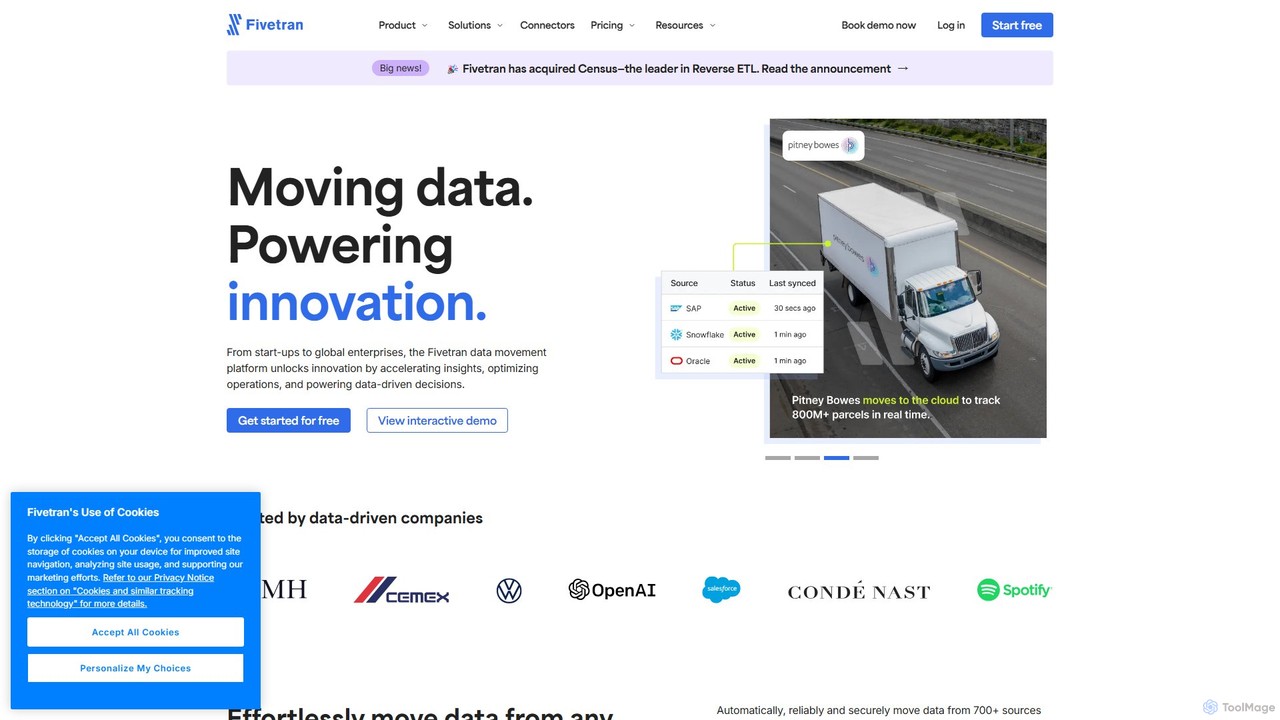
Fivetran
Fivetran is an automated data movement platform that centralizes data from hundreds of sources into cloud data warehouses, lakes, and databases. It simplifies and accelerates data integration with pre-built, zero-maintenance pipelines, enabling teams to focus on analytics, AI, and business intelligence rather than on engineering.
Etl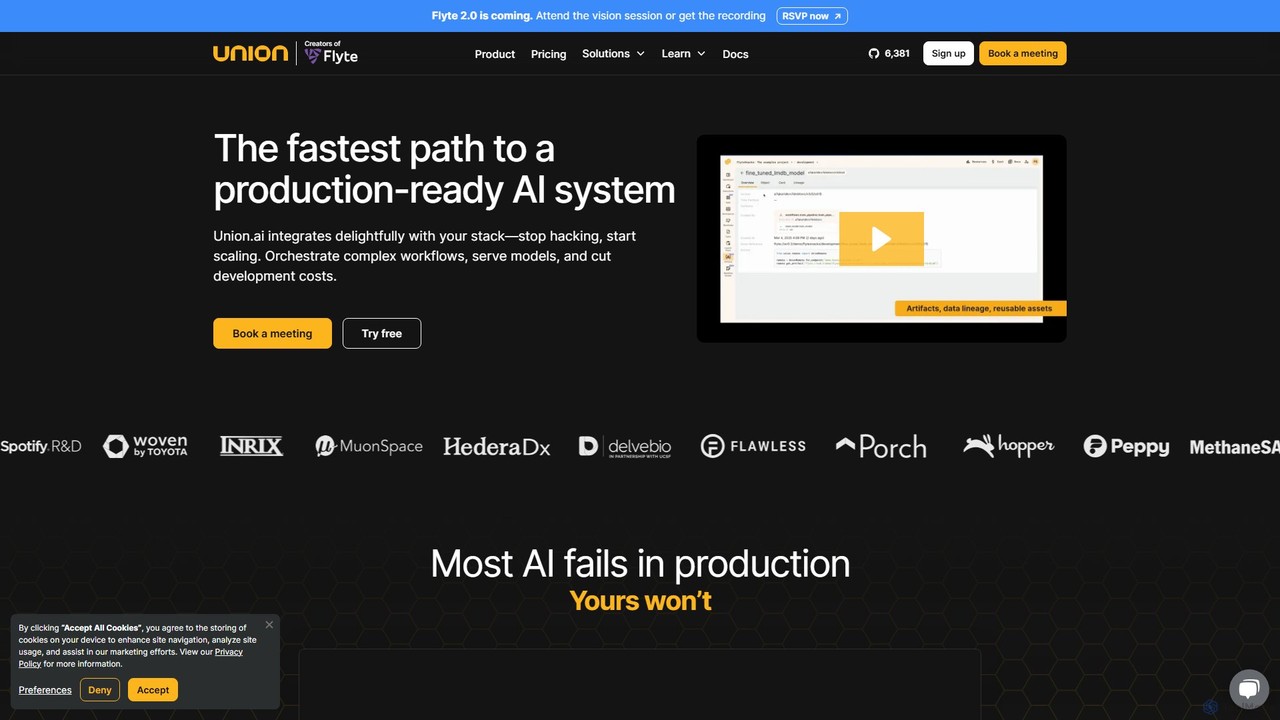
Union.ai
Union.ai is an enterprise-grade, production-ready platform for orchestrating complex AI and machine learning workflows. Built on the open-source Flyte, it empowers teams to build, serve, and scale compound AI systems with unparalleled performance and efficiency. It bridges the data-ML gap, optimizes cloud costs with features like scale-to-zero, and enhances developer velocity through a seamless, integrated experience.
Orchestration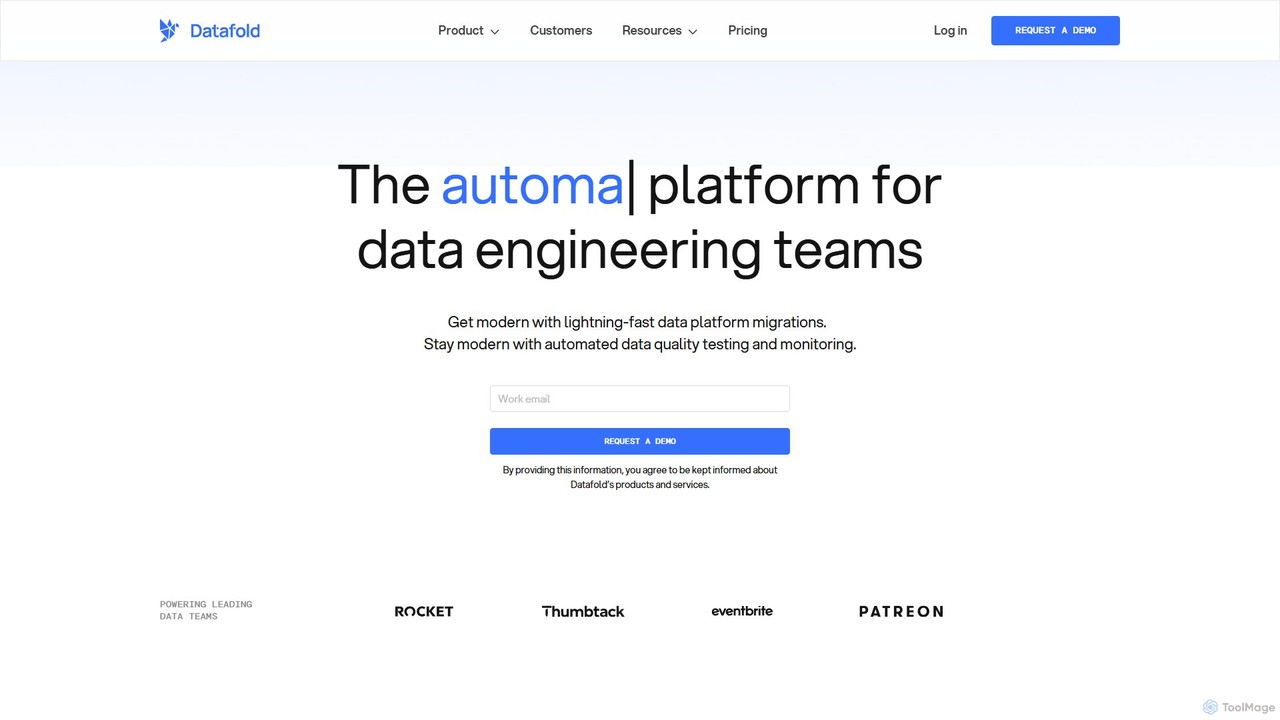
Datafold
Datafold is an AI-powered platform for data engineering teams that automates data quality testing, monitoring, and migrations. It uses data diffing to compare datasets, enabling proactive issue detection in CI/CD and ensuring 100% parity during complex data migrations, accelerating timelines by up to 6x.
Analytics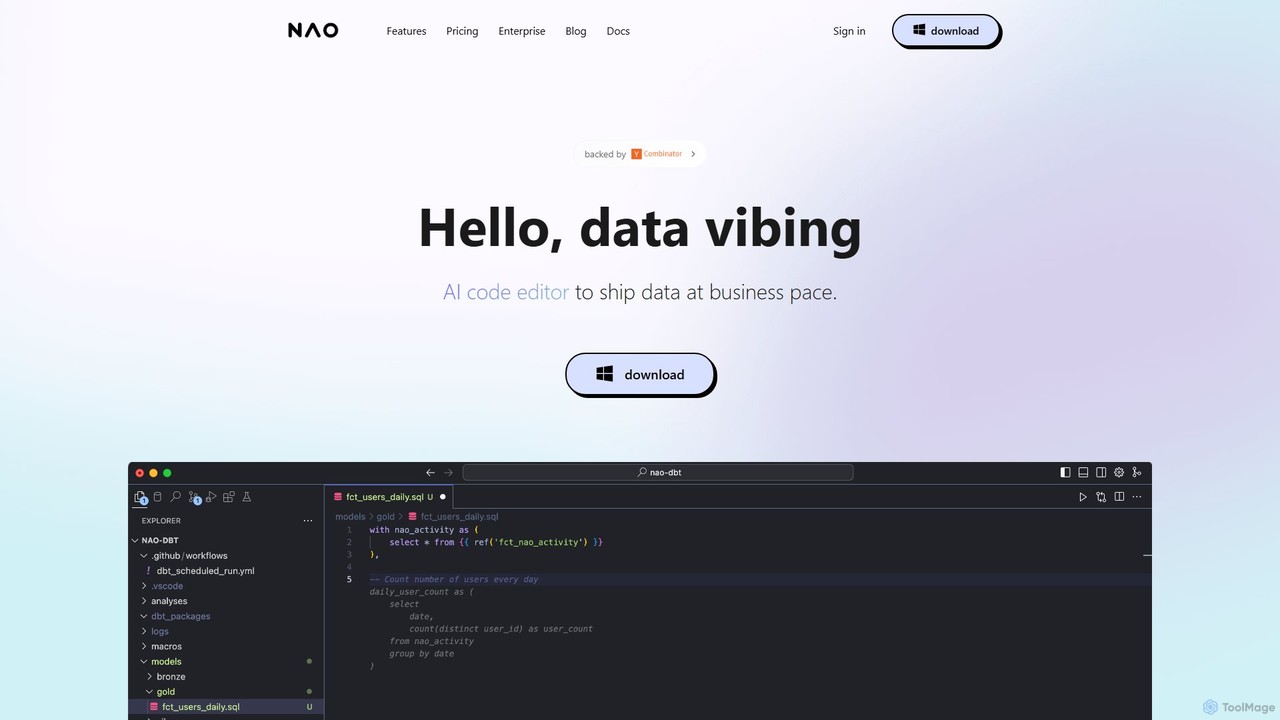
nao
nao is an AI-powered code editor designed for data teams. It streamlines SQL and Python data pipeline creation, dbt workflows, and analytics by natively connecting to your data warehouse. Its intelligent agent provides data-aware code suggestions, quality checks, and instant diff previews to help you ship data faster and more safely.
Analytics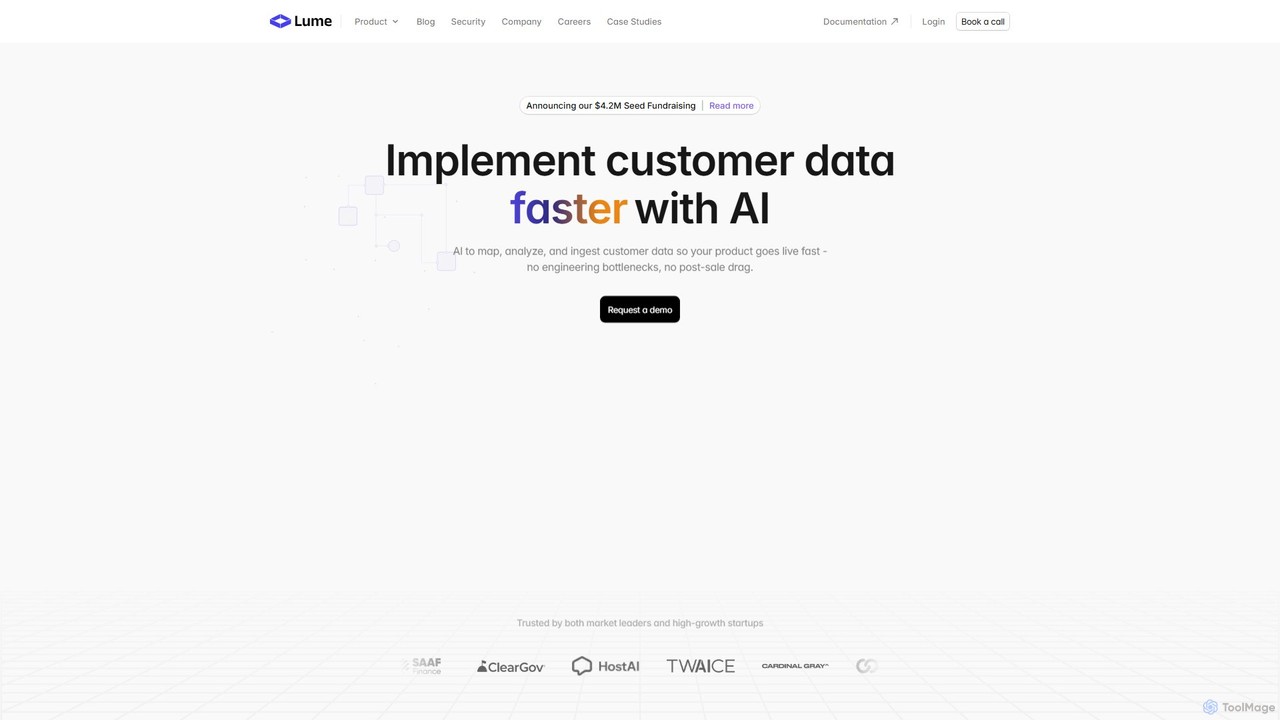
Lume AI
Lume AI is an AI-powered platform designed to automate and accelerate customer data implementation. It intelligently maps, analyzes, and ingests customer data, eliminating engineering bottlenecks and reducing onboarding time from weeks to days. By offering both a no-code interface and a flexible API, Lume AI helps businesses streamline data integration, normalize data from various sources, and manage complex data pipelines, allowing teams to focus on their core product value.
Data Management
Eventual
Eventual is building the future of data infrastructure with Daft, a high-performance, open-source query engine for multimodal data. It enables engineers to process petabyte-scale images, video, audio, and text with the simplicity of SQL, drastically accelerating AI and ML workflows without the need for deep distributed systems expertise.
Machine Learning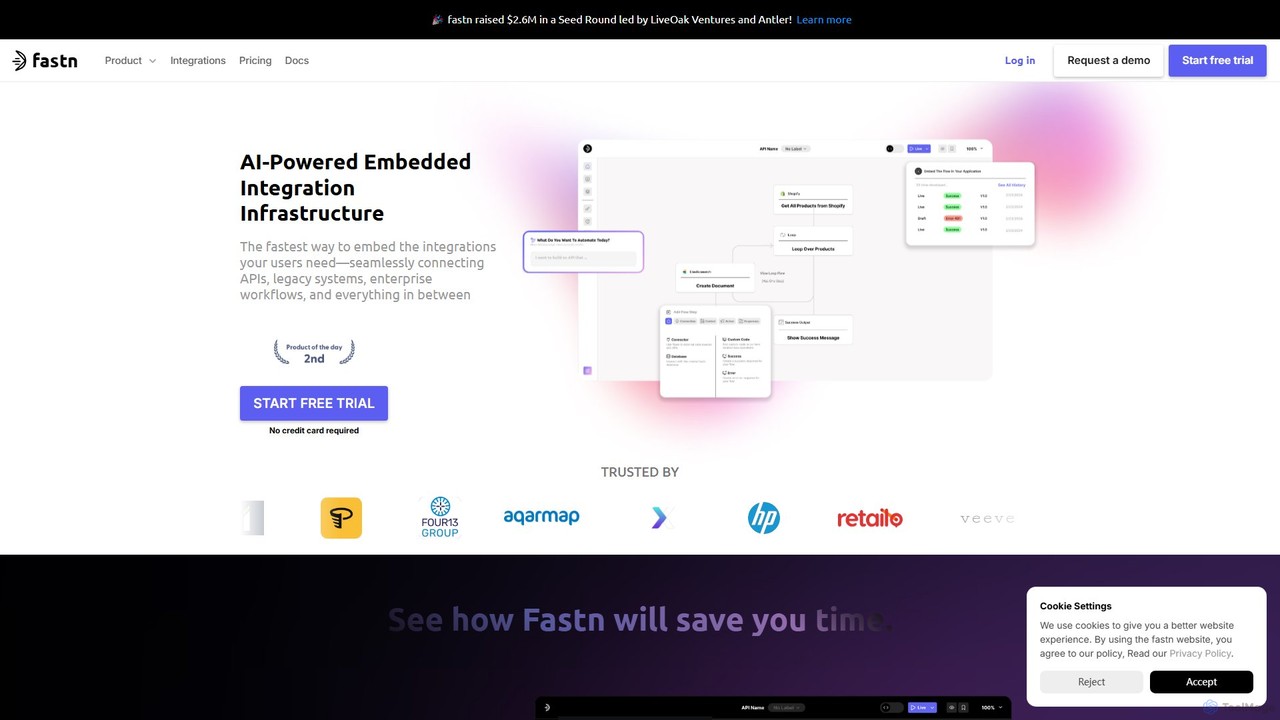
fastn
fastn is an AI-powered, low-code embedded integration platform (iPaaS) for SaaS companies. It enables developers to rapidly build, manage, and embed complex integrations using a visual interface and AI-driven prompts. Unify data from disparate sources like APIs, legacy systems, and enterprise workflows into a single, high-performance API to accelerate development and reduce costs.
Api Management
Orchestra Comments (0)
Sign in to comment.
Sign inNo comments yet.