
DataChain Overview
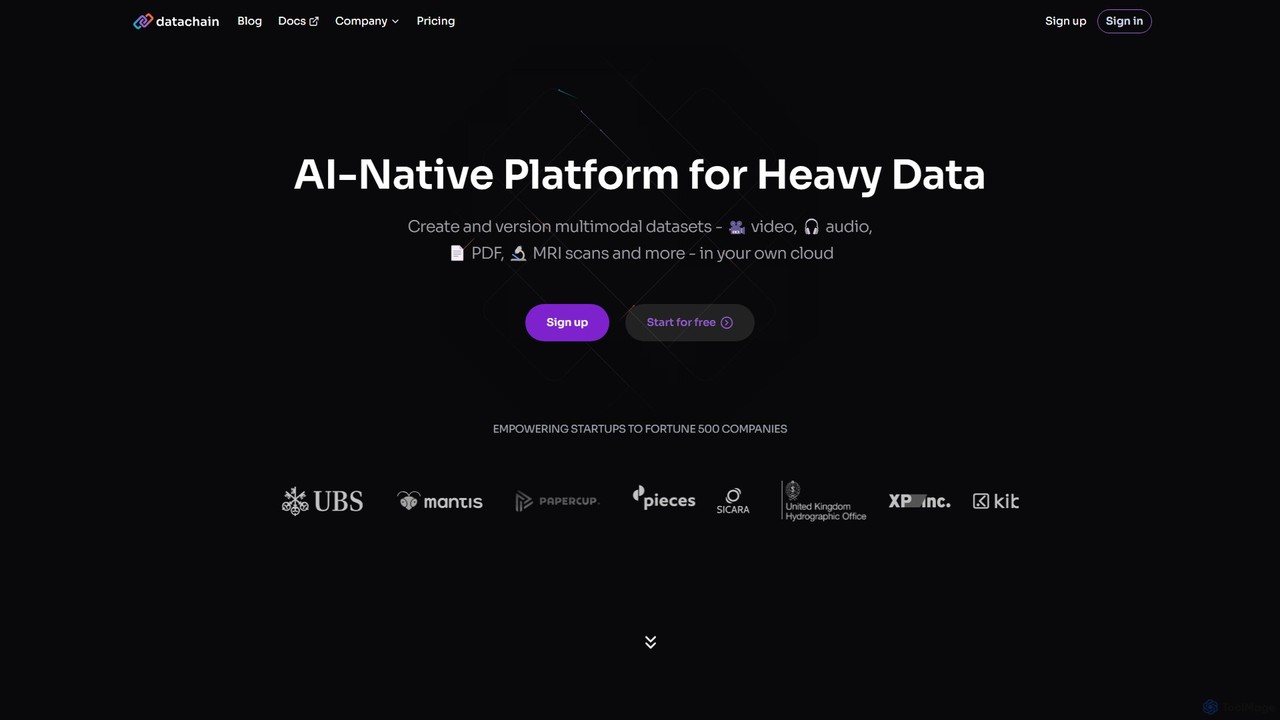
DataChain is an advanced, open-source platform designed to tackle the challenges of "Heavy Data"—the rich, multimodal, and unstructured data that fuels the next generation of AI. Developed by the team behind the popular DVC (Data Version Control), DataChain provides a comprehensive solution for curating, enriching, and versioning massive datasets such as videos, images, audio files, and PDFs that typically reside in object stores like S3, GCS, or Azure.
The platform is built with a developer-first philosophy, empowering teams to transform raw, unstructured files into AI-ready knowledge. It allows for the extraction of structure, embeddings, and critical insights, which are essential for powering sophisticated AI agents, copilots, and adaptive workflows. By turning heavy data into a competitive advantage, DataChain helps teams build efficient and powerful data pipelines without the need for constant data reprocessing.
How to use DataChain
DataChain offers a streamlined, code-centric workflow that integrates seamlessly into a developer's existing environment.
- Develop Locally: Start by defining your data processing pipelines using simple Python code directly in your local Integrated Development Environment (IDE). This intuitive approach eliminates the need for complex SQL queries or specialized languages.
- Connect to Data Sources: Connect to your unstructured data stored in S3, GCS, Azure, or other object storage. DataChain operates with a zero-copy architecture, meaning it tracks versions and references without duplicating your large files, saving significant storage costs and time.
- Process and Enrich: Apply Large Language Models (LLMs) and custom Machine Learning (ML) models to your data to extract insights, generate embeddings, and structure your information. This can involve tasks like transcribing audio, running object detection on videos, or parsing text from PDFs.
- Version and Track: DataChain automatically creates a centralized dataset registry that tracks full data lineage, including all code and data dependencies. This ensures that every dataset is versioned, auditable, and fully reproducible.
- Scale to the Cloud: Once your pipeline is tested locally, you can deploy it to the cloud and scale it across hundreds of GPUs with zero rework. The platform handles distributed processing and auto-scaling, efficiently processing millions or even billions of files.
- Access and Query: The versioned, structured datasets can be accessed and queried through a web UI, chat interfaces, IDEs, or directly by AI agents via the platform's API.
Core Features of DataChain
- Centralized Dataset Registry: Provides a single source of truth for all your datasets with full lineage, metadata, and versioning.
- Python Simplicity with SQL-Scale: Use a single, intuitive Python interface for all data operations, making it easy for developers and more compatible with IDEs and agents.
- Local IDE & Cloud Scale: The most productive way to build data pipelines—develop and test locally, then scale to massive cloud infrastructure seamlessly.
- Zero Data Copy, Zero Lock-In: Your data stays in your own storage. DataChain only manages metadata and versions, preventing vendor lock-in and reducing costs.
- Multimodal Data Processing: Natively handles and processes diverse unstructured data types, including videos, PDFs, audio, and images.
- Large-Scale Data Processing: Engineered to efficiently handle millions or billions of files, filter data using ML models, and compute dataset updates with ease.
- Reproducibility and Data Lineage: Automatically track all dependencies to reproduce any version of a dataset and automatically update them via ETL processes.
- Parallel & Distributed Processing: Leverages modern cloud infrastructure for high-speed, parallel data processing.
Use Cases for DataChain
DataChain is versatile and can be applied to a wide range of AI and data engineering challenges:
- Fine-Tuning Multimodal Models: Prepare and version complex datasets for fine-tuning models like CLIP to match images with text captions.
- Scalable Document Processing: Build pipelines to extract and parse text from millions of documents (e.g., PDFs) and create vector embeddings for RAG (Retrieval-Augmented Generation) systems.
- Generative AI for Computer Vision: Create, curate, and manage vast datasets required for training and evaluating generative computer vision models.
- Powering AI Agents and Copilots: Provide reliable, versioned, and structured data to ensure AI agents and copilots operate on accurate and up-to-date information.
- Data Curation and Filtering: Use ML models to programmatically filter, label, and select the most valuable data from massive raw collections.
Advantages of DataChain
DataChain offers a distinct edge for teams working with modern AI systems:
- Efficiency: The zero-copy architecture and scalable processing dramatically reduce time and cost associated with data preparation.
- Developer-Centric: The Python-native approach lowers the barrier to entry and increases productivity for development teams.
- Robustness and Reproducibility: Guarantees that all data work is versioned and reproducible, which is critical for enterprise-grade AI applications.
- Open-Source Foundation: Built on a powerful open-source core, offering transparency, flexibility, and a strong community.
- From a Trusted Team: Developed by the creators of DVC, a widely respected tool in the MLOps community, ensuring a deep understanding of data management challenges in ML.
Pricing and Plans
DataChain offers a flexible, tiered pricing model to suit different needs:
- Open Source: A free, self-hosted plan that includes all core features like unstructured storage support, data versioning & lineage, semantic search, Python pipelines, and parallel processing. It's suitable for terabyte-scale data and up to 30 million items.
- Teams (SaaS): A managed cloud offering designed for teams. It includes everything in Open Source plus features for petabyte-scale data (1B+ items), distributed processing, auto-scaling, a shared dataset registry with a web UI, SSO/SAML, and RBAC. Pricing is available upon contacting sales.
- Enterprise: For large organizations with specific security and deployment needs. This plan includes all Teams features plus options for Bring Your Own Cloud (BYOC) and on-premise deployments. Pricing is available upon contacting sales.
Traffic
Latest traffic
Status
Monthly traffic trend
- 2025-9: 3.8K
- 2026-1: 5.3K
- 2026-2: 4.5K
- 2026-3: 6.0K
- 2026-4: 3.2K
- 2026-5: 4.4K
Geography
Top 5 countries / regions
- 🇺🇸United States52.3%
- 🇷🇺Russia19.7%
- 🇮🇳India13.2%
- 🇩🇪Germany12.2%
- 🇪🇸Spain2.6%
Top keywords
| Keyword | Cost per click |
|---|---|
| chemin ai | $0.00 |
| claude structured output | $0.00 |
| data chain | $0.00 |
| datachain | $0.00 |
| unstructured io | $1.63 |
DataChain Alternatives
Tidepool
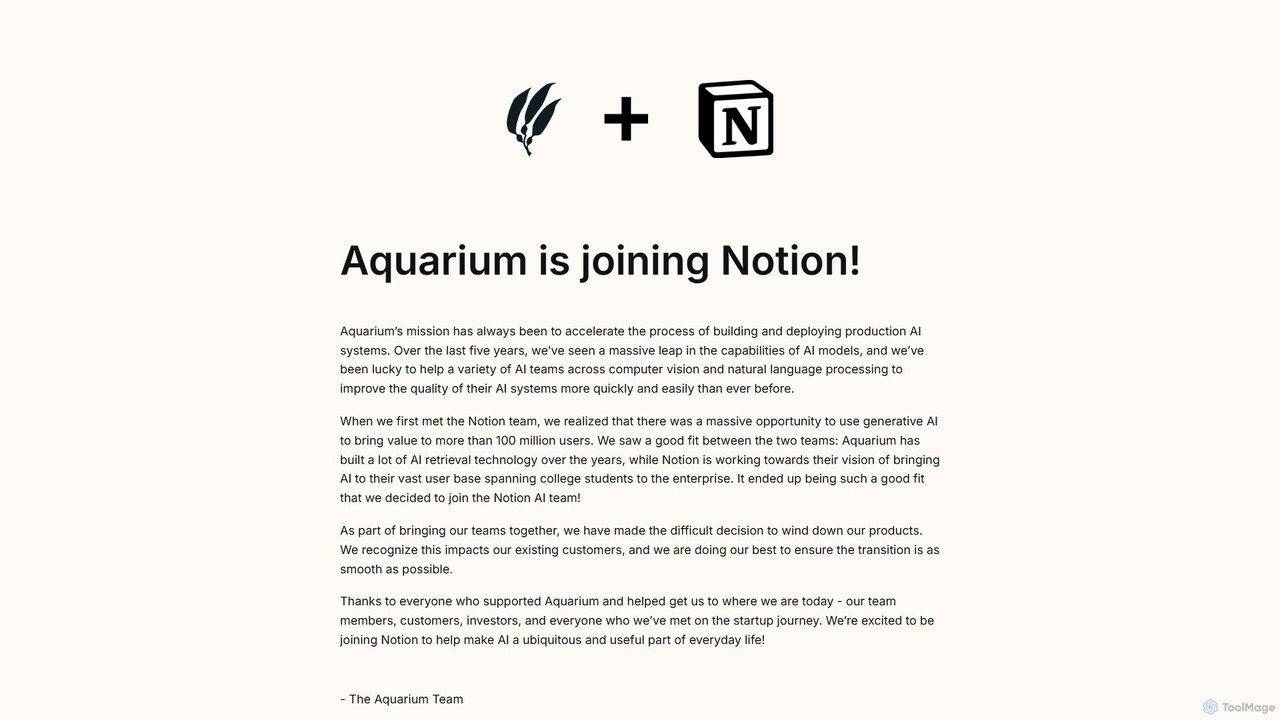
Tidepool (formerly Aquarium) was a powerful MLOps platform designed for AI teams to improve machine learning models. It specialized in managing and curating datasets for computer vision and NLP, enabling faster iteration and higher model performance through a data-centric approach.
Machine Learning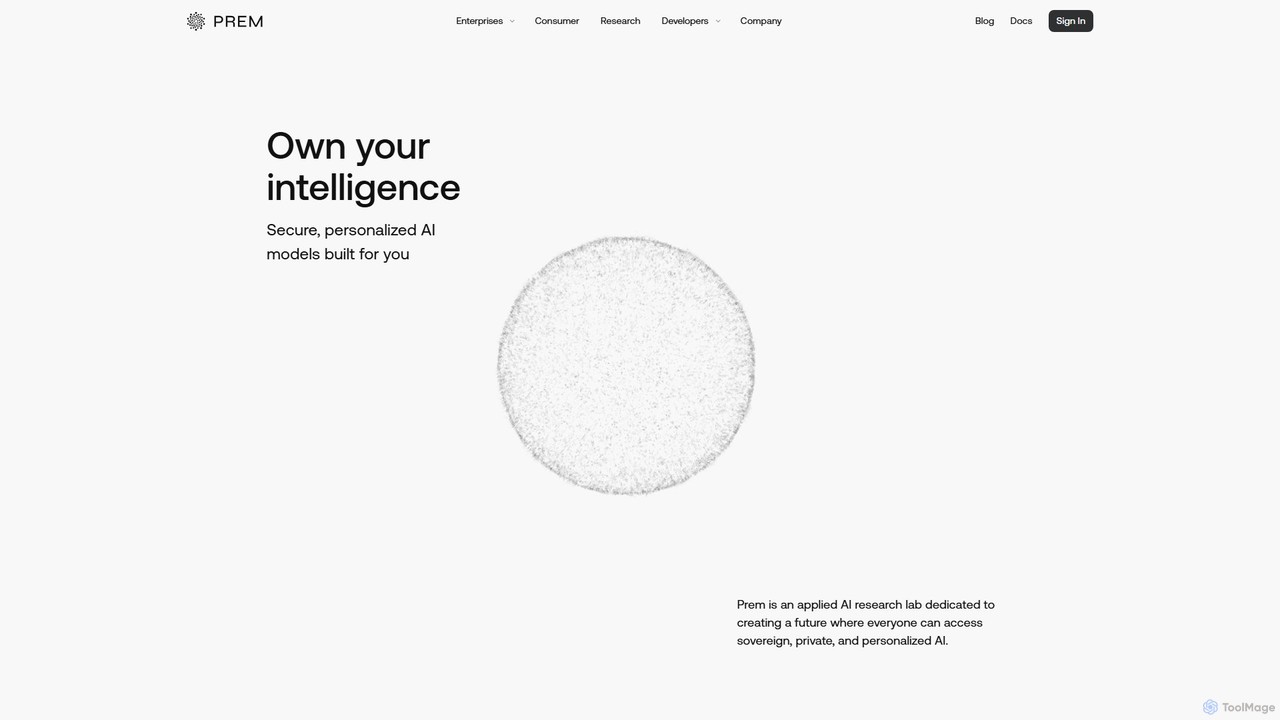
PremAI
PremAI is an enterprise-grade platform for building, fine-tuning, and deploying secure, private AI models. It empowers businesses to transform their raw data into high-performance, specialized models while maintaining absolute data sovereignty and leveraging state-of-the-art encryption for maximum privacy.
Database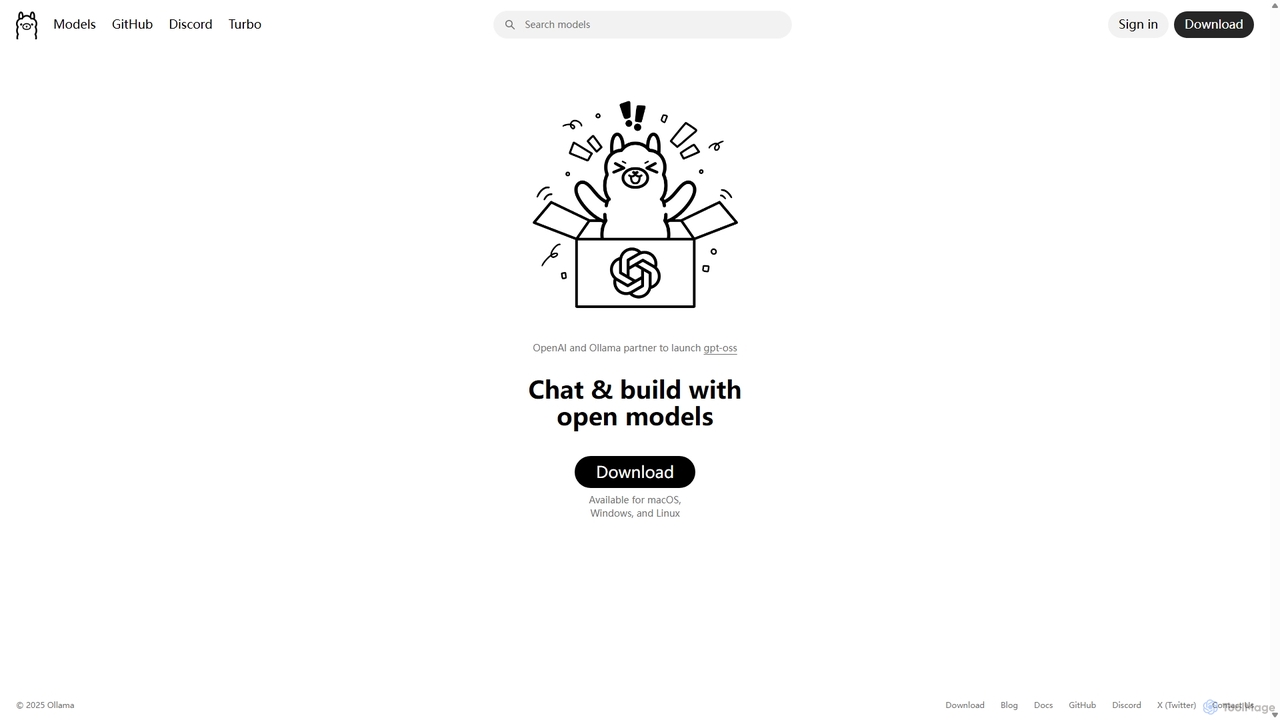
Ollama
Ollama is a powerful open-source framework for running large language models (LLMs) like Llama 3, Mistral, and Gemma locally on your own hardware. Available for macOS, Windows, and Linux, it simplifies the setup and management of open-source models, enabling private, offline, and cost-effective AI development and usage.
Machine Learning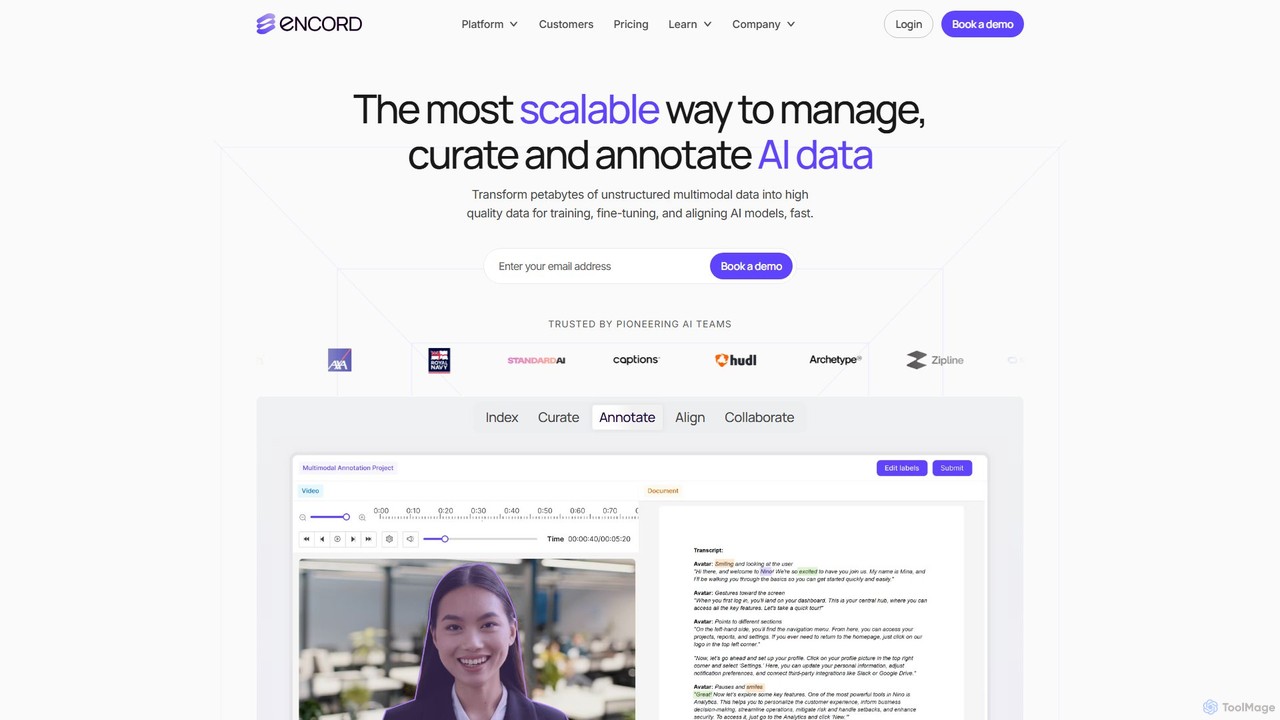
Encord
Encord is a comprehensive data development platform for visual and multimodal AI. It provides tools for managing, curating, and annotating large-scale, unstructured data like images, videos, and DICOM files. The platform helps AI teams build high-quality datasets, improve model performance, and accelerate the deployment of production-ready AI applications through advanced labeling, model evaluation, and human-in-the-loop workflows.
Annotation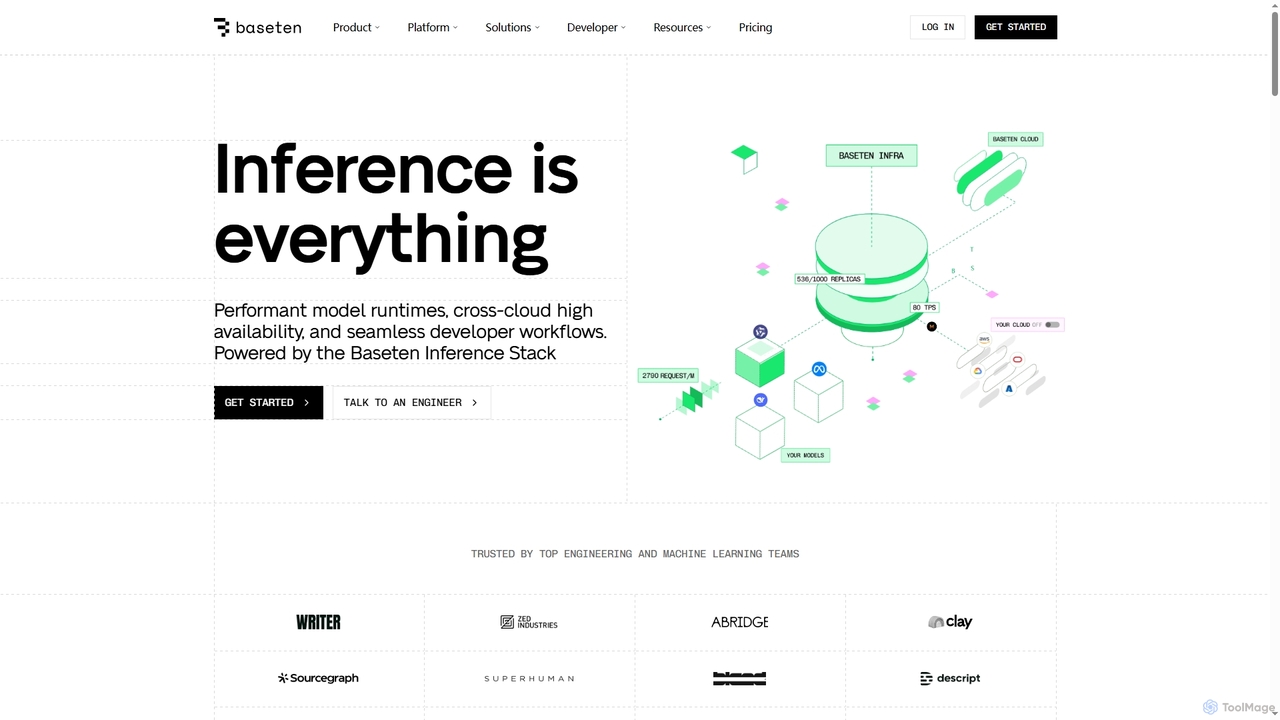
Baseten
Baseten is a production-grade inference platform for deploying, scaling, and managing AI models. It offers high-performance runtimes, seamless developer workflows, and flexible deployment options (cloud, self-hosted, hybrid). Ideal for engineering and ML teams building mission-critical AI applications.
DeploymentDataChain Categories
DataChain Embed Widget
Copy this embed code to place the badge on your blog, article, or product site and send readers directly to this ToolMage detail page.

Related AI tools

MLflow
MLflow is an open-source platform for managing the end-to-end machine learning lifecycle. It enables developers and data scientists to track experiments, package code into reproducible runs, version and share models, and deploy them to production, supporting both traditional ML and modern GenAI applications.
Data Science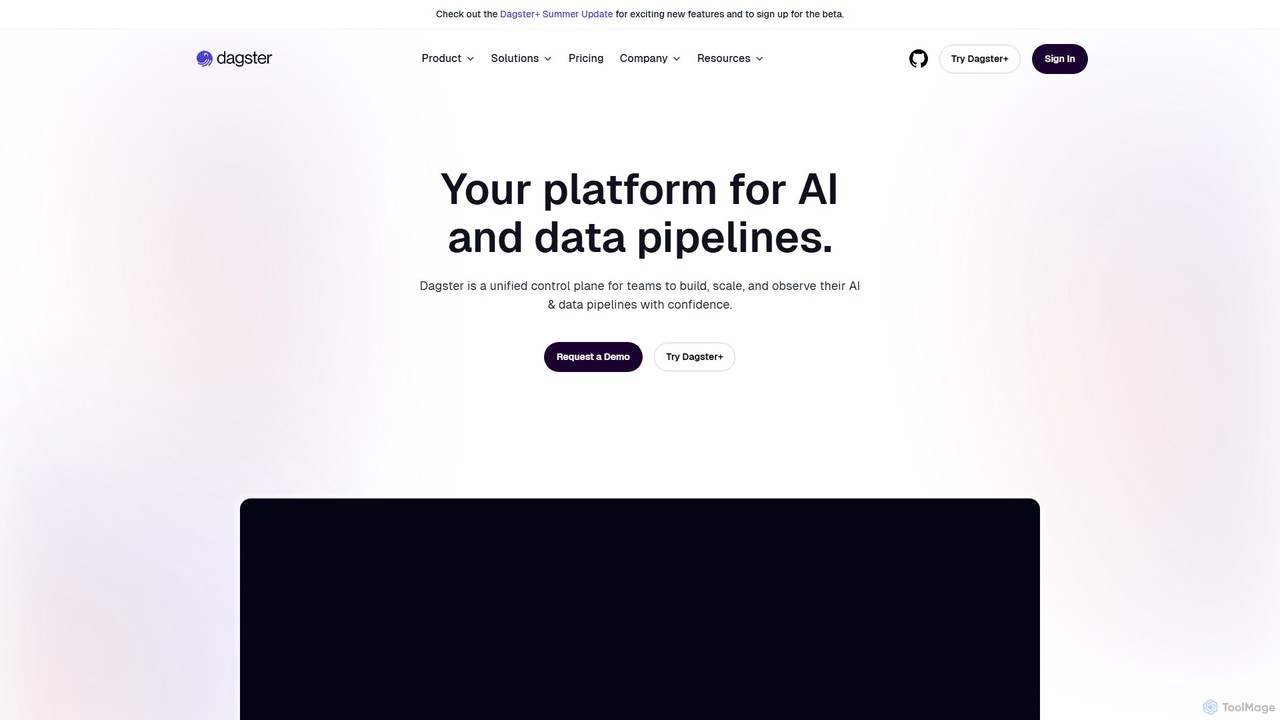
Dagster
Dagster is a modern, open-source data orchestrator designed for building, scaling, and observing AI and data pipelines. It acts as a unified control plane, allowing teams to model data assets, track lineage, and ensure data quality with confidence. By integrating software engineering best practices like local testing and reusable components, Dagster helps data engineers and ML teams ship products faster and more reliably.
Machine Learning Operations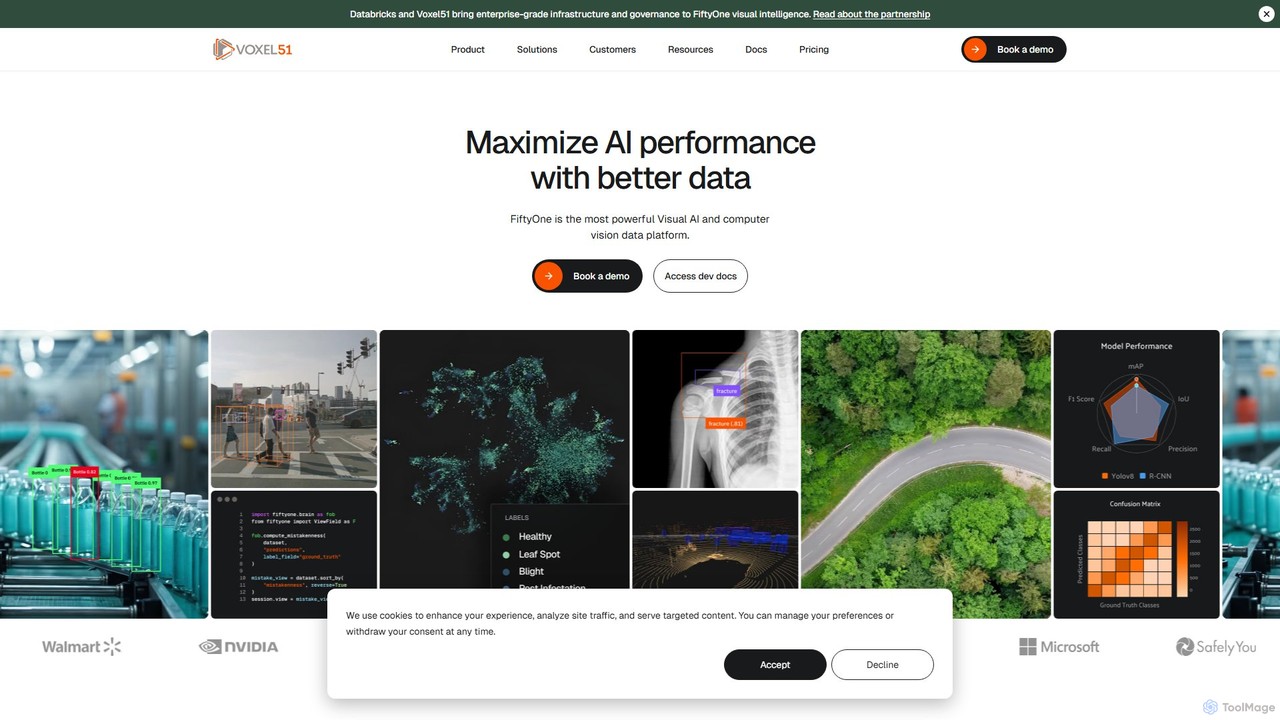
Voxel51
Voxel51 provides FiftyOne, an enterprise-grade computer vision and multimodal AI platform. It empowers developers and data scientists to curate, visualize, and evaluate complex datasets, leading to higher-performing models. By focusing on data-centric AI, FiftyOne streamlines workflows for data annotation, quality improvement, and model analysis, accelerating the entire development lifecycle.
Mlops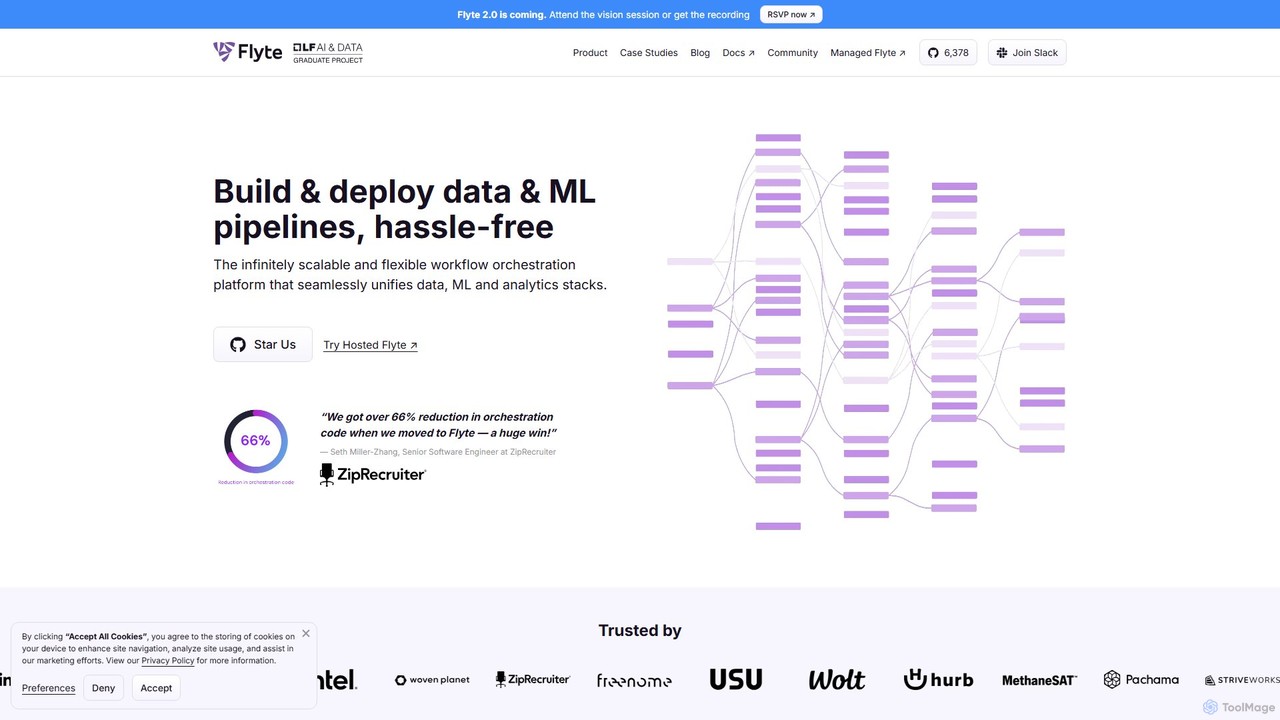
Flyte
Flyte is an open-source, cloud-native workflow orchestration platform designed for building, deploying, and managing production-grade data, machine learning, and analytics pipelines. It emphasizes scalability, reproducibility, and ease of use, enabling teams to move from local development to large-scale production seamlessly. With a Python-first SDK and support for multiple languages, Flyte empowers data scientists and engineers to create complex, versioned, and maintainable workflows.
Mlops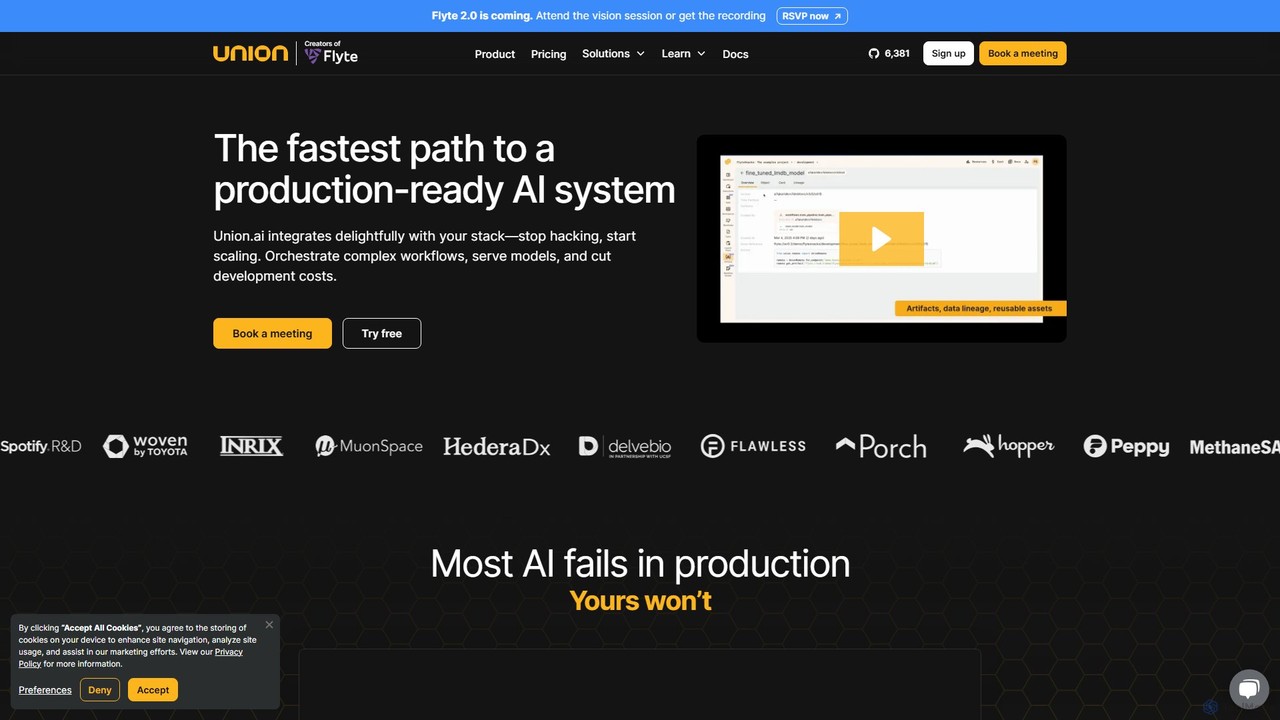
Union.ai
Union.ai is an enterprise-grade, production-ready platform for orchestrating complex AI and machine learning workflows. Built on the open-source Flyte, it empowers teams to build, serve, and scale compound AI systems with unparalleled performance and efficiency. It bridges the data-ML gap, optimizes cloud costs with features like scale-to-zero, and enhances developer velocity through a seamless, integrated experience.
Orchestration
Jyek
Jyek is an AI agent platform that understands objectives, creates execution plans, uses tools, and delivers verifiable results for complex, multi-step tasks.
Automation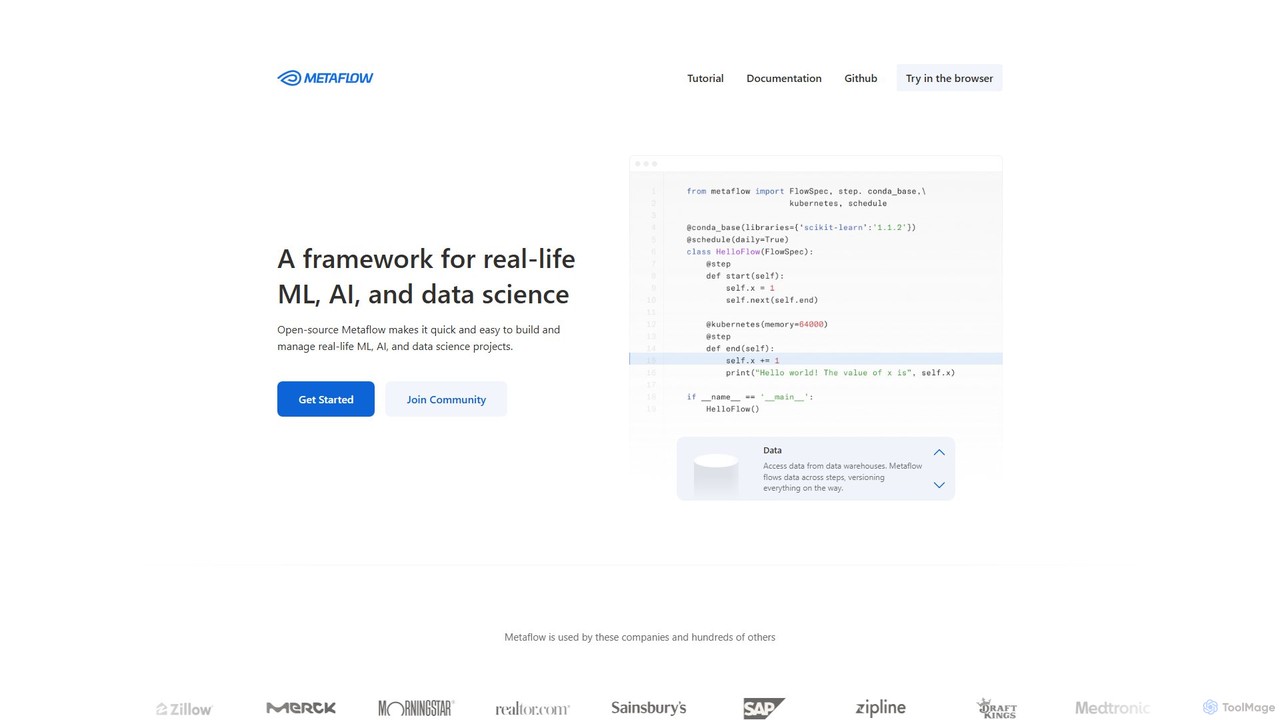
Metaflow
A human-centric Python framework, originally from Netflix, for building and managing real-life data science, ML, and AI projects. It simplifies workflow orchestration, data management, and model deployment, enabling rapid prototyping and scalable production pipelines.
Mlops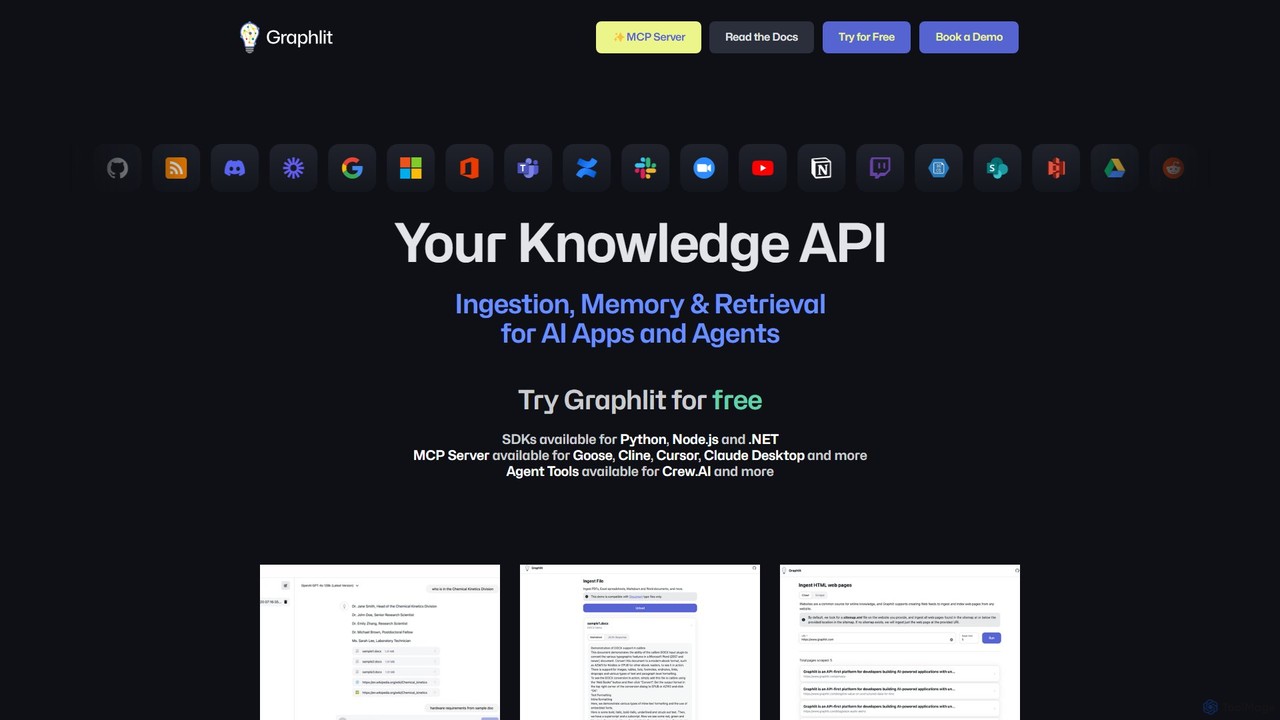
Graphlit
Graphlit is a developer-focused Knowledge API platform for building AI applications and agents. It streamlines the ingestion, memory, and retrieval of unstructured data from any source, offering a powerful RAG-as-a-Service solution. With SDKs for major languages and tools for AI agent integration, it simplifies the creation of sophisticated AI systems.
Rag
Eventual
Eventual is building the future of data infrastructure with Daft, a high-performance, open-source query engine for multimodal data. It enables engineers to process petabyte-scale images, video, audio, and text with the simplicity of SQL, drastically accelerating AI and ML workflows without the need for deep distributed systems expertise.
Machine LearningTidepool
Tidepool (formerly Aquarium) was a powerful MLOps platform designed for AI teams to improve machine learning models. It specialized in managing and curating datasets for computer vision and NLP, enabling faster iteration and higher model performance through a data-centric approach.
Machine LearningOllama
Ollama is a powerful open-source framework for running large language models (LLMs) like Llama 3, Mistral, and Gemma locally on your own hardware. Available for macOS, Windows, and Linux, it simplifies the setup and management of open-source models, enabling private, offline, and cost-effective AI development and usage.
Machine LearningEncord
Encord is a comprehensive data development platform for visual and multimodal AI. It provides tools for managing, curating, and annotating large-scale, unstructured data like images, videos, and DICOM files. The platform helps AI teams build high-quality datasets, improve model performance, and accelerate the deployment of production-ready AI applications through advanced labeling, model evaluation, and human-in-the-loop workflows.
AnnotationBaseten
Baseten is a production-grade inference platform for deploying, scaling, and managing AI models. It offers high-performance runtimes, seamless developer workflows, and flexible deployment options (cloud, self-hosted, hybrid). Ideal for engineering and ML teams building mission-critical AI applications.
Deployment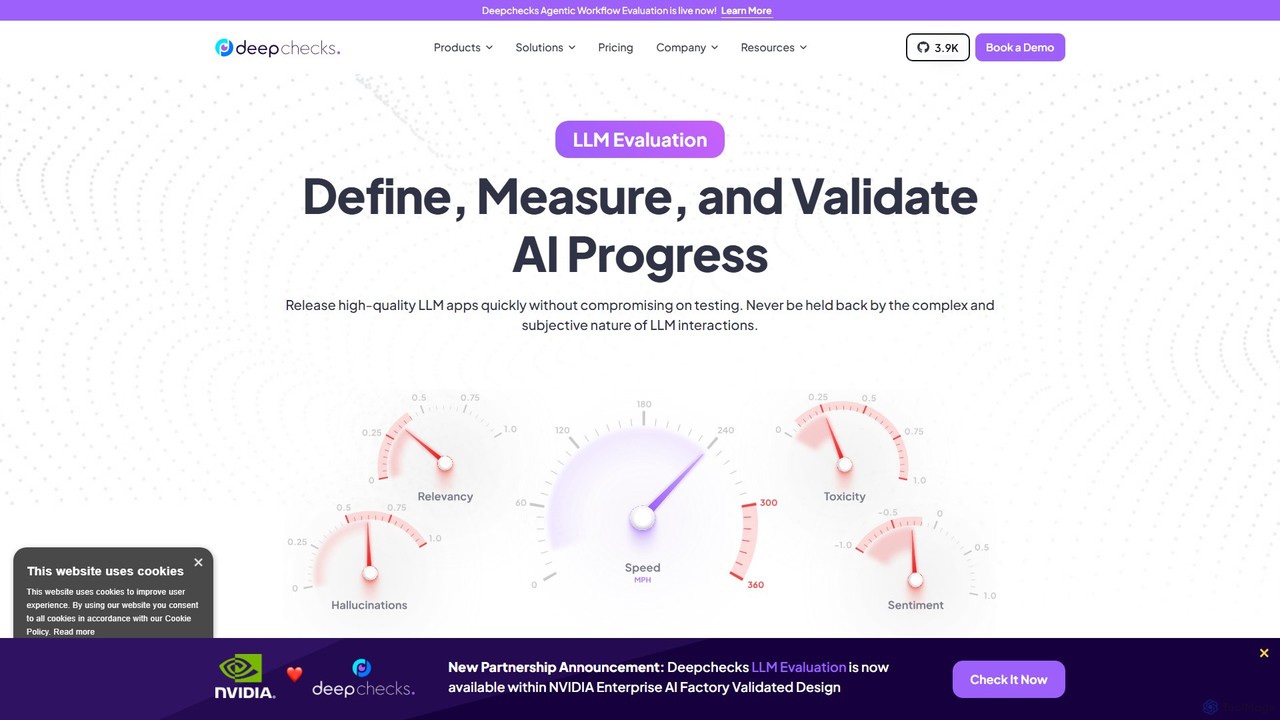
deepchecks
Deepchecks is an end-to-end platform for evaluating, validating, and monitoring LLM-based applications. It helps AI teams define, measure, and validate AI progress, ensuring the release of high-quality, reliable applications by streamlining testing from development through CI/CD to production.
Analytics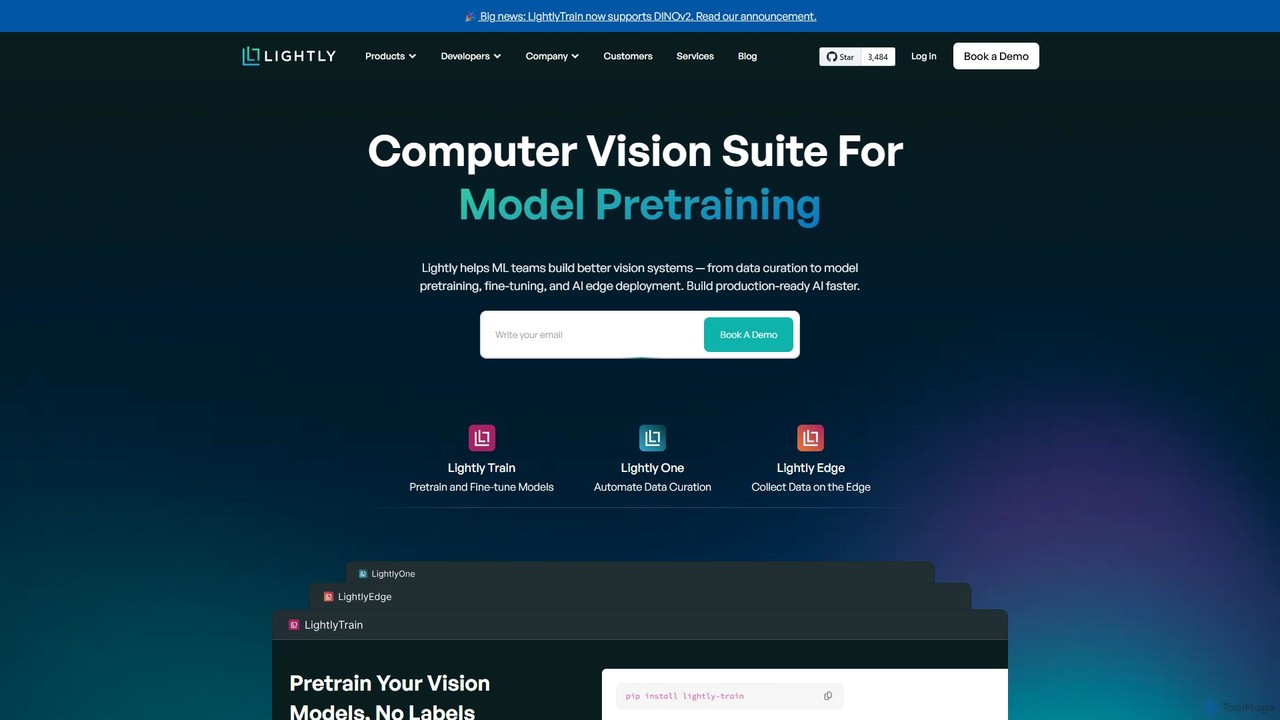
Lightly
Lightly is a comprehensive computer vision suite for machine learning teams. It streamlines the entire model development lifecycle, from intelligent data curation and selection on edge devices to efficient, label-free model pretraining and fine-tuning. By focusing on the most valuable data, Lightly helps build more accurate and production-ready AI models faster, while significantly reducing data labeling and storage costs.
Data Management
DataChain Comments (0)
Sign in to comment.
Sign inNo comments yet.