Raven
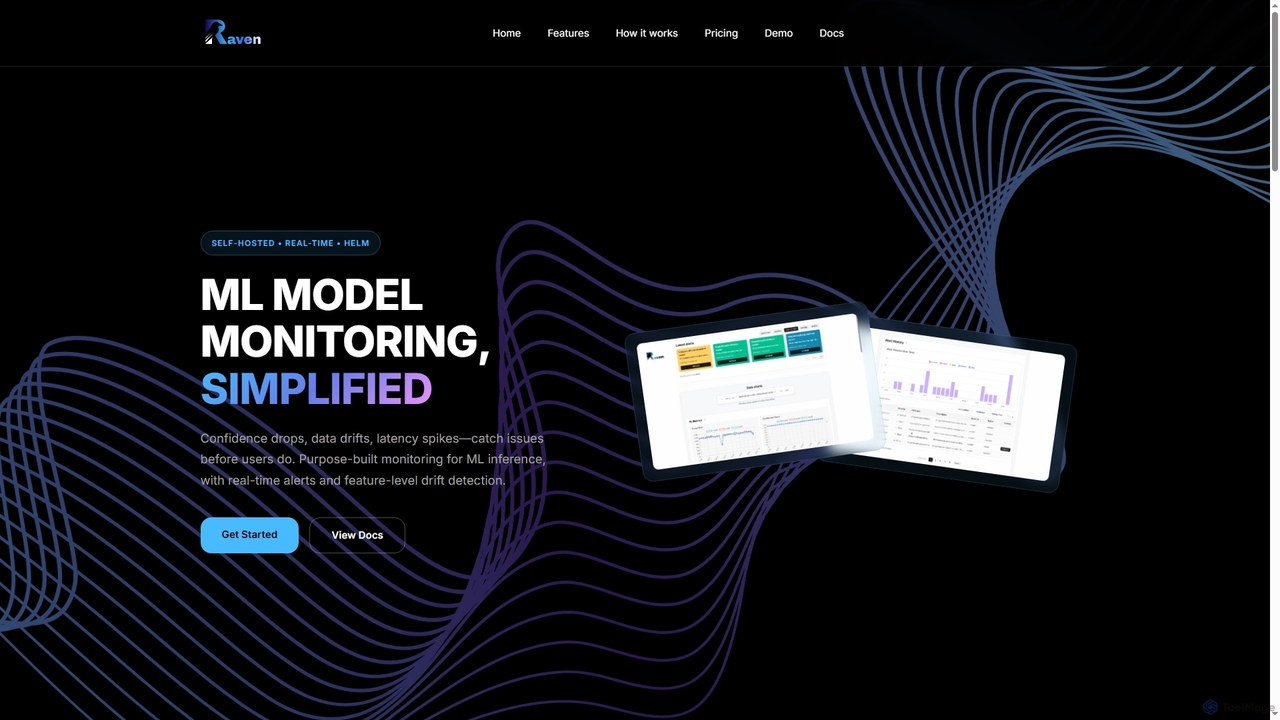
Raven is a self-hosted, real-time ML model monitoring platform designed to simplify observability for AI pipelines. It detects …
Raven is a self-hosted, real-time ML model monitoring platform designed to simplify observability for AI pipelines. It detects data drift, latency spikes, and confidence drops, providing instant alerts to ensure model reliability and performance in production environments.
Pipekit
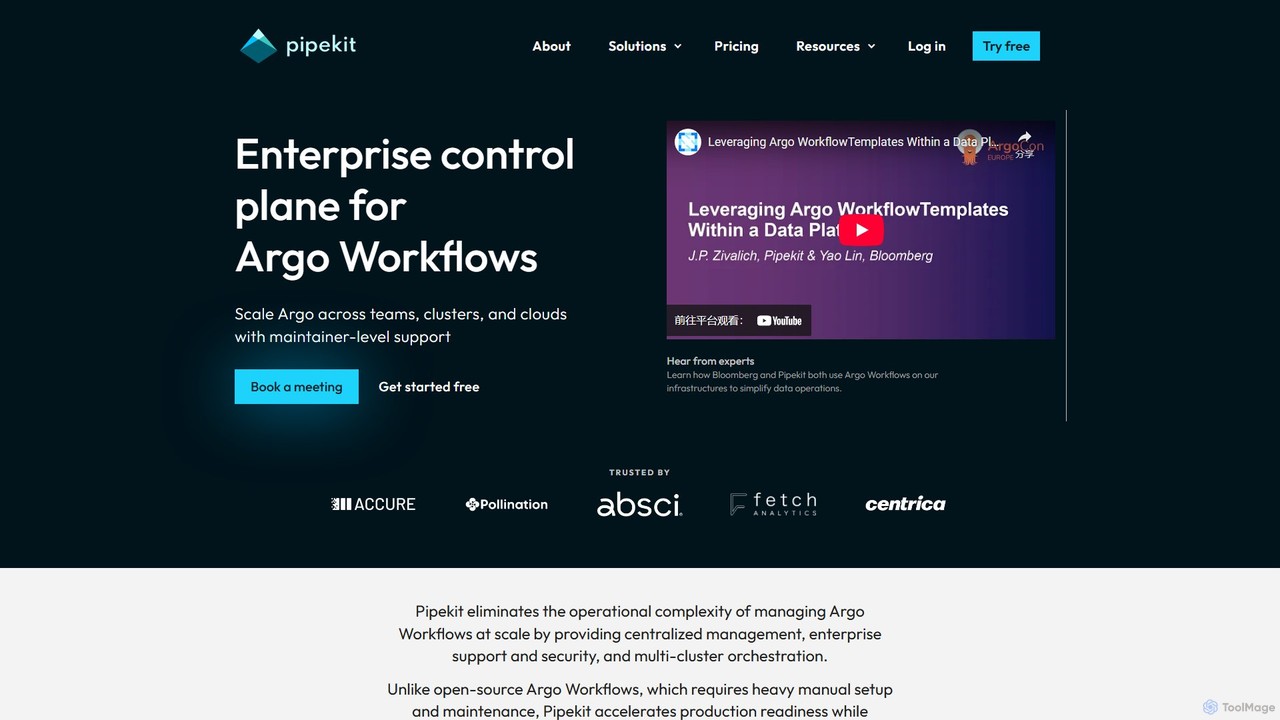
Pipekit is an enterprise-grade control plane and support service for Argo Workflows. It empowers platform and data teams …
Pipekit is an enterprise-grade control plane and support service for Argo Workflows. It empowers platform and data teams to run, monitor, and govern large-scale data, MLOps, and CI/CD pipelines on Kubernetes across multiple clusters and clouds.
DataRobot AI Platform (formerly Algorithmia)
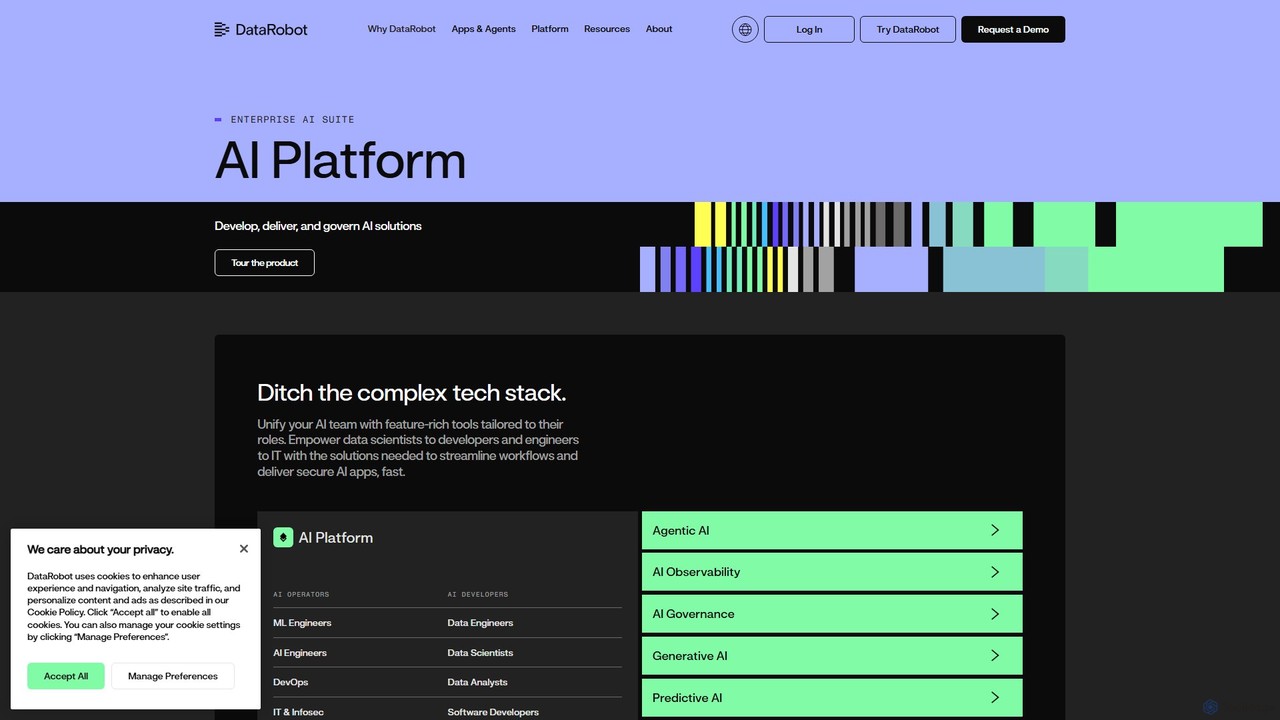
DataRobot AI Platform, which has integrated Algorithmia's powerful MLOps technology, is an end-to-end enterprise solution for the entire …
DataRobot AI Platform, which has integrated Algorithmia's powerful MLOps technology, is an end-to-end enterprise solution for the entire AI lifecycle. It enables organizations to rapidly build, deploy, manage, and govern machine learning models and generative AI applications at scale, accelerating the journey from data to value.
Flyte
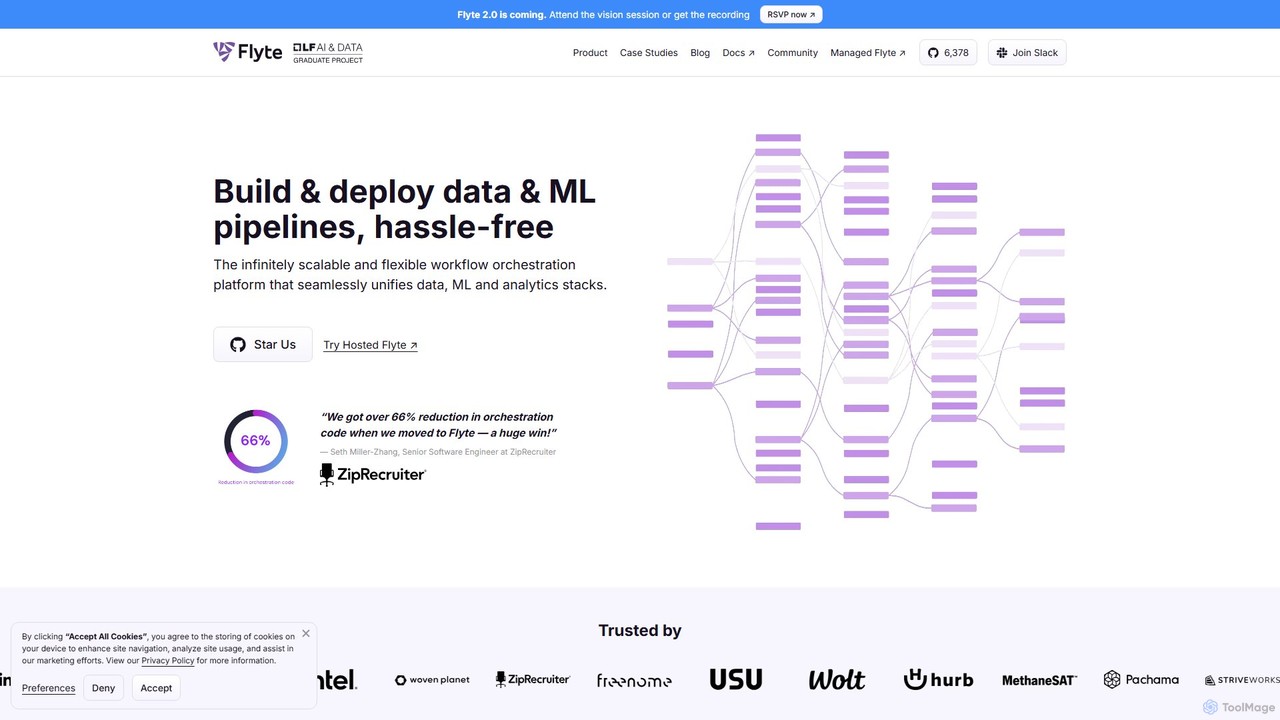
Flyte is an open-source, cloud-native workflow orchestration platform designed for building, deploying, and managing production-grade data, machine learning, …
Flyte is an open-source, cloud-native workflow orchestration platform designed for building, deploying, and managing production-grade data, machine learning, and analytics pipelines. It emphasizes scalability, reproducibility, and ease of use, enabling teams to move from local development to large-scale production seamlessly. With a Python-first SDK and support for multiple languages, Flyte empowers data scientists and engineers to create complex, versioned, and maintainable workflows.
About Mlops
MLOps (Machine Learning Operations) is a specialized discipline focused on streamlining the entire lifecycle of machine learning models, from development to production. It integrates principles from Machine Learning, DevOps, and Data Engineering to ensure reliable, efficient, and scalable deployment of AI solutions. By automating model building, testing, deployment, and monitoring, MLOps bridges the gap between data science innovation and operational reality, enabling organizations to deliver production-ready AI applications faster and more consistently. This crucial practice extends the capabilities of data science teams by providing the infrastructure and processes needed to manage complex ML systems effectively.
Core Features
- Model Versioning & Registry: Track and manage different versions of models, datasets, and their metadata for reproducibility and governance.
- Automated ML Pipelines: Orchestrate end-to-end workflows for data preparation, model training, evaluation, and deployment.
- Model Deployment & Serving: Facilitate seamless deployment of models to various environments (cloud, edge) and serve predictions efficiently.
- Model Monitoring & Alerting: Continuously track model performance, data drift, concept drift, and resource utilization in production.
- Automated Retraining & Governance: Implement strategies for automatic model retraining based on performance degradation and ensure compliance with regulations.
Applicable Scenarios
MLOps is essential for organizations deploying machine learning models at scale, including tech companies managing recommendation engines, financial institutions deploying fraud detection systems, and industrial firms implementing predictive maintenance. It supports ML engineers, data scientists, and operations teams in maintaining high-performing, reliable AI systems in production environments.
How to Choose
When selecting MLOps tools, consider their integration capabilities with your existing ML frameworks and cloud platforms, scalability to handle growing model complexity and data volume, and robust monitoring and alerting features. Evaluate the extent of automation for pipelines and retraining, and balance cost with ease of use and community support to find the best fit for your team's needs.

MlopsUse Cases
Real-time Fraud Detection Model Deployment
A financial ML engineer needs to deploy a high-throughput fraud detection model that can process transactions with minimal latency. MLOps tools automate the deployment process, ensuring the model is always available and performs optimally. They continuously monitor for data drift and concept drift, automatically triggering alerts or retraining to maintain accuracy against evolving fraud patterns, significantly reducing financial losses and improving response times.
Automated Recommendation Engine Management
An e-commerce ML engineer is responsible for continuously updating and deploying personalized product recommendation models. MLOps orchestrates the entire workflow, from ingesting new user behavior data to retraining models, conducting A/B tests for new versions, and seamlessly deploying them without downtime. This ensures that recommendations remain relevant and fresh, leading to improved user engagement and increased conversion rates for the e-commerce platform.
Predictive Maintenance for Industrial IoT
An industrial ML engineer deploys and monitors models that predict equipment failures from sensor data across a factory floor. MLOps manages the deployment of these models to edge devices or cloud infrastructure, continuously monitors sensor data quality and model predictions, and triggers alerts for potential failures. It also automates model retraining with new operational data, ensuring the predictive models remain accurate and minimize costly downtime for machinery.
Scalable NLP Model Deployment for Customer Support
An AI product manager needs to deploy and scale natural language processing (NLP) models for chatbots or sentiment analysis in customer support. MLOps provides the necessary infrastructure for deploying these models as microservices, handling traffic spikes efficiently. It monitors model accuracy on live customer interactions and facilitates rapid updates to improve language understanding, leading to enhanced customer experience and reduced manual support workload.
Personalized Healthcare Treatment Plan Generation
A healthcare data scientist needs to deploy and manage models that generate personalized treatment recommendations based on sensitive patient data. MLOps ensures the secure and compliant deployment of these models, adhering to strict privacy regulations. It monitors model fairness and bias, tracks model performance against clinical outcomes, and manages versioning for auditability, ultimately leading to more effective patient care and improved clinical decision-making while maintaining data integrity.
Continuous Integration/Continuous Delivery (CI/CD) for ML Models
An ML engineer or DevOps engineer aims to implement automated testing, building, and deployment workflows for ML code and models. MLOps integrates ML pipelines into CI/CD systems, automating the testing of data, code, and models. This ensures consistent deployment across various environments and enables rapid iteration and release cycles for new ML features, significantly reducing deployment errors and accelerating time-to-market for AI products.